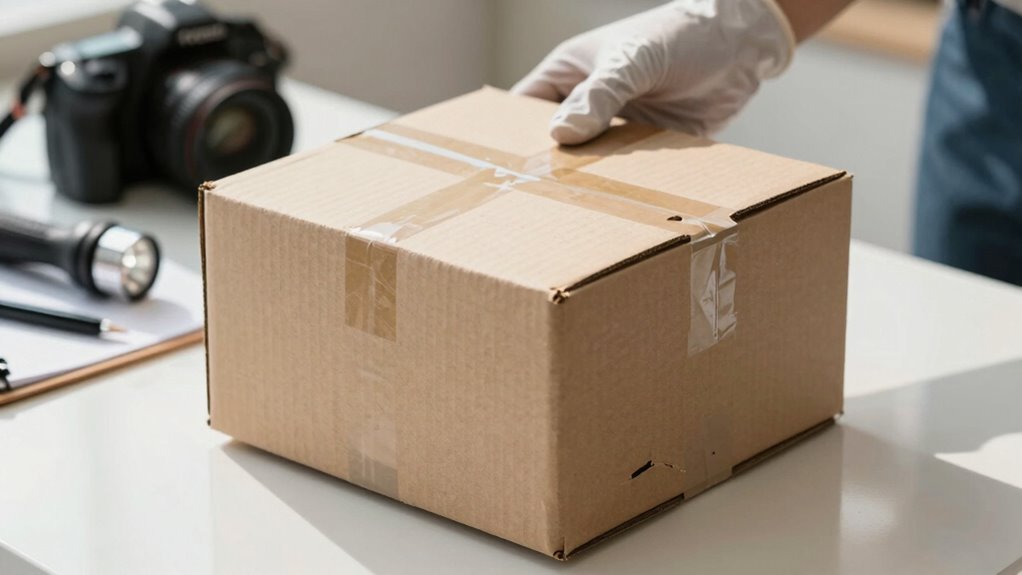

The moment your box arrives, inspect it carefully for visible damage like dents, tears, or moisture. Take clear photos of the packaging and any damage, then keep all original materials including boxes, inserts, and labels. Carefully check the contents for missing or broken items. Record detailed notes about what’s damaged and how, then contact the carrier and seller immediately to report the issue. Continuing will show you how to handle each step efficiently.
Key Takeaways
- Inspect the package immediately for visible damage, dents, tears, or moisture.
- Photograph all damage, packaging, labels, and seals from multiple angles.
- Carefully open the box, checking for missing or damaged items against the packing list.
- Preserve all packaging materials and documentation until the claim is resolved.
- Contact the carrier and seller promptly, providing detailed descriptions and photos of the damage.
Inspect the Package Immediately Upon Arrival
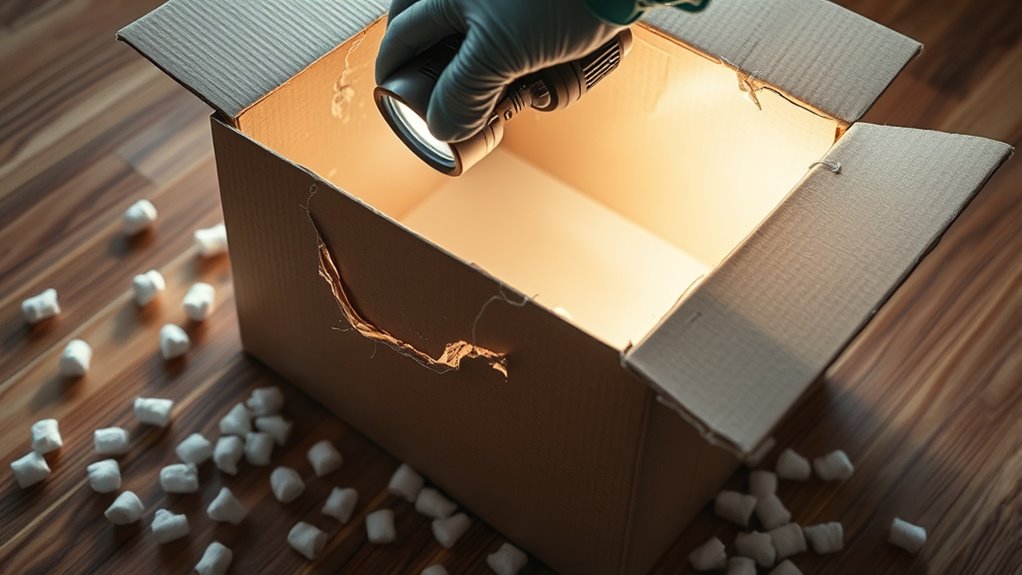
As soon as your package arrives, take a moment to inspect it thoroughly. Look for any signs of damage on the outer box, such as dents, tears, or punctures. Check if the package is wet, crushed, or has any unusual bulges. Handle it carefully, and don’t rush the inspection—your goal is to identify any visible issues right away. Confirm that the packaging matches what you ordered, including labels and shipping details. If you notice anything suspicious or damaged, document it immediately. Remember, early detection can protect your rights and streamline the claims process. Even if everything looks fine, it’s still wise to examine the package closely before proceeding with opening it. This step ensures you catch problems before unpacking.
Photograph the Damage and Packaging

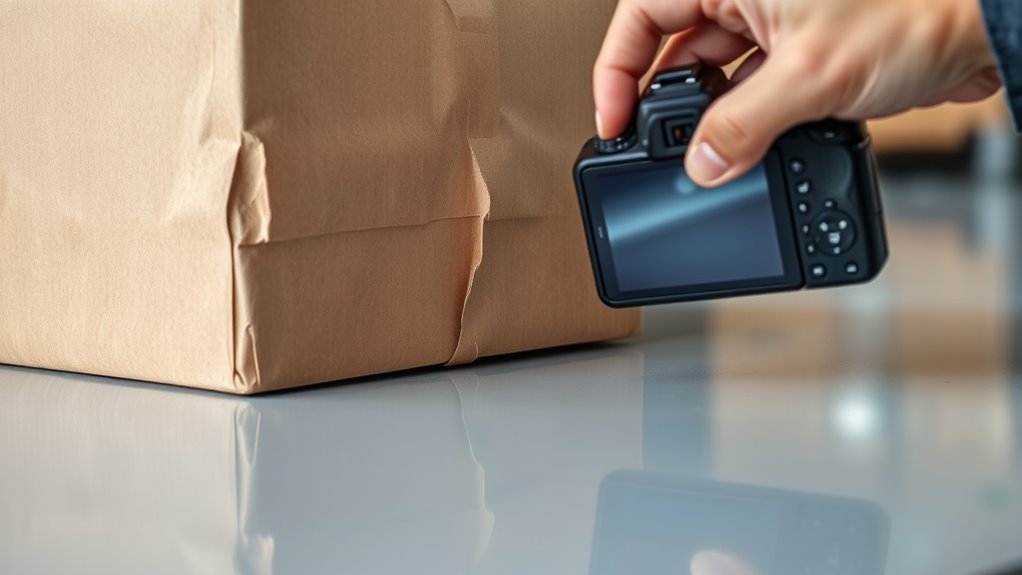
You should take clear, detailed photos of both the damage and the packaging to support your claim. Make sure to document the packaging condition before opening it, noting any tears or dents. Record specific damage details to guarantee your documentation is thorough and helpful.
Capture Clear Images
Capturing clear images of the damage and packaging is essential for documenting the issue effectively. Good photos provide proof for claims and help resolve disputes quickly. Use your phone or camera to take well-lit, in-focus shots from multiple angles. Include close-ups of the damage and the packaging materials, especially any labels or tear lines. Make sure each image is sharp and detailed, avoiding blurry or dark pictures. These visuals will strengthen your case when filing a claim or contacting the shipper. Here’s a quick reference:
| Aspect | What to Capture | Tips |
|---|---|---|
| Overall Damage | Entire box showing damage | Capture context and surroundings |
| Close-up Damage | Specific tears or dents | Focus on details for clarity |
| Packaging | Labels, seals, or torn areas | Document packaging condition |
Document Packaging Condition
Photographing the packaging condition alongside the damage offers essential proof for your claim. Take clear, detailed photos of the box from multiple angles, ensuring you capture any tears, dents, or crushed areas. Include close-ups of labels, barcodes, and shipping labels to show tracking information. Keep the packaging intact as evidence, since its condition can impact your claim’s validity. Avoid discarding or damaging the box before documenting everything thoroughly. Your photos should clearly show the relationship between the damage and how it relates to the packaging. Proper documentation helps support your case if you need to file a claim or seek reimbursement. Be prompt so your evidence remains fresh and unaltered, making your claim process smoother and more credible.
Record Damage Details
How can you guarantee your damage claim is well-supported? The key is to photograph the damage and packaging immediately. Use a camera or smartphone to capture clear, detailed pictures from multiple angles. Include close-ups of the damaged area and the packaging, especially any labels or torn sections. Make sure the photos are well-lit and in focus. These images serve as vital evidence for your claim, showing the extent of the damage and how it occurred during transit. Don’t delay—taking photos right away prevents any disputes or questions later. Store these images securely, and consider timestamping them if possible. Accurate, detailed photos will strengthen your case and help ensure a smoother resolution process.
Keep All Packaging Materials and Documentation

Make sure you keep all packaging materials and shipping documents, as they can be essential for claims. Preserve the original packaging and save any receipts or tracking information related to the shipment. These items will support your case if you need to report damage or seek reimbursement.
Preserve Original Packaging
To guarantee you have all the necessary evidence if damage occurs, it’s essential to preserve the original packaging and all related materials. Keep the box, cushioning, and any protective inserts intact, as they show how the item was shipped. Avoid discarding or recycling packaging until after inspections or claims are settled. Take photos of the packaging from different angles before opening it, to document its condition upon arrival. Retaining the original packaging helps verify how the product was packed and can support insurance or warranty claims. Additionally, store all packing materials in a safe place, so they remain in good condition should you need to show proof of the packaging’s integrity. Preserving the original packaging is a vital step in protecting your rights and ensuring proper resolution.
Save Shipping Documentation
Have you kept all the shipping documents and packaging materials since your item arrived? It’s essential to save the shipping receipt, tracking numbers, and any labels or customs forms. These documents serve as proof of the item’s condition and the shipping process, which can be critical for filing claims. Keep the original packaging, including boxes, fillers, and seals, as they may be needed for inspection or return. Store everything in one place, like a designated folder or digital scan, so you can access it quickly if needed. These materials support your case if you need to report damage or request a refund. Maintaining complete documentation ensures you have all necessary proof, making the resolution process smoother and faster.
Check the Contents for Damage or Missing Items

When you receive your shipment, it’s important to thoroughly inspect the contents for any damage or missing items. Carefully unpack everything and take a close look at each item. Check for any dents, tears, or broken parts that might have occurred during transit. Confirm that all items listed in your order are present. Don’t forget to verify quantities and specifications. Consider the following:
- Examine each item for visible damage
- Confirm all items match your packing list
- Check for missing accessories or parts
- Look for signs of mishandling or mishaps
- Ensure packaging materials are intact and undamaged
Doing this immediately helps you identify issues early and prepares you for the next steps in resolving problems. Being thorough now can save you time later.
Record Detailed Information About the Damage
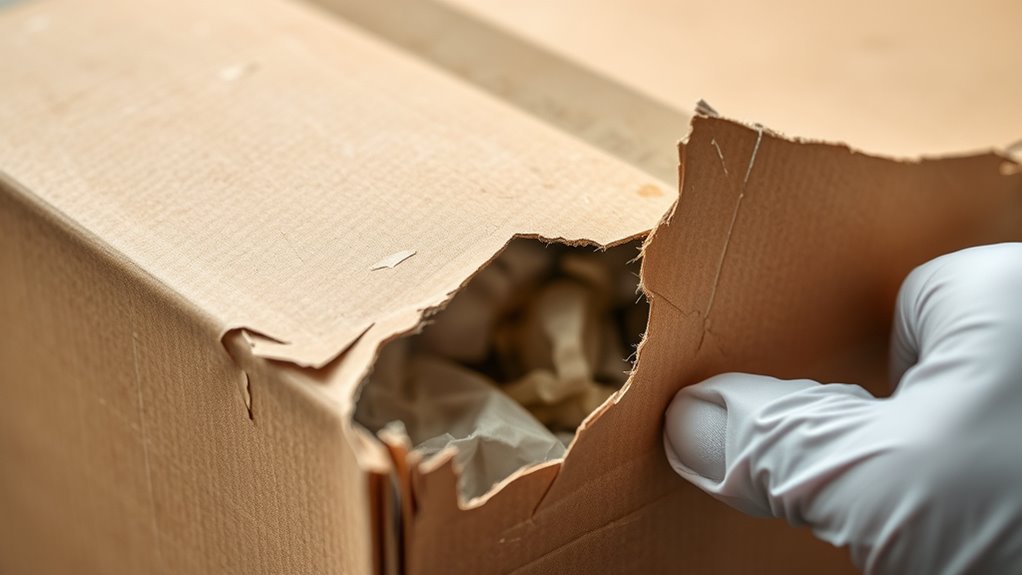
How can you make certain you have all the necessary details to support any claims? The key is to document everything thoroughly. Take clear, close-up photos of the damage from multiple angles, showing the extent and nature of the harm. Record precise descriptions of the damage, including size, location, and how it occurred. Note any visible packaging issues, such as tears or crushed areas, that might have contributed to the damage. Keep track of the date and time you discovered the problem. Write down any relevant details about the packaging or handling that might be important. Accurate, detailed records create a solid foundation for your claim, helping ensure you’re properly supported when you report the damage to the carrier or seller.
Contact the Shipping Carrier and Seller Promptly
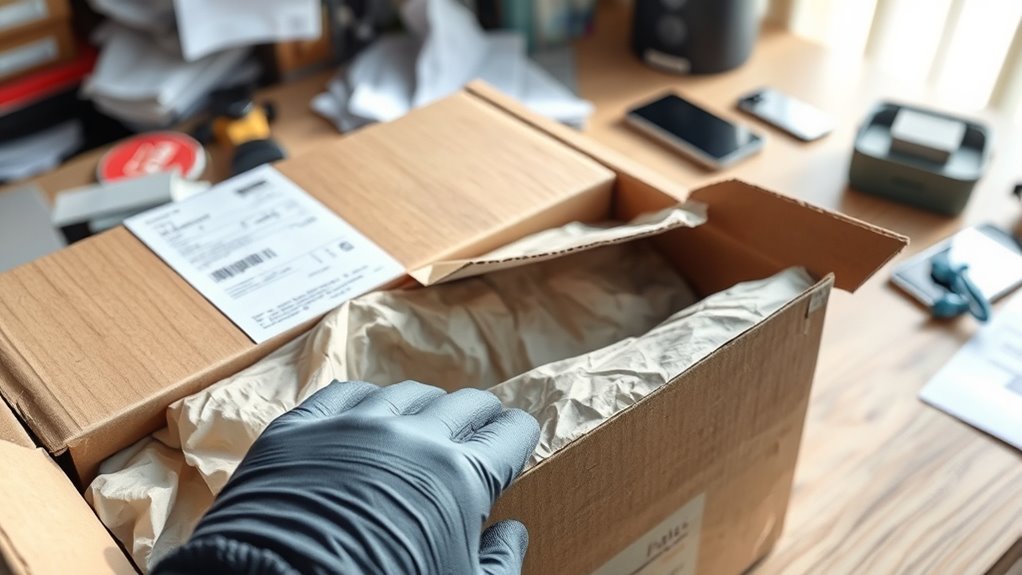
Once you’ve gathered all the necessary details about the damage, it’s important to act quickly by contacting the shipping carrier and seller. Prompt communication helps ensure your claim is taken seriously and processed efficiently. When reaching out, be clear and concise about what you observed. Keep records of your conversations for future reference. Here’s what to do:
- Call the carrier’s customer service immediately
- Provide your tracking number and order details
- Describe the damage clearly and factually
- Take notes during the conversation
- Request a confirmation or reference number for your report
This swift action helps initiate the resolution process and establishes a documented timeline, making it easier to follow up and resolve the issue effectively.
Follow Up and Initiate a Claim Process
After contacting the carrier and seller, it’s essential to follow up promptly to keep the claim process moving smoothly. Reach out to confirm they received your documentation and ask about the next steps. Keep a record of all communications, including dates, names, and details discussed. If you haven’t received a response within the expected timeframe, don’t hesitate to follow up again. Be clear about your claim details, including photos, receipts, and descriptions of the damage. Stay organized and persistent; this helps prevent delays. Once your claim is acknowledged, cooperate fully by providing any additional information requested. Following up diligently ensures you stay informed, speeds up resolution, and increases your chances of getting the compensation or replacement you need.
Frequently Asked Questions
How Long Do I Have to Report Shipping Damage?
You typically have 48 hours to report shipping damage after your package arrives. It’s important to inspect your items promptly and document any issues with photos or descriptions. Contact the shipping company or seller as soon as you notice damage to guarantee your claim is valid. Acting quickly helps you avoid delays in processing refunds or replacements, so don’t wait too long to report any problems you find.
What if I Notice Damage After Unpacking?
If you notice damage after unpacking, don’t wait a second—act immediately! Document the damage with photos, detail everything in your report, and contact the seller or shipping company right away. Delay could mean losing your chance to claim a refund or replacement. Remember, quick action is your best weapon, turning a potential disaster into a quick fix. Stay vigilant, and don’t let hidden damage slip through the cracks!
Can I Refuse Delivery Due to Visible Damage?
Yes, you can refuse delivery if the box shows visible damage. Politely inform the delivery person that you’re refusing the package due to damage, and make sure they document the issue. Take photos of the damage for your records. Contact the sender or shipping company promptly to report the problem and request a replacement or refund. Refusing delivery helps protect you from accepting damaged goods and simplifies the return process.
Who Is Responsible for Damages During Transit?
You are typically responsible for damages during transit until the carrier delivers the package to you. If you notice visible damage upon arrival, you should refuse delivery or note the damage with the carrier before accepting. The shipping carrier’s liability generally covers damages during transit, but your responsibility begins once you accept the package. Always inspect your shipment immediately and document any issues to guarantee proper claims processing.
Are There Specific Photos Required for Claims?
Imagine capturing every tiny scratch or dent as if it’s a masterpiece—yes, specific photos are essential. You should photograph the entire package, close-ups of damages, and the shipping labels. Use good lighting and a steady hand to clearly show issues. These detailed images help prove your case and speed up claims. Without them, the damage might seem invisible, delaying your resolution and feeling like chasing shadows.
Conclusion
When that box lands in your hands, think of yourself as a vigilant guardian, ready to catch any trouble before it slips away. By acting swiftly and documenting every detail, you’re sealing your shield against potential losses. Remember, you’re the captain steering this ship through choppy waters—prompt action keeps your treasures safe and your peace of mind intact. Stay alert, stay proactive, and turn a damaged delivery into just a small bump on your smooth sailing journey.