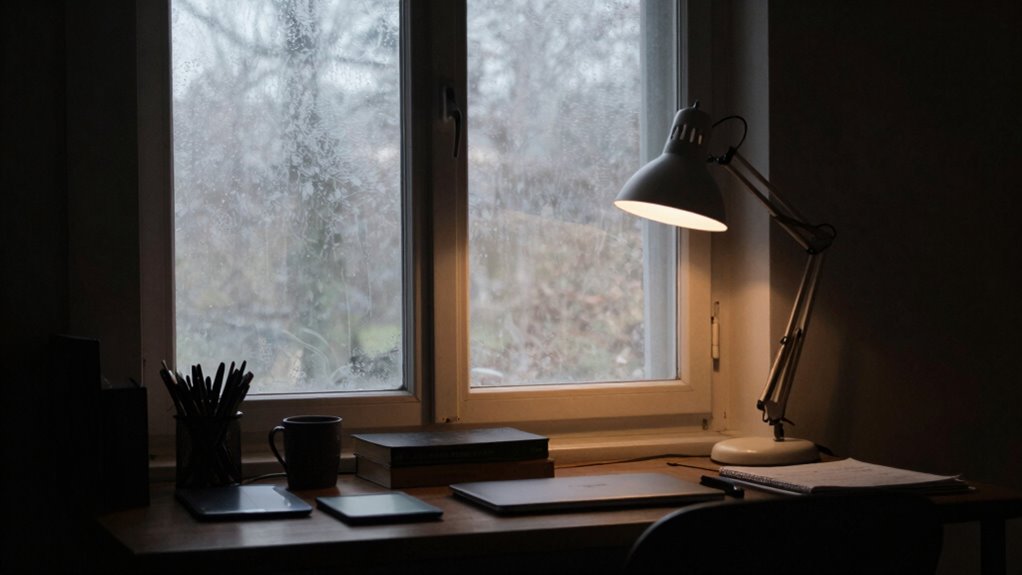

During winter, your desk can feel dark even with lamps because your windows may face away from the sun or be obstructed by trees, buildings, or heavy curtains, limiting natural light. Poor window orientation means less daylight reaches your workspace, and external obstacles block sunlight. Adjusting window treatments and repositioning your desk closer to better-lit windows can help. Keep exploring to discover simple ways to brighten your winter workspace naturally.
Key Takeaways
- North-facing windows provide less direct sunlight in winter, making the room feel darker despite artificial lighting.
- Desk placement away from south-facing windows reduces natural light, increasing reliance on lamps.
- Heavy curtains or blinds block daylight, preventing your workspace from brightening naturally.
- External obstacles like trees or buildings can shade windows, decreasing natural light even during daytime.
- Reflective surfaces and adjusting window treatments can enhance natural light, reducing the need for additional lamps.
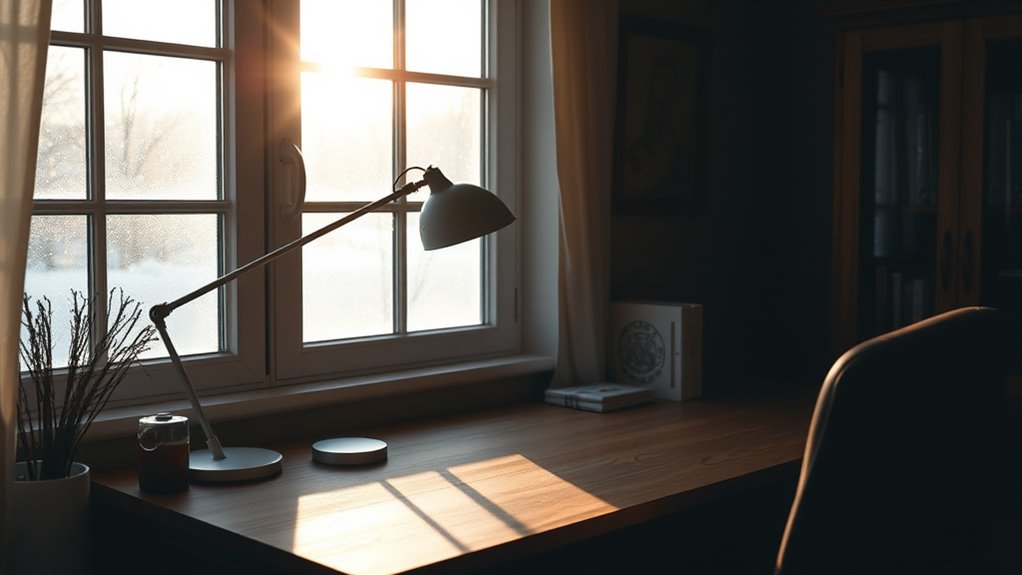
Have you ever wondered how to make the most of the limited daylight during winter? If your desk still feels dark even with lamps turned on, the issue might stem from how your space is positioned relative to natural light and window orientation. While lamps can help, they often can’t replicate the full spectrum and warmth of natural light, which is vital for boosting your mood and productivity during the darker months. The key is understanding how your room’s window placement influences the amount and quality of daylight that reaches your workspace.
Maximize winter daylight by understanding your window placement and adjusting your space accordingly.
First, consider the orientation of your windows. If your windows face north, you’ll notice less direct sunlight throughout the day, especially in winter. North-facing windows tend to provide consistent but diffuse light, which can make your space feel dull and shadowy, even during daylight hours. On the other hand, south-facing windows capture more direct sunlight during winter, bathing your room in natural light and making your desk feel brighter and more inviting. East-facing windows bring in morning sunlight, which can energize you at the start of the day, while west-facing windows offer afternoon and evening light, giving your space a warm glow later on. Understanding these patterns helps you position your desk or workspace to maximize sunlight exposure.
If your window orientation isn’t ideal, you can make adjustments to improve natural light intake. For example, placing your desk near south-facing windows can help you soak up more sunlight during the day. If that’s not feasible, consider using reflective surfaces like light-colored walls or mirrors to bounce natural light deeper into your room. Removing heavy drapes or blinds during daylight hours also allows more light to enter. If your windows are shaded by trees or buildings, trimming or rearranging outdoor obstacles can increase the amount of natural light that reaches your workspace. These small changes can considerably brighten your environment without the need for additional artificial lighting.
In addition to repositioning your desk, think about how window treatments impact light. Heavy curtains can block daylight, making your workspace feel darker despite the presence of lamps. Opt for sheer curtains or blinds that can be easily opened during the day to allow maximum natural light to flood in. Combining these strategies with proper window orientation maximization helps create a brighter, more uplifting workspace during winter months when natural light is scarce. Being aware of natural light patterns and managing your window coverings effectively can significantly improve your workspace’s brightness. By paying attention to how your room is oriented and how you manage natural light, you can make your desk a more comfortable and energizing place, even on the gloomiest winter days.

Light Therapy Lamp, 10000 Lux, Remote Control, 3 Color Temperatures, Timer
- 360° Brightness Coverage: Adjustable brightness from 25% to 100%
- UV-Free Light Therapy: Emits 10,000 lux natural light
- Multiple Color Temperatures: Switchable 2700K, 4000K, 6500K
As an affiliate, we earn on qualifying purchases.
As an affiliate, we earn on qualifying purchases.
Frequently Asked Questions
How Does Window Orientation Affect Winter Light in My Workspace?
Your window orientation greatly impacts winter light in your workspace. If your window faces north, you’ll get softer, indirect light, making your desk feel darker. East-facing windows bring morning sunlight, while west-facing ones offer afternoon light. External obstructions like buildings or trees can block sunlight, reducing brightness regardless of window placement. Adjust your workspace or add reflective surfaces to maximize the available light, making your desk feel brighter during those darker winter months.
Can Reflective Surfaces Improve Overall Light Distribution at My Desk?
Yes, reflective surfaces can improve light distribution at your desk by enhancing light diffusion. When you place mirrors or glossy materials nearby, they bounce natural and artificial light around the space, making it feel brighter. This reduces shadows and creates a more evenly lit environment. Try positioning reflective surfaces opposite windows or lamps to maximize their effect, and you’ll notice a clearer, more inviting workspace even during darker winter days.
What Are the Best Times of Day for Optimal Natural Light?
The best daylight hours are typically between 10 a.m. and 2 p.m., when sunlight intensity peaks. During these hours, you get the most natural light, which can brighten your workspace and boost your mood. To maximize this, position your desk near windows and open blinds. By doing so, you’ll harness the strongest daylight, making your workspace feel more inviting and reducing reliance on artificial lighting during these ideal times.
How Do Indoor Plants Influence Perceived Light Levels?
Indoor plants influence perceived light levels through their plant color and leaf size. Bright green leaves reflect more light, making your space feel lighter and more open. Larger leaves can also diffuse light, creating a softer glow that brightens your surroundings. By choosing plants with vibrant colors and sizable foliage, you can make your desk area feel more illuminated, even on dull winter days, without needing extra lamps.
Are There Specific Lamp Types That Better Mimic Natural Winter Sunlight?
Yes, you should look for daylight lamps or artificial sunlight that closely mimic natural winter sunlight. These lamps typically have a high color rendering index (CRI) and emit full-spectrum light, which helps brighten your workspace and improve your mood. Opt for models labeled as “full-spectrum” or “daylight,” and place them strategically to maximize their effect. This way, your desk feels brighter, and you get the benefit of natural-like light even during winter days.
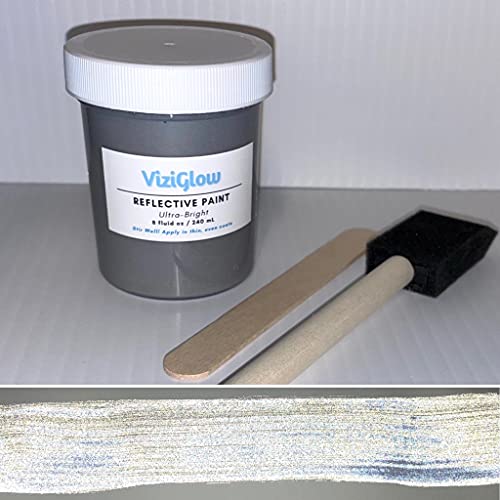
Ultra Bright Reflective Paint – high-visibility, reflective, paint solution, outdoor use (8 oz)
- Bright Reflective Finish: Ultra-bright, high-visibility paint
- Premium Reflective Powder: Mixed with water-based polyurethane
- Easy Application: Apply in thin, even coats
As an affiliate, we earn on qualifying purchases.
As an affiliate, we earn on qualifying purchases.
Conclusion
Understanding the importance of proper winter light placement can transform your workspace. Did you know that inadequate natural light exposure can decrease productivity by up to 20%? By positioning your desk near a window and supplementing with well-placed lamps, you create a brighter, more inviting environment. Don’t let the dark winter months dim your motivation—strategic lighting can make all the difference, keeping you energized and focused even on the gloomiest days.

Tollpiz Sheer Curtains Living Room Linen Textured Curtain Sheers Light Filtering Voile Rod Pocket Curtains for Bedroom, 38 x 63 inches Long, White, Set of 2 Panels
- Package Includes: Set of 2 sheer curtain panels
- Panel Dimensions: 38 x 63 inches each
- Design Features: Rod pocket and bottom hem
As an affiliate, we earn on qualifying purchases.
As an affiliate, we earn on qualifying purchases.

Marsail Glass Standing Desk with Drawer, 48 x 24 inch Electric Standing Desk, Height Adjustable Desk with One-Piece Tabletop & USB Charging Ports, Sit Stand Desk with Storage for Home & Office White
- Elegant Glass Desktop: Elevate your home office with…
- Sit & Stand Comfortably: This glass electric standing desk…
- Stay Charged, Stay Connected: The glass standing desk features…
As an affiliate, we earn on qualifying purchases.
As an affiliate, we earn on qualifying purchases.