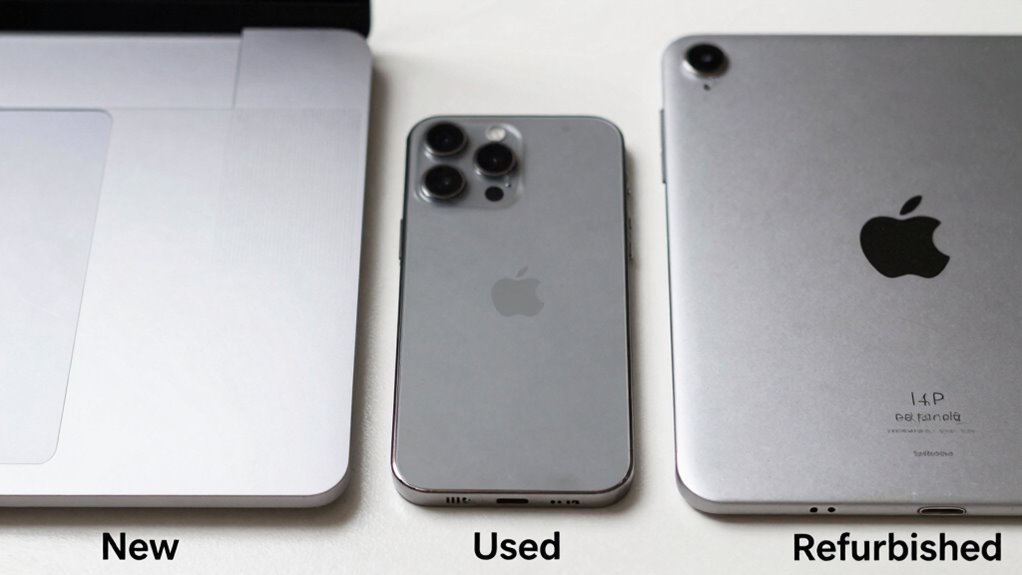

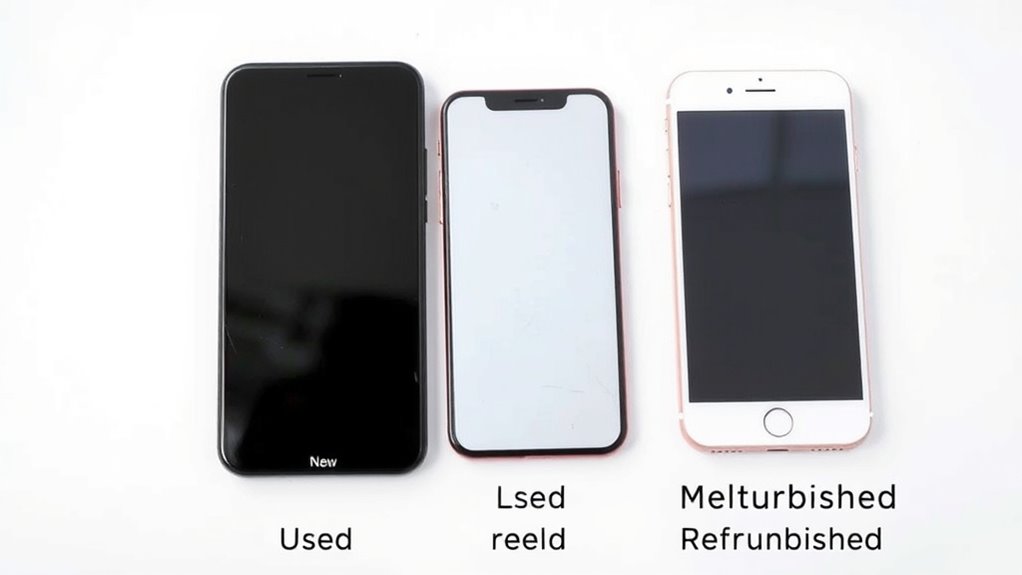
When you see labels like “new,” “used,” and “refurbished,” they tell you about a device’s condition and inspection process. “New” means it’s untouched and fresh from the manufacturer with a full warranty. “Used” indicates prior ownership, with possible wear and no guarantees. “Refurbished” has been restored, inspected, and tested, often with a warranty. Understanding these differences helps you make smarter choices—continue to explore for more details on what each label truly means.
Key Takeaways
- New means unused, straight from the manufacturer, with full warranty and pristine condition.
- Refurbished indicates the device was returned, repaired, tested, and restored to near-new quality, often with warranty.
- Used refers to pre-owned items sold as-is, showing signs of prior use with minimal or no warranty.
- Price and warranty vary: new is most expensive with full coverage; refurbished offers savings with limited warranty; used is cheapest with higher risk.
- Labels inform about condition, warranty, and reliability, helping buyers choose based on budget, tech needs, and risk tolerance.
Defining Brand New Electronics and Devices
Brand new electronics and devices are products that have never been used or sold before. When you buy something brand new, it’s straight from the manufacturer or authorized retailer. You get fresh packaging, a full warranty, and the assurance that the device hasn’t been tampered with. These items are in perfect condition, free from scratches, dents, or any signs of prior use. Buying new often means the latest model or version, equipped with all the newest features. You don’t need to worry about previous owners or usage history. This gives you peace of mind, knowing you’re the first person to handle and enjoy the device. If you value freshness, reliability, and the full manufacturer’s warranty, choosing new electronics is usually your best option.
What Does ‘Used’ Typically Signify?
When it comes to electronics and devices, “used” usually means they have been previously owned and operated by someone else. This indicates the item isn’t brand new and has seen some level of prior use. Typically, used products are sold through secondhand stores, online marketplaces, or private sales. They may have minor signs of wear, like scratches or small dents, but generally still function properly. The key point is that these items haven’t undergone any official refurbishment or repairs to restore them to a nearly-new condition. Because of their history, used devices are often priced lower than new ones, but their condition can vary. It’s crucial to check for any warranties or return policies when purchasing used electronics to ensure you’re protected.
The Meaning of ‘Refurbished’ in Electronics
Have you ever wondered what “refurbished” truly means when shopping for electronics? Generally, it indicates that the product has been returned, inspected, and restored to a condition close to new by the manufacturer or a certified refurbisher. Unlike used items, refurbished products typically undergo a thorough testing process, ensuring they work properly and meet quality standards. They may have minor cosmetic blemishes but are usually free of functional defects. Refurbished devices often come with a warranty, giving you extra confidence in their reliability. This label signals that the product isn’t brand new but has been repaired or restored to a like-new state, offering a balance between affordability and quality. Understanding this helps you make smarter decisions when evaluating electronics options.
Differences in Quality and Inspection Processes
Refurbished electronics undergo a thorough inspection and testing process that sets them apart from used items. This process guarantees the device meets manufacturer standards and functions like new. During refurbishment, technicians typically:
Refurbished electronics are thoroughly tested and restored to meet manufacturer standards.
- Disassemble and clean the device thoroughly.
- Replace or repair damaged or worn parts.
- Run comprehensive diagnostics to identify issues.
- Reassemble and perform final testing to confirm performance.
In contrast, used items are usually sold as-is, with minimal inspection. They might work fine, but there’s no guarantee of quality or longevity. New devices, on the other hand, are brand new and haven’t undergone any inspection beyond manufacturing quality control. Your choice depends on how much assurance you need about a device’s condition and performance.
Price Variations Between the Three Options
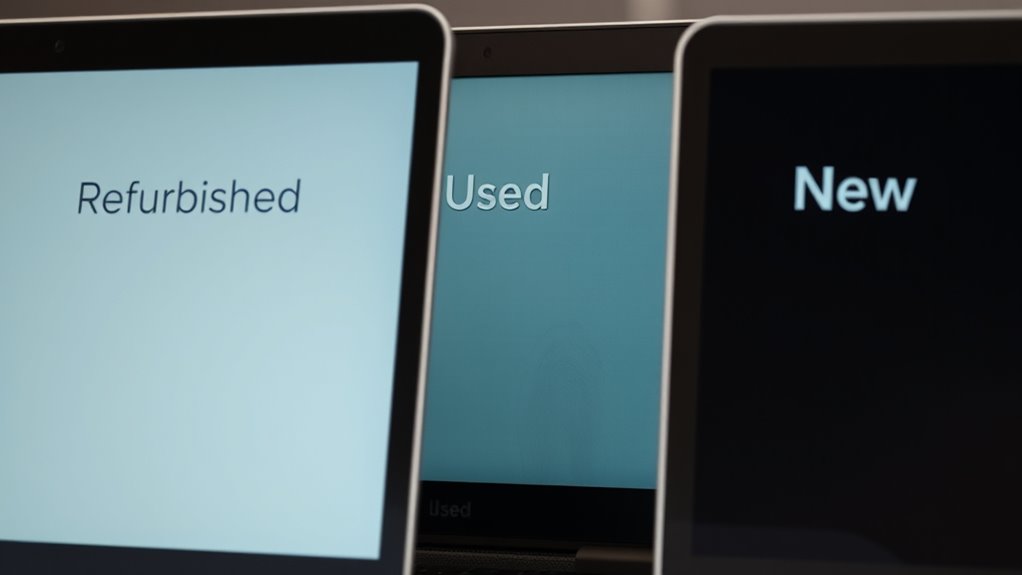
You’ll notice that new items usually come with higher prices, while used options are more budget-friendly. Refurbished products often fall somewhere in between, offering a balance of cost and quality. Understanding these price differences helps you choose the best option for your budget and needs.
Cost Differences Explained
Understanding the cost differences between new, used, and refurbished items can help you make smarter purchasing decisions. Generally, new items are the most expensive because they’re in pristine condition and come with full warranties. Used products are typically the cheapest since they’ve been owned before and may show signs of wear. Refurbished items fall in between—they’re restored to good condition, often with a warranty, making them more affordable than new but more reliable than used.
Here’s a quick breakdown:
- New: Highest price, brand-new condition, full warranty.
- Refurbished: Moderate price, restored to good condition, warranty often included.
- Used: Lowest cost, pre-owned, variable condition.
- Price variability: Factors like brand, age, and condition influence costs.
Budget-Friendly Options
When shopping for electronics or appliances, your budget plays a key role in choosing between new, used, or refurbished items. Generally, used products are the most affordable, often costing 20-50% less than new ones. Refurbished items fall in the middle, usually priced 10-30% below new products, but with some repairs or updates. New items tend to be the most expensive, reflecting the latest technology and full warranties.
| Option | Typical Price Range |
|---|---|
| Used | 20-50% less than new |
| Refurbished | 10-30% less than new |
| New | Full retail price |
Warranty and Return Policies Explained
Warranty and return policies vary considerably between refurbished, used, and new products, so it’s vital to know what to expect before making a purchase. Typically, new items come with comprehensive warranties and flexible return periods, giving you peace of mind. Refurbished products often include limited warranties, but these can differ based on the seller. Used items usually have the shortest or no warranty, and return policies are often strict. To navigate this:
- Check how long the warranty lasts.
- Understand what damages or issues are covered.
- Review the return window and process.
- Confirm if refunds or exchanges are allowed and under what conditions.
Knowing these details helps you avoid unexpected costs and guarantees you’re protected if problems arise. Always read the fine print before buying.
The Risks and Benefits of Buying Used Items
Buying used items can be a smart way to save money, but it also comes with certain risks. You might encounter products with hidden damage, wear and tear, or missing parts that aren’t immediately obvious. Without a warranty, you’re responsible if the item breaks down shortly after purchase. There’s also a chance you could buy from unreliable sellers or fall victim to scams. On the other hand, used items often come at considerably lower prices, allowing you to get quality products at a fraction of the cost. If you do thorough research, inspect items carefully, and buy from reputable sources, you can minimize these risks. Overall, buying used can be beneficial if you’re cautious and aware of potential issues.
Advantages of Purchasing Refurbished Products
Purchasing refurbished products offers a compelling balance between cost savings and quality. You get a nearly new item at a lower price, often with warranties that provide peace of mind. Here are some key advantages:
- Cost Efficiency: Refurbished items are usually priced considerably lower than new versions.
- Quality Assurance: Repaired and tested thoroughly, they meet manufacturer standards.
- Environmental Impact: Buying refurbished reduces electronic waste and supports sustainability.
- Latest Technology: Refurbished products often feature recent models, giving you modern features without the premium price.
When to Choose Brand New Equipment
If having the latest technology features matters most to you, choosing brand new equipment guarantees you’re up-to-date. A new device also comes with a full warranty and dedicated support, giving you peace of mind. Consider this option when reliability and access to cutting-edge innovations are top priorities.
Latest Technology Features
When staying at the forefront of technology matters most, choosing brand new equipment guarantees you get the latest features and innovations. New devices often include cutting-edge advancements that older models lack, ensuring you stay ahead. Here’s what new equipment offers:
- Latest processors and hardware for faster performance.
- Updated software and firmware with improved security and functionality.
- Enhanced connectivity options like faster Wi-Fi or newer ports.
- Innovative features such as improved cameras, displays, or AI capabilities.
Opting for new equipment means you benefit from the newest tech trends, giving you a competitive edge and a more seamless user experience. If staying current is your goal, investing in brand new devices is the clear choice.
Warranty and Support
Ever wonder if choosing brand new equipment is the best way to guarantee reliable warranty coverage and ongoing support? When you buy new, you typically get a manufacturer’s warranty that covers repairs and defects for a set period. This means you can get repairs or replacements without extra costs, giving you peace of mind. Plus, with new gear, support services like customer assistance and software updates are often more accessible and responsive. If something goes wrong, you’re more likely to receive prompt help directly from the manufacturer. In contrast, used or refurbished items might have limited or no warranty, making repairs more expensive or complicated. So, if reliable support and exhaustive warranty coverage matter most, opting for new equipment is usually the safer choice.
Tips for Making the Best Purchase Decision
Making the best purchase decision involves carefully weighing your options and understanding what each choice offers. To make a confident choice, consider these tips:
- Set a budget: Determine how much you’re willing to spend and adhere to it.
- Research seller reputation: Check reviews and ratings to ensure reliability.
- Assess product condition: Understand if the item is new, refurbished, or used, and what that implies for quality and warranty.
- Compare warranties and support: A longer or more extensive warranty can save you money and hassle later.
Frequently Asked Questions
How Can I Verify the Authenticity of Refurbished Devices?
You can verify a refurbished device’s authenticity by checking the seller’s reputation, looking for official certification or warranty, and inspecting the device for proper branding and serial numbers. Always buy from authorized retailers or directly from the manufacturer. Confirm the device’s details through the manufacturer’s website or customer support. Avoid deals that seem too good to be true, and read reviews to ensure others have had positive experiences.
Are Used Electronics More Environmentally Friendly Than New Ones?
Yes, used electronics are generally more environmentally friendly than new ones because they extend the lifespan of devices and reduce electronic waste. When you buy used, you’re repurposing existing products instead of contributing to manufacturing demand and resource extraction. This minimizes your carbon footprint and conserves raw materials. Plus, it helps prevent devices from ending up in landfills prematurely, promoting a more sustainable approach to technology consumption.
What Factors Influence the Resale Value of Used Gadgets?
Your resale value depends on factors like brand reputation, model popularity, age, and condition. Keep your gadget well-maintained, avoid damage, and keep original accessories and packaging. Software updates and remaining warranty also boost value. Limited editions or newer models tend to fetch higher prices. Research current market trends to set a competitive price. Staying proactive with maintenance and presentation helps maximize your gadget’s resale potential.
How Do Different Sellers Define ‘Used’ and ‘Refurbished’?
Ever wonder how sellers define ‘used’ and ‘refurbished’? Typically, ‘used’ means a gadget has been previously owned and may show signs of wear, but functions properly. ‘Refurbished’ usually indicates the item has been repaired, tested, and restored to a like-new condition, often with warranty. Some sellers might label items differently, so it’s key to ask about the item’s condition and any guarantees before buying.
Can Refurbished Items Be Upgraded or Customized?
Yes, refurbished items can often be upgraded or customized, depending on the product and seller. You might be able to add new features, update software, or replace certain components to better suit your needs. However, it’s essential to check with the seller beforehand, as some refurbishments are more about repairs and restoring functionality rather than full customization. Always clarify what modifications are permitted before making any changes.
Conclusion
Ultimately, understanding these labels helps you make smarter choices. Some say refurbished devices are just as good as new, thanks to thorough inspections, while others worry about hidden flaws in used products. The truth? With careful research, you can find great deals and reliable gear at any level. So, trust your instincts, do your homework, and remember—sometimes, what’s labeled “used” or “refurbished” might actually be your best buy.