TL;DR

Get comfort and recovery gear delivered free — and shop member deals
- Fast, free delivery on millions of items
- Access to Prime Big Deal Days deals on October 6–7
- Prime Video, Amazon Music and more included
Search and coverage interest is rising around a reported Chrome feature that shares open tabs to new devices while preserving the reader’s scroll position. The specific trigger for the surge is unconfirmed, and Google has not officially announced the change. Long-standing Chrome tab sync remains the only confirmed capability so far.
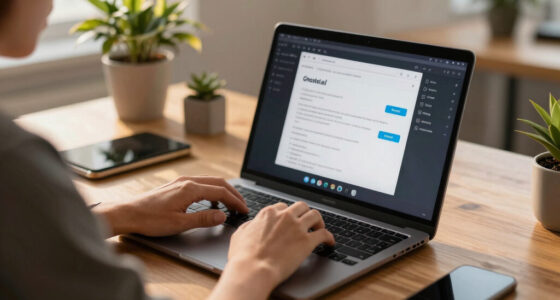
Search interest and tech coverage are spiking around a reported Google Chrome capability that shares open tabs to new devices while preserving the reader’s scroll position — but the specific trigger for the surge is unconfirmed. The feature, if it ships as described, would extend Chrome’s long-standing cross-device tab sync into a true “pick up where you left off” experience. Neither Google nor any official Chrome release notes have confirmed the change, and details remain thin.
What is long-established is that Chrome has synced tabs across devices signed into the same Google account for years. The “Send tab to device” option lets a user push an open tab from one device to another, and tab history has been visible across linked devices through the browser’s sync settings.
What is newly reported — and unconfirmed — is that shared tabs now arrive with the reading position intact, meaning a user could open an article on a phone and continue from the same scroll point on a desktop. The reports suggest the behavior appears when tabs are shared between devices linked to the same Google account. No official Google announcement, changelog entry, or named spokesperson has verified the feature. Coverage interest is rising across tech outlets and search platforms, which often signals either a pending official rollout or a user-discovered behavior that has not yet been documented.
Why Position-Preserving Tabs Matter
If the reading-position preservation works as described, it would remove a persistent friction point in cross-device workflows. Currently, sending a tab to another device opens the page at the top, forcing the user to scroll manually to find where they left off. Preserving the position would make Chrome feel more continuous across phones, tablets, and desktops.
For people who regularly switch devices mid-article — reading on a commute, then continuing at a desk — the convenience is substantial. It also signals that Google is investing in seamless session continuity, a space where Apple’s Handoff and Microsoft’s “Continue on PC” already offer comparable experiences. If Chrome matches that bar, it could shift user expectations for how browsers handle cross-device work.
Chrome’s Cross-Device Sync History
Chrome’s tab sync has existed for over a decade, letting users access open tabs from other devices through the browser’s history and sync menus. Google has steadily pushed cross-device continuity, including features like “Continue browsing” prompts that surface recently opened pages on other signed-in devices.
The reported position-preserving behavior would be a natural extension of that trajectory. Apple’s Handoff and Microsoft’s “Continue on PC” both allow users to resume a session from a specific point, and Google has been closing the gap with incremental Chrome updates. The current trend signal suggests users are noticing — or expecting — a similar capability in Chrome, though the exact mechanism and rollout status remain unverified.
What Remains Unverified
It is not yet clear whether the feature is live in a stable Chrome release, a beta or Canary build, or a test running with a subset of users. Platform availability is unknown — whether it works across desktop, Android, and iOS, or only in specific device combinations. It is also unclear whether the reading-position data syncs through Google’s servers or is transferred directly between devices.
The trigger for the current spike in interest is unconfirmed. It could stem from a user discovery, a leaked build, or a misattributed report. No official documentation or Google statement has confirmed the behavior, and until one appears, the feature should be treated as reported but unverified.
Where Confirmation Could Come From
Google may publish an official announcement or Chrome release notes confirming the feature, or it may appear in the Chrome release blog with the next stable update. Users can check their Chrome settings under sync options to see whether any new tab-sharing or position-preservation toggle has appeared.
Until then, the trend is best treated as an unconfirmed signal. If Google does not acknowledge the behavior, the reports may fade or be clarified as a limited test. Observers should watch Chrome’s official channels and the next beta release notes for a definitive answer.
Key Questions
Does Chrome already sync tabs across devices?
Yes. Chrome has offered tab sync across devices signed into the same Google account for years. Users can access open tabs from other devices through the browser’s sync and history menus, and the “Send tab to device” option pushes a specific tab to another linked device.
How would the new position-preserving feature work?
Based on the unconfirmed reports, a tab shared to another device would open at the same scroll position where the reader left off, rather than at the top of the page. This would let a user continue reading an article or document without manually scrolling to find their place.
Which devices and platforms would be supported?
That is not yet clear. The reports do not specify whether the feature works across desktop, Android, and iOS, or only in certain device combinations. Platform availability remains unconfirmed until Google provides official details.
Has Google officially announced this feature?
No. Neither Google nor any official Chrome release notes have confirmed the behavior. The current interest is based on a trend signal, and the feature should be treated as reported but unverified until an official announcement is made.
How can I enable tab sync in Chrome?
Open Chrome’s settings, go to “You and Google,” and ensure sync is turned on with the “Open tabs” option enabled. You must be signed into the same Google account on all devices for tab sync to work.
Source: rss
Evergreen bestsellers Picks
bestsellers
As an affiliate, we earn on qualifying purchases.