TL;DR

Get comfort and recovery gear delivered free with Prime
- Fast, free delivery on millions of items
- Prime Video, Amazon Music and more included
- Member-only deals all year
A Fit&Well report outlines two balance drills recommended by coach Yancy Culp: walking slowly to lengthen each one-foot transition and performing slow high knees. The report describes a suggested practice schedule, but provides no controlled research or measured results showing how much the drills improve balance.
Fit&Well has reported two balance drills recommended by coach Yancy Culp: delayed walking and slow high knees. The exercises are intended to make people spend longer balancing on one leg during movement, with Culp advising gradual progression; the article does not provide trial data establishing how much improvement to expect.
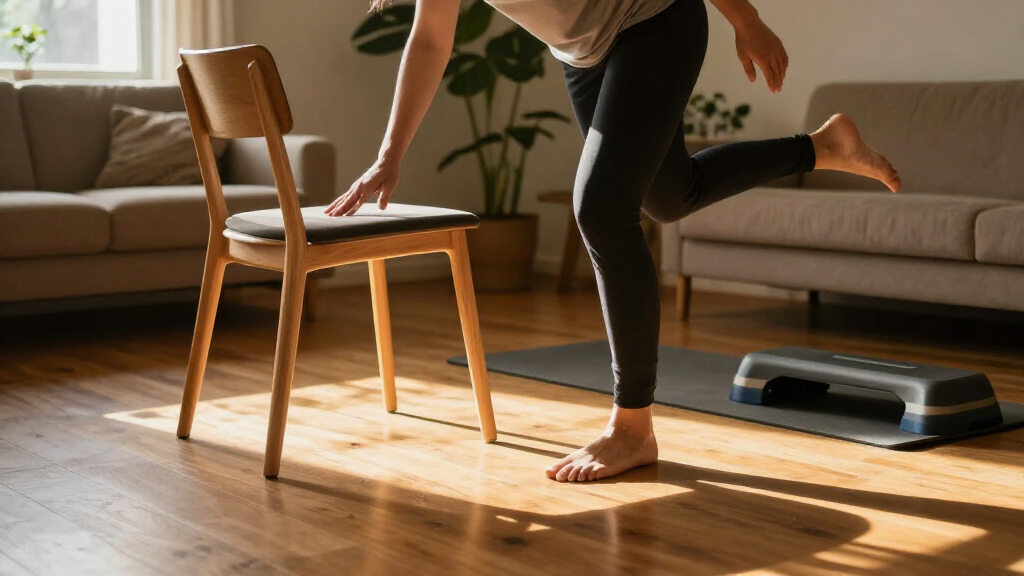
For delayed walking, Culp advises walking slowly enough to extend the time spent balancing on one foot as the legs alternate. He recommends practicing for several minutes each day and gradually increasing the duration of each step transition. Unlike a static one-leg hold, the drill keeps the person moving while slowing the transfer from one leg to the other.
The second drill is a slow high-knee cycle. Culp says to raise one knee slowly, take three seconds to complete the movement, then return the foot to the ground. His suggested starting schedule is two minutes daily, with one second added to each leg cycle every fifth day. He describes that schedule as reaching a 10-second cycle after 35 days.
Culp also suggests making the high-knee exercise harder by briefly closing the eyes or reaching down to touch the foot with both hands. Those are challenges, not necessary starting steps. Because closing the eyes or bending can make balance more difficult, readers should attempt variations only when steady and in a clear area, with a stable support nearby if needed.
Practice Balance During Movement
Balance supports ordinary activities that involve shifting weight, including walking and dressing. Culp says it contributes to confidence in movement and becomes more important with age. The drills focus on coordinating movement and maintaining control through a single-leg phase, rather than requiring specialist equipment or a gym.
The practical point is to start with a manageable version and progress in small increments. The source does not report a clinical study, quantify effects, or establish that these exercises prevent falls. They are presented as fitness practice, not as a substitute for an individualized assessment when balance problems are persistent or sudden.
balance training exercises for seniors
As an affiliate, we earn on qualifying purchases.
As an affiliate, we earn on qualifying purchases.
Culp’s One-Leg Fitness Test
The Fit&Well report presents standing on one leg during a task as the first of five fitness checks Culp uses. The other checks concern cardio fitness, strength and mobility. As an example of everyday balance, he mentions staying steady while tying a shoe.
The report’s author also describes practicing by putting on socks while standing on one leg and says improvement took months. That is a personal account, not a measured result or a timeline that can be applied to everyone. Culp’s drills offer alternatives for people who are not comfortable beginning with a one-leg task.
“Balance is one of the clearest indicators of how well the body is functioning day to day.”
— Yancy Culp, Spartan DEKA co-creator and senior director, as quoted by Fit&Well
As an affiliate, we earn on qualifying purchases.
Expected Results Are Not Quantified
The supplied report does not cite a study testing these exact drills, provide measured changes in balance, or compare them with other exercises. Culp’s proposed schedule is advice, not a guarantee that every person will reach the same result in 35 days. The article also does not specify who should avoid the drills or offer adaptations for people with injuries, mobility limitations or diagnosed balance conditions.
Anyone who feels unsteady should use a stable surface for support and avoid eyes-closed or reaching variations unless they can perform them safely. People with a medical condition, recent injury, recurrent falls or a new change in balance should seek guidance from a qualified health professional before starting or progressing a routine.
As an affiliate, we earn on qualifying purchases.
Build Up Only When Steady
The report offers a daily practice plan but names no follow-up study, clinical assessment or scheduled update. Readers following the suggestions can begin with slow walking or controlled knee raises, then increase the duration only while maintaining control. The eyes-closed and foot-touch challenges are optional progressions, not required milestones.
How much the drills help will depend on the individual, and the source provides no outcome data to predict that. If balance remains difficult, worsens, or affects everyday activities, professional assessment is a more appropriate next step than making the exercises harder.
As an affiliate, we earn on qualifying purchases.
Key Questions
What are the two balance drills?
Delayed walking means walking unusually slowly to spend longer balancing on each foot. Slow high knees means raising a knee and completing the movement over a controlled three-second cycle before lowering the foot.
How often does Culp recommend doing them?
For delayed walking, Culp suggests several minutes each day. For slow high knees, he recommends two minutes daily, with a gradual increase in cycle time every fifth day.
Do the exercises guarantee better balance in 35 days?
No. The 35-day schedule is Culp’s suggested progression to 10-second leg cycles, not a guarantee of a particular improvement. The Fit&Well report gives no controlled results or measured outcomes for the drills.
Is it safe to close your eyes during the high-knee drill?
Closing the eyes makes balancing harder and is an optional challenge in Culp’s advice. Do not try it unless you are already steady, have a clear space and can use a stable support; skip it if it feels unsafe.
Source: rss
Halloween Picks
halloween
As an affiliate, we earn on qualifying purchases.