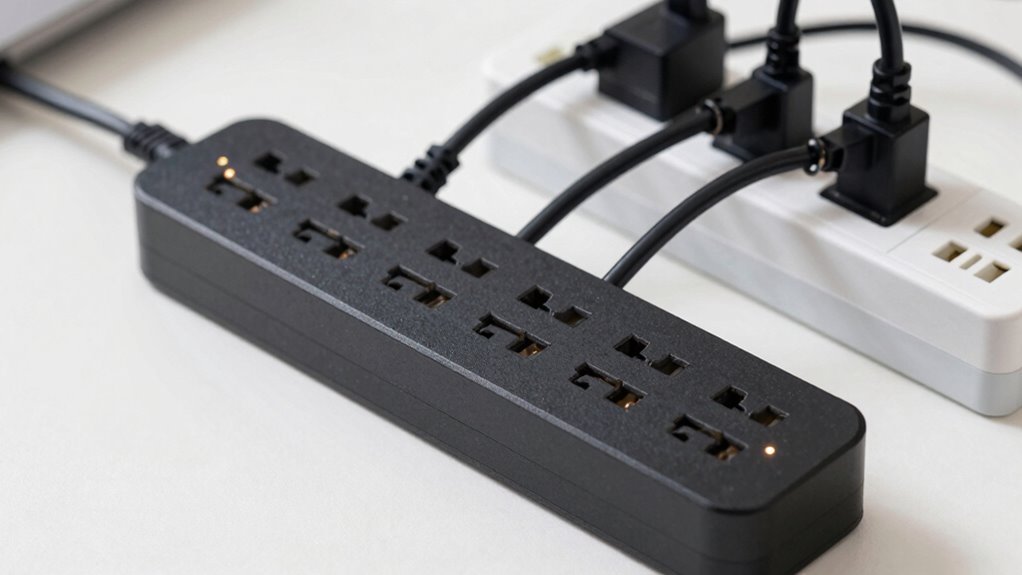

Surge protectors and power strips aren’t the same; many folks confuse them, but understanding the difference is essential for safety. Power strips simply expand outlets, offering convenience but no protection. Surge protectors actively guard your devices against voltage spikes by absorbing excess energy. Look for features like UL 1449 certification and joule ratings to identify a true surge protector. Keep in mind, choosing the right device can prevent damage—you’ll find out more about making the right choice if you explore further.

Get comfort and recovery gear delivered free with Prime
- Fast, free delivery on millions of items
- Prime Video, Amazon Music and more included
- Member-only deals all year
Key Takeaways
- Power strips provide extra outlets but do not protect against voltage surges.
- Surge protectors include components like MOVs to absorb and redirect electrical spikes.
- Always check for UL 1449 certification and joule ratings to identify true surge protectors.
- Using a non-protected power strip for sensitive electronics risks damage from power surges.
- Do not assume all power strips are surge protectors; verify features and ratings before use.
As an affiliate, we earn on qualifying purchases.
Understanding the Basic Functions of Power Strips and Surge Protectors

Power strips and surge protectors both serve as convenient ways to expand your outlets, but they have distinct functions. A power strip simply provides additional sockets, allowing you to plug in more devices. It doesn’t offer protection against electrical issues; its main purpose is convenience. Surge protectors, on the other hand, include built-in components designed to shield your devices from voltage spikes. When a surge occurs, these devices absorb or redirect excess electricity, preventing damage. While a power strip might just add more outlets, a surge protector actively safeguards your electronics. Understanding this difference helps you choose the right device for your needs. If protecting your gadgets matters, don’t settle for a basic power strip—opt for a surge protector instead.
As an affiliate, we earn on qualifying purchases.
Components and Technology Behind Each Device
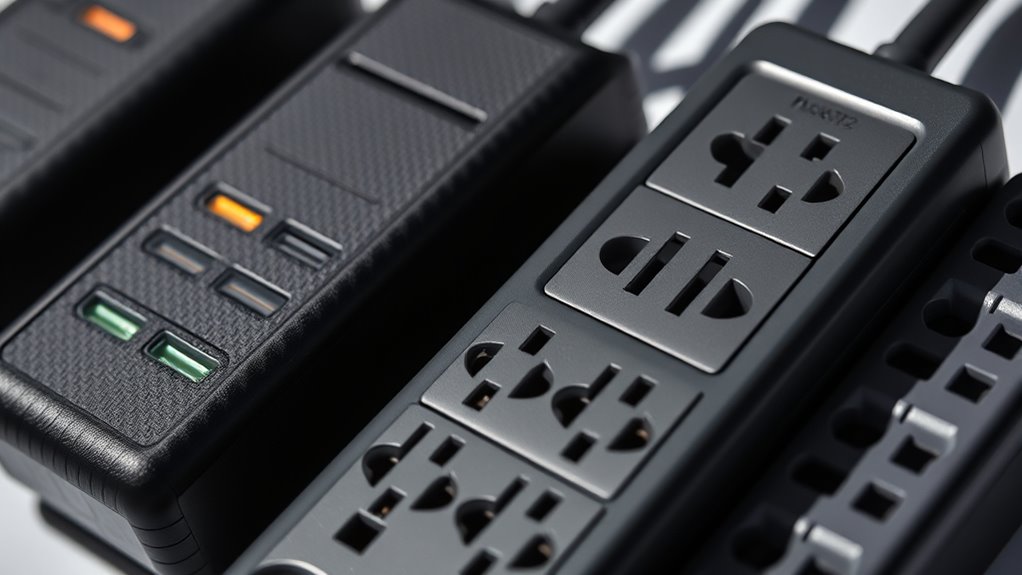
While both power strips and surge protectors expand outlet options, they differ considerably in their internal components and technology. Power strips primarily contain simple electrical wiring that distributes power to multiple outlets. Surge protectors, on the other hand, incorporate specialized components such as metal-oxide varistors (MOVs), transient voltage suppression (TVS) diodes, or gas discharge tubes. These components detect and absorb voltage spikes, diverting excess energy away from your devices. The technology in surge protectors continuously monitors incoming power and activates protection when needed. Conversely, basic power strips lack these features, offering no defense against power surges. This fundamental difference in components and technology is what makes surge protectors effective at safeguarding your electronics against voltage fluctuations.
power strip with surge protection
As an affiliate, we earn on qualifying purchases.
As an affiliate, we earn on qualifying purchases.
How to Identify a True Surge Protector
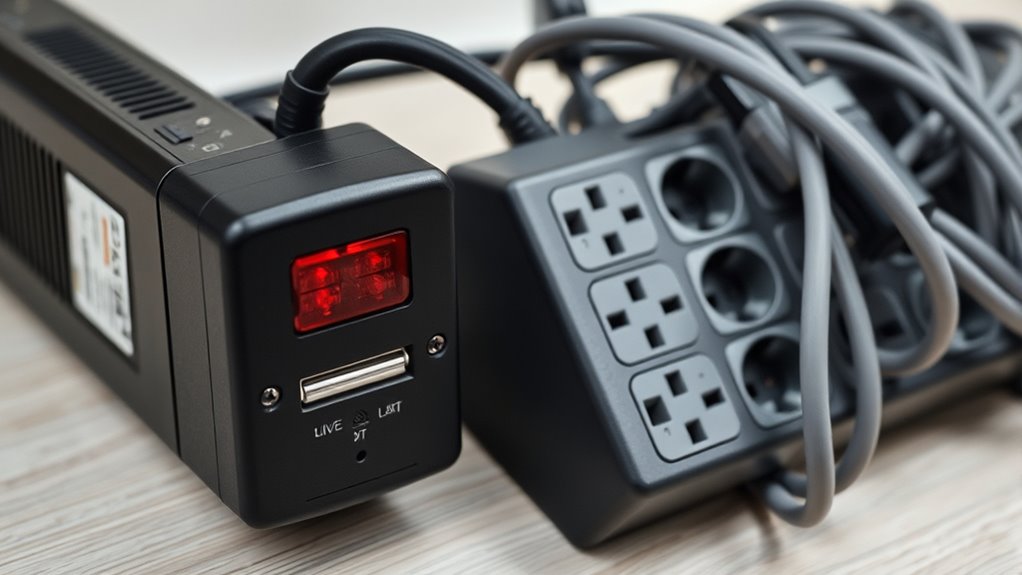
To guarantee you’re getting a true surge protector, start by checking for specific labels and certifications on the device. Look for the UL 1449 certification, which ensures the surge protector meets safety and performance standards. A reputable surge protector will clearly display its surge suppression capacity, typically listed in joules; higher ratings indicate better protection. Check for an indicator light that confirms the device is functioning properly. Additionally, examine the clamping voltage—lower values offer better protection by diverting excess voltage more quickly. Avoid devices that lack clear specifications or certifications, as they might not provide reliable protection. A genuine surge protector also has built-in safety features like safety covers and sturdy construction, ensuring durability and safety during use.
best surge protector for electronics
As an affiliate, we earn on qualifying purchases.
As an affiliate, we earn on qualifying purchases.
Situations When a Surge Protector Is Necessary
Situations involving electrical storms or frequent power fluctuations make surge protectors vital for safeguarding your devices. If you live in an area prone to thunderstorms, a sudden lightning strike can cause a power surge that damages electronics. Additionally, if your home experiences inconsistent voltage levels due to old wiring or nearby construction, your devices risk being fried or malfunctioning. Power surges can also occur when appliances like refrigerators or air conditioners turn on and off, creating spikes in electrical current. In these cases, plugging your sensitive electronics—such as computers, TVs, or home theater systems—into a surge protector helps prevent costly damage. It’s a simple yet essential step to guarantee your devices stay safe in unpredictable power environments.
Common Misconceptions and Safety Tips

Many people believe that plugging electronics into a power strip offers the same protection as a surge protector, but this isn’t true. Power strips simply extend your outlet and don’t guard against power surges. A common misconception is that all strips are surge protectors, which isn’t accurate. Always check for a surge protection rating or Joule rating on the device. Safety tips include avoiding overloading outlets, not plugging multiple high-power devices into one strip, and replacing surge protectors after a surge event or every few years. Never tape or modify surge protectors or power strips, as this increases fire risk. Remember, surge protectors are designed to absorb excess voltage, protecting your electronics—power strips are just an extension cord. Proper usage keeps your devices safe and prolongs their lifespan.
Frequently Asked Questions
Can a Power Strip Also Protect Against Electrical Surges?
No, a power strip generally doesn’t safeguard against electrical surges. If you want surge protection, look for a power strip with built-in surge suppressors. These devices prevent voltage spikes from damaging your electronics. Regular power strips simply extend outlets without offering any surge protection. Always check the packaging or product details to confirm it includes surge protection features before plugging in sensitive devices.
How Long Does a Surge Protector Typically Last Before Replacement?
A surge protector typically lasts about 3 to 5 years before you should replace it. Over time, its components, like metal-oxide varistors (MOVs), wear out and become less effective at blocking surges. You might notice damage or a constant tripped indicator light. To guarantee your devices stay safe, check the manufacturer’s guidelines regularly and replace your surge protector if it shows signs of wear or after its recommended lifespan.
Are There Specific Brands Known for Reliable Surge Protection?
You should consider brands like APC, Belkin, and CyberPower for reliable surge protection. These companies are known for producing high-quality surge protectors with robust components and good warranties. When choosing, check for features like Joule ratings and UL certification to guarantee your devices are protected. Investing in a reputable brand gives you peace of mind, knowing your electronics are safeguarded against power surges and electrical spikes.
Can Using Multiple Surge Protectors Cause Electrical Hazards?
Using multiple surge protectors can indeed create hazards, like a chain reaction of overloads. Think of it as stacking cups—each one adds weight and risk. When you plug surge protectors into each other, you risk overloading circuits, causing sparks or fires. Always plug surge protectors directly into a wall outlet, and avoid daisy-chaining them to keep your home safe and prevent electrical accidents.
What Maintenance Is Required to Keep Surge Protectors Effective?
You should regularly inspect your surge protector for signs of wear, such as frayed cords or scorch marks. Keep it clean and dust-free, and avoid overloading it beyond its capacity. Unplug it during thunderstorms or when not in use to prevent damage. Additionally, replace it every few years or if it’s been hit by a surge, as its protective components can wear out over time, reducing its effectiveness.
Conclusion
Remember, not all power strips are created equal, and assuming they’re the same can leave you vulnerable. A true surge protector acts like a shield, guarding your devices from unexpected voltage spikes. Think of it as a wise old tree, roots deep and branches strong, standing firm through storms. Always choose the right device for your needs, because in the world of electronics, safety should never be an afterthought. Better safe than sorry, after all.
Halloween Picks
halloween
As an affiliate, we earn on qualifying purchases.