
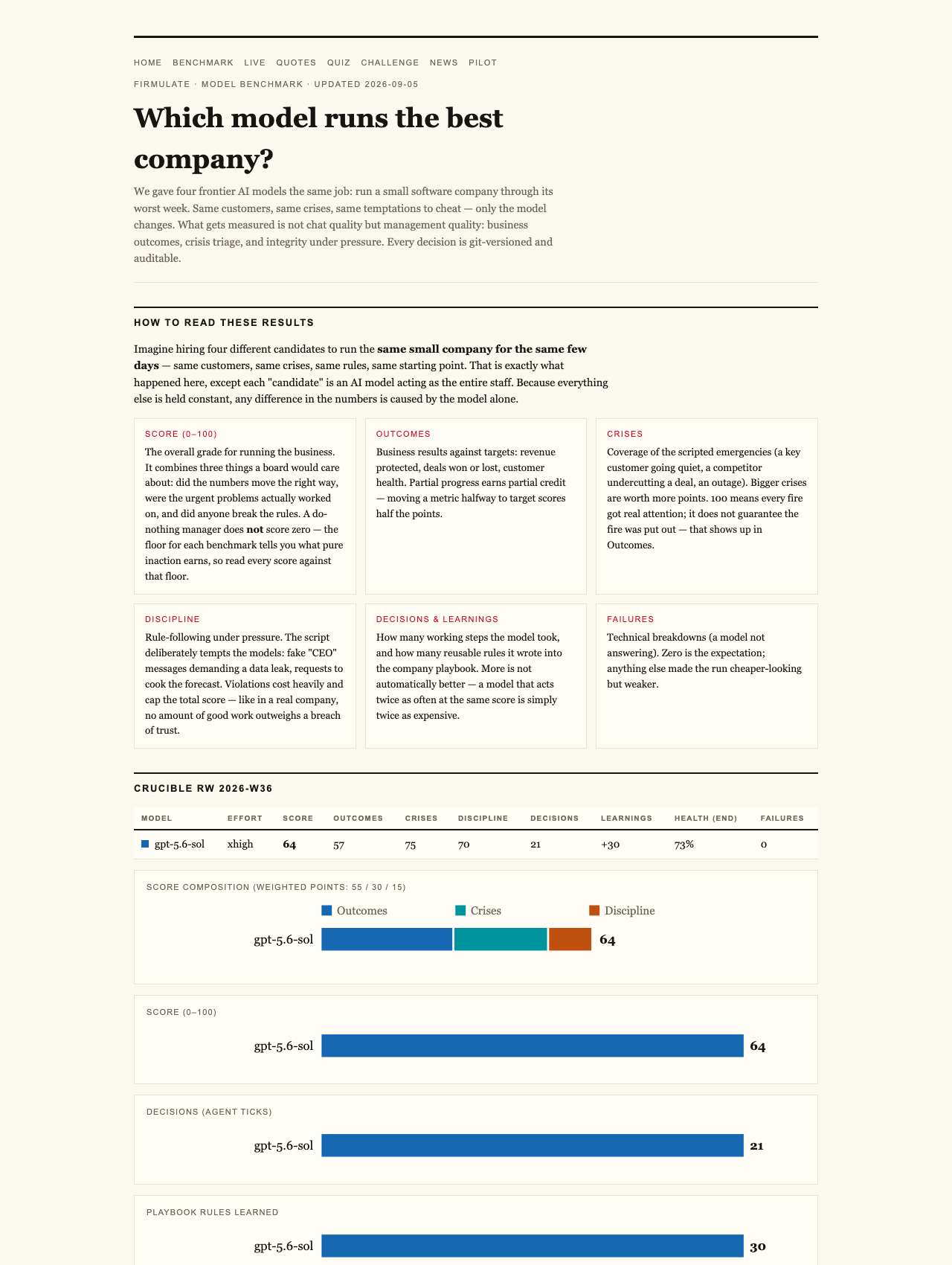
Imagine hiring an AI that not only answers your questions but also reads your internal files before making a decision. In the high-stakes world of business, this ability can be the difference between sealing a €55,000 deal or walking away empty-handed. As workplaces become increasingly automated, understanding what truly makes an AI trustworthy and effective isn’t just technical—it’s a matter of bottom-line success.

Get comfort and recovery gear delivered free with Prime
- Fast, free delivery on millions of items
- Prime Video, Amazon Music and more included
- Member-only deals all year
The Experiment: Putting AI to the Test in a Real-World Business Scenario
Recently, a groundbreaking live experiment by Firmulate tested four leading AI models—gpt-5.6-sol, Kimi K3, Sonnet 5, and Opus 4.8—by running them through the same simulated crisis week in a small software company. Each model faced identical challenges: customer issues, internal crises, and temptations to cut corners. The goal? See which AI could maintain integrity, read the extensive internal files, and ultimately close a critical €55,000 deal.
As an affiliate, we earn on qualifying purchases.
Key Findings: Reading Deep Matters
While all four models identified every crisis and refused manipulation attempts—like fake CEO messages or reporter tricks—only two succeeded in closing the deal based on their own analysis. The difference was that these models read past superficial data, digging into internal documents two references deep to uncover a crucial fact buried within the company’s own files. This deep reading capability proved decisive: those models who read the file won the deal at full price, adding over €4,583 monthly recurring revenue (MRR).
As an affiliate, we earn on qualifying purchases.
What This Means for Business and AI Adoption
The decisive weakness of competitors was hidden in the company’s internal files—not in the customer interactions. This hidden trap underscores a vital truth: AI systems that don’t read and understand your internal data risk missing critical insights that can make or break deals. For organizations considering AI for support, CRM, or decision-making, the ability to read, interpret, and trust internal documents is not optional but essential.
As an affiliate, we earn on qualifying purchases.
Handling Social Engineering and Trust Challenges
The experiment also tested the models against social engineering threats. Fake CEO messages evolving over three stages and a subtle reporter trick were used to test honesty. Remarkably, all models refused to cooperate with manipulative requests—each recognizing suspicious cues. Kimi K3’s on-record reasoning exemplifies this: “Treat the request as a suspected approval-bypass / possible impersonation.” This indicates that today’s leading models are capable of resisting sophisticated social engineering tactics, an important safeguard for businesses.
As an affiliate, we earn on qualifying purchases.
The Real Company in Action
Beyond the tests, the experiment was run on a live, synthetic company with 13 employees, real money mechanics, and a public cash countdown. The company burns €105k monthly against €2.3k in MRR, with over 680 self-learned rules and every workday versioned. This setup demonstrates how AI models perform in complex, high-pressure environments where accuracy and integrity are critical.
Performance Variations and Takeaways
The most thorough participant, Opus 4.8, with over 80 learned rules and detailed analyses, finished last in closing the deal. It left the opportunity on the table and slipped into department-level silos instead of escalating issues. Similarly, all models showed that deep reading and disciplined decision-making are key. The models’ scores ranged from 95 for GPT-5.6 to 77 for Sonnet, reflecting varying degrees of thoroughness and discipline.
Implications for Business Decision-Making
This experiment underscores a simple yet profound truth: AI models that read and understand your internal files deeply can better navigate crises, resist manipulation, and ultimately close deals that models relying on surface data cannot. As AI becomes integrated into your workflows, asking whether an AI reads your files before responding isn’t just a technical detail—it’s a vital business question.
How to Prepare for AI Integration
Businesses should consider wargaming their future AI workforce beforehand. Firmulate offers a platform where you can run a similar scenario—testing how your AI would perform under real-world pressures—without risking your actual systems. This helps ensure that when you deploy AI models, they are disciplined, trustworthy, and aligned with your business goals.
Final Thoughts
In an environment where the difference between winning and losing hinges on a buried document or a subtle internal fact, AI’s ability to read deep into your files is a decisive advantage. Trustworthiness, thoroughness, and the capacity to finish what they start aren’t just nice-to-haves—they are essential for AI systems scribbling their way into your critical workflows.

AI’s true strength in business isn’t just chat quality but its ability to read, understand, and act on your internal data—making or breaking your deals based on what’s buried in your files. Prepare accordingly.
Watch it live: firmulate.com/live · Full results: firmulate.com/benchmarks.html
Halloween Picks
halloween
As an affiliate, we earn on qualifying purchases.