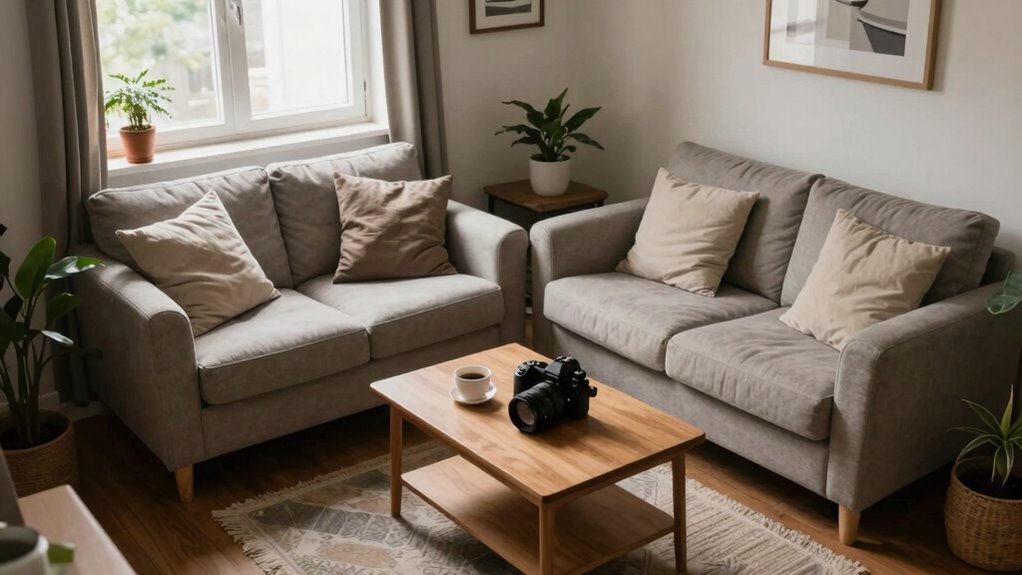

To avoid looking down on people in small rooms, focus on eye-level or slightly elevated camera angles. This perspective creates a more inviting and intimate feeling, making the space seem larger and more comfortable. Steer clear of high angles that can feel overwhelming or claustrophobic. Experiment with different angles, lighting, and framing strategies to enhance the room’s openness. Keep exploring these tips to transform your shots and create a welcoming atmosphere.
Key Takeaways
- Use eye-level or slightly elevated angles to foster intimacy and avoid making the space feel overwhelming.
- Avoid high or downward angles that can diminish the subject and create a cramped atmosphere.
- Position the camera to capture the room’s depth, enhancing openness without looking down on people.
- Keep the camera centered or slightly to the side for balanced framing and natural perspective.
- Test different angles to find the most flattering, inviting view that emphasizes space without downward distortion.

When filming in small rooms, choosing the right camera angles can make a significant difference in how spacious and inviting the space appears. Instead of sticking to standard shots that might make the room seem cramped or overwhelming, you need to think about how your angles influence perception. The goal is to create a sense of openness and comfort, which often means rethinking your framing strategies and lighting techniques.
Start by avoiding shots that look down on people, as these tend to compress space and can make viewers feel disconnected or overwhelmed. Instead, aim for eye-level or slightly elevated angles that present your subjects naturally and invitingly. This framing strategy helps foster a sense of intimacy and makes the space seem less confined. When you position your camera at eye level, you allow the viewer to connect more directly with the subject, which is particularly important in small rooms where every detail counts.
Avoid high angles; opt for eye-level shots to create intimacy and make small spaces feel more inviting.
Lighting techniques play a fundamental role in enhancing the sense of space. Use soft, diffused lighting to eliminate harsh shadows that can make a room feel smaller or more cluttered. Natural light is ideal if you can, but if not, opt for multiple light sources placed strategically around the room. Lighting from the sides or behind the camera can create a more open, airy atmosphere. Avoid positioning lights directly overhead or behind the subject, as this can cast unflattering shadows and diminish the room’s sense of space. Instead, use fill lights to balance shadows and maintain a bright, welcoming environment.
In addition, incorporating Polynesian symbols for strength or culturally meaningful elements into your set design can subtly influence viewers’ perception of space by adding depth and narrative, making the environment feel richer and more inviting.
In terms of framing strategies, you want to maximize the use of available space without cluttering the shot. Wide-angle lenses are helpful here because they can capture more of the room and give viewers a sense of depth. However, be cautious with wide angles—they can distort proportions if overused. Keep your subjects centered or slightly off-center using the rule of thirds, and ensure enough space around them to avoid a cramped feeling. When possible, shoot from angles that include as much of the room as possible without sacrificing focus on your subject. This approach helps to create a more immersive experience, giving viewers a clearer sense of the environment and reducing any feelings of claustrophobia.
Ultimately, the key is to experiment with different angles and lighting setups to find what works best for your space. Remember, the goal isn’t just to fit everything into the shot but to present it in a way that feels inviting and spacious. By thoughtfully applying lighting techniques and framing strategies, you can transform small rooms from confining spaces into open, welcoming environments that viewers want to explore.
Frequently Asked Questions
How Can I Make a Small Room Appear Larger With Camera Angles?
To make a small room appear larger, use focal length adjustments to create a sense of depth and avoid wide-angle distortions. Position the camera at eye level and shoot slightly from the side for a more open feel. Apply color grading techniques to brighten the space and enhance natural light, making it seem more expansive. These strategies help viewers perceive the room as bigger without resorting to extreme angles.
What Lighting Techniques Complement Specific Camera Angles in Small Spaces?
Think of lighting as your room’s heartbeat. Use diffuse lighting to soften shadows and create a sense of openness, making the space feel larger. Combine it with color grading that enhances natural tones, avoiding harsh contrasts. These techniques work best with eye-level or slightly elevated camera angles, helping your small room appear more spacious and inviting, as if it breathes freely rather than shrinks under the weight of shadows.
Are There Camera Accessories That Enhance Small Room Filming?
You can enhance your small room filming with tripod enhancements like compact, adjustable heads for stability and smooth shots. Lens accessories, such as wide-angle or macro lenses, help you capture more detail or wider scenes without clutter. These accessories make it easier to optimize your camera setup in tight spaces, ensuring clear, professional-quality footage. By choosing the right tripod enhancements and lens accessories, you’ll get better angles and sharper images effortlessly.
How Do Different Camera Heights Affect Mood in Small Room Shots?
Adjusting camera height considerably impacts the emotional mood in small room shots. When you position the camera at eye level, it creates a sense of intimacy and equality, making viewers feel connected. Raising the camera height can evoke detachment or authority, while lowering it might add vulnerability or tension. By thoughtfully choosing your camera height, you influence the emotional impact, guiding your audience’s perception and enhancing storytelling effectively.
What Post-Processing Tips Improve Small Room Footage?
To improve small room footage, focus on post-processing techniques like depth enhancement and color grading. Use depth enhancement to add layers and dimension, making the space feel larger and more inviting. Adjust color grading to create a balanced, vibrant look that highlights the room’s best features. Avoid over-sharpening or heavy filters, and consider subtle vignettes to draw attention to your subject while maintaining a natural feel.
Conclusion
Now that you know how to steer clear of looking down on people in small rooms, your shots will feel more natural and inviting. Think of camera angles as the brushstrokes that paint the scene’s personality—choose them wisely to capture genuine connection. When you avoid that top-down view, you create a space where everyone feels seen and valued. So, keep your angles balanced, and watch your storytelling come alive with a rhythm that flows effortlessly.