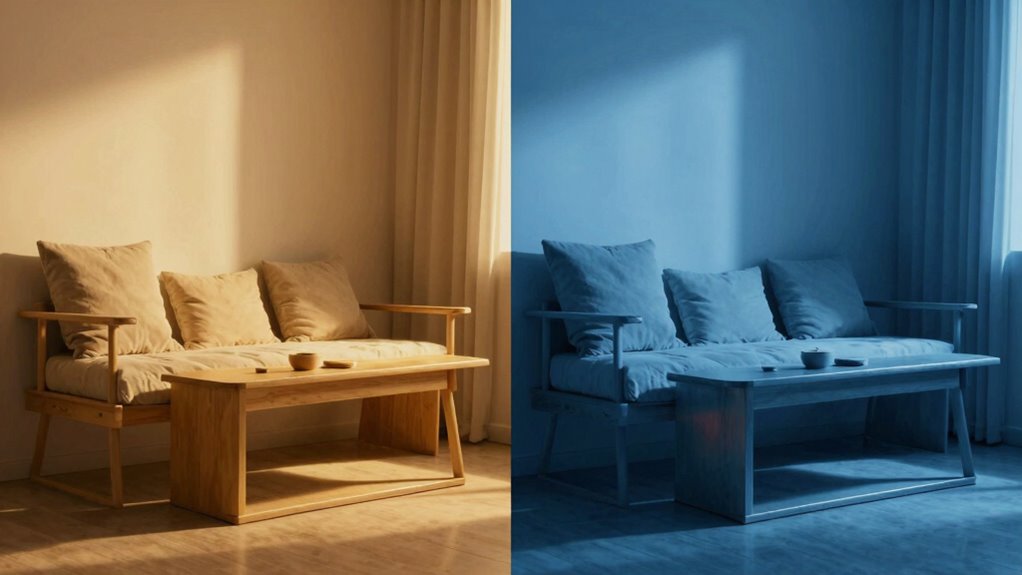

Choosing the wrong light—warm or cool—for your space can leave you feeling tired and out of sync. Warm light promotes relaxation and comfort but can make you feel sluggish if used during the day. Cool light energizes and boosts alertness but can disrupt your sleep if used at night, leading to fatigue. To optimize your mood and energy levels, it’s important to match your lighting to the time of day and activity. Keep exploring to discover how to balance both effectively.

Get comfort and recovery gear delivered free with Prime
- Fast, free delivery on millions of items
- Prime Video, Amazon Music and more included
- Member-only deals all year
Key Takeaways
- Choosing the wrong light temperature can disrupt your circadian rhythm, leading to fatigue and difficulty sleeping.
- Warm light promotes relaxation but can cause drowsiness if used during active daytime hours.
- Cool light enhances alertness but may cause eye strain and discomfort if overused or at inappropriate times.
- Mismatched lighting in a space can reduce focus and increase tiredness, impacting productivity and mood.
- Properly matching light color to the environment and activity prevents fatigue and supports overall well-being.
As an affiliate, we earn on qualifying purchases.
Understanding the Color Temperature Spectrum
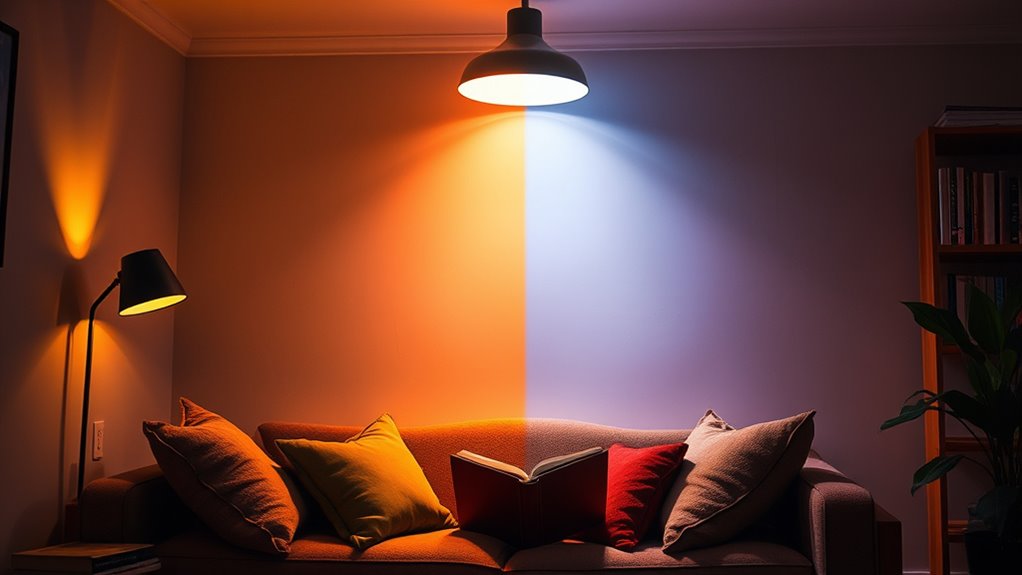
The color temperature spectrum explains how different light sources emit colors that range from warm to cool. When you look at various lights, you’ll notice they produce different hues, from soft amber to bright blue-white. This spectrum is measured in Kelvin (K), guiding you to understand whether a light is warm or cool. Warm lights, usually below 3500K, create a cozy, inviting atmosphere, while cool lights, above 5000K, emit a crisp, energizing glow. Recognizing these differences helps you choose lighting that matches your environment and mood. For example, warmer lights are ideal for relaxation, while cooler lights boost alertness. Understanding this spectrum allows you to make informed decisions about lighting, ensuring your space feels just right.
As an affiliate, we earn on qualifying purchases.
How Warm Light Influences Mood and Productivity
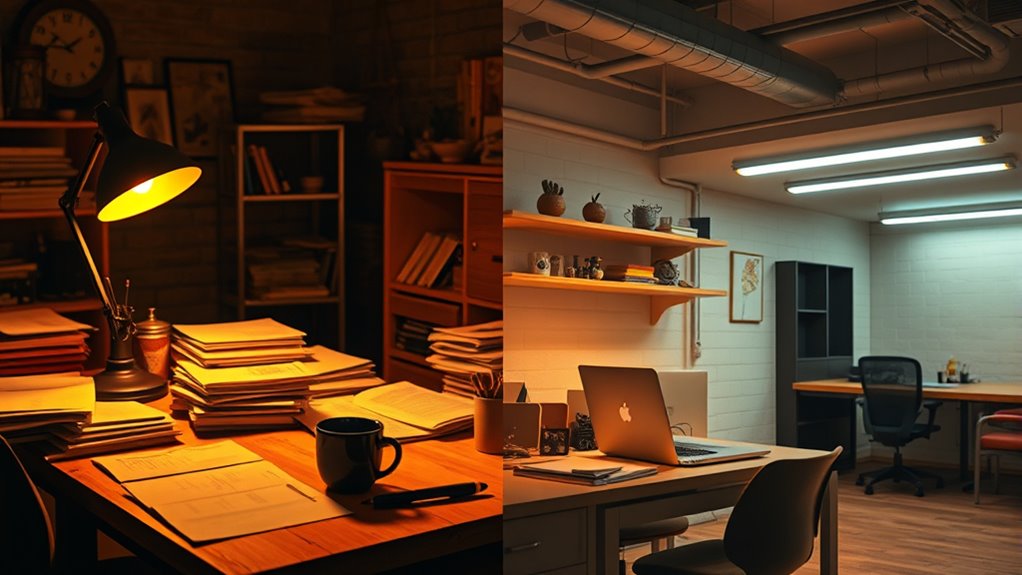
Warm light creates an inviting atmosphere that can profoundly influence your mood and sense of well-being. It tends to relax your mind, making spaces feel cozy and comfortable. When you’re in warm lighting, you’re more likely to feel calm, content, and less stressed. This type of light can improve your overall mood, especially during evenings or leisure activities. It also encourages a slower, more mindful pace, which can boost your ability to unwind and reflect. While it may not energize you like cool light, warm lighting helps foster a sense of safety and relaxation, making it ideal for areas where you want to feel at ease. In turn, this atmosphere can enhance your overall productivity by reducing mental fatigue and promoting better emotional health.
adjustable color temperature smart light
As an affiliate, we earn on qualifying purchases.
As an affiliate, we earn on qualifying purchases.
The Energizing Effects of Cool Light
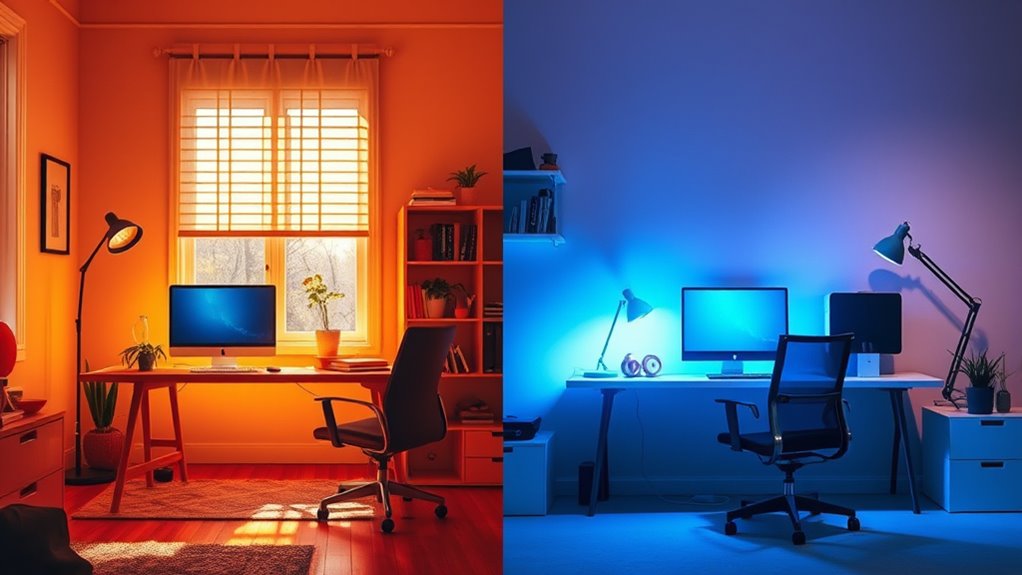
While warm light helps you unwind and feel at ease, cool light offers a different set of benefits by actively boosting your energy levels. It mimics natural daylight, which signals your brain to stay alert and focused. When you’re working or need to stay productive, cool light can improve concentration and reduce fatigue. It enhances your alertness by suppressing melatonin, the hormone responsible for sleepiness, keeping you more awake and attentive. This type of lighting is especially effective in environments like offices, kitchens, or study areas. By using cool light during daytime hours, you create a stimulating atmosphere that helps you stay active and engaged. Ultimately, cool light supports your daytime energy needs and keeps you feeling refreshed.
As an affiliate, we earn on qualifying purchases.
Common Mistakes in Lighting Choices for Different Spaces
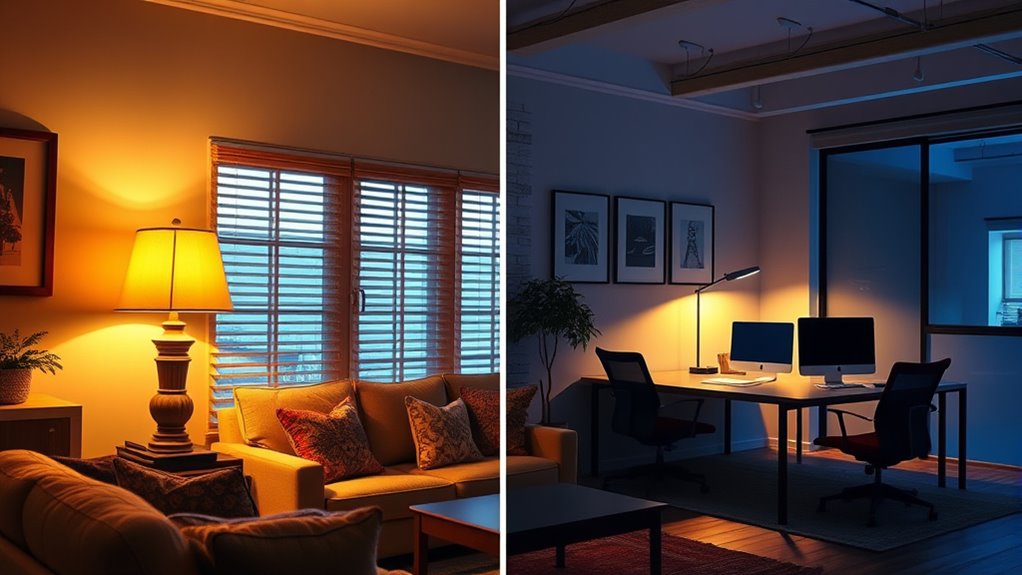
Many people overlook the importance of choosing the right color temperature for each space, which can make a room feel off. Ignoring the room’s function often leads to lighting that’s either too harsh or too dull for its purpose. To get it right, you need to match your lighting choices with how you’ll use the space.
Overlooking Color Temperature
Have you ever chosen lighting without considering its color temperature? If so, you might be setting yourself up for unnecessary tiredness or discomfort. Overlooking this detail can lead to the wrong ambiance, affecting your mood and productivity. To avoid this mistake, keep these points in mind:
- Match the color temperature to the room’s purpose—warm for relaxation, cool for focus.
- Don’t assume all bulbs labeled “daylight” are the same—check the Kelvin (K) rating.
- Consider how natural light interacts with artificial lighting throughout the day, adjusting as needed.
Ignoring color temperature can make spaces feel uninviting or overstimulating, leading to fatigue. Paying attention helps ensure your lighting enhances the environment and supports your well-being.
Ignoring Room Function
Choosing the right lighting for a space requires more than just picking a style or brightness; it’s essential to contemplate the room’s function. If you ignore this, you risk creating an environment that hinders productivity or relaxation. For example, a kitchen needs bright, focused lighting for cooking and food prep, while a bedroom benefits from softer, warmer lights to promote rest. Ignoring room function can lead to mismatched lighting that feels uncomfortable or inefficient. You might install cool, harsh lights in a cozy reading nook or dim, warm lights in a workspace, making tasks harder and straining your eyes. To avoid this mistake, consider how each space is used and choose lighting that enhances its purpose, ensuring comfort, functionality, and a balanced atmosphere.
Impact of Lighting on Sleep Patterns and Circadian Rhythms
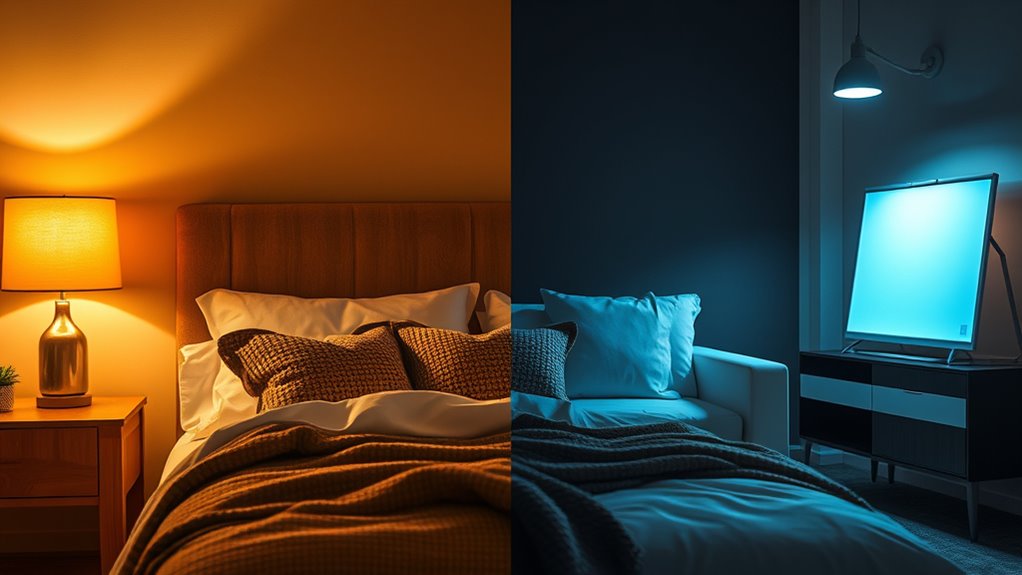
Light exposure profoundly influences your sleep patterns and circadian rhythms, acting as a powerful regulator of your body’s internal clock. When exposed to bright, cool light in the evening, your melatonin production decreases, making it harder to fall asleep. Conversely, warm, dim light in the evening helps your body prepare for rest. To optimize your sleep, keep these points in mind:
- Bright, blue-enriched light suppresses melatonin, delaying sleep onset.
- Warm, low-intensity lighting promotes relaxation and signals your body to wind down.
- Consistent light exposure during the day reinforces healthy circadian rhythms, improving sleep quality.
Adjust your lighting habits to support your internal clock, and you’ll find it easier to fall asleep and wake refreshed.
Signs You Might Be Using the Wrong Light at the Wrong Time
If you notice you’re feeling unusually tired in the morning or having trouble waking up, you might be using the wrong light at the wrong time. Evening restlessness or trouble falling asleep could also signal poor lighting choices late in the day. Additionally, sudden mood swings or irritability might indicate your lighting isn’t supporting your natural rhythms.
Morning Fatigue Sets In
You might notice you’re feeling unusually sluggish or groggy shortly after waking up, and it could be a sign you’re using the wrong type of light at the wrong time. If your mornings feel dull and unenergized, your lighting may be to blame. Using warm light during early hours can make it harder to wake up fully, while cool light helps boost alertness. To check if your lighting setup is mismatched, consider these points:
- You struggle to shake off sleepiness even after getting up.
- You feel unmotivated or sluggish during morning tasks.
- Your energy levels dip shortly after waking, despite enough sleep.
Adjusting your lighting to match the morning needs can help you feel more awake, alert, and ready to start your day.
Evening Restlessness Occurs
Evening restlessness can often signal that you’re using the wrong type of lighting at night. If you find yourself tossing and turning, it might be because your lights are too cool or bright, which can interfere with your melatonin production. Cool or harsh lighting in the evening mimics daytime, tricking your brain into staying alert when it should be winding down. Instead, opt for warm, dim lighting to signal that it’s time to relax. This helps your body prepare for sleep and reduces feelings of agitation or restlessness. Ignoring these cues can leave you feeling wired, making it harder to fall asleep or stay asleep through the night. Adjusting your lighting in the evening is a simple step toward a calmer, more restful night.
Mood Fluctuations Appear
Mood fluctuations often serve as subtle signs that your lighting choices may be off. If you notice you’re feeling irritable, anxious, or suddenly more emotional, your light environment might be to blame. Different light temperatures influence your mood and mental clarity. Here are some signs to watch for:
- Feeling unexpectedly tired or sluggish during the day, indicating too much warm light.
- Experiencing irritability or anxiety in brightly lit spaces, hinting at excessive cool light.
- Sudden shifts in energy levels, which can result from inconsistent lighting cues disrupting your circadian rhythm.
Adjusting your lighting to match natural patterns can stabilize your mood and keep you feeling balanced. Pay attention to how different lights make you feel to create a more harmonious environment.
Tips for Balancing Warm and Cool Light in Your Home
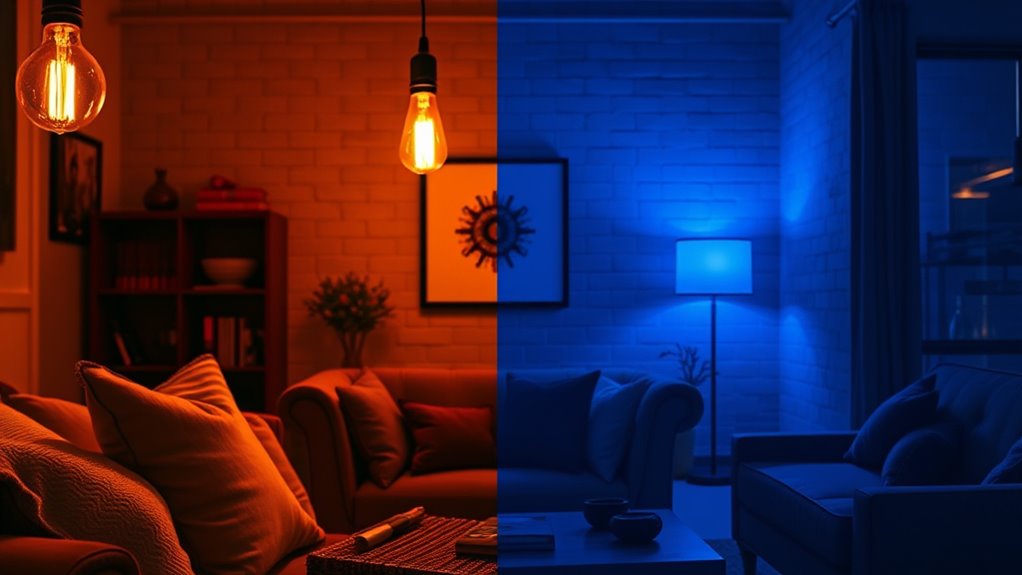
Balancing warm and cool light in your home can considerably enhance the ambiance and functionality of each space. To do this effectively, consider the purpose of each room. Use warm light in areas like the living room or bedroom to promote relaxation, while cool light works better in workspaces or kitchens for alertness. Mix lighting sources, such as combining ceiling fixtures with task lamps, to create layered lighting. Adjust the brightness to suit different activities. Below is a simple guide:
| Room Type | Recommended Lighting |
|---|---|
| Living Room | Warm, soft lighting |
| Kitchen | Cool, bright lighting |
| Bedroom | Warm, relaxing lighting |
| Office/Study | Cool, focused lighting |
| Bathroom | Neutral to cool lighting |
Technological Advances in Lighting: Smart and Adjustable Options
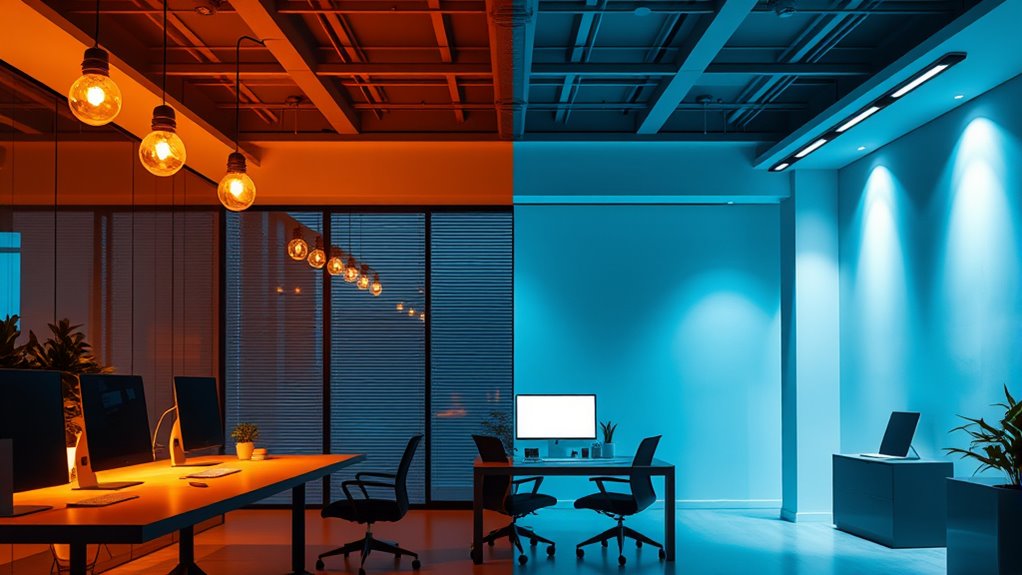
Advancements in lighting technology have revolutionized how you can customize your home’s illumination. Smart and adjustable lighting options let you tailor your environment to suit your mood and activity. With programmable features, you can set different lighting scenes for relaxation, work, or entertainment. You can also control lights remotely through apps or voice commands, making adjustments effortless. Here are three key benefits:
- Personalization: Easily switch between warm and cool tones to match your needs.
- Efficiency: Automate lighting schedules to conserve energy.
- Flexibility: Adjust brightness and color temperature instantly for *ideal* comfort.
These innovations help you create a more comfortable, adaptable living space, reducing fatigue caused by inappropriate lighting. Embracing smart lighting makes it simple to optimize your environment at any time.
Creating a Healthy Lighting Environment for All Day Use
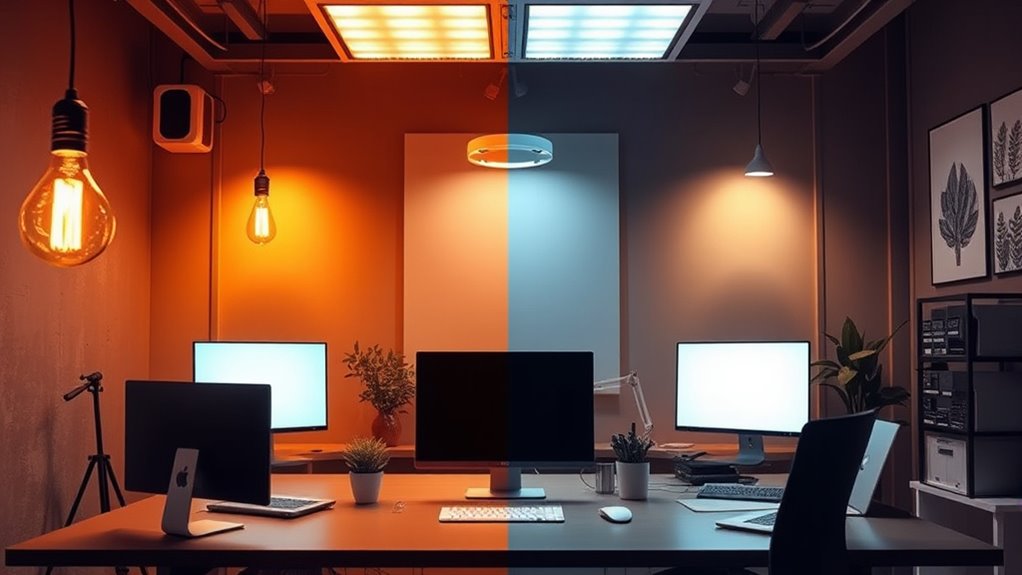
To maintain your energy and focus throughout the day, it’s essential to create a lighting environment that promotes health and well-being. Use a mix of natural light and well-designed artificial lighting to keep your space bright and balanced. Position your workspace near windows to maximize daylight exposure, which helps regulate your circadian rhythm. During cloudy days or evenings, switch to adjustable LED lights with a neutral or cool tone to mimic natural light, boosting alertness. Avoid harsh, overly warm or cool lighting that can cause eye strain or fatigue. Incorporate dimmable fixtures so you can adjust the brightness based on your activity. Consistent, well-planned lighting supports focus, reduces tiredness, and enhances your overall comfort throughout the day.
Frequently Asked Questions
How Can I Measure the Color Temperature of My Lights Accurately?
You can measure the color temperature of your lights accurately using a light meter or a smartphone app designed for this purpose. A light meter with a color temperature feature provides precise readings, while apps use your phone’s camera to analyze the light. Make certain to calibrate your device properly and take measurements in the same lighting conditions you plan to use. This way, you’ll ensure your lighting matches your desired ambiance.
Are There Specific Bulbs Recommended for Energy Efficiency and Proper Lighting?
When choosing bulbs, look for ENERGY STAR-rated LED options—they’re energy-efficient and provide consistent, quality light. Brands like Philips and Cree offer reliable, long-lasting bulbs with the right color temperature for your needs. Imagine a cozy, inviting glow or a bright, energizing light—these bulbs help you achieve that effortlessly. Picking the right bulbs not only saves energy but also creates a comfortable environment, making your space more enjoyable and productive.
Can Lighting Color Affect Children’s Vision or Eye Development?
Lighting color can impact children’s vision and eye development. Cool, blue-toned lights may cause eye strain or discomfort if used excessively, especially during homework or reading. Warm, softer lights are gentler on their eyes and can promote better focus and relaxation. You should choose lighting that mimics natural daylight, avoiding overly bright or harsh colors, to support healthy eye development and prevent fatigue or strain.
How Does Natural Daylight Compare to Artificial Lighting in Color Temperature?
Did you know natural daylight varies from 5,500K to 6,500K in color temperature? It’s generally brighter and more balanced than artificial lighting, which often ranges from 2,700K to 6,500K. Natural daylight provides ideal light for your eyes, reducing fatigue and enhancing mood. Artificial lighting can be less consistent and may cause eye strain if it doesn’t match daylight’s balanced spectrum, so you should aim to maximize natural light whenever possible.
What Are the Long-Term Health Effects of Improper Lighting Choices?
Choosing the wrong lighting can lead to long-term health issues like eye strain, headaches, and disrupted sleep patterns. When you expose yourself to improper lighting regularly, it may affect your circadian rhythm, making it harder to fall asleep or wake up refreshed. Over time, this imbalance can contribute to chronic fatigue, stress, and decreased productivity. So, selecting the right lighting is essential for maintaining your overall health and well-being.
Conclusion
Choosing the right lighting can boost your mood, productivity, and sleep quality. Did you know that poor lighting can reduce alertness by up to 30%? By understanding the effects of warm and cool light, you can create a balanced environment that energizes you during the day and promotes restful sleep at night. Make smart lighting choices, and you’ll feel more comfortable, focused, and rested every day.
Halloween Picks
halloween
As an affiliate, we earn on qualifying purchases.