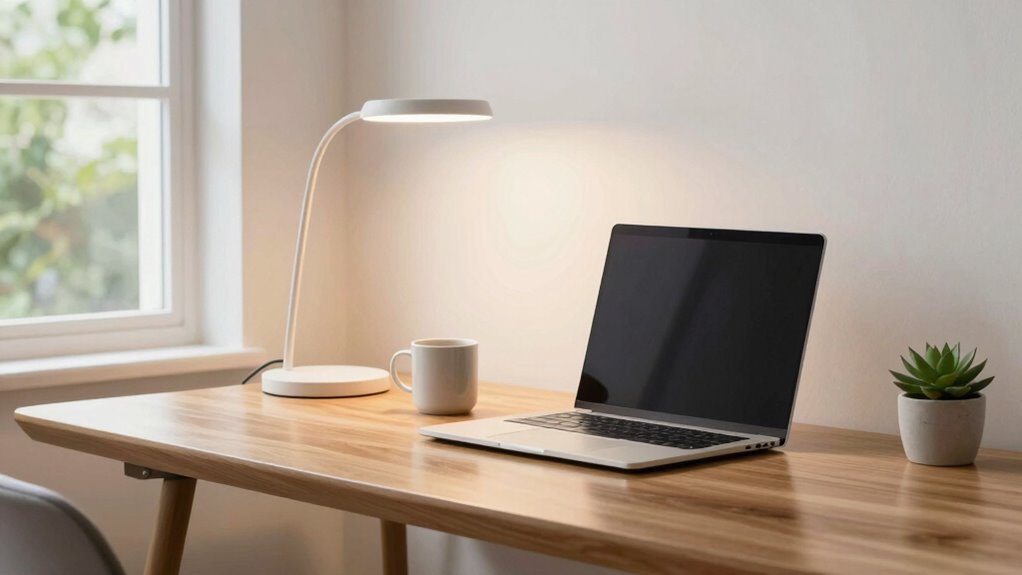

To fix desk echo without renovations, focus on adding soft, sound-absorbing materials around your workspace. Place plush rugs, fabric curtains, or soft furnishings like cushioned mats and fabric-covered organizers to break up sound waves and reduce reflections. Rearrange your furniture to minimize bouncing sounds off reflective surfaces. Small, strategic adjustments can make a big difference, creating a quieter, clearer space. Keep exploring for more simple tips to improve your workspace’s acoustics even further.
Key Takeaways
- Add soft furnishings like fabric-covered organizers or cushioned mats near your desk to absorb sound.
- Place acoustic panels or foam boards on nearby walls to reduce sound reflections.
- Rearrange furniture to avoid reflective surfaces facing your workspace.
- Use thick textiles, rugs, or curtains to dampen echo without renovation.
- Strategically position sound-absorbing items around your desk for quick, cost-effective results.

Have you ever noticed a strange echo when speaking at your desk? That lingering reverberation can make conversations feel awkward and hinder your focus. Luckily, you don’t need to undertake a full renovation to fix this issue. Instead, you can improve your workspace’s acoustics using simple soundproofing techniques and smart material selection. This approach helps absorb sound waves, reducing echo and creating a more comfortable environment without costly or time-consuming construction.
The key lies in understanding how sound travels and how to interrupt its bounce around your space. Soundproofing techniques involve adding materials that absorb or block sound waves. For your desk area, this could mean strategically placing acoustic panels, using soft furnishings, or incorporating other sound-absorbing elements. When choosing materials, opt for those with high sound absorption qualities, such as foam panels, fabric-covered boards, or thick textiles. These materials effectively dampen echoes by trapping sound energy before it reflects back into the room.
Material selection plays a vital role in controlling the acoustics of your workspace. Instead of loud, hard surfaces like glass or metal, which reflect sound, focus on softer materials that absorb it. For example, adding a plush rug under your desk or hanging fabric curtains can markedly cut down on echo. If you have shelves, filling them with books or decorative items made of fabric, foam, or other sound-absorbing materials can further reduce sound reflections. Additionally, installing acoustic panels on walls—either commercially made or DIY versions covered with fabric—can make a noticeable difference. These panels absorb sound waves directly at their source, preventing them from bouncing around the room. Incorporating soundproofing materials with high absorbency can greatly enhance the effectiveness of your acoustic treatment. Understanding sound absorption principles can help you optimize your setup for better results.
You can also consider rearranging your furniture to minimize sound reflection. Positioning your desk away from reflective surfaces and placing soft items nearby can help break up sound paths. Incorporating desk accessories like fabric-covered organizers or cushioned mats can add extra layers of sound absorption. The goal is to create a balance where sound waves are absorbed rather than reflected, making your voice clearer and reducing that annoying echo. Additionally, using sound-absorbing materials strategically around your workspace can further enhance these efforts, ensuring the sound is contained and diffused effectively.
Understanding the importance of material selection in soundproofing can help you make smarter choices and achieve better results with minimal effort. All of these adjustments require minimal effort and expense but deliver noticeable results. With thoughtful material selection and targeted soundproofing techniques, you can turn your echo-prone workspace into a more acoustically friendly zone. You won’t need to tear down walls or hire contractors—just a few well-chosen materials and strategic placement can make your desk area much more comfortable for work and conversation.

VIVO Gray Clamp-on 71 x 24 inch Privacy Panel, PP-2-V072G
Clamp-On/Screw-In Privacy Panel: This 71” x 24” desk privacy panel system is perfect for dividing open work areas…
As an affiliate, we earn on qualifying purchases.
As an affiliate, we earn on qualifying purchases.
Frequently Asked Questions
Can the Desk Echo Be Completely Eliminated With Simple Adjustments?
Yes, you can nearly eliminate desk echo with simple adjustments. Start by repositioning your desk to reduce reflective surfaces and improve desk placement away from hard walls. Adding sound absorption elements, like a fabric-covered panel or a rug, helps absorb sound waves and minimizes echo. These small changes make a significant difference, creating a quieter workspace without needing renovation.
Does Fixing the Desk Echo Affect the Room’s Overall Acoustics?
Sure, fixing your desk echo might seem like a small tweak, but it does impact your room’s overall acoustics. Adding soundproof curtains or acoustic panels helps absorb sound, reducing echo’s reach. Ironically, these simple fixes can improve clarity without turning your room into a soundproof bunker. So, your space stays lively enough for conversation while eliminating those distracting, unwanted echoes—making your workspace both functional and pleasant.
Are There Specific Materials That Reduce Desk Echo Most Effectively?
Yes, specific materials can markedly reduce desk echo. Sound absorbing panels are highly effective, as they absorb reflections and dampen sound. Desk insulation, like foam mats or fabric-covered panels, also helps minimize echo by preventing sound waves from bouncing off surfaces. Combining these materials creates a quieter, more focused environment. You should place sound absorbing panels on walls and use desk insulation around your workspace for the best results.
How Long Does It Typically Take to Notice Improvements After Fixing?
You’ll notice improvements in desk echo within a few days to a week after adjusting your desk placement and adding sound-absorbing materials. When you position your desk away from hard surfaces and incorporate items like acoustic panels or soft furnishings, sound absorption increases. This reduces echo quickly, making your space quieter and more comfortable. Keep in mind, consistent use of sound-absorbing materials speeds up the noticeable difference.
Is Professional Help Necessary for Significant Desk Echo Issues?
You don’t always need professional help for significant desk echo issues. Try adding soundproof partitions or acoustic panels around your workspace; these are effective DIY solutions. If the problem persists despite these adjustments, consulting an acoustics expert can help identify underlying issues and recommend specialized treatments. However, for most desk echo problems, simple modifications like acoustic panels often provide noticeable improvements without the need for professional intervention.

ATS Acoustics Sound Absorbing Acoustic Panel with Sona Fabric, NRC 1.0, Fire Rated, 24" x 36" x 2" (Merle Grey)
Panel size is 24" x 36" x 2" and mounts flush to wall
As an affiliate, we earn on qualifying purchases.
As an affiliate, we earn on qualifying purchases.
Conclusion
So, next time your desk echoes like a canyon, don’t rush to rip out walls or splurge on fancy soundproofing. Just grab some foam, toss a few cushions, or drape that old blanket—you know, the stuff you’ve been avoiding. Who knew fixing your noisy desk was so simple? With a little creativity, you’ll be the master of your own soundscape—without turning your office into a soundproof bunker. Easy, affordable, and surprisingly stylish!

Office Desk Partition Iron Divider for Privacy Soundproofing Panel for Restaurants Workstations Desks and OfficesEnhance Workspace Aesthetics
Introducing Our Premium Double-Bottom Screen: Crafted by Skilled Artisans, This Screen Features a Durable and Elegant Design. The…
As an affiliate, we earn on qualifying purchases.
As an affiliate, we earn on qualifying purchases.

FEATOL Anti Fatigue Mat for Standing, 9/10 Extra Thick Ergonomic Standing Desk Mat, Comfort Memory Foam Standing Mat at Home,Office All Day (20" x 32", Black, 1PC)
[Anti Fatigue Standing Desk Mat] – This anti fatigue mat standing desk office is effective in reducing stress…
As an affiliate, we earn on qualifying purchases.
As an affiliate, we earn on qualifying purchases.