
TL;DR

Get comfort and recovery gear delivered free with Prime
- Fast, free delivery on millions of items
- Prime Video, Amazon Music and more included
- Member-only deals all year
Fit&Well reports that physical therapist Erin Cannon recommends thread the needle, banded shoulder external rotations and shoulder CARs as regular shoulder-mobility exercises. She suggests starting with two to three sets of five to 10 repetitions, three times weekly, while adapting the range and volume to individual ability.
Physical therapist Erin Cannon recommends three mobility exercises—thread the needle, banded shoulder external rotations and shoulder CARs—for people who want to maintain shoulder movement as they age. In a report by Fit&Well, Cannon, of Hackensack Meridian JFK Johnson Rehabilitation Institute, says the moves can help maintain range of motion and encourage circulation around the joint; the report does not present them as a guarantee against injury.
The exercises use different movements and equipment: thread the needle is performed on hands and knees, external rotations require a resistance band, and shoulder CARs involve slowly moving one arm through controlled circles. Fit&Well says an exercise mat and band are needed for the full set. Cannon emphasizes maintaining an upright posture where applicable, keeping the core engaged and avoiding excessive arching or rounding through the back.
Cannon suggests two to three sets of five to 10 repetitions, performed three times per week, as a general guide. She says the appropriate number can vary between people. Those new to regular exercise are advised to start at the lower end and build gradually, rather than treating the suggested volume as a requirement for everyone.
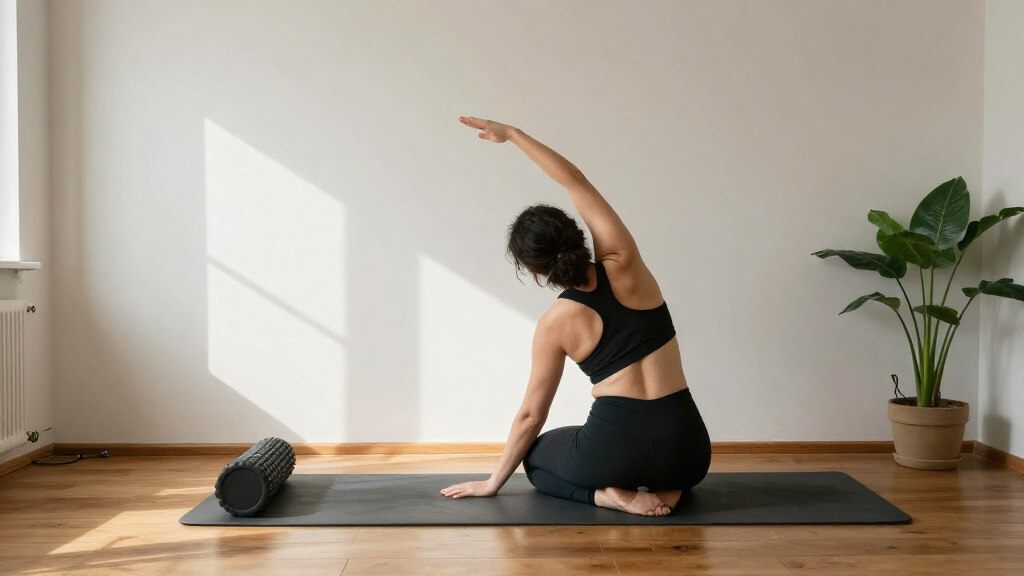
For thread the needle, begin on hands and knees. Rotate the torso and raise one arm, then bring that shoulder toward the mat as the arm reaches beneath the body; repeat on both sides. For banded external rotations, stand with feet hip-width apart, elbows bent and held near the sides, then pull the band apart by rotating the shoulders outward. A rolled towel between an elbow and the torso may help keep the elbow in place. For shoulder CARs, slowly sweep one arm through a controlled circle, moving only within a comfortable range, then repeat in the opposite direction and with the other arm.
Mobility for Everyday Shoulder Use
Shoulder discomfort can make routine tasks such as getting dressed or putting away shopping harder, according to the Fit&Well report. The recommendations focus on keeping the joint moving through controlled exercises, rather than on a specialized piece of equipment or a strenuous workout. That makes the guidance potentially relevant to people looking for a short routine they can practise at home.
The report also distinguishes mobility work from strengthening: it says strengthening the muscles around the shoulder may help avoid injury, while regular mobility work can help keep movement available. It does not cite research establishing that these three exercises prevent injury or protect every person’s joints as they age. Their value for an individual depends on factors including comfort, ability and existing health concerns.
The practical takeaway is to use the exercises as general movement guidance, not as a diagnosis or treatment plan. Pain, restricted movement or an existing injury may call for advice from a qualified clinician before starting or changing an exercise routine.
Popular right now

KitchenAid Artisan Series 5-Quart Tilt-Head Stand Mixer, Dried Rose (KSM150PS)

Vitamix 5200 Professional-Grade Blender, 64 oz. Container, Black

Shark Navigator Robot Vacuum with 30-Day Self-Emptying Base, White (AV2110S)
As an affiliate, we earn on qualifying purchases.
How the Three Moves Differ
The recommendations come from a Fit&Well report on shoulder mobility, not from a clinical trial comparing exercises or a formal exercise prescription. The report attributes the advice to Cannon, a physical therapist at Hackensack Meridian JFK Johnson Rehabilitation Institute. It describes the exercises and provides suggested sets and repetitions, but does not report measured outcomes or establish that one move is more effective than another.
Thread the needle combines upper-body rotation with an arm reaching beneath the torso. External rotations use a band to add resistance while the elbows remain close to the trunk. Shoulder CARs, short for controlled articular rotations, move the shoulder slowly through a circle. For CARs, the report advises keeping the moving arm close to the body and working only within a comfortable range. Across the movements, it advises engaging the core and avoiding excessive movement through the lower back.
“A general standard to follow could be two to three sets of five to 10 reps, three times per week.”
— Erin Cannon, physical therapist, as quoted in Fit&Well
Individual Needs and Evidence Limits
The report does not specify a publication date, cite studies measuring the effect of these exercises, or provide evidence that they prevent shoulder injuries. It also does not set out a single routine that suits everyone: Cannon says the suitable number of sets and repetitions can differ between people.
People’s reasons for shoulder pain or limited movement may differ, and the report does not assess readers individually. Fit&Well advises speaking with a doctor before attempting the exercises if someone has an injury or mobility concern. The advice is not a substitute for an assessment by a health professional, especially if a movement causes pain or symptoms worsen.
Start Gently and Adjust
For readers without an injury or mobility concern who choose to try the routine, the report’s guidance is to begin with the lower end of Cannon’s suggested range: two sets of five repetitions, building gradually only as comfortable. Movements should stay controlled, with the back kept from excessive arching or rounding and the shoulder working within a comfortable range.
There is no follow-up study or further milestone described in the source. People who have persistent discomfort, an injury or concerns about their range of motion should consult a doctor or physical therapist for individualized guidance before starting. How often to practise and whether to change the exercises will depend on their response and professional advice.
Key Questions
Which three shoulder mobility exercises does the physical therapist recommend?
Thread the needle, banded shoulder external rotations and shoulder CARs are the three exercises attributed to Erin Cannon in the Fit&Well report.
How often does the report suggest doing the exercises?
Cannon gives two to three sets of five to 10 repetitions, three times per week as a general standard. She says the right amount can vary; people new to regular exercise are advised to start at the lower end and increase gradually.
What equipment is needed?
The full routine calls for a resistance band and an exercise mat. Thread the needle is done on hands and knees, while the other two exercises are performed standing.
Should someone with shoulder pain try these moves?
The report advises speaking with a doctor before trying the exercises if you have an injury or mobility concern. It does not provide individual medical advice or establish that the routine is appropriate for every cause of shoulder pain.
Source: fitandwell.com