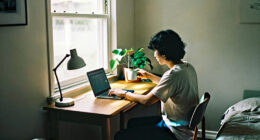
To place a lamp so it helps rather than distracts, position it to provide focused, indirect light that reduces glare and reflections on screens or shiny surfaces. Keep it close enough to illuminate your workspace but avoid causing bright spots or shadows. Adjust the height and angle to make certain the light directs where you need it without creating visual clutter. Careful placement can improve focus and comfort—continue exploring how to optimize your lighting for a perfect environment.

Get comfort and recovery gear delivered free with Prime
- Fast, free delivery on millions of items
- Prime Video, Amazon Music and more included
- Member-only deals all year
Key Takeaways
- Place lamps behind or beside furniture to cast soft, diffuse light without causing glare or reflections.
- Position task lamps close to work areas, ensuring direct illumination without creating distracting bright spots.
- Use adjustable lamps to control light direction and intensity, minimizing shadows and glare.
- Avoid placing lamps where their light interferes with screens or shiny surfaces to prevent reflections.
- Balance ambient and task lighting to create a comfortable environment that enhances focus without being overwhelming.
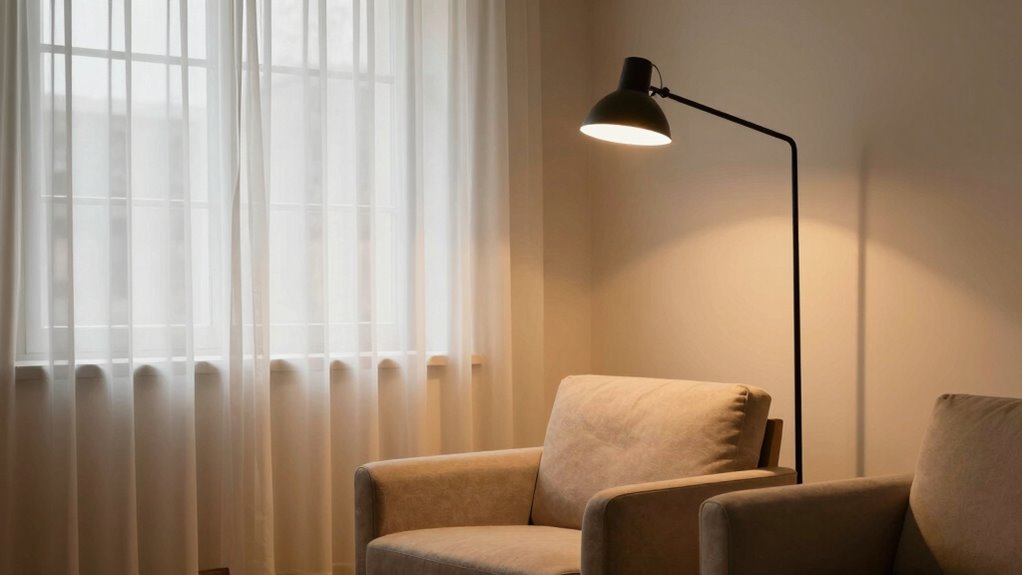
Ever wondered how the placement of a lamp can influence the mood or focus of a room? The right positioning can turn a dull space into a cozy haven or a productive workspace. It all comes down to understanding how ambient lighting and task illumination work together to create the environment you want. Ambient lighting, which provides soft, overall illumination, sets the tone for the entire room. Task illumination, on the other hand, directs focused light where you need it most, like on a desk or reading nook. When placing your lamp, consider what you want to achieve. If you aim for relaxation, position a lamp in a way that diffuses light gently across the room, avoiding harsh shadows or overly bright spots. Placing a lamp behind or beside furniture helps cast a warm glow that fills the space without overpowering it. Conversely, if you’re working or reading, you need task illumination that directs light straight onto your work surface. Position the lamp so that the light falls directly onto your book or workspace without causing glare or shadows that strain your eyes. Keep the lamp close enough to illuminate your tasks clearly but far enough to avoid creating distracting bright spots that draw attention away from your main focus. Consider the height and angle of your lamp as well. A taller lamp can provide more ambient lighting, especially if it’s angled to bounce light off the ceiling or walls, creating a diffuse glow. A desk or task lamp should be adjustable, allowing you to direct light exactly where it’s needed. Avoid placing lamps in spots where they cause reflections on screens or shiny surfaces, which can be distracting and reduce visibility. If your goal is to help focus, position the lamp so that it highlights your work area without casting unnecessary shadows or creating visual clutter in your peripheral vision. For distraction, a poorly placed lamp might shine directly into your eyes or cause uneven lighting that draws your attention away from your tasks. Think about the overall layout of your space. Balance ambient lighting with task lighting, and avoid overly bright or dim zones. When your lighting is well-placed, it subtly guides your attention, making your environment more conducive to concentration or relaxation, depending on your needs. Additionally, understanding how ambient lighting and task lights interact can help you create a balanced environment that enhances both comfort and productivity. In fact, lighting placement can also influence your mood and energy levels throughout the day. With intentional placement, your lamp can do more than just light up a room — it can help create the right atmosphere for whatever you’re doing. Recognizing the importance of lighting design ensures that you optimize your space for both functionality and atmosphere.
adjustable desk lamp for focused task lighting
As an affiliate, we earn on qualifying purchases.
As an affiliate, we earn on qualifying purchases.
Frequently Asked Questions
What Types of Lamps Are Best for Different Rooms?
You should choose lamps that match your decor style and prioritize energy efficiency. For living rooms, opt for floor lamps with adjustable brightness to create ambiance. In bedrooms, table lamps with soft, warm lighting work best for relaxation. For kitchens or workspaces, consider task lighting with LED bulbs to save energy and improve visibility. Selecting the right lamp enhances your room’s aesthetic while keeping energy costs low.
How Can I Prevent Glare From Lamps?
To prevent glare from lamps, think of your space as a stage where perfect lighting is key. You should focus on strategic lamp placement, avoiding direct lines of sight to bulbs, and use shades to diffuse light. Adjust the lamp’s height and angle for ideal glare reduction, ensuring light softly illuminates, not blinds. This way, your lighting becomes a gentle spotlight, enhancing rather than distracting from your space.
What Is the Ideal Height for Placing a Lamp?
The ideal height for placing a lamp depends on its purpose, but generally, for effective lighting, you should position your lamp so that the lampshade or bulb is at eye level or slightly below when seated. Proper lamp placement and lighting height prevent glare and shadows, creating a comfortable environment. Adjust the height to make certain the light illuminates your workspace or area without causing discomfort or distraction.
How Do I Choose the Right Lamp Bulb Brightness?
Think of your lamp as a storyteller—its brightness sets the mood. For cozy nights, choose a warm, soft bulb with lower lumens to create a gentle glow, perfect for relaxing. If you need sharp focus, pick a brighter, cooler bulb with higher lumens that illuminates your space clearly. When selecting a bulb, consider the lamp’s purpose and room ambiance—your choice shapes the story your lighting tells.
Can Moving a Lamp Improve Room Ambiance?
Yes, moving a lamp can considerably improve room ambiance. Proper lamp placement creates a warm, inviting atmosphere by highlighting focal points or softening harsh shadows. Experiment with placing lamps near seating areas or in corners to balance light distribution. Adjusting height and angle can also enhance the mood. By thoughtfully repositioning your lamps, you’ll make the space feel more comfortable and visually appealing, elevating your overall room ambiance effortlessly.
As an affiliate, we earn on qualifying purchases.
Conclusion
By carefully placing your lamp, you can create a space that feels as inviting as a warm hug, encouraging focus and relaxation. Think of your lighting as a guiding star, steering your attention where it’s needed most. When you position your lamp thoughtfully, it’s like tuning a musical instrument—bringing harmony to your environment. So, take your time, adjust the placement, and let your lighting work with you, not against you.
As an affiliate, we earn on qualifying purchases.
As an affiliate, we earn on qualifying purchases.
Columbus Day / Indigenous Peoples' Day Picks
long weekend sales
As an affiliate, we earn on qualifying purchases.