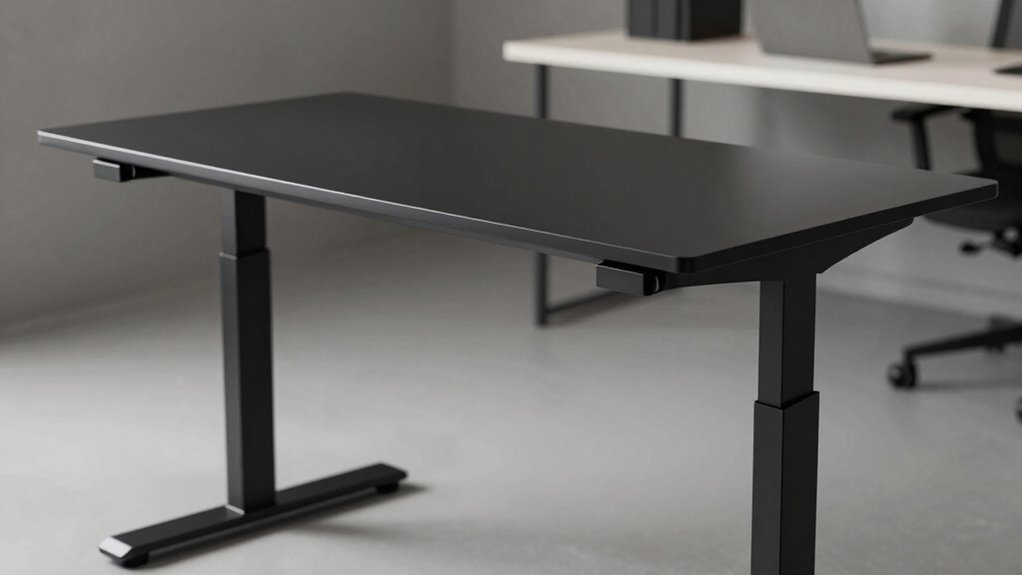
Wobbling at full height often happens because your desk’s design and build quality aren’t strong enough to support the extension. Cheaper models tend to use lighter materials and less durable mechanisms, making them less stable when fully extended. Over time, wear and tear can loosen joints and reduce stability. Environmental factors, like uneven floors, also contribute. To understand how to fix or prevent this wobbling, you’ll find more useful insights below.
Key Takeaways
- Weak or lightweight materials and mechanisms cause flexing and instability at maximum height.
- Poorly designed or built frames with inadequate reinforcement contribute to wobbling.
- Wear and tear on lift systems, like joints and calibrations, reduce stability over time.
- Uneven floors or surface imperfections intensify wobbling when desks are fully extended.
- Low-quality or improperly maintained lift mechanisms are more prone to instability at full extension.
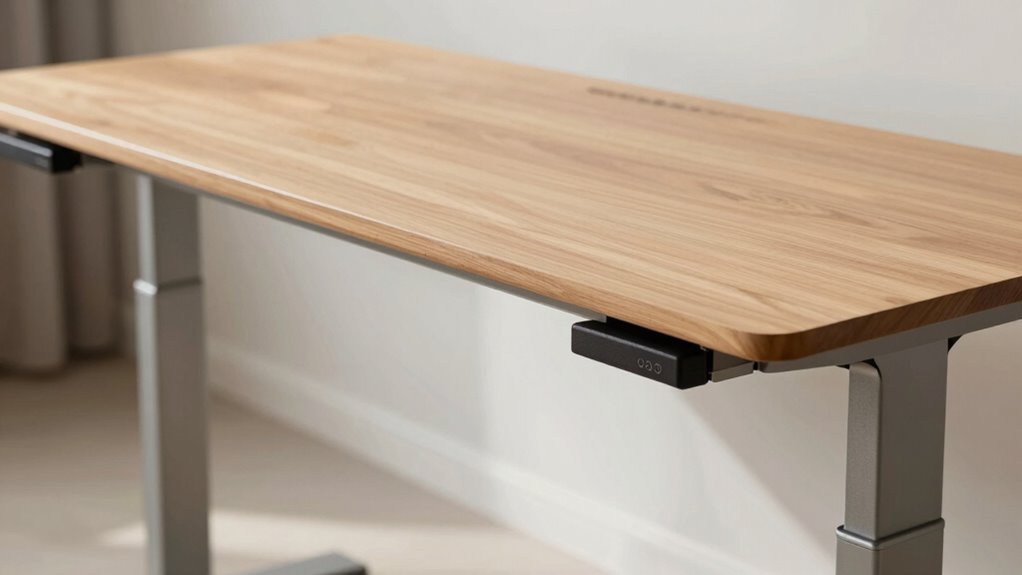
If you’ve ever set your standing desk to its full height and noticed it wobbling, you’re not alone. Many users face this issue, and understanding the real reason behind it can help you find solutions. The wobbling often stems from a combination of factors related to desk stability and design. When your desk is at its maximum height, the structural support becomes more critical. If the frame or mechanism isn’t sturdy enough, it can lead to noticeable movement. This instability not only affects your comfort but also diminishes the ergonomic benefits you’re seeking. A wobbling desk can cause strain on your neck, shoulders, and back because you’re constantly adjusting or compensating for the instability.
Wobbling at full height compromises comfort, stability, and ergonomic benefits, often due to design and build quality issues.
One key reason for wobbling at full height is the design and build quality of the desk. Cheaper models often use lightweight materials or less robust mechanisms, which can’t support the upper range of height without flexing or shifting. The stability of your desk depends heavily on its frame and the quality of its lift system. When the structure isn’t reinforced properly, the weight distribution shifts, amplifying any weak points. As a result, even slight movements are exaggerated, making your workspace less secure and more prone to wobbling. Ensuring your desk has a sturdy construction and quality components can make a significant difference in stability. Additionally, material strength plays a crucial role in ensuring long-term durability and stability at all heights.
Another factor is the type of lift mechanism your desk uses. Gas springs, hydraulic lifts, or electric motors all have their advantages, but some are more prone to instability at full extension. If the mechanism isn’t calibrated correctly or isn’t designed to hold the desk steady at maximum height, wobbling can occur. Over time, wear and tear can also loosen joints or reduce the effectiveness of these systems, further compromising desk stability.
Your environment can also play a role. An uneven floor or a surface that isn’t perfectly level can cause instability, especially when your desk is fully extended. Small adjustments like adding levelers or placing your desk on a more even surface can sometimes reduce wobbling. However, if the core issue is the design or construction quality, these are only temporary fixes. Additionally, structural integrity is crucial for ensuring stability at all heights.
Ultimately, understanding the relationship between ergonomic benefits and desk stability is key. While standing desks are great for promoting movement and reducing sedentary behavior, they must be stable at all heights to truly support your health. Wobbling at full height undermines these benefits by creating discomfort and potential ergonomic issues. To guarantee your desk remains stable, invest in a high-quality model with reinforced frames and reliable lift mechanisms, and always check that your workspace is level. Only then can you enjoy all the advantages of a proper standing desk without the distraction of wobbling.

VIVO Black Universal Steel Clamp-on Desk Stabilizer Bar for Sturdy Reinforced Workstation, 36 to 61.6 inch Bracket Support System for Sit to Stand Desk Frames, Expandable Width Adjustment, DESK-STB01B
VIVO Desk Frame Support: This universal desk stabilizer bar clamps onto your desk frame for added support. Effectively…
As an affiliate, we earn on qualifying purchases.
As an affiliate, we earn on qualifying purchases.
Frequently Asked Questions
Can Placement on Uneven Flooring Cause Wobbling?
Yes, placement on uneven flooring can cause wobbling. Flooring unevenness creates instability, making your desk less steady, especially at full height. Your weight dynamics also play a role; shifting your weight or leaning can amplify wobbling if the floor isn’t level. To fix this, consider using shims or a mat to level the surface, which helps your desk stay stable and reduces wobbling caused by uneven flooring and your movements.
Do Specific Desk Materials Affect Stability at Full Height?
Yes, the material influence greatly impacts a desk’s stability at full height. Durable materials like steel or high-quality wood enhance structural integrity, preventing wobbling. Conversely, lighter or cheaper materials may lack the strength needed for stability, especially when extended. You should choose a desk with sturdy, well-constructed materials to guarantee it remains stable and wobble-free during your standing sessions.
How Does Weight Distribution Impact Wobbling?
Did you know that uneven weight distribution increases wobbling by up to 50%? When you don’t evenly distribute your weight across the desk at full height, it destabilizes the structure. Proper ergonomic posture involves maintaining balanced weight, which helps keep the desk stable. By adjusting your stance and ensuring the weight is centered, you minimize wobbling, making your workspace safer and more comfortable at any desk height.
Are There Recommended Maintenance Routines to Prevent Wobbling?
To prevent wobbling, regularly check and tighten all screws and bolts on your adjustable height standing desk. Lubricate moving parts to guarantee smooth adjustments, which maintains ergonomic benefits and stability. Avoid sudden height changes and distribute weight evenly when working at full height. Performing these routine maintenance steps helps your desk stay steady, prolongs its lifespan, and keeps your workspace ergonomic and comfortable.
Can Accessories or Added Weight Improve Stability?
Adding accessories or extra weight can boost your desk’s stability, especially since studies show that a slight increase in weight can reduce wobbling by up to 20%. You’ll enjoy enhanced ergonomic benefits and a more solid feel. Plus, carefully chosen accessories can also boost the aesthetic appeal of your workspace, making it look sleek while helping prevent unwanted movement at full height. Just make sure not to overload beyond the desk’s recommended weight limit.

DeskShow Electric Standing Desk Adjustable – 60×28 Inch Sit Stand Desk with 1 Inch Thick Tabletop, Double Beam Frame, 3 Memory Height Adjustment, Cable Management for Home Office
Rock-solid Stability : DeskShow standing desk is engineered with a heavy-duty 2.5mm steel base and a reinforced double-beam…
As an affiliate, we earn on qualifying purchases.
As an affiliate, we earn on qualifying purchases.
Conclusion
So, now that you know why some standing desks wobble at full height, you see it’s all about finding the right fit and support. Don’t throw in the towel just yet; sometimes, a simple adjustment makes all the difference. Remember, a problem shared is a problem halved, so don’t hesitate to seek out solutions or upgrades. When you address the root cause, you’ll stand tall and steady—no more rocking the boat when you’re working.

VIVO Height Adjustable 32 inch Stand Up Desk Converter, Quick Sit to Stand Tabletop Dual Monitor Riser Workstation, Black, DESK-V000S
Create Instant Active Standing: Provides on-demand standing throughout the day for the freedom to get out of your…
As an affiliate, we earn on qualifying purchases.
As an affiliate, we earn on qualifying purchases.

JYLH JOYSEEKER Standing Desk Converter 32 inch, Height Adjustable Sit Stand Desk Riser, Quick Sit to Stand Tabletop Dual Monitor Riser Workstation for Home Office with Keyboard Tray, Black
Ergonomic Design: Adjustable workstation allows you to find healthy balance between sitting or standing throughout the day, the…
As an affiliate, we earn on qualifying purchases.
As an affiliate, we earn on qualifying purchases.