
To do the 30-second footrest test, sit comfortably with feet flat and supported by a footrest, ensuring your back stays supported and shoulders relaxed. Elevate one foot onto the footrest and check if your hips, knees, and lower back feel well aligned and relaxed. Repeat with the other foot. Proper support helps prevent strain and maintains good posture. Keep practicing this quick check regularly—more tips to optimize your sitting alignment await you.
Key Takeaways
- The Footrest Test is a quick 30-second method to assess proper sitting posture and foot support.
- It involves elevating one foot on a footrest while maintaining relaxed shoulders and upright alignment.
- Proper support ensures feet are flat, knees at 90 degrees, and the back supported to promote natural spine alignment.
- Regularly performing the test helps identify misalignments and encourages good posture habits.
- Using the test can reduce muscle fatigue, improve circulation, and prevent long-term musculoskeletal issues.
Why Proper Foot Support Matters
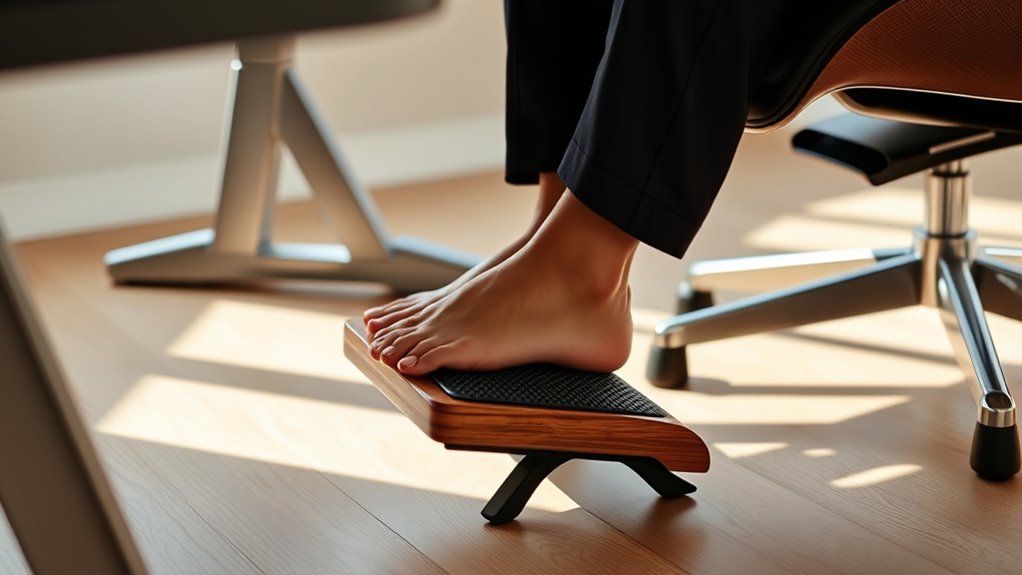
Proper foot support is essential because it helps maintain good posture and reduces strain on your lower back and legs. When your feet are properly supported, your weight distributes evenly, preventing unnecessary pressure on your spine and hips. Without adequate support, you might find yourself leaning forward or slouching, leading to discomfort and long-term posture issues. Using a footrest encourages your feet to rest flat and relax, promoting a natural alignment of your hips and spine. This alignment decreases muscle fatigue and improves circulation, making it easier to stay comfortable during extended periods of sitting. By ensuring your feet are well-supported, you actively protect your body from aches and injuries caused by poor sitting habits. Ultimately, proper foot support keeps you comfortable and helps maintain healthy posture all day.
Preparing for the Test

Before taking the footrest test, it’s important to set up your workspace correctly. Sit comfortably at your desk with your chair adjusted so your feet are flat on the floor. Clear the area around your feet and ensure your keyboard and monitor are positioned to promote good posture. Remove any unnecessary objects that might interfere with your positioning. Make sure your seat height allows your thighs to be parallel to the ground. Keep your back supported by the chair’s lumbar support or a cushion. Relax your shoulders and keep your arms at a comfortable angle. Taking these steps guarantees your environment supports an accurate assessment. Proper setup helps you focus on the test itself and provides reliable results for evaluating your foot support and posture.
The Step-by-Step Footrest Test Procedure
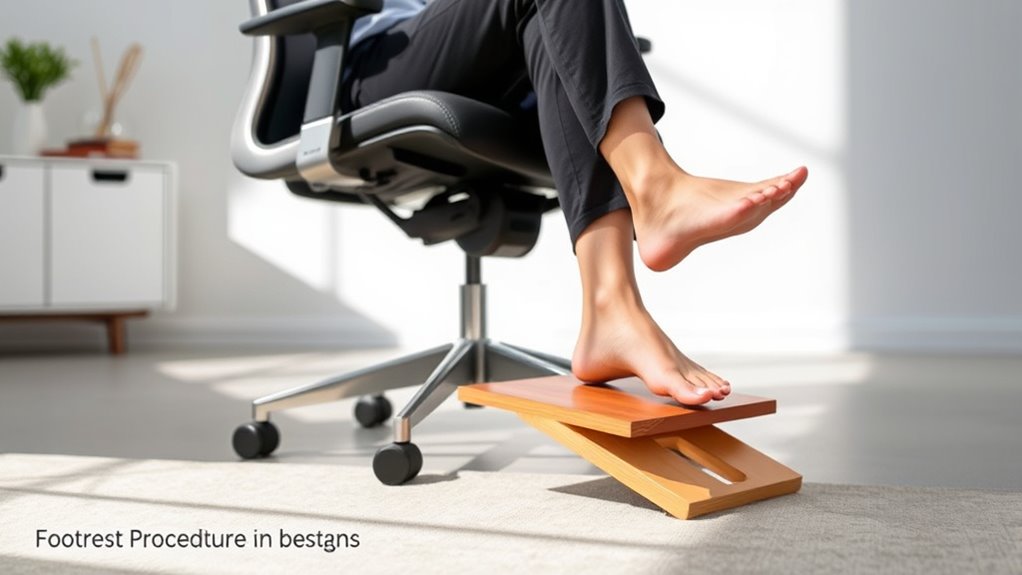
To begin the footrest test, sit upright with your feet flat on the floor and your back supported. Place a footrest or sturdy object under your feet. Without changing your posture, gently elevate one foot onto the footrest. Take note of how your body feels—whether your hips and lower back remain comfortable or if there’s tension. Then, switch feet and repeat. Keep your shoulders relaxed and avoid leaning forward or slumping. The goal is to see if elevating your feet improves comfort and alignment. Stay in this position for about 30 seconds. During this time, observe any shifts in your posture or muscle tension. This simple step helps you assess whether a footrest could support better posture throughout your day.
Signs of Correct Posture During the Test
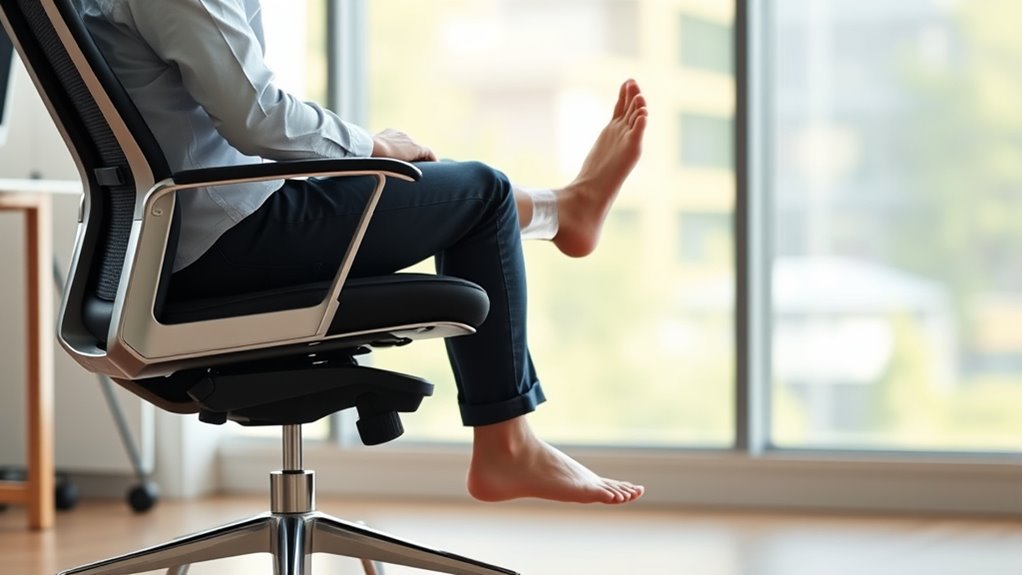
When you sit properly during the test, your feet should be fully supported on the footrest, ensuring comfort and stability. Your knees should be aligned naturally without strain, and your back should maintain its natural curvature. These signs indicate you’re achieving the correct posture for long-term comfort and health.
Feet Fully Supported
Ensuring your feet are fully supported is a key sign of correct posture during the footrest test. When your feet rest flat and comfortably on the footrest, it indicates proper alignment and balance. You shouldn’t feel strain or have your feet dangling, which can cause discomfort and poor posture over time. Proper support also helps distribute your weight evenly, reducing pressure on your lower back and legs.
Signs your feet are fully supported include:
- Feet lying flat with heels and balls of feet making contact
- No excessive pressure points or discomfort
- An even distribution of weight across the footrest
- Relaxed calf muscles, indicating no unnecessary tension
Pay attention to these cues to ensure your posture remains healthy and balanced during the test.
Knees Aligned Naturally
Are your knees sitting comfortably and naturally aligned with your hips? During the footrest test, your knees should rest in a relaxed position, neither bent sharply nor forced outward. When properly aligned, your thighs are parallel to the floor, reducing strain on your joints. Check if your knees are pointing straight ahead or slightly outward, matching your hips. Misalignment often indicates poor posture or discomfort. Here’s what to look for:
| Good Alignment | Signs of Misalignment |
|---|---|
| Knees directly over ankles | Knees pushed forward or backward |
| Slight outward angle, natural | Knees collapsing inward or outward |
| No pressure or tightness in knees | Feeling tension or strain |
| Comfortable joint position | Discomfort or awkward positioning |
This alignment helps distribute weight evenly, easing joint stress and promoting better posture.
Back Maintains Curvature
If your back maintains its natural curve during the footrest test, you’re likely sitting with proper posture. A healthy spine has a gentle inward curve in your lower back, which should stay visible as you sit. When you perform the test, look for these signs:
- The lumbar curve remains prominent and supported
- Your shoulders stay relaxed and aligned
- Your upper back doesn’t slump or round forward
- You feel balanced and stable without needing to overcorrect
If these elements are present, your back is properly supporting your body’s structure. Maintaining this natural curvature reduces strain on your spine, minimizes discomfort, and promotes better overall posture. Keeping the curve intact during the test is a good indicator you’re sitting correctly.
Common Posture Mistakes to Watch For
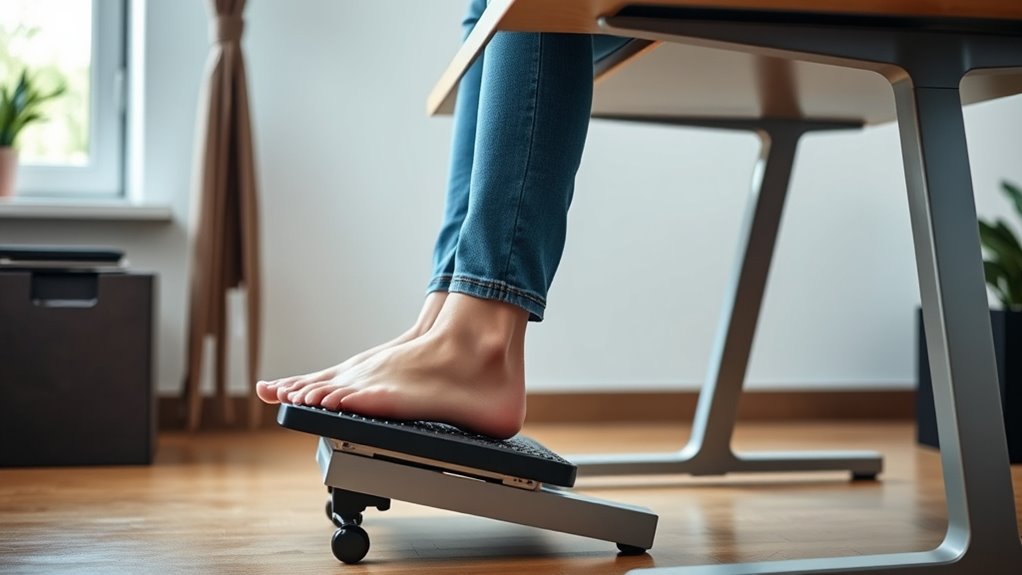
Poor posture habits often sneak into your daily routine without you realizing it, leading to discomfort and long-term issues. Common mistakes include slouching forward at your desk, which strains your neck and shoulders. Sitting with your feet tucked under your chair or crossing your legs can misalign your hips and spine. Leaning heavily on one side or arching your back excessively puts uneven pressure on your joints. Failing to adjust your chair or monitor height encourages poor alignment. Additionally, staying in the same position for extended periods without movement can cause stiffness and muscle imbalances. Recognizing these habits is vital for making small adjustments. By being aware of these common mistakes, you can actively work to correct your posture and reduce discomfort over time.
Interpreting Your Results
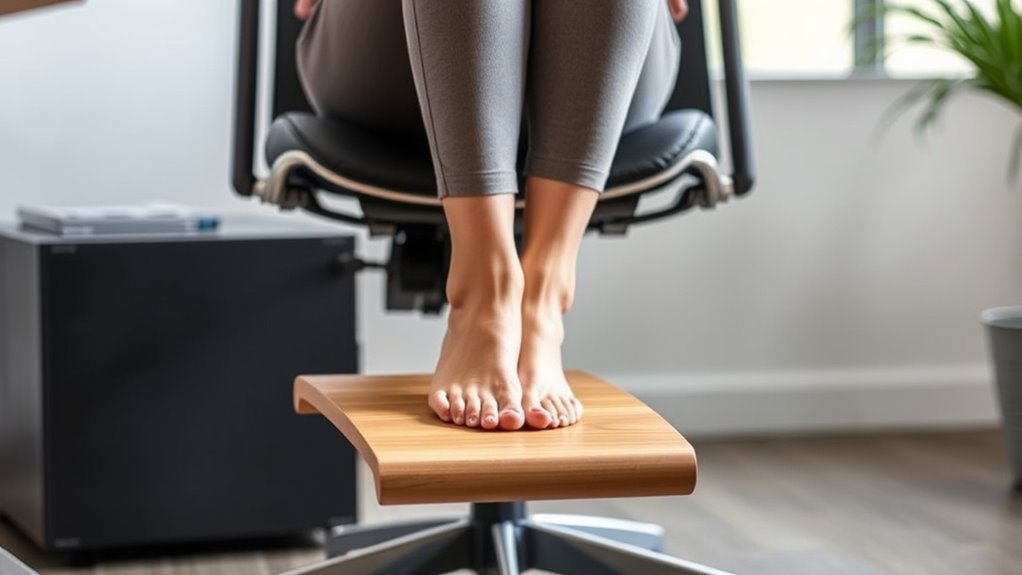
Understanding how your footrest test results reflect your posture habits helps you identify areas needing improvement. If your feet comfortably reach the footrest without strain, your posture may be aligned, and your habits support good ergonomics. If your feet feel strained, dangling, or excessively elevated, it indicates areas for adjustment. Pay attention to these signs:
Comfortable footrest use indicates good posture; discomfort suggests adjustments are needed.
- Feet hanging without support, causing leg strain
- Excessively high footrest, leading to slouched shoulders
- Feet flat on the floor, but with discomfort or instability
- Uneven foot placement, which may cause asymmetrical posture
Adjustments to Improve Support and Alignment
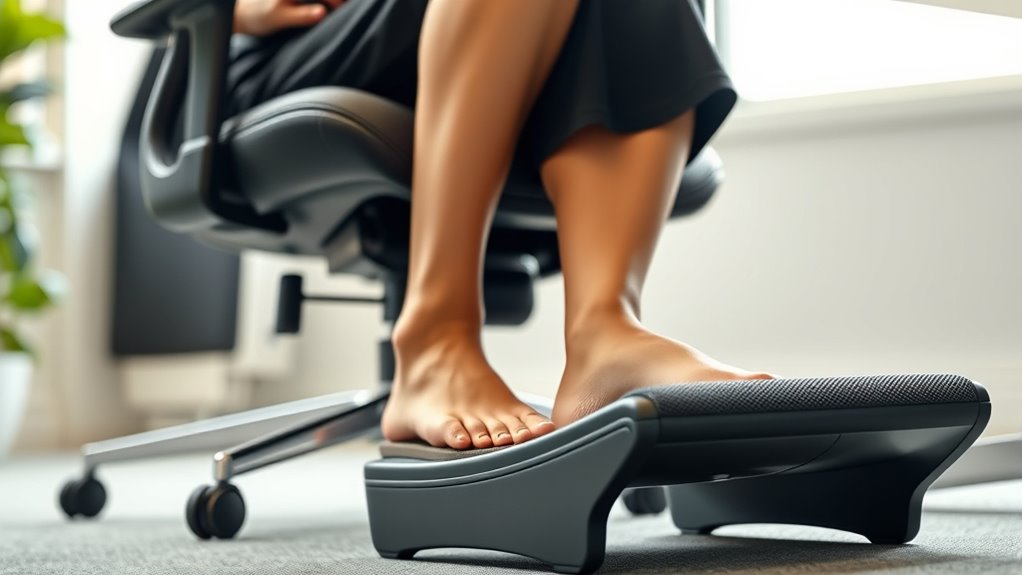
To improve your support and alignment, start by adjusting your footrest height so your feet rest comfortably flat without dangling or feeling strained. If your feet are too high or low, your knees won’t be aligned properly, which can cause discomfort and poor posture. Raise or lower the footrest until your thighs are parallel to the floor, promoting better circulation and reducing pressure on your lower back. Make sure your hips are slightly open and your lower back is supported by your chair’s lumbar curve. Keep your shoulders relaxed and your elbows close to your sides. Small adjustments can make a significant difference in maintaining proper alignment throughout the day. Regularly check your position to prevent strain and support your overall posture health.
Benefits of Regular Posture Checks
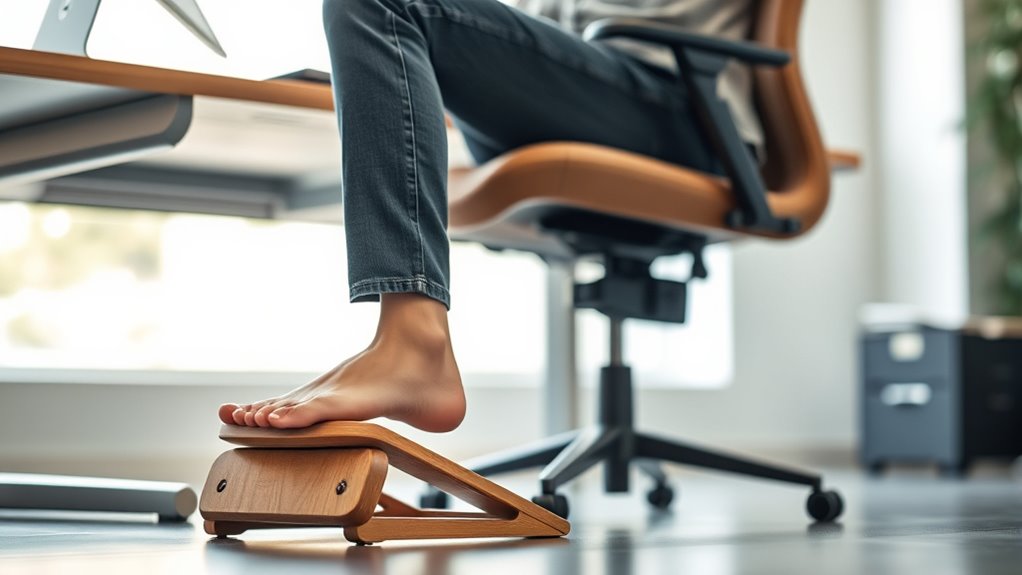
Regularly checking your posture helps you catch misalignments early before they cause discomfort or long-term issues. When you make posture checks a habit, you’re more likely to maintain proper alignment throughout the day. This proactive approach can reduce strain on your neck, back, and shoulders, preventing pain and fatigue. It also encourages awareness of your body positioning, helping you identify habits like slouching or leaning forward. With consistent checks, you can:
- Prevent chronic musculoskeletal problems
- Improve circulation and reduce fatigue
- Increase overall comfort during long periods of sitting
- Develop better body awareness and control
Tips for Maintaining Good Sitting Habits
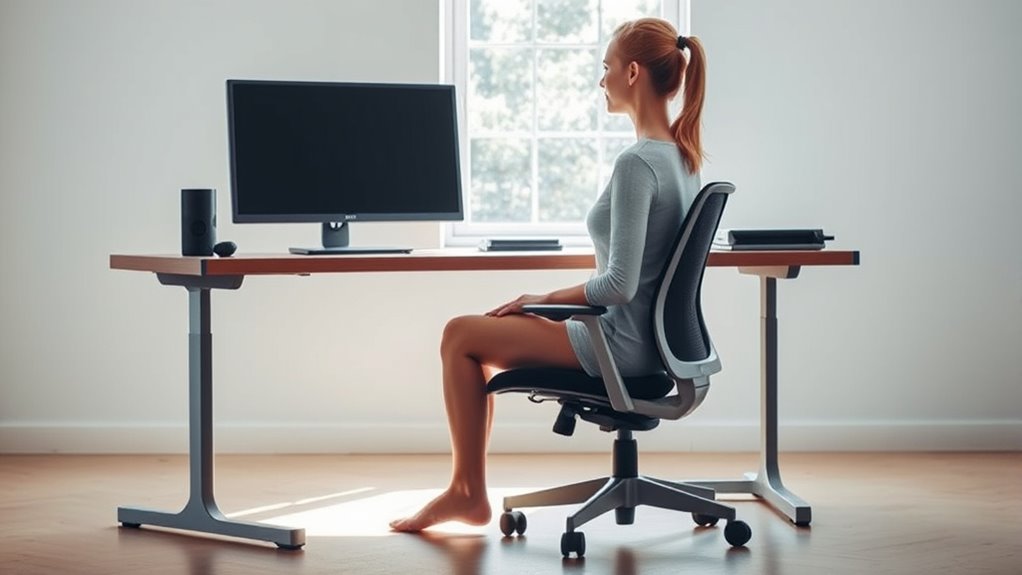
Maintaining good sitting habits is essential for supporting the benefits of regular posture checks. To do this, keep your feet flat on the floor or a footrest, with knees at a 90-degree angle. Sit back in your chair, ensuring your lower back is supported. Keep your shoulders relaxed and avoid leaning forward. Take short breaks to stand and stretch every 30 minutes. Use the table below to remember key tips:
| Tip | Benefit |
|---|---|
| Keep feet flat | Prevents strain on legs |
| Maintain natural spine curve | Supports lower back health |
| Relax shoulders | Reduces tension in neck and shoulders |
Consistently practicing these habits helps you maintain good posture effortlessly.
Frequently Asked Questions
Can the Footrest Test Be Used While Standing?
No, the footrest test can’t be used while standing because it’s designed for sitting positions. When you sit, you can easily assess if your feet are properly supported and your posture is aligned by using a footrest. Standing requires different checks, like ensuring your weight is evenly distributed and your hips are aligned. So, switch to sitting to do the footrest test effectively and improve your posture.
How Often Should I Perform the Footrest Test?
You should perform the footrest test daily or at least a few times each week. Doing it regularly helps you become more aware of your posture and allows you to make quick adjustments to stay comfortable and aligned. Whenever you notice discomfort or slouching, take a moment to do the test. Consistent practice guarantees you develop better habits, reducing strain and promoting healthier sitting positions over time.
Is It Suitable for Children or Only Adults?
The footrest test is primarily designed for adults, as their posture and seating habits differ from children’s. For children, their furniture and posture needs are different, and they should be monitored with age-appropriate ergonomic checks. If you’re concerned about a child’s posture, consult a pediatrician or an ergonomic specialist. Keep in mind, regular breaks and proper chair height are key for children’s healthy posture development.
What Equipment Do I Need Besides a Footrest?
Besides a footrest, you just need a comfortable, supportive chair that encourages good posture. Make sure your chair has adjustable height and armrests to support your back and arms properly. You might also want a small cushion or lumbar support for added comfort. Keep your workspace organized, with essential items within easy reach, so you avoid awkward postures. Regularly check your setup, and adjust as needed for ideal ergonomics.
Can This Test Help With Chronic Back Pain?
Think of the test as a quick tune-up for your posture engine. It can help identify misalignments that contribute to chronic back pain, but it’s not a cure-all. By improving your sitting habits and ensuring your feet are properly supported, you may reduce discomfort over time. However, for persistent pain, consult a healthcare professional to get tailored advice and treatment options.
Conclusion
Think of your posture like a carefully balanced bridge—you want all parts supporting each other. After doing the footrest test, you might realize your support is uneven, like a sagging span. Regular checks keep your alignment sturdy and strong, preventing strain and discomfort. Just like tightening loose bolts keeps a bridge safe, small adjustments now can maintain your comfort and health long-term. Make posture checks part of your routine, and enjoy a steadier, healthier day.