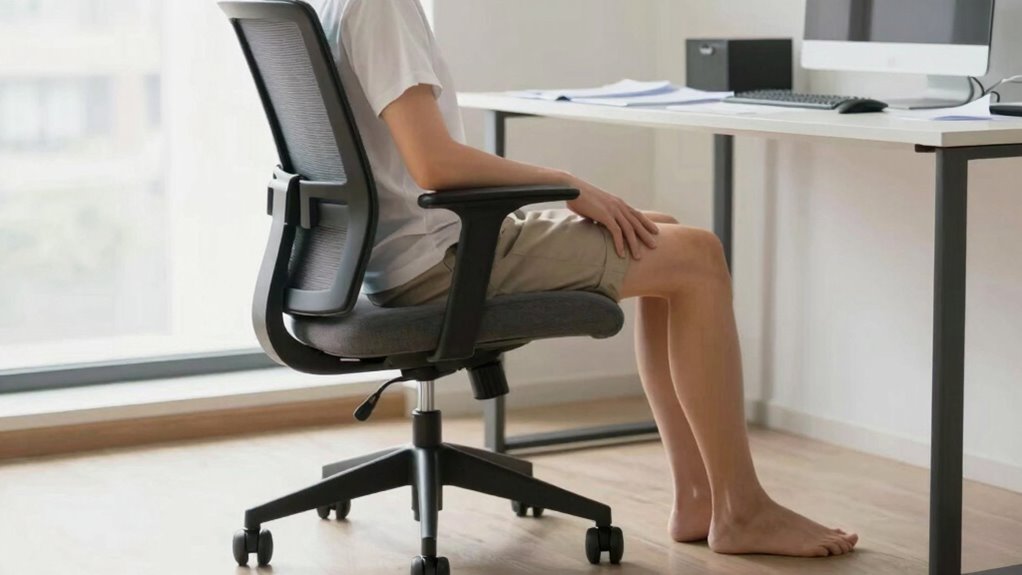

Stop guessing your ideal sitting position by actually evaluating how you feel in your current setup. Sit upright, relax your shoulders, and make sure your lower back is supported. Check if your feet are flat on the floor and adjust your chair height if needed so your knees are level with your hips. Regularly monitor your posture and make small adjustments to stay comfortable. Keep going, and you’ll discover practical tips to optimize your posture for long-term health.

Get comfort and recovery gear delivered free with Prime
- Fast, free delivery on millions of items
- Prime Video, Amazon Music and more included
- Member-only deals all year
Key Takeaways
- Conduct a self-assessment by sitting naturally and noting discomfort or strain points to identify ergonomic adjustments needed.
- Ensure your feet are flat on the floor and knees are roughly level with hips for proper alignment.
- Check if your shoulders are relaxed and your lower back is supported to maintain a neutral, comfortable posture.
- Use ergonomic tools like adjustable monitors or lumbar supports to verify optimal positioning.
- Regularly monitor and adjust your posture throughout the day to maintain comfort and prevent strain.
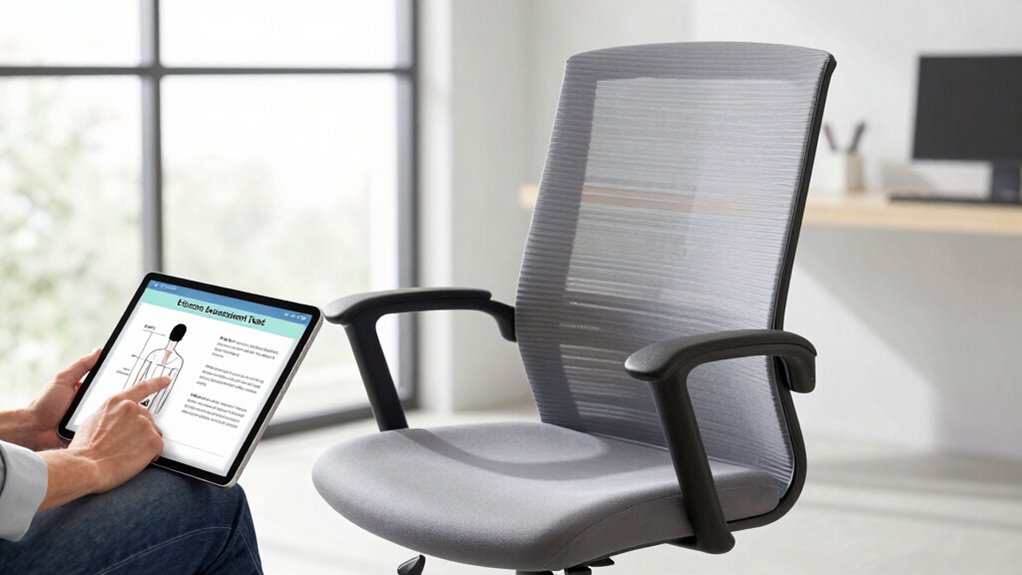
Finding the perfect sitting position isn’t something you should guess at, especially since poor posture can lead to discomfort and long-term health issues. Instead of trial and error, you can use a simple test to identify what truly works for your body. The key is making ergonomic adjustments that promote comfort and prevent strain, while maintaining posture awareness throughout your day. When you understand how to fine-tune your seating setup, you’ll find it easier to stay comfortable and avoid common problems like back pain, neck tension, and fatigue.
Start by evaluating your current position. Sit upright in your usual chair and pay attention to how your body feels. Are your shoulders relaxed? Is your lower back supported? Do your feet rest flat on the floor? These questions help establish a baseline. Then, make small ergonomic adjustments—like repositioning your chair height so your knees are roughly level with your hips, or adding lumbar support if your lower back feels strained. These adjustments aren’t just about comfort; they’re about creating a posture that minimizes stress on your muscles and joints. Incorporating ergonomic principles into your workspace setup can make a significant difference in maintaining proper posture throughout the day.
Next, engage in posture awareness. This means consciously checking in with yourself every so often: Are your shoulders hunched? Is your head jutting forward? If you notice these signs, correct your position immediately. This ongoing awareness trains your body to adopt healthier habits naturally. A good way to reinforce this is by setting reminders or using ergonomic tools like adjustable monitors or keyboard trays, which help keep your body aligned. Additionally, understanding body mechanics can help you adopt more sustainable postures that reduce fatigue and discomfort. Practicing posture correction techniques can further enhance your comfort and prevent strain over time. Recognizing the importance of ergonomic setup can empower you to make adjustments that support long-term health benefits. Being mindful of muscle engagement can also contribute to maintaining proper posture during extended periods of sitting.
As an affiliate, we earn on qualifying purchases.
Frequently Asked Questions
How Often Should I Reassess My Sitting Position?
You should reassess your sitting position every few weeks, especially when making ergonomic adjustments or noticing discomfort. Incorporating this into your daily routines helps prevent strain and improves comfort. Regular checks guarantee your workspace remains supportive as your body or work habits change. Listen to your body—if you feel any aches or fatigue, it’s time to reassess and tweak your sitting setup for ideal comfort and health.
Can This Test Improve Posture for All Body Types?
Think of this test as a tailor-made suit for your posture; it can adapt to your unique shape. While it promotes better alignment, posture diversity and body adaptability mean it might work differently for everyone. You’ll find it helpful, but don’t expect a one-size-fits-all solution. Use it as a guide, then tweak your sitting habits to suit your body’s unique needs for best comfort and health.
Is There an Age Limit for Using This Test?
There are no strict age restrictions for using this sitting position test. It’s safe for all ages, including seniors, as long as you follow the senior guidelines for posture and comfort. If you have existing health issues or mobility concerns, consult a healthcare professional before starting. This test can help you find a better sitting posture regardless of your age, making it accessible and beneficial for everyone.
What Equipment Is Needed to Perform the Test Accurately?
Like a scientist in a lab, you only need a few simple tools to perform this test accurately. Gather ergonomic accessories such as a supportive chair, a measuring tape, and a mirror or camera for proper alignment checks. Testing tools like a posture assessment sheet or app can help you record and analyze your sitting position. No advanced equipment is necessary—just your keen eye and these basic items to find your perfect posture.
How Long Does It Take to See Results After Adjusting?
You might start noticing improvements within a few days to a week after adjusting your sitting position using ergonomic accessories and incorporating posture exercises. Consistency is key; the more regularly you practice, the quicker you’ll see results. While some discomfort may linger initially, persistent effort will lead to better posture, reduced strain, and increased comfort. Keep tracking your progress, and stay committed to your ergonomic routine for lasting benefits.
adjustable ergonomic office chair
As an affiliate, we earn on qualifying purchases.
As an affiliate, we earn on qualifying purchases.
Conclusion
Stop guessing and start testing your perfect sitting position today. Just like tuning a guitar, small adjustments can make a big difference—imagine strumming wrong chords versus hitting the right note effortlessly. By using this simple test, you’ll find your rhythm, reduce discomfort, and boost productivity. Don’t let poor posture be a silent thief of your comfort. Take control now, and experience the harmony of sitting just right—your body will thank you.
monitor riser for proper eye level
As an affiliate, we earn on qualifying purchases.
As an affiliate, we earn on qualifying purchases.
As an affiliate, we earn on qualifying purchases.
Halloween Picks
halloween
As an affiliate, we earn on qualifying purchases.