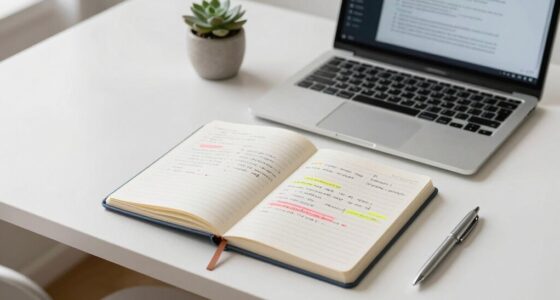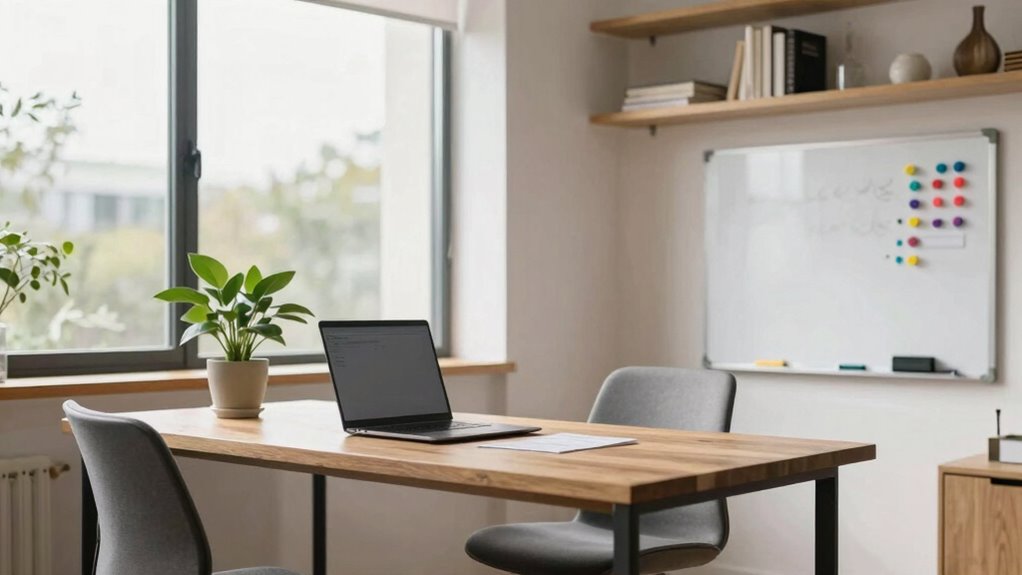

A well-designed workspace helps you develop better habits by supporting your body and mind. When your chair, desk, and monitor are aligned for comfort, you stay focused and avoid fatigue. Good lighting reduces eye strain and boosts alertness, while an organized environment minimizes distractions. By creating a space that encourages consistency and reduces stress, you’ll find it easier to stick to routines. Keep exploring to learn how these elements truly transform your productivity and well-being.

Get comfort and recovery gear delivered free — and shop member deals
- Fast, free delivery on millions of items
- Access to Prime Big Deal Days deals on October 6–7
- Prime Video, Amazon Music and more included
Key Takeaways
- Ergonomic setups reduce discomfort, making it easier to maintain consistent work habits without physical fatigue.
- Proper lighting minimizes eye strain, helping sustain focus and reinforce productive routines.
- An organized, clutter-free environment lowers stress, supporting mental clarity and habit formation.
- Dedicated workspaces aligned with specific tasks reduce distractions, promoting sustained attention and routine adherence.
- Combining ergonomic design and ambient lighting creates a comfortable environment that encourages long-term discipline and healthy habits.

Creating a workspace that supports your goals can make forming good habits much easier. When your environment is designed with intention, it minimizes distractions and streamlines your daily routines. One of the key elements is ergonomic design, which guarantees your workspace promotes comfort and reduces physical strain. An ergonomic setup means your chair, desk, keyboard, and monitor are aligned to support your body’s natural posture. This setup prevents discomfort and fatigue, so you stay focused longer and are less likely to develop bad habits like slouching or neglecting breaks. When your workspace feels comfortable, you’re more motivated to show up consistently and stick with positive routines. Additionally, incorporating proper ergonomic practices can further enhance your comfort and prevent long-term injuries. Ambient lighting plays a crucial role in shaping your productivity and mood. Proper lighting isn’t just about brightness; it’s about creating a balanced environment that mimics natural light as much as possible. Soft, well-distributed ambient lighting reduces eye strain and helps you stay alert without causing glare or harsh shadows. When your workspace is lit correctly, you’re less prone to fatigue, which can derail your efforts to develop healthy work habits. Additionally, adjustable lighting options allow you to customize your environment depending on your task, whether you need focused illumination for detailed work or softer light for planning and brainstorming. This flexibility encourages consistent routines and helps you associate specific lighting conditions with productive periods. Creating an environment that promotes mental clarity can further support your habit-forming efforts by reducing stress and decision fatigue. Your workspace’s overall design influences your mental state, making it easier to form habits that stick. An uncluttered, well-organized environment reduces stress and decision fatigue, giving you mental clarity to focus on your goals. When everything has its place, you waste less time searching for tools or documents, which reinforces your routines and builds momentum. Incorporating ergonomic elements and ambient lighting into your workspace means you’re creating a supportive foundation for good habits. These features work together to foster comfort, focus, and consistency, turning your environment into an active partner in your success. Creating a dedicated workspace that is purpose-built for your tasks can also enhance your ability to establish routines and stay motivated. A well-designed environment also reduces distractions, making it easier to stay engaged with your work and avoid interruptions that could derail your progress. In addition, a thoughtfully arranged workspace can boost your productivity levels, making your work sessions more efficient and rewarding. Ultimately, a thoughtfully designed workspace isn’t just about aesthetics—it’s about functionality and support. When you prioritize ergonomic design and ambient lighting, you set yourself up for long-term success. You’ll find it easier to stay disciplined, avoid discomfort, and enjoy your work. These small but impactful choices create an environment that encourages healthy routines and keeps you motivated. Over time, your workspace becomes an essential tool in forming habits that improve your productivity, well-being, and overall satisfaction. When your environment genuinely supports your goals, developing good habits becomes less of a challenge and more of a natural extension of your daily routine.
Frequently Asked Questions
How Quickly Can Workspace Changes Improve Habits?
Workspace changes can start improving your habits within days, as environmental cues play a crucial role in habit formation. When you redesign your space to promote positive behaviors, like adding a water bottle or organizing your desk, you reinforce these cues consistently. Over time, these small adjustments become automatic, making it easier to stick to good habits. So, with intentional changes, you’ll notice progress surprisingly quickly.
Do Personal Preferences Influence Workspace Effectiveness?
Imagine stepping into your workspace, where personal comfort and aesthetic appeal create a sanctuary just for you. Your preferences strongly influence its effectiveness, making it easier to focus and develop good habits. When your environment reflects what you find visually pleasing and physically comfortable, you’re more motivated to engage, stay consistent, and enjoy the process. Personal touches turn your workspace into a place where habits flourish naturally and effortlessly.
Can Small Workspace Modifications Make a Big Difference?
Yes, small workspace modifications can make a big difference. Adding ergonomic furniture reduces strain, boosting comfort and focus. Incorporating color psychology, like calming blues or energizing yellows, can improve mood and productivity. These tweaks are simple but impactful, helping you stay motivated and efficient. By optimizing your space with thoughtful adjustments, you create an environment that naturally encourages better habits and enhances your overall well-being.
What Role Does Technology Play in Workspace Optimization?
Imagine your workspace as a sleek control center, where technology seamlessly integrates with ergonomic design. You leverage smart gadgets and intuitive software to streamline tasks, reduce strain, and boost focus. Tech plays an essential role in workspace optimization by automating routine processes and enhancing comfort. With the right tools, you create an environment that encourages better habits effortlessly, making productivity feel natural and your workday more enjoyable.
Are There Common Mistakes to Avoid When Redesigning a Workspace?
When redesigning your workspace, avoid clutter buildup and neglecting ergonomic enhancements. Keep your space organized by eliminating unnecessary items to boost focus and efficiency. Prioritize ergonomic furniture and accessories to prevent discomfort and promote good posture. Also, don’t forget to plan for natural light and proper airflow. These common mistakes can hinder productivity, so focus on creating a clean, comfortable, and well-lit environment that encourages better habits and sustained focus.
Conclusion
By designing your workspace thoughtfully, you’re setting the stage for success—like planting seeds in fertile soil. When your environment supports your habits, growth comes naturally, and challenges seem smaller. So, embrace the power of a better workspace; it’s the silent partner in your journey. Remember, a well-crafted space isn’t just a backdrop—it’s the catalyst that turns good intentions into great achievements. Make your environment work for you, and watch your habits flourish effortlessly.
Fall Picks
fall essentials
As an affiliate, we earn on qualifying purchases.