

To do deep work at home, you need to first eliminate distractions and organize your environment. Clear your workspace of clutter and turn off non-essential notifications. Create a dedicated area that signals focus, and communicate boundaries with household members to prevent interruptions. Establish routines that help you shift into deep work mode smoothly. Keep this environment tidy and purposeful long-term, and you’ll open the focus needed to achieve your goals. Keep going to discover more effective strategies.
Key Takeaways
- Create a dedicated, clutter-free workspace to minimize distractions and establish a mental boundary for deep work.
- Eliminate notifications and digital interruptions by turning off non-essential device alerts.
- Set clear boundaries with household members through communication and visual cues to protect work time.
- Develop consistent rituals or routines that signal the start of focused work sessions, reinforcing mental cues.
- Maintain an organized environment by regularly decluttering and managing noise to sustain long-term productivity.
Identifying Your Distractions and Eliminating Clutter
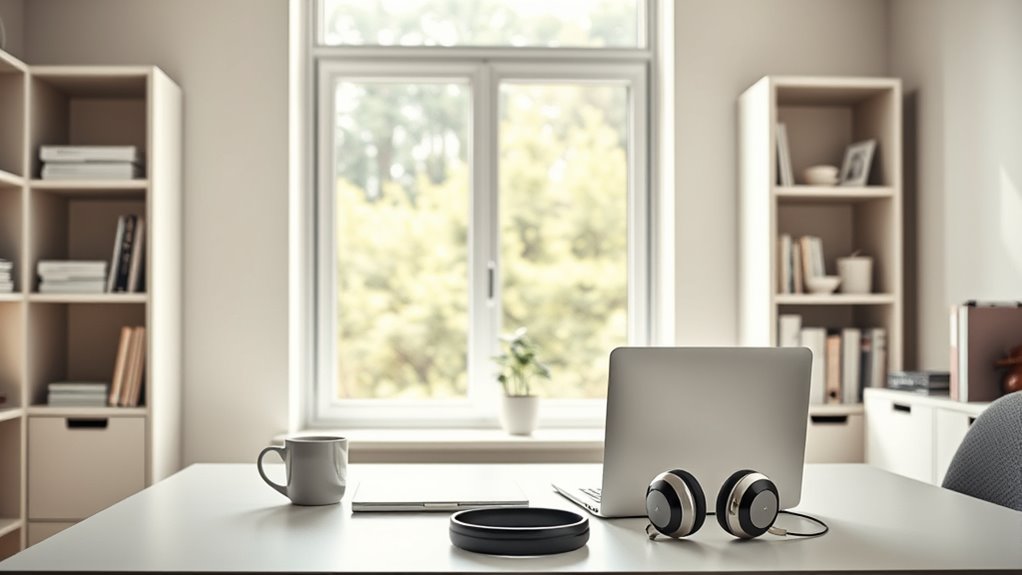
To create a focused work environment at home, you first need to identify what distracts you and clear away unnecessary clutter. Start by observing your daily routines and noting what pulls your attention away from work—be it notifications, noise, or physical mess. Once you recognize these triggers, take proactive steps to eliminate or minimize them. Clear your workspace of irrelevant papers, gadgets, or personal items that don’t contribute to your tasks. Turn off non-essential notifications on your devices to avoid constant interruptions. Creating a clean, organized space helps your mind stay focused and reduces the temptation to multitask or get distracted. Remember, a clutter-free environment isn’t just about tidiness; it’s about setting the stage for deep, uninterrupted work.
Designing a Dedicated Workspace That Signals Focus

Have you ever noticed how a clearly defined workspace can instantly boost your focus? When you create a dedicated area solely for work, your brain associates that space with concentration and productivity. Choose a spot that’s quiet, free from distractions, and comfortable. Keep your essentials—laptop, notepad, headphones—within reach, but avoid clutter that can divert your attention. Use visual signals, like a specific chair or desk, to reinforce that this is your focus zone. Personalize it minimally to make it inviting without becoming distracting. When you step into this space, your mind shifts into work mode, helping you stay on task. Consistently using the same area trains your brain to associate that environment with deep work.
Establishing Clear Boundaries With Household Members

Setting clear boundaries with household members is essential to maintaining focus during deep work sessions. Communicate your schedule openly, letting them know when you’re unavailable and why. Use visual cues like a closed door or a “do not disturb” sign to signal your need for focus. Establish routines so everyone respects your work time, and encourage household members to plan activities around your deep work periods. Be consistent in enforcing these boundaries, and remind others gently if they forget. By setting clear expectations, you create an environment where interruptions are minimized, and your work time is protected. This clarity helps prevent misunderstandings and fosters mutual respect, making it easier to stay dedicated and productive during your deep work sessions.
Incorporating Rituals to Transition Into Deep Work Mode

After establishing clear boundaries with household members, creating a consistent routine helps signal your mind that it’s time to focus. Incorporate rituals to make this changeover seamless and reinforce your deep work mindset. These rituals act as mental cues, easing you into concentration. For example, you might:
- Brew a specific coffee or tea as a signal.
- Play a particular song or sound to create an auditory cue.
- Light a candle or use an essential oil to set a calming atmosphere.
- Spend a few minutes reviewing your goals or to-do list.
These simple actions help your brain associate certain behaviors with deep work, making it easier to shift into focus mode quickly. Over time, rituals become powerful anchors that prepare you mentally for deep work sessions.
Maintaining Your Environment for Long-Term Productivity
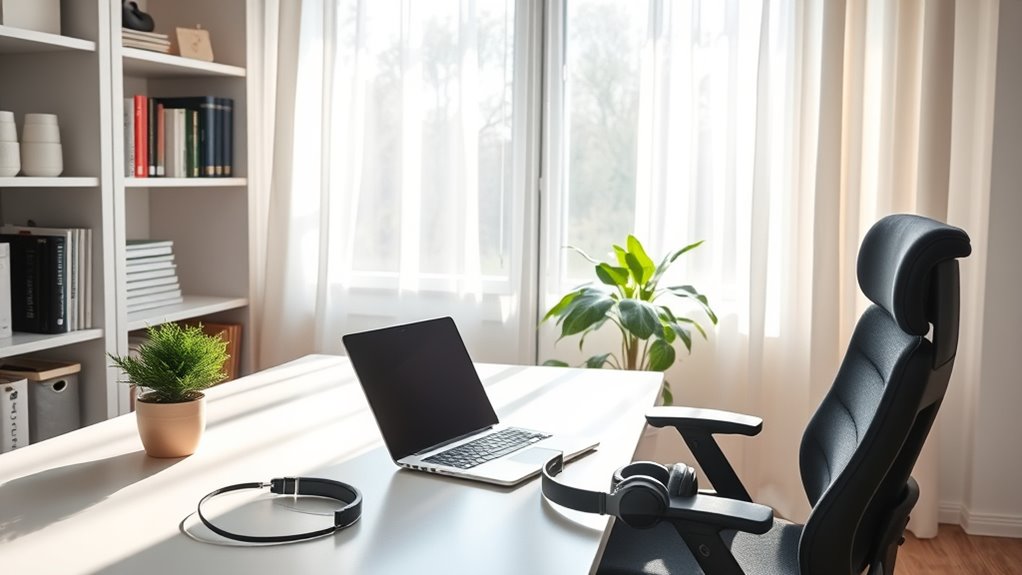
To sustain long-term productivity, it is essential to actively maintain and optimize your environment. A cluttered or distracting space hampers your focus and drains energy. Regularly declutter your workspace, keep essentials within reach, and minimize noise. Personalize your area to inspire motivation without overstimulation. Think of your environment as a foundation that supports your deep work efforts.
| Distraction | Clutter | Noise |
|---|---|---|
| Breaks focus | Causes stress | Diverts attention |
| Creates chaos | Reduces clarity | Interrupts flow |
| Needs management | Needs organization | Needs sound control |
Frequently Asked Questions
How Can I Stay Motivated to Maintain My Deep Work Routine?
To stay motivated to maintain your deep work routine, set clear, achievable goals that excite you. Break tasks into manageable steps, celebrate small wins, and remind yourself of the benefits, like increased productivity and satisfaction. Create a dedicated workspace, minimize distractions, and establish consistent routines. When you see progress and remember your purpose, you’ll find it easier to stay committed and energized for deep, focused work.
What Tools Can Help Minimize Digital Distractions Effectively?
You can try tools like website blockers—think of them as digital bouncers for your productivity. Apps like Freedom or Cold Turkey shut down distracting sites, so you don’t get sidetracked by cat videos or endless social scrolling. Use focus timers like Pomodoro timers to create disciplined work sprints. These tools act like your personal assistants, politely escorting distractions out of the room, letting you focus on what truly matters.
How Do I Handle Interruptions From Urgent Household Tasks?
When interruptions from urgent household tasks occur, set clear boundaries by communicating your work schedule to family members. Use visual signals like a “do not disturb” sign or a specific workspace to reinforce these boundaries. If a task arises, quickly assess if it’s truly urgent; if not, schedule it for later. Stay flexible, but prioritize your deep work sessions to maintain focus and productivity.
What Are Quick Ways to Reset After a Distraction?
When distractions hit, take a deep breath and quickly refocus. Close your eyes for a moment, then review your task list to re-establish your priorities. Use a timer to set a short, dedicated work burst—like five minutes—to regain momentum. Minimize further interruptions by silencing notifications. Remember, resetting is about quick mental shifts, so don’t dwell—just get back on track and keep moving forward.
How Can I Personalize My Workspace for Maximum Focus?
You can personalize your workspace for maximum focus by adding elements that inspire you and reduce distractions. Choose calming colors, incorporate plants, and keep your essentials within reach. Use noise-canceling headphones or soft background music to block out noise. Arrange your desk to minimize clutter, and include personal touches like photos or artwork that motivate you. Regularly update your setup to maintain a fresh, focused environment that encourages deep work.
Conclusion
By setting up a dedicated workspace and establishing boundaries, you’re more likely to succeed in deep work at home. Did you know that only 20% of people claim they can focus without distractions? Eliminating clutter and creating rituals can boost your productivity and mental clarity. Fixing this one thing—your environment—could be the key to releasing your full potential and making home work truly effective. Start today, and watch your focus transform.