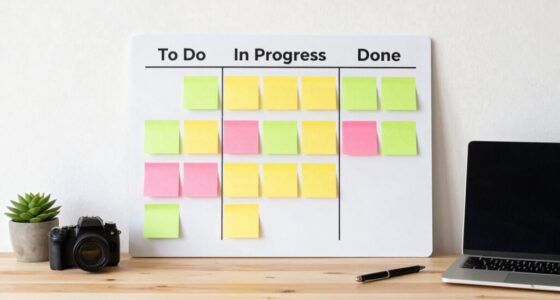
To protect your evenings, spend 10 minutes tidying your workspace and digital clutter, then reflect on what you achieved and identify any challenges. Set boundaries by planning tomorrow’s priorities and engaging in calming breathing or meditation exercises. Disconnect from screens and create a cozy, peaceful environment with dim lighting, soothing scents, and comfortable textures. Following this routine can help you unwind and establish a relaxing nighttime habit—continue to discover how to make this routine truly yours.
Key Takeaways
- Dedicate 10 minutes to declutter your workspace and organize digital files to signal the end of work.
- Review your day’s progress, celebrate wins, and plan 3-5 priorities for tomorrow to foster readiness.
- Limit screen time and engage in calming activities like reading or stretching to transition into relaxation.
- Dim lights, eliminate noise, and create a cozy environment with soothing scents and textures to promote restful sleep.
- Turn off notifications and establish a nightly routine to mentally detach, reducing worries and enhancing evening unwinding.

gianotter Desk Organizers and Accessories with File Holder, 4-Tier Desk Accessories & Workspace Organizers with Drawer and 2 Pen Holder, Paper Organizer for Office Supplies (Black)
📂【Liberate Your Desk】: The just-right size of the desk organizer expands more space for your desk, easily accommodates…
As an affiliate, we earn on qualifying purchases.
As an affiliate, we earn on qualifying purchases.
Clearing Your Workspace and Digital Clutter

Before wrapping up your day, take a few moments to clear your workspace and digital clutter. Put away papers, organize supplies, and tidy your desk to create a clean environment. Closing open tabs, deleting unnecessary files, and organizing your desktop reduces digital chaos. This helps prevent your mind from lingering on unfinished tasks and makes the shift to personal time smoother. A clutter-free space signals the end of the workday, allowing you to mentally detach. Keep a designated spot for incoming documents or notes to avoid future mess. By establishing this habit, you set clear boundaries between work and personal life, making your evenings more relaxing. Finishing your day with an organized workspace supports a fresh start tomorrow.

Sooez Upgraded Accordion File Organizer, Expanding File Folder with Deeper 12 Pockets – Never Cover Up Index Tabs, Monthly Bill Paper Receipt Document Organizer, Letter A4 Size for Home Office School
Superior Durability: Featuring strong 100C thickened cover and reinforced edges, surpassing competitors in durability. Made from PVC-free, acid-free…
As an affiliate, we earn on qualifying purchases.
As an affiliate, we earn on qualifying purchases.
Reflecting on the Day’s Accomplishments and Challenges

Take a moment to review your daily goals and see what you’ve achieved. Acknowledge the key challenges you faced and consider how to improve tomorrow. Celebrating small wins helps you stay motivated and focused on your progress.
Review Daily Goals
Reflecting on your daily goals helps you stay aware of what you’ve achieved and where you faced obstacles. Take a few minutes to review your list and check off completed tasks. This reinforces your sense of progress and keeps you motivated. If some goals remain unfinished, identify why—were they too ambitious or did unexpected interruptions occur? Recognizing these patterns helps you plan better for tomorrow. Be honest with yourself about what worked and what didn’t. Celebrating small wins boosts your confidence, while understanding setbacks offers insight for improvement. This reflection isn’t about self-criticism; it’s about learning and adjusting. When you finish, you’ll feel more organized and ready to disconnect, knowing you’ve acknowledged your efforts and set a clear path forward.
Note Key Challenges
Have you considered which challenges stood out most during your day? Reflecting on these moments helps you understand what pushed your boundaries and where improvements are needed. Maybe a project didn’t go as planned, or a miscommunication caused delays. Recognizing these hurdles isn’t about dwelling on setbacks but about learning from them. Did you feel overwhelmed at any point, or did a particular task require more effort than expected? Jot down these key challenges to gain clarity on your patterns and habits. This awareness allows you to address obstacles proactively, rather than letting them fester. By acknowledging your difficulties, you set the stage for growth and better preparation tomorrow. It’s a crucial step in maintaining your momentum and staying focused on your journey.
Celebrate Small Wins
Recognizing your small wins each day helps you see the progress often hidden in everyday moments. When you take time to celebrate even minor accomplishments, you reinforce a positive mindset and build confidence. Whether you completed a task, handled a difficult conversation, or simply stayed focused, acknowledging these wins keeps you motivated. It also helps you appreciate how far you’ve come, even if the bigger goals still feel distant. Reflecting on challenges alongside successes gives you a balanced perspective, showing growth through setbacks. By consciously celebrating small wins, you create a habit of gratitude and self-encouragement. This practice not only boosts your morale but also prepares you to unwind peacefully, knowing you’ve made genuine progress today.

Bersiler Aromatherapy Candles, Scented Candles, 7OZ Lavender Eucalyptus Candles Stress Relief and Relax for Home & Bedroom Gift for Women Birthday Christmas, Soy Wax Candle
Lavender Eucalyptus Scented Candles: It's well-known that lavender is very effective for relaxing stress, so it can improve…
As an affiliate, we earn on qualifying purchases.
As an affiliate, we earn on qualifying purchases.
Setting Boundaries for Evening Activities

To protect your evenings, start by setting clear end times for work and activities so you can truly unwind. Limit your screen exposure before bed to help your mind relax and prepare for rest. Focus on relaxing activities like reading or gentle stretches to create a peaceful shift from day to night.
Establish Clear End Times
Setting a clear end time for your evening activities helps establish boundaries and signals to your mind that the workday is wrapping up. Decide when you’ll stop working or engaging in tasks, and stick to it. This prevents work from spilling into your personal time and helps you shift smoothly. To stay consistent, create a visual reminder like a timetable:
| Time Slot | Activity | Duration |
|---|---|---|
| 6:00 PM | Wrap up work | 15 mins |
| 6:15 PM | Tidy workspace | 5 mins |
| 6:20 PM | Prepare for tomorrow | 10 mins |
| 6:30 PM | Transition to personal | — |
| 7:00 PM | End all work activities | — |
Stick to these times. Clear boundaries make your evenings more relaxing and protect your personal time.
Limit Screen Exposure
Limiting your screen exposure in the evening is essential for winding down and maintaining good sleep hygiene. Screens emit blue light, which can suppress melatonin production and disrupt your circadian rhythm. To set boundaries, turn off devices at least 30 minutes before your designated bedtime. Consider establishing a “tech curfew” and leaving your phone or tablet in another room. If you need to use screens for reading or work, switch to blue light filters or glasses to reduce exposure. Avoid social media, emails, or news in the hour before bed, as these can increase alertness and stress. Creating this boundary helps signal to your brain that it’s time to relax, making it easier to fall asleep and improve overall sleep quality.
Prioritize Relaxing Activities
Establishing a routine of relaxing activities signals your mind that it’s time to wind down. Prioritizing calming tasks helps set clear boundaries for your evenings. Choose activities like reading, gentle stretches, or listening to soothing music. These help you shift from a busy day to relaxation. To create a consistent flow, consider this schedule:
| Time | Activity | Purpose |
|---|---|---|
| 30 mins before bedtime | Light reading or journaling | Calm your mind and reflect |
| 15 mins before bedtime | Gentle stretches or meditation | Release tension and prepare to sleep |
| 5 mins before bedtime | Deep breathing exercises | Signal your body it’s time to rest |
Focusing on these activities ensures your evenings become a peaceful progression, making it easier to unwind and enjoy quality rest.

Growalleter Ocean Wave Projector Light, 16-Color LED Cube Lamp & Remote, 3D Holographic Water Ripple, Romantic Ambient Lighting for Kids Room, Meditation, Relaxation, Bathroom, Night Light (Plug-in)
Immersive RGB Mood Lighting – With 16 soothing colors and 4 dynamic gradient modes In the lower-right corner…
As an affiliate, we earn on qualifying purchases.
As an affiliate, we earn on qualifying purchases.
Engaging in a Relaxing Breathing or Meditation Exercise

To wind down effectively, taking a few moments to engage in a relaxing breathing or meditation exercise can make a significant difference. Find a comfortable position and close your eyes if you like. Focus on your breath, inhaling slowly through your nose, and exhaling gently through your mouth. Let your attention settle on the rhythm of your breathing, releasing tension with each exhale. If your mind wanders, gently bring it back to your breath. Alternatively, try a simple meditation by visualizing a peaceful scene or repeating a calming phrase. This practice helps slow your heart rate, relax your muscles, and clear your mind. Even a few minutes of intentional breathing or meditation can create a sense of calm, setting the stage for a restful evening.
Planning Tomorrow’s Priorities to Ease Your Mind

Taking a few minutes to plan your priorities for tomorrow can help clear your mind and reduce evening stress. When you jot down your top tasks, you create a mental roadmap, making tomorrow feel more manageable. Focus on three to five key items, including essential work tasks, personal errands, or self-care routines. Prioritizing helps prevent your mind from racing with an endless to-do list. As you write, consider what’s most urgent and impactful, and leave less critical items for later. This process allows you to mentally release worries about the unknown, giving you a sense of control. When you finish, you’ll feel more organized and ready to unwind, knowing you’ve set clear intentions for tomorrow’s success.
Disconnecting From Screens and Digital Devices

Since screens and digital devices are often sources of distraction and overstimulation, disconnecting from them in the evening can help your mind unwind. Shutting down your devices signals your brain that it’s time to relax, making it easier to shift into rest. To make this easier, try these steps:
Disconnect from screens in the evening to help your mind unwind and prepare for restful sleep.
- Set a specific device cutoff time, like 30 minutes before bed.
- Turn off all notifications to avoid interruptions.
- Replace screen time with calming activities, such as reading or journaling.
Creating a Calm and Cozy Environment for Rest

Creating a calm and cozy environment for rest involves intentionally designing your space to promote relaxation. Start by dimming the lights and eliminating loud noises, which signal your brain it’s time to wind down. Use soft, comfortable textures like plush blankets and cushions to make your space inviting. Keep your room tidy, removing clutter that can cause stress or distraction. Incorporate calming scents like lavender or chamomile through diffusers or candles to relax your mind. Adjust the temperature to a comfortable level, avoiding extremes that might disturb your sleep. Personalize your space with soothing elements that bring you joy, whether it’s a favorite photo or calming artwork. When your environment feels safe and peaceful, your body naturally relaxes, making it easier to drift into restful sleep.
Frequently Asked Questions
How Long Should Each Step of the Routine Take?
Each step of your shutdown routine should take about one to two minutes. Start by clearing your workspace in one minute, then spend another minute organizing your materials and planning for tomorrow. Use the remaining time to shut down your devices and do a quick mental review. Keeping each step within this timeframe helps you finish efficiently, leaving you relaxed and ready for a peaceful evening.
Can This Routine Be Adapted for Busy or Unpredictable Schedules?
Yes, you can adapt this routine for busy or unpredictable schedules. Keep each step brief, focusing only on essential tasks. You might do a quick 3-minute check-in, then spend 2 minutes tidying your workspace, and 2 minutes planning for tomorrow. Flexibility is key. If your evening gets disrupted, simply do what you can and pick up where you left off, ensuring you still protect your evenings.
What if I Struggle to Unwind or Disconnect Completely?
If you find it hard to unwind, think of your evening as a garden needing gentle tending. You can start small—turn off screens, take deep breaths, or do a quick stretch. Consistency is your watering can, slowly nurturing relaxation. Over time, these small acts become easier, helping you disconnect and create a peaceful changeover from work mode to home. Remember, even a tiny shift can bloom into calm.
Are There Specific Scents or Lighting Tips to Enhance Relaxation?
You can enhance relaxation by using calming scents like lavender, chamomile, or eucalyptus through essential oils or candles. Dim the lighting in your space, opting for warm, soft tones or amber bulbs to create a cozy atmosphere. Avoid harsh fluorescent lights, and consider using a bedside lamp or string lights to set a tranquil mood. These small changes help signal your mind that it’s time to unwind and relax.
How Often Should I Modify or Update My Shutdown Routine?
You should review and update your shutdown routine every few months, especially if your schedule or stress levels change. Pay attention to what’s working and what’s not, and feel free to add new calming techniques or eliminate those that no longer serve you. Regular updates keep your routine fresh and effective, helping you wind down better and enjoy more peaceful evenings. Stay flexible and listen to your evolving needs.
Conclusion
By following this 10-minute shutdown routine, you’ll close the door on the day like a gentle sunset, leaving behind only peaceful hues. Clearing your space, reflecting, and disconnecting helps your mind breathe freely, setting the stage for restful nights. Think of it as watering a garden—you nurture calm and clarity, so tomorrow’s growth begins with ease. Embrace this habit, and watch your evenings transform into serene sanctuaries.