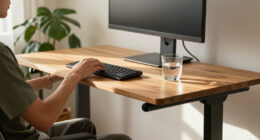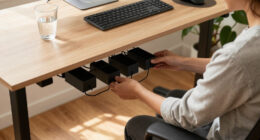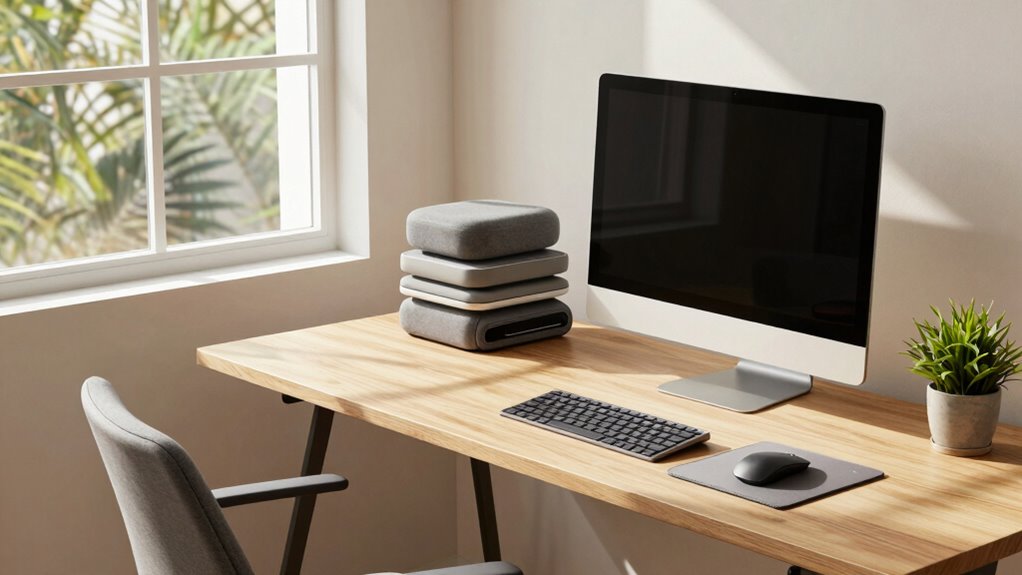

A friction audit helps you identify and remove disruptions in your home office that hinder productivity. You should review your workspace organization, guarantee ergonomic setups, and streamline digital systems to reduce distractions and physical strain. Regularly evaluating these areas keeps your environment efficient and comfortable. Small adjustments can make a big difference over time. Keep exploring to discover practical strategies that transform your workspace into a focus-friendly zone.

Get comfort and recovery gear delivered free with Prime
- Fast, free delivery on millions of items
- Prime Video, Amazon Music and more included
- Member-only deals all year
Key Takeaways
- Regularly assess workspace layout to identify and eliminate clutter and distractions.
- Ensure ergonomic accessories are properly adjusted to prevent discomfort and improve focus.
- Organize digital files and streamline workflows to reduce mental load and save time.
- Continuously review and refine workspace setup based on evolving work habits and needs.
- Address digital and physical friction points promptly to maintain a smooth, efficient work environment.
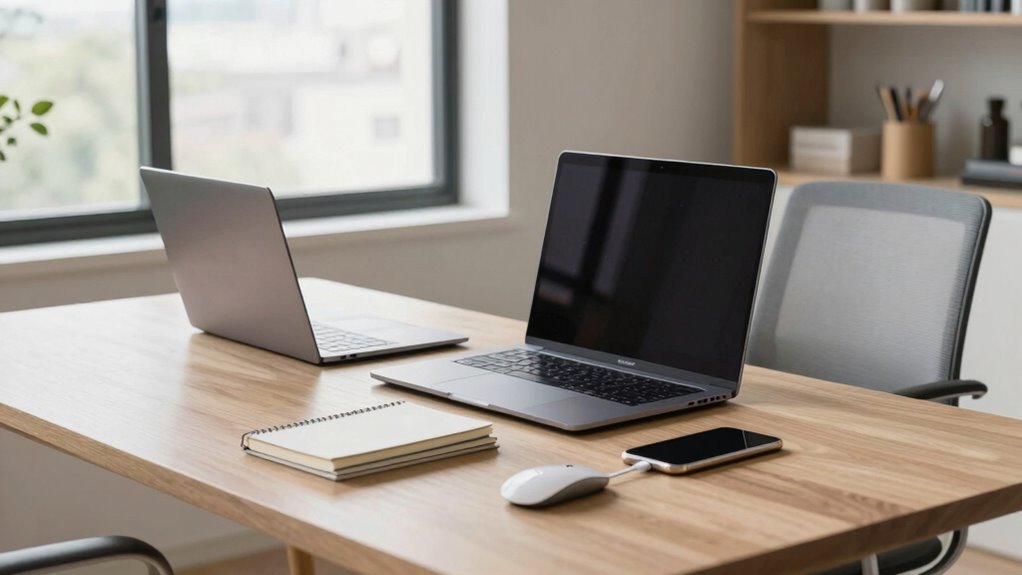
Have you ever wondered why some days at your home office feel smoother than others? It’s often because of subtle differences in how your workspace is set up and how well you manage friction points that can slow you down. Conducting a friction audit helps you identify these issues and optimize your environment for productivity. Start by examining your workspace organization. Is everything within easy reach? Cluttered surfaces or misplaced items can cause constant interruptions, forcing you to pause and search for tools or documents. Streamlining your workspace helps minimize distractions and keeps your focus sharp. Think about the flow of your daily tasks and arrange your supplies, files, and equipment accordingly. When your workspace is organized, you spend less steering through chaos and more time working efficiently.
A well-organized workspace reduces distractions and helps you work more efficiently and focus better.
Next, consider the role of ergonomic accessories in reducing friction. An uncomfortable workspace can lead to physical strain, which affects your concentration and stamina. Ergonomic accessories like adjustable chairs, keyboard stands, or monitor risers promote better posture and reduce fatigue. When your body isn’t battling discomfort, your mind remains clearer, and your work becomes smoother. Proper ergonomic setup isn’t just about comfort—it’s about preventing long-term strain and boosting your overall productivity. These accessories also help you maintain a natural workflow, preventing awkward movements that can slow you down. Additionally, understanding the importance of biodiversity in your environment can inspire sustainable and healthful choices for your workspace setup, fostering a more balanced and energizing atmosphere. Incorporating elements of biophilic design can further enhance your workspace by connecting you with nature, which has been shown to improve focus and reduce stress. An awareness of ergonomic principles can guide you in selecting the most effective accessories for your specific needs.
Beyond physical setup, pay attention to the digital friction that might be slowing you down. Are your files organized logically? Do your apps and tools integrate seamlessly? Removing unnecessary digital clutter and setting up a consistent system for naming and storing files can save you valuable time. Automate repetitive tasks where possible, and make certain that your software and hardware work harmoniously. This reduces the mental load of steering through multiple platforms or troubleshooting tech issues, which can be a significant friction point. Recognizing and addressing digital organization as part of your workflow can lead to smoother daily operations.
Finally, take time periodically to review and refine your setup. A friction audit isn’t a one-time task; it’s an ongoing process. As your work habits evolve, so should your workspace. Regularly check if your ergonomic accessories are still supporting your posture, and if your workspace organization still aligns with your workflow. Small adjustments can lead to big improvements in your daily efficiency. By staying proactive and attentive to these details, you’ll create a home office environment that feels effortless, allowing you to focus on what truly matters—your work.
Popular right now

Bose QuietComfort True Wireless Earbuds with Active Noise Cancellation, Bluetooth 5.3, USB-C Charging, IPX4, Black

Ninja Foodi Smart 6-in-1 Indoor Grill and Air Fryer, 4 qt, FG551

Shark Rocket Pet Plus Corded Stick Vacuum, Bordeaux/Silver, HV322
As an affiliate, we earn on qualifying purchases.
Frequently Asked Questions
How Often Should I Perform a Friction Audit in My Home Office?
You should perform a friction audit every three to six months to maintain ergonomic comfort and guarantee equipment functions smoothly. Regular checks help you identify issues like uncomfortable setups or worn-out equipment that can cause discomfort or slow productivity. Keep your workspace optimized by maintaining equipment, adjusting ergonomic accessories, and addressing friction points promptly. This proactive approach prevents discomfort and keeps your home office efficient and comfortable over time.
What Tools Are Best for Measuring Friction in Office Equipment?
You should use ergonomic assessments and equipment maintenance tools to measure friction effectively. Try using a friction tester or a force gauge to evaluate resistance on your keyboard, mouse, and chair mechanisms. Conduct regular ergonomic assessments to identify areas where friction causes discomfort or inefficiency. Keep your equipment well-maintained by lubricating moving parts and replacing worn-out components, ensuring smooth operation and reducing strain during your workday.
Can a Friction Audit Improve Overall Productivity Significantly?
Absolutely, a friction audit can skyrocket your productivity—think of it as a spa day for your workspace. By pinpointing ergonomic improvements and workflow bottlenecks, you’ll streamline tasks and banish those pesky delays. Suddenly, your home office feels less like a jungle gym and more like a well-oiled machine. It’s the secret sauce that turns chaos into efficiency, making work feel less like a chore and more like a breeze.
Are There Specific Signs Indicating a Need for a Friction Audit?
Yes, signs like persistent discomfort or frequent interruptions suggest you need a friction audit. An ergonomic assessment can reveal if your workspace causes strain, while a thorough equipment inspection guarantees your tools function smoothly. If you notice decreased focus, lingering aches, or productivity dips, it’s time to evaluate your setup. Addressing these issues with an audit can eliminate friction points, boosting your comfort and efficiency in your home office.
How Much Does It Typically Cost to Conduct a Professional Friction Audit?
Think of a professional friction audit as tuning your home office’s engine; it usually costs between $200 and $600. This investment covers expert analysis of equipment maintenance and ergonomic adjustments, ensuring your workspace runs smoothly. While prices vary based on size and complexity, the cost is a small price to pay for a more comfortable, efficient environment that boosts productivity and prevents costly future repairs.
Conclusion
By conducting a friction audit, you uncover hidden hurdles slowing down your productivity. Did you know that the average person wastes up to 21 days a year dealing with inefficient setups? Addressing these friction points transforms your workspace into a smooth-running machine. Don’t wait—identify and eliminate those obstacles today. A few small tweaks can boost your efficiency, save time, and make working from home more enjoyable every single day.