TL;DR

Get comfort and recovery gear delivered free with Prime
- Fast, free delivery on millions of items
- Prime Video, Amazon Music and more included
- Member-only deals all year
Steve Powell, a training and education director at Power Plate, recommends a two-minute sequence of shoulder, chest, hip and breathing movements to break up sedentary periods. The routine may offer a brief pause and change of posture, but Powell says it will not resolve every source of stress, and the source provides no evidence that the sequence treats stress.
A Fit&Well report for National Stress Awareness Day outlines a two-minute movement reset recommended by Steve Powell, Power Plate’s director of training and education, as a way to interrupt sedentary work and take a brief pause. Powell says the sequence may help people change posture and notice how their bodies feel, but it is not a cure for stress or a substitute for addressing its causes.
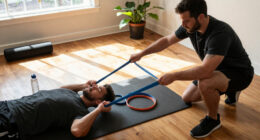
The routine has four parts, each lasting 30 seconds. It starts with shoulder rolls: sit or stand comfortably, let the shoulders drop, roll them backward five times and forward five times, then gently draw the shoulder blades together and release. Powell advises breathing naturally and noticing tension around the neck and upper back.
For the second step, stand with feet hip-width apart and gently open the arms to the sides, drawing the shoulders back without forcing a stretch. The third step shifts weight from one foot to the other, followed by a few slow standing side bends. Powell says the movements should stay controlled and within a comfortable range; the aim is a change of position, not a rapid flexibility gain.
The final 30 seconds are for standing tall, relaxing the arms and taking a few comfortable, unhurried breaths. The routine requires no equipment, gym clothes or dedicated space. Powell also suggests shorter movement breaks, such as a walk around an office or shoulder rolls between meetings, rather than waiting for time for a lengthy workout.
Short Breaks Fit Busy Workdays
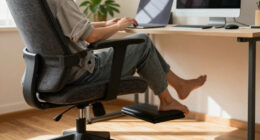
The advice focuses on a practical obstacle: people may spend long stretches sitting and may not have time or motivation for a full workout during the workday. A short sequence can be done between tasks, making movement easier to fit into an ordinary routine. Powell says small actions can make movement feel less dependent on finding a spare hour.
The report presents the routine as a modest wellbeing prompt, not a measured intervention. It does not cite research showing that this particular sequence reduces stress, nor does it quantify its effects. Its immediate purpose, as Powell describes it, is to interrupt sitting, change posture and pause before returning to work.
Popular right now

KitchenAid Artisan 5-Qt Tilt-Head Stand Mixer – Dried Rose (KSM150PS)

Ninja DualBrew Pro Specialty Coffee Maker, Black, CFP301

De'Longhi Rivelia Fully Automatic Espresso Machine with Milk Frother, White
As an affiliate, we earn on qualifying purchases.
Advice Tied to Stress Awareness Day
National Stress Awareness Day falls on the first Wednesday in November, a date that has been observed since 1998, according to the source. Fit&Well frames the day as a reminder to pause and consider everyday wellbeing as holiday preparations and work deadlines accumulate.
Powell is a movement and coaching specialist who works for Power Plate, a company that makes whole-body vibration devices. His suggestions in this report do not require those devices. The routine is based on simple standing or seated movements and is offered as one way to break up a working day, not as a device-based treatment or formal stress-management program.
“Our bodies are designed to move, yet modern working life often encourages the opposite.”
— Steve Powell, Power Plate director of training and education, speaking to Fit&Well
Effects Have Not Been Measured
The report offers Powell’s practical advice but does not provide study results or evidence measuring whether this two-minute sequence changes stress, discomfort or work performance. It also does not establish how long any perceived benefit might last, or whether the routine works differently for people with different needs.
Powell acknowledges that two minutes will not undo the effects of a demanding week. Readers should keep movements gentle and stop if they cause pain or discomfort. The source does not discuss adaptations for injuries or medical conditions; people with concerns about movement should seek guidance from a qualified health professional.
Try the Sequence During a Break
There is no announced follow-up study or formal program in the source. The practical next step is to try the movements during a break, keeping each action comfortable and using the pause to notice posture and breathing. Powell’s broader suggestion is to break up long periods of inactivity with small, repeatable actions during the day.
Whether someone finds the reset useful will depend on their experience; the report gives no outcome data. It should be treated as a brief movement prompt, while persistent or significant stress may call for support beyond a short workplace break.
Key Questions
What is the two-minute movement reset?
It is a four-part routine with 30 seconds for each step: shoulder rolls, a gentle chest-opening movement, hip shifts and side bends, then a brief standing pause with unhurried breaths.
Does the routine cure stress?
No. Powell says movement is not a cure for stress and that two minutes will not undo a demanding week. He presents it as a short pause that may help someone change posture and reconnect with how their body feels.
Do I need equipment or workout clothes?
No. Powell says the reset does not require specialist equipment, gym clothes or a dedicated space. The movements can be done during a workday break.
How should I adapt the movements if they feel uncomfortable?
Keep each movement gentle and within a comfortable range; do not force a stretch or continue through pain. The report does not give condition-specific modifications, so people with an injury or health concern should ask a qualified professional for guidance.
Source: fitandwell.com