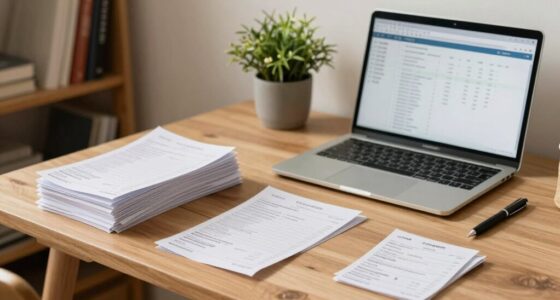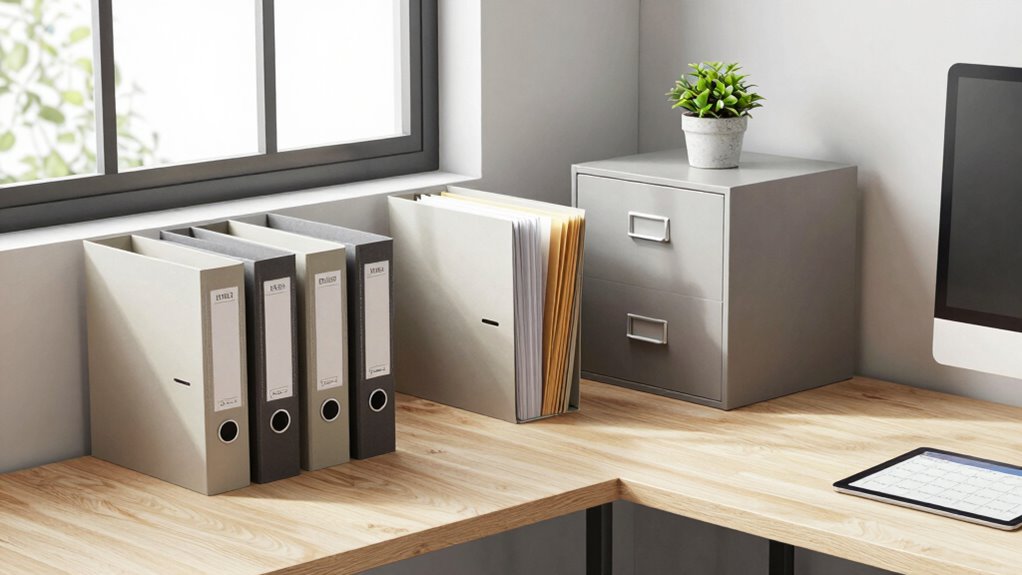

The best way to store your home office records all year is by digitizing your documents and using cloud storage. This way, you can easily organize, access, and back up your files securely online, reducing clutter and protecting against damage or theft. Implement clear folder structures and consistent naming conventions to stay organized. Continuing will help you discover simple strategies to keep your records safe, accessible, and manageable throughout the year.
Key Takeaways
- Digitize paper records using reliable scanners and organized file naming for easy access year-round.
- Utilize cloud storage for secure, remote access and automatic backups of all records.
- Organize digital files into clear folders by category (taxes, receipts, invoices) for efficient management.
- Implement routine digital organization and maintenance to ensure ongoing record accessibility.
- Use encryption and security measures to protect sensitive information throughout the year.

Keeping your home office records organized year-round can be challenging, but adopting a better storage method makes it manageable. Instead of relying solely on physical files, digital archiving offers a smarter, more efficient way to keep track of your documents. Digital archiving involves converting paper records into digital formats, which you can store electronically. This way, you reduce clutter and make your files easier to access, search, and back up. Moving to digital records also minimizes the risk of losing important documents due to damage, theft, or misplacement. To implement this, invest in a reliable scanner and develop a system for naming and organizing your digital files, guaranteeing you can find what you need quickly.
Cloud storage plays an essential role in maintaining your digital archive. With cloud storage, your documents are stored securely online, giving you access from anywhere with an internet connection. Instead of lugging around physical folders or digging through piles of paper, you can retrieve or upload files effortlessly. Many cloud services offer automatic backups, so your records stay safe even if your device crashes or gets lost. Plus, cloud storage often includes version control, allowing you to track changes and restore previous versions if necessary. This is especially useful for ongoing projects, contracts, or financial records that change frequently. Additionally, using cloud storage can help you stay compliant with record-keeping regulations, which often mandate secure and accessible documentation. Practicing digital record-keeping consistently ensures your data remains organized and protected over time. Incorporating secure storage solutions further enhances the safety and integrity of your digital archive.
Another benefit of digital archiving and cloud storage is collaboration. If you work with others, you can share specific files or folders without printing copies or mailing physical documents. This speeds up workflows, reduces paper waste, and helps keep everyone on the same page. Additionally, digital records are easier to organize into folders or categories, making long-term management simpler. You can set up folders for tax documents, receipts, invoices, or personal records, and access them whenever needed. With encryption and security measures offered by reputable cloud providers, your sensitive information stays protected from unauthorized access. Developing a system for digital organization helps streamline the process and ensures your records remain accessible and secure. Setting up clear naming conventions and folder structures can significantly improve your efficiency. By establishing a routine, you’ll keep your records manageable and ensure your digital archive remains a trustworthy resource. Embracing digital archiving and cloud storage transforms a once intimidating task into a streamlined process, giving you peace of mind and more space in your home office.
document scanner for home office
As an affiliate, we earn on qualifying purchases.
As an affiliate, we earn on qualifying purchases.
Frequently Asked Questions
How Long Should I Keep Different Types of Home Office Records?
You should keep most home office records for at least three to seven years, following record retention policies. Tax documents and receipts typically need seven years, while ongoing project records can be stored for a shorter period. Use document scanning techniques to digitize important papers, reducing clutter and making it easier to organize and access files. Regularly review and securely delete outdated records to stay compliant and keep your storage efficient.
What Are the Best Digital Tools for Organizing Records?
Think of digital tools as a well-organized library for your records. Digital archives and cloud storage are your best allies, making it easy to find and access files anytime. Use platforms like Google Drive or Dropbox for seamless cloud storage, and consider digital archiving solutions like Evernote or OneDrive for categorizing and securing important documents. These tools keep your records safe, accessible, and neatly arranged, no matter where you are.
How Can I Ensure My Records Are Secure From Theft or Damage?
To keep your records secure from theft or damage, follow cybersecurity tips like using strong, unique passwords and enabling two-factor authentication. Take advantage of cloud storage benefits, such as automatic backups and encryption, to protect your data. Regularly update your security software and back up files to multiple locations. By staying vigilant and leveraging these tools, you guarantee your home office records stay safe and accessible.
Are There Specific Storage Solutions for Small Home Offices?
Did you know 60% of small home offices struggle with clutter? For your space, choose compact office furniture with built-in storage options like desks with drawers. Use stackable storage containers to organize files and supplies efficiently. These solutions maximize limited space and keep your records safe, accessible, and tidy. Opt for furniture and containers designed specifically for small areas, making your home office functional without sacrificing style or security.
How Often Should I Review and Declutter Stored Records?
You should review and declutter your stored records at least once a year to stay organized. During this time, consider switching to paperless filing where possible, reducing physical clutter. Also, verify your records are securely backed up in the cloud. This way, you keep only necessary documents, free up space, and protect your data. Regular reviews make it easier to manage your records and avoid unnecessary clutter.
cloud storage service subscription
As an affiliate, we earn on qualifying purchases.
As an affiliate, we earn on qualifying purchases.
Conclusion
By adopting a simple, organized system for storing your home office records year-round, you can save time and reduce stress during tax season. Did you know that 30% of small business owners face penalties due to misplaced or incomplete records? Don’t let disorganization cost you. Stay proactive and keep your records tidy—it’s the smarter way to handle your home office finances all year long. Staying organized today pays off tomorrow.

NeatDesk Desktop Document Scanner and Digital Filing System for PC and Mac – Black – with DVO cook'n Organizer software
- Includes all relevant accessories: Brand new in box
As an affiliate, we earn on qualifying purchases.
As an affiliate, we earn on qualifying purchases.
As an affiliate, we earn on qualifying purchases.