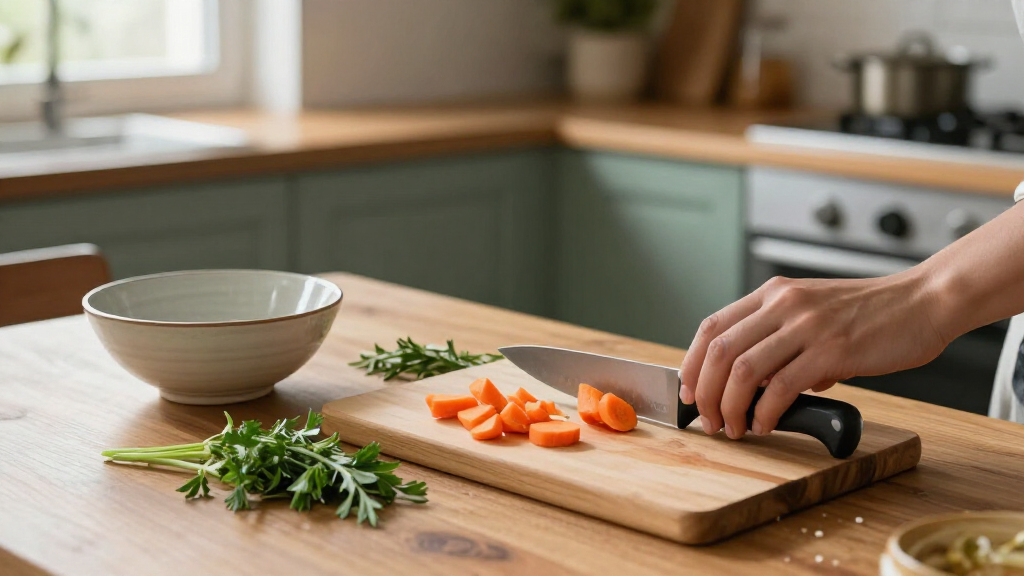
Ergonomic kitchen knives are not one-size-fits-all: the right choice depends on your grip, cutting motion, and the foods you prepare. My best overall pick is the Victorinox Fibrox Pro 8-Inch Chef’s Knife for its versatile chef-knife format and grippy handle design. The Etac Relieve Angled Carving Knife is a standout for users who want an angled grip, while the NULU Advanced Ulu Rocker Knife suits a rocking motion and compact chopping tasks. The main tradeoff is between a familiar, all-purpose blade and a specialized shape that may ease a particular movement but limit other jobs. Read on for the full breakdown, ranking logic, and advice on matching a knife to your hand and kitchen routine.

Get comfort and recovery gear delivered free with Prime
- Fast, free delivery on millions of items
- Prime Video, Amazon Music and more included
- Member-only deals all year
Complete the kit


Key Takeaways
- The Victorinox Fibrox Pro leads for all-around use: its conventional chef-knife format is more versatile than the angled, rocker, or task-specific designs in this lineup.
- Specialized grips are most useful when they match a real movement need: the Etac angled carving knife, DMI curved rocker, and adaptive right-angle pair each serve different handling preferences.
- A rocker blade can reduce the need for a repeated lift-and-drop motion: the NULU ulu and KitchenAid mezzaluna suit users who prefer rocking, but they are less adaptable than a chef’s knife.
- Blade size and shape matter as much as handle ergonomics: the HOSHANHO nakiri favors vegetable prep, while the Plys and Wruhamd cleaver-style options are more specialized and may feel cumbersome for fine work.
- Large bundles do not automatically offer the best ergonomic fit: the Astercook set provides variety, but a single well-matched knife may be easier to control and maintain than a block of tools with mixed handle and blade styles.
| Right-Angle Adaptive Knives, 2-Pack |  | Best Adaptive Two-Knife Set | Set size: 2 knives | Blade material: Stainless steel | Blade length: 6 inches | VIEW LATEST PRICE | See Our Full Breakdown |
| Plys Ergonomic Stainless Steel Meat Cleaver |  | Best Ergonomic Cleaver for Boneless Prep | Knife type: Meat cleaver | Blade material: High-carbon stainless steel | Construction: Forged, full tang | VIEW LATEST PRICE | See Our Full Breakdown |
| NULU Advanced Ulu Rocker Knife with 7-Inch Stainless Steel Blade and Sheath |  | Best for Adjustable, Ambidextrous Grip | Blade length: 7 inches | Item length: 7.25 inches | Blade material: High-carbon stainless steel | VIEW LATEST PRICE | See Our Full Breakdown |
| DMI Verti-Grip Curved Rocker Steak Knife |  | Best Simple Rocker Knife | Knife type: Curved rocker knife | Blade material: Stainless steel | Blade edge: Plain | VIEW LATEST PRICE | See Our Full Breakdown |
| Wruhamd Hand-Forged Cleaver and Ulu Knife Set with Leather Sheath |  | Best Forged Two-Knife Set | Set contents: Butcher cleaver and ulu knife | Blade material: High-carbon stainless steel | Construction: Forged, full tang | VIEW LATEST PRICE | See Our Full Breakdown |
| Etac Relieve Angled Carving Knife for Arthritis | 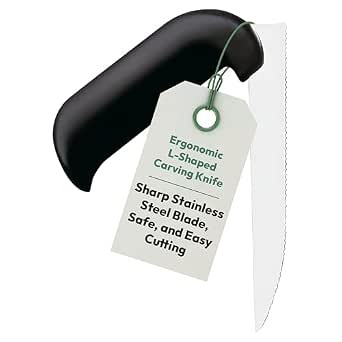 | Best for Wrist-Sparing Grip | Blade material: Stainless steel | Handle design: Angled ergonomic handle with curved thumb support | Blade position: Lower than the handle | VIEW LATEST PRICE | See Our Full Breakdown |
| PAUDIN 8-Inch High-Carbon Stainless Steel Chef Knife |  | Best Ergonomic All-Purpose Pick | Product type: Chef knife | Blade length: 8 inches | Blade material: 5Cr15MoV stainless steel | VIEW LATEST PRICE | See Our Full Breakdown |
| Victorinox Fibrox Pro 8-Inch Chef’s Knife, Black | 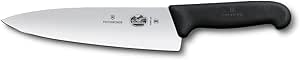 | Best for a Secure, Low-Fuss Grip | Model: 45520 | Blade length: 8 inches | Blade material: Stainless steel | VIEW LATEST PRICE | See Our Full Breakdown |
| HOSHANHO 7-Inch Nakiri Chef Knife |  | Best for Vegetable Prep | Knife type: Nakiri chef knife | Blade length: 7 inches | Blade material: 10Cr15CoMoV high-carbon stainless steel | VIEW LATEST PRICE | See Our Full Breakdown |
| Astercook 14-Piece Stainless Steel Knife Set with Block and Sharpener |  | Best Complete Set for a Shared Kitchen | Set size: 14 pieces | Blade material: High-carbon stainless steel | Handle material: Stainless steel | VIEW LATEST PRICE | See Our Full Breakdown |
| KitchenAid Mezzaluna Knife, 6-Inch, Onyx Black |  | Best for Herbs and Minced Ingredients | Brand: KitchenAid | Blade material: Stainless steel | Blade length: 6 inches | VIEW LATEST PRICE | See Our Full Breakdown |
| ergonomic kitchen knife | Blade material | Blade length | Handle material | Construction |
|---|---|---|---|---|
| Right-Angle Adaptive Knives | Stainless steel | 6 inches | — | — |
| Plys Ergonomic Stainless Steel | High-carbon stainless steel | 8.6 inches | Wood | Forged, full tang |
| NULU Advanced Ulu Rocker Knife | High-carbon stainless steel | 7 inches | — | Stamped |
| DMI Verti-Grip Curved Rocker S | Stainless steel | — | Plastic | — |
| Wruhamd Hand-Forged Cleaver an | High-carbon stainless steel | 8.63 inches | Wood | Forged, full tang |
| Etac Relieve Angled Carving Kn | Stainless steel | — | — | — |
| PAUDIN 8-Inch High-Carbon Stai | 5Cr15MoV stainless steel | 8 inches | Wood | — |
| Victorinox Fibrox Pro 8-Inch C | Stainless steel | 8 inches | Thermoplastic elastomer (TPE/Fibrox) | Stamped |
| HOSHANHO 7-Inch Nakiri Chef Kn | 10Cr15CoMoV high-carbon stainless steel | 7 inches | Pakkawood | Forged |
| Astercook 14-Piece Stainless S | High-carbon stainless steel | — | Stainless steel | Full tang |
| KitchenAid Mezzaluna Knife | Stainless steel | 6 inches | — | — |
More Details on Our Top Picks
Right-Angle Adaptive Knives, 2-Pack
The Right-Angle Adaptive Knives make the most sense for cooks whose main concern is wrist position, not adding another conventional chef’s knife. Their L-shaped handles are designed to reduce wrist strain, while the serrated blade and flat chopping blade cover different everyday jobs: think bread or tomatoes with the former, and tender produce with the latter. That division gives this set more task flexibility than the single-blade DMI Verti-Grip Curved Rocker Steak Knife, though the DMI’s rocker motion may suit someone seeking a simpler cutting action. The tradeoff is that an angled grip changes how cutting feels, so users accustomed to straight handles may need time to adapt. These knives are also described for tender foods, not every demanding kitchen task. Dishwasher-safe stainless steel keeps routine cleanup straightforward.
Pros:- L-shaped handles are designed to support a more comfortable wrist position.
- Two blade styles cover both serrated slicing and flat-blade chopping.
- Stainless steel blades are dishwasher safe.
- Two-knife format offers more task choice than a single adaptive knife.
Cons:- The angled handle may take adjustment for users familiar with conventional knives.
- Designed for tender foods, so it may not suit heavier cutting tasks.
Best for: Cooks seeking an angled grip to reduce wrist strain who regularly cut bread, tomatoes, and tender produce.
Not ideal for: People who want a familiar straight-handle knife or need one knife for hard, heavy-duty cutting tasks.
- Set size:2 knives
- Blade material:Stainless steel
- Blade length:6 inches
- Handle design:Angled L-shaped
- Blade types:Serrated and flat chopping
- Care:Dishwasher safe
- Designed for:Adaptive cooking and reduced wrist strain
Our verdict“Choose this set if wrist-friendly handle geometry and two complementary blades matter more than a conventional knife feel.”
Plys Ergonomic Stainless Steel Meat Cleaver
The Plys meat cleaver pairs an 8.6-inch blade with a curved profile and an integrated wood handle intended to give the hand a balanced, secure hold. Its ergonomic appeal is less about an adaptive grip angle and more about a full-tang construction and broad chopping format for repeated work with vegetables, fruit, and boneless meat. Compared with the Right-Angle Adaptive Knives, it offers a more familiar cleaver-style approach and a longer blade, but it does not provide their specialized angled handles or two-blade choice. The hand-polished 15° V-shaped edge is designed to reduce cutting resistance; still, this is explicitly not a bone-cutting cleaver. The wood handle may also need more care than a dishwasher-safe option. I’d choose it for cooks who want a substantial prep blade and can work within its boneless-food limits.
Pros:- Full-tang forged construction pairs the blade and handle in a robust format.
- Curved 8.6-inch blade is suited to slicing, dicing, and chopping boneless foods.
- Polished 15° V-shaped edge is designed to reduce cutting resistance.
- Integrated wood handle is designed for a balanced, slip-resistant grip.
Cons:- Not intended for cutting bones.
- Wood handle may need care and is less convenient to clean than a dishwasher-safe handle.
- A cleaver format may feel oversized for cooks who prefer compact adaptive knives.
Best for: Home cooks who prepare vegetables and boneless meat with a cleaver-style blade and prefer a wood handle.
Not ideal for: Anyone needing a bone-cracking cleaver, dishwasher convenience, or an adaptive angled grip designed specifically around wrist positioning.
- Knife type:Meat cleaver
- Blade material:High-carbon stainless steel
- Construction:Forged, full tang
- Blade edge:Plain, 15° V-shaped
- Blade length:8.6 inches
- Handle material:Wood
- Weight:4.48 ounces
- Hardness:60 ± 2 HRC
Our verdict“Pick the Plys if you want a full-tang cleaver for boneless prep, but skip it if bone cutting or low-maintenance care is a priority.”
NULU Advanced Ulu Rocker Knife with 7-Inch Stainless Steel Blade and Sheath
The NULU Advanced Ulu Rocker Knife stands out for cooks who need more than one way to hold an adaptive knife. Its centralized raised handle offers five grip positions, and the ambidextrous design makes it a flexible option for left- or right-handed users. The curved blade supports rocking, chopping, slicing, and mincing with a controlled downward motion, unlike the straighter working style of the Plys Ergonomic Stainless Steel Meat Cleaver. A rounded safety tip, textured grip, and included sheath add practical protection during handling and storage. The distinct ulu shape is also the tradeoff: its point-free blade is not a fit for tasks that call for a pointed tip. Its rubber-over-plastic handle may also feel less substantial to buyers seeking the forged wood construction of the Wruhamd set.
Pros:- Five grip positions let users vary their hold for control and comfort.
- Ambidextrous design accommodates either hand.
- Curved rocker blade supports chopping, slicing, and mincing motions.
- Raised handle, rounded tip, non-slip grip, and sheath add handling and storage safeguards.
Cons:- The point-free blade is unsuitable for tasks that require a pointed tip.
- Rubber grip over a PP plastic core may not satisfy buyers seeking an all-metal or forged handle.
- Rocker-style cutting differs from conventional straight-knife technique.
Best for: Left- or right-handed cooks with limited grip flexibility who want multiple hand positions for rocking and chopping.
Not ideal for: Cooks who rely on a pointed blade for detail work or prefer a forged metal-and-wood knife construction.
- Blade length:7 inches
- Item length:7.25 inches
- Blade material:High-carbon stainless steel
- Construction:Stamped
- Handle:Soft non-slip rubber grip over durable PP plastic core
- Grip positions:5
- Handedness:Ambidextrous
- Included component:Protective sheath
Our verdict“Choose the NULU for adaptable, ambidextrous grip positions and rocker control, not for pointed-tip work or a traditional knife feel.”
DMI Verti-Grip Curved Rocker Steak Knife
The DMI Verti-Grip Curved Rocker Steak Knife is the straightforward choice for cooks who want a vertical handle and a rocking cut rather than a multi-grip adaptive system. Its curved stainless steel blade is designed for a smooth downward motion through foods such as meat, cake, fruit, and vegetables, while the plastic vertical grip aims to improve control for people with limited hand strength, mobility, or dexterity. Compared with the NULU Advanced Ulu Rocker Knife, the DMI keeps the setup simpler, but it does not offer five grip positions or an explicitly ambidextrous design. The compact 6.5-inch overall length may also limit its usefulness for larger ingredients. A snap-on blade cover helps with storage, and dishwasher-safe care is convenient; the curved rocker shape remains less versatile for cooks who prefer standard knife strokes.
Pros:- Rocker blade supports a controlled downward cutting motion.
- Vertical plastic grip is designed to improve control and reduce hand slippage.
- Dishwasher-safe stainless steel blade simplifies cleanup.
- Snap-on cover protects the blade during storage or travel.
Cons:- Rocker shape may not suit users who prefer conventional straight-knife strokes.
- The 6.5-inch overall length may be limiting for larger cutting tasks.
- Offers a simpler grip design than the NULU’s five-position handle.
Best for: People with limited hand strength or dexterity who want a compact rocker knife for everyday foods and easy cleanup.
Not ideal for: Cooks who prefer a conventional straight blade, need a longer knife for large ingredients, or want several adjustable grip positions.
- Knife type:Curved rocker knife
- Blade material:Stainless steel
- Blade edge:Plain
- Handle material:Plastic
- Dimensions:6.5 × 2.25 × 0.5 inches
- Care:Dishwasher safe
- Included:Snap-on blade cover
Our verdict“Choose the DMI for a compact, easy-care rocker knife with a vertical grip, but look elsewhere for adjustable holds or broader cutting reach.”
Wruhamd Hand-Forged Cleaver and Ulu Knife Set with Leather Sheath
The Wruhamd Cleaver and Ulu Knife Set is aimed at cooks who want two forged blade shapes for boneless prep rather than one dedicated adaptive handle. The cleaver covers slicing and chopping, while the ulu adds a curved option for trimming or filleting; a full-tang build and wood handles give the set a more traditional construction than the rubber-grip NULU Advanced Ulu Rocker Knife. That comparison matters for buyers who value forged construction, but the NULU offers five grip positions and explicitly ambidextrous use—features not specified for this set. Wruhamd’s 15° V-edges and high-carbon stainless steel are built around cutting performance, not a clearly stated wrist-relief handle geometry. These knives are not for hard bones, and the description limits meat use to boneless cuts. The leather ulu sheath adds storage protection, though wood handles may ask for more care.
Pros:- Two blade shapes allow different approaches to chopping and trimming.
- High-carbon stainless steel blades use forged, full-tang construction.
- Wood cleaver handle is designed for a secure, anti-slip grip.
- Ulu knife includes a leather sheath.
Cons:- Not suitable for cutting hard bones.
- The product description specifies boneless meat use.
- Wood handles may require more care than the molded grips on adaptive rocker knives.
Best for: Cooks who want separate forged cleaver and ulu blades for produce, boneless meat, trimming, or outdoor cooking.
Not ideal for: People who need a knife specifically designed around wrist-relief ergonomics, adjustable grip positions, or cutting hard bones.
- Set contents:Butcher cleaver and ulu knife
- Blade material:High-carbon stainless steel
- Construction:Forged, full tang
- Blade edge:Plain, 15° V-edge
- Blade length:8.63 inches
- Handle material:Wood
- Blade hardness:60 ± 2 HRC
- Included component:Ulu knife leather case
Our verdict“Choose this set for forged cleaver-and-ulu versatility on boneless foods, but not as a substitute for a purpose-designed wrist-relief grip.”
Etac Relieve Angled Carving Knife for Arthritis
The Etac Relieve is the most directly adaptive choice here: its angled handle is designed to keep the wrist straighter during cutting, while the curved top gives the thumb a defined place to brace. That makes it a more targeted option for users whose comfort depends on grip and wrist position than the general-purpose Victorinox Fibrox Pro or PAUDIN chef knife. The blade sits below the handle, which can also help keep the hand clear of food while carving or slicing bread. The tradeoff is specialization: its right-angle grip may feel unnatural to someone accustomed to a standard chef knife, and the listed information gives no blade length. I’d choose it for controlled slicing, not as a one-knife replacement for broad prep tasks.
Pros:- Angled handle is designed to support a straighter wrist position while cutting
- Curved handle top provides a thumb-support point for a steadier grip
- Lower blade position helps keep the hand above the food during cutting
- Stainless steel blade is suited to carving meat and slicing bread
Cons:- Right-angle grip may not suit users who prefer a traditional knife hold
- Blade length is not specified in the supplied product details
- Specialized carving shape is less versatile for broad chopping and mincing than an 8-inch chef knife
Best for: People with arthritis or limited wrist comfort who want an angled grip for carving meat, slicing bread, and everyday cutting
Not ideal for: Cooks who prefer a conventional handle, need a versatile chopping knife, or want a confirmed blade length before buying
- Blade material:Stainless steel
- Handle design:Angled ergonomic handle with curved thumb support
- Blade position:Lower than the handle
- Item weight:3.8 ounces
- Model number:19013
- Manufacturer:Patterson Medical Holdings Inc.
Our verdict“Choose the Etac Relieve if wrist position and a supported grip matter more than the versatility of a standard chef knife.”
PAUDIN 8-Inch High-Carbon Stainless Steel Chef Knife
For someone who wants a familiar chef-knife shape with an emphasis on grip comfort, the PAUDIN pairs an ergonomic wood handle with an 8-inch blade for chopping, slicing, mincing, and dicing. Its stated 2 mm thickness and balanced feel point toward everyday prep rather than the more specialized wrist-position support of the Etac Relieve. Compared with the Victorinox Fibrox Pro, PAUDIN offers a wood handle and a waved blade appearance, while Victorinox specifies a non-slip thermoplastic handle and dishwasher-safe care. The waved pattern is explicitly not real Damascus, so it should be treated as a visual detail rather than a special blade construction. Buyers also get less care guidance in the supplied details than Victorinox provides. This is a versatile choice, but it is not as purpose-built for grip adaptation as the Etac.
Pros:- 8-inch blade covers chopping, slicing, mincing, and dicing
- Ergonomic wood handle is designed for a comfortable, balanced grip
- Hand-polished 5Cr15MoV stainless steel blade is intended to maintain sharpness
- 2 mm blade thickness suits a range of everyday ingredients
Cons:- Waved pattern is not real Damascus and should not be mistaken for a construction feature
- Supplied details do not specify dishwasher-safe care
- Conventional handle does not offer the wrist-position support of the Etac Relieve
Best for: Home cooks seeking one conventional 8-inch chef knife for mixed prep who prefer a wood handle and want a balanced grip
Not ideal for: People who need a specifically adaptive wrist-angle design, a clearly specified non-slip wet grip, or dishwasher-safe care
- Product type:Chef knife
- Blade length:8 inches
- Blade material:5Cr15MoV stainless steel
- Blade thickness:2 mm
- Handle material:Wood
- Blade pattern:Waved pattern; not real Damascus
- Intended uses:Chopping, slicing, mincing, and dicing
Our verdict“Pick the PAUDIN for broad everyday prep and a wood-handled grip, but choose an adaptive model if wrist angle is your main concern.”
Victorinox Fibrox Pro 8-Inch Chef’s Knife, Black
The Victorinox Fibrox Pro stands out for a non-slip thermoplastic handle and a standard 8-inch blade that can handle chopping, mincing, slicing, and dicing. Its grip design makes it a practical ergonomic choice for cooks who want dependable hold, including when the handle is wet, without moving to a specialized angled knife like the Etac Relieve. Compared with the wood-handled PAUDIN, Victorinox specifies both dishwasher-safe care and a lifetime warranty against original manufacturer’s defects, making upkeep and warranty terms clearer. It is still a conventional chef knife, not an adaptive design that changes wrist position. The stamped construction may also be less appealing to shoppers seeking a forged knife, and a sharpener is not included. I’d rank it above the PAUDIN for defined grip and care details, not for specialized hand support.
Pros:- Textured thermoplastic handle is designed to provide a non-slip grip, including when wet
- 8-inch stainless steel blade supports a wide range of prep tasks
- Dishwasher-safe care is specified
- Lifetime warranty against original manufacturer’s defects is stated
Cons:- Conventional handle does not provide the wrist-angle adaptation of the Etac Relieve
- Stamped construction may not appeal to buyers seeking a forged knife
- Knife sharpener is sold separately
Best for: Busy home cooks who want a versatile chef knife with a secure-feeling handle, easy cleanup, and stated warranty coverage
Not ideal for: People who need an angled adaptive grip, prefer forged construction, or want sharpening equipment included
- Model:45520
- Blade length:8 inches
- Blade material:Stainless steel
- Handle material:Thermoplastic elastomer (TPE/Fibrox)
- Construction:Stamped
- Origin:Switzerland
- Care:Dishwasher safe
- Warranty:Lifetime warranty against original manufacturer’s defects
Our verdict“Choose the Fibrox Pro if a secure, easy-care grip matters more than an adaptive handle or forged construction.”
HOSHANHO 7-Inch Nakiri Chef Knife
The HOSHANHO is the most focused option for cooks who do a lot of vegetable work: its 7-inch nakiri blade, 15-degree edge, and scalloped hollows are designed for controlled chopping and easier ingredient release. The shorter blade can feel more manageable than the 8-inch Victorinox Fibrox Pro or PAUDIN when working through a pile of produce, though it gives up reach for larger ingredients and long slicing cuts. Its pakkawood handle is shaped for comfort and balance, but that is a conventional ergonomic grip rather than the wrist-position support offered by the Etac Relieve. The stated 60 HRC hardness and forged 10Cr15CoMoV blade make this a more specialized knife, yet the supplied details do not explain care requirements. I’d favor it for vegetable-heavy prep, not as the most flexible single knife in this group.
Pros:- 7-inch nakiri shape is suited to chopping and dicing vegetables
- 15-degree edge is designed for precise cutting
- Scalloped hollows are intended to help ingredients release from the blade
- Pakkawood handle is shaped to balance the knife and reduce fatigue
Cons:- Shorter blade offers less reach for large ingredients and long slicing cuts than the 8-inch chef knives
- Care and maintenance instructions are not specified in the supplied details
- Handle is not an adaptive angled design like the Etac Relieve
Best for: Vegetable-focused home cooks who want a shorter, precise chopping blade and a shaped handle for regular produce prep
Not ideal for: Buyers who need a longer all-purpose blade, want specified care instructions, or require an adaptive wrist-angle handle
- Knife type:Nakiri chef knife
- Blade length:7 inches
- Blade material:10Cr15CoMoV high-carbon stainless steel
- Blade hardness:60 HRC
- Edge angle:15 degrees
- Construction:Forged
- Handle material:Pakkawood
- Item weight:350 g
Our verdict“Pick the HOSHANHO for precise, frequent vegetable prep, but choose a longer chef knife for broader all-purpose use.”
Astercook 14-Piece Stainless Steel Knife Set with Block and Sharpener
Astercook’s main advantage is breadth: the set includes five kitchen knives, six serrated steak knives, shears, and a block with a built-in sharpener. That makes it a more complete household setup than the single-knife Victorinox Fibrox Pro, but its ergonomic case is less convincing: the stainless steel handles are not described as contoured or non-slip, and the set offers no adaptive grip like the Etac Relieve. Full-tang construction and dishwasher-safe care may appeal to buyers who value a unified set and simple cleanup. The tradeoffs are its 3.66 kg weight, the storage space needed for the block, and the number of serrated knives, which may not match every household’s preferences. I’d choose it for outfitting a shared kitchen, not for a buyer whose first priority is hand comfort.
Pros:- Includes multiple kitchen knives, six steak knives, kitchen shears, and a storage block
- Built-in sharpener provides an on-hand way to maintain blade edges
- Full-tang construction and stainless steel handles
- Dishwasher-safe care and a stated 99-year warranty
Cons:- Stainless steel handles are not described as contoured or non-slip for ergonomic support
- Set weighs 3.66 kg and its block requires dedicated storage space
- Six serrated steak knives may be more than some kitchens need
Best for: Households setting up a shared kitchen that want a broad knife selection, shears, storage, and an integrated sharpener
Not ideal for: Buyers prioritizing a contoured or adaptive grip, cooks with limited counter or storage space, or households that do not want several serrated knives
- Set size:14 pieces
- Blade material:High-carbon stainless steel
- Handle material:Stainless steel
- Construction:Full tang
- Included knives:8-inch chef, 8-inch slicing, 8-inch serrated bread, 5-inch utility, 3.5-inch paring, and six 4.5-inch serrated steak knives
- Other included items:Kitchen shears and hardwood knife block with built-in sharpener
- Item weight:3.66 kg
- Care:Dishwasher safe
- Warranty:99 years
Our verdict“Choose Astercook to equip a shared kitchen with a full knife lineup, but skip it if a comfort-focused grip is your main requirement.”
KitchenAid Mezzaluna Knife, 6-Inch, Onyx Black
The KitchenAid Mezzaluna suits cooks who want a broad, two-handed grip for rocking through herbs, garlic, and onions. Its curved 6-inch stainless steel blade keeps the motion focused on chopping and mincing, which can feel more controlled for these tasks than a straight chef’s knife such as the Victorinox Fibrox Pro 8-Inch Chef’s Knife. The wide handle is the ergonomic draw: it offers a larger gripping surface, though the product details do not specify an adaptive or arthritis-focused design. This is a specialized tool, not a replacement for a general-purpose knife; its short curved blade is less suited to slicing larger ingredients. A protective cover helps with drawer storage, and dishwasher-safe construction simplifies cleanup, but the cover adds a storage step.
Pros:- Curved blade supports a rocking motion for mincing herbs and aromatics.
- Wide handle provides a substantial gripping surface.
- Protective cover helps shield the blade in storage.
- Dishwasher-safe construction allows convenient cleanup.
Cons:- Specialized shape is less useful for general-purpose slicing than a chef’s knife.
- Drawer storage depends on using the separate protective cover.
Best for: Home cooks who regularly mince herbs, garlic, or onions and prefer a wide handle with a rocking cut.
Not ideal for: Buyers seeking one knife for slicing, trimming, and general meal preparation, since the short curved blade is task-specific.
- Brand:KitchenAid
- Blade material:Stainless steel
- Blade length:6 inches
- Overall dimensions:6 x 4.5 inches
- Handle:Wide ergonomic handle
- Color:Onyx Black
- Included components:Mezzaluna knife and protective cover
- Dishwasher safe:Yes
- Model number:KQ173OHOBA
Our verdict“Choose this for ergonomic-feeling rocking chops on herbs and aromatics, but pick a chef’s knife for broader kitchen duties.”
How We Picked
I ranked these ergonomic kitchen knives by how clearly each design supports a comfortable, controllable cutting motion—not by the number of pieces in a package or claims about comfort alone. I weighed handle shape and grip security, blade balance and form, likely usefulness across common kitchen tasks, construction and care needs, and how readily a buyer can match the design to a particular hand or movement preference. Since comfort is personal, I favored knives with a clear functional role and considered whether the shape could be limiting for someone with different needs.
The Victorinox Fibrox Pro ranks first because a familiar chef-knife profile offers broad utility while retaining an emphasis on grip. Specialized options rank well when their geometry solves a specific handling problem, but they sit lower for buyers seeking one knife for many tasks. Sets and less clearly task-focused designs rank below purpose-built picks when variety or distinctive styling does not establish a clear ergonomic advantage. Buyers should check dimensions, weight, grip shape, and care instructions against their own needs before choosing.
| ergonomic kitchen knife | Construction | Handle material |
|---|---|---|
| Right-Angle Adaptive Knives | — | — |
| Plys Ergonomic Stainless Steel | Forged, full tang | Wood |
| NULU Advanced Ulu Rocker Knife | Stamped | — |
| DMI Verti-Grip Curved Rocker S | — | Plastic |
| Wruhamd Hand-Forged Cleaver an | Forged, full tang | Wood |
| Etac Relieve Angled Carving Kn | — | — |
| PAUDIN 8-Inch High-Carbon Stai | — | Wood |
| Victorinox Fibrox Pro 8-Inch C | Stamped | Thermoplastic elastomer (TPE/Fibrox) |
| HOSHANHO 7-Inch Nakiri Chef Kn | Forged | Pakkawood |
| Astercook 14-Piece Stainless S | Full tang | Stainless steel |
| KitchenAid Mezzaluna Knife | — | — |
Factors to Consider When Choosing Ergonomic Kitchen Knives
Ergonomics is about how a knife works with your hand and movement, not simply whether its handle looks comfortable. I would start by identifying the action that feels tiring or awkward, then narrow the choice by blade style, grip, and maintenance demands.
Match the Knife to Your Cutting Motion
Think about whether you naturally lift and press, rock the blade, or guide a knife with a grip that keeps the wrist straighter. A curved rocker or mezzaluna can suit a repeated rocking action, while a conventional chef’s knife supports a wider range of cuts. Angled and adaptive handles may help some users change wrist position, but they can feel unfamiliar if your technique depends on a standard grip. A common mistake is choosing a specialized knife because its shape appears easier without checking whether that shape fits your actual motion. If possible, compare the handle angle and the blade’s contact with the board before committing. The best design is the one that gives you control through the full cut, not just a comfortable resting grip.
Treat Handle Fit as Personal, Not Universal
Hand size, grip strength, dexterity, and the way you hold a knife all affect what feels secure. A thick handle can fill the hand for one person and create pressure for another; a narrow or angled grip may offer more room for a different grasp. If you have arthritis or limited mobility, consider whether you can hold the knife without pinching tightly and whether your fingers can stay clear of the blade and board. Do not assume that a product labeled for a particular condition will fit every user with that condition. Pay attention to handle length, contour, material, and the overall weight shown in product specifications. When comfort needs are substantial, a short in-person fitting or advice from an occupational therapist can be more useful than choosing by product name alone.
Choose Blade Geometry for Your Regular Tasks
Blade shape changes how a knife meets food and the cutting board. A chef’s knife is a flexible starting point for varied prep, while a nakiri is shaped around vegetable cutting and rocker blades favor a rolling action. Cleaver-style knives can suit heavier or broad chopping tasks, but their size and weight may make detail work awkward. Buyers often overestimate how much a specialized blade will replace a general-purpose knife. If you cook many different meals, prioritize one versatile blade before adding a task-specific option. If your routine centers on a narrower job, a dedicated shape may make more sense than a multipurpose knife that feels less natural.
Balance Weight, Reach, and Control
A heavier knife can feel stable during some cuts, yet add fatigue during longer prep sessions; a lighter knife may be easier to maneuver but feel less substantial. Blade length also affects reach and control, especially on crowded boards or when cutting smaller ingredients. Compare total length and weight alongside the handle design rather than treating either measurement as a comfort score. A common buying error is selecting a large blade for versatility when a shorter one would be easier to guide safely. Consider where you work, how much board space you have, and whether you tend to make long slicing cuts or short controlled ones. A good fit lets you direct the blade without compensating with a tense grip.
Account for Sharpening, Cleaning, and Storage
Comfort can fade if a knife becomes dull: a blade that needs more pressure may strain the hand and reduce control. Check whether the knife requires hand washing, how its edge is maintained, and whether you have a safe place to store it. A built-in sharpener or a set block may be convenient, but neither guarantees that every included knife fits your grip or receives the right care. Rocker blades and unusual shapes may also call for a sharpening method suited to their edge geometry. Choose a maintenance routine you can keep up with rather than focusing only on the blade material. If upkeep is likely to be inconsistent, a simpler, familiar knife style may be easier to manage.
Pay More for a Clear Fit, Not More Pieces
Spending more can make sense when a knife has a handle shape, balance, or build that directly addresses your needs and is likely to see frequent use. It is harder to justify a large set if only one or two pieces match your hand or cooking style. For a first purchase, a versatile chef’s knife can answer more everyday needs than a bundle with several specialized blades. A focused adaptive or rocker knife may be the better choice when a particular movement is the main source of discomfort. Compare the role of each knife and the care it demands before paying for extra tools. The aim is a dependable fit for your routine, not the largest collection.
Frequently Asked Questions
Should I choose an angled ergonomic knife or a conventional chef’s knife?
Choose an angled design when changing your wrist position is a priority and the grip feels natural in your hand. A conventional chef’s knife is usually the more flexible choice for someone who wants one blade for chopping, slicing, and general prep. Angled handles may take practice, and their geometry can feel restrictive for cuts that require a different grip. Check whether you can guide the blade securely while keeping your fingers clear of the board. If you are uncertain, compare the handle position and cutting motion in person where possible.
Can a rocker knife replace a chef’s knife for everyday cooking?
A rocker knife can handle repeated chopping with a rolling motion, which may suit users who prefer keeping the blade in contact with the board. It is less adaptable for tasks that call for long, straight slices or precise tip work. A conventional chef’s knife covers a wider mix of prep, so many kitchens will find it more useful as the primary knife. Consider the foods you prepare most often and whether the rocker’s curve matches your technique. If you rely on both styles of cutting, a rocker may work better as a companion than a replacement.
What should I check if hand pain or limited grip strength affects my knife choice?
Focus on whether the handle can be held securely without a tight pinch and whether the knife’s weight allows controlled movement. Handle thickness and angle can change pressure points, so a shape that helps one person may create discomfort for another. A sharp edge matters because it reduces the force needed for many cuts, but safe technique and a stable cutting surface matter too. Consider testing grip and balance before buying, especially if symptoms vary from day to day. For ongoing mobility or pain concerns, an occupational therapist can help assess which handle and cutting motion suit you.
Is a knife set a better choice than buying one ergonomic knife?
A set can provide several blade shapes and a storage solution, but its pieces may differ in weight, grip, and usefulness. If comfort is the main reason for buying, one well-matched knife can be a better starting point than a block of tools you may rarely use. Look closely at the handle design of each included knife rather than assuming the set has a consistent ergonomic feel. A set makes more sense when you already know which types you use and want them together. For a first purchase, identify your most frequent task and choose around that need.
How do I know whether a cleaver-style knife is too heavy or large for me?
Compare the knife’s listed weight and dimensions with the space you have on your cutting board and the length of your usual prep sessions. A broad or heavy blade may feel steady for some chopping, yet become tiring for small ingredients or repeated fine cuts. Check that you can lift, guide, and set it down without relying on a forceful grip. If possible, hold a similar knife before buying and assess its balance as well as its weight. When control feels uncertain, a lighter or more versatile knife is often the safer starting point.
Conclusion
For most buyers, I would start with the Victorinox Fibrox Pro 8-Inch Chef’s Knife as the best overall because it combines an everyday chef-knife format with a grip-focused design. The PAUDIN 8-Inch Chef Knife is my best value-style choice for shoppers who want a general-purpose blade, while the Wruhamd hand-forged cleaver and ulu set is the premium-style pick for buyers drawn to a specialized set and its distinctive forms. For beginners, the Victorinox is also the easiest place to start because its familiar shape suits a broad range of kitchen tasks. Choose the Etac Relieve for an angled carving grip, the Right-Angle Adaptive Knives for an adaptive handle approach, or the NULU ulu and DMI rocker if a rocking action is your priority. If vegetable prep dominates, look at the HOSHANHO nakiri; if you want a wide collection in one package, compare the Astercook set while checking that its individual handles suit you. My final advice: prioritize the motion and grip that feel controllable, then choose the blade that covers the tasks you actually do.