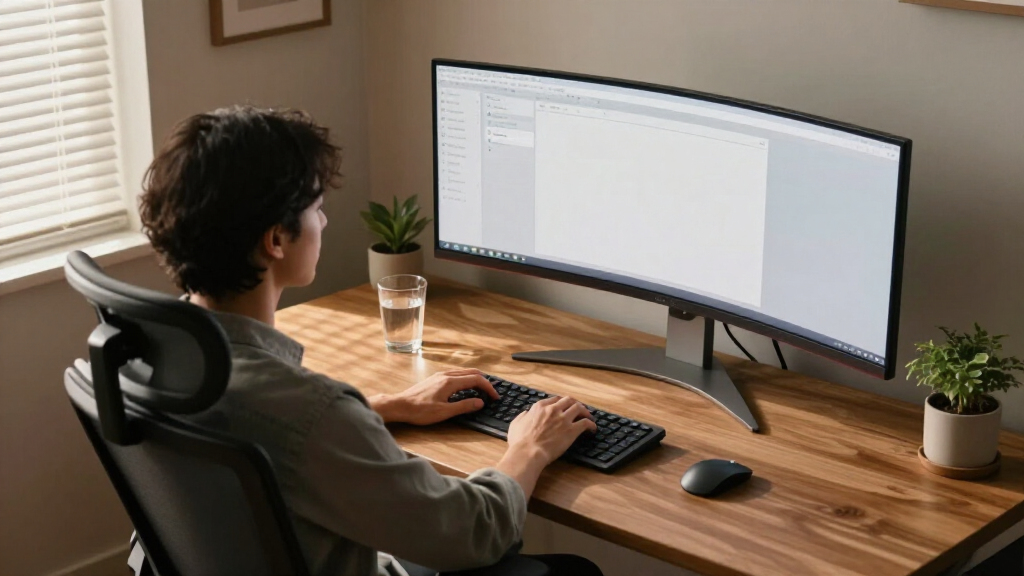

The best ultrawide monitors balance workspace, image quality, refresh rate, and desk fit rather than simply offering the widest screen. My best overall pick is the Dell S3425DW, a practical 34-inch WQHD display with a 120Hz refresh rate and eye-comfort features. For gaming, the Alienware AW3425DWM brings a faster 180Hz refresh rate, while the Samsung Odyssey Neo G9 suits buyers who want an exceptionally large, high-resolution curved screen. The main tradeoffs are 34-inch simplicity versus 49- or 57-inch immersion, and gaming speed versus work-friendly connectivity and pixel density. Read on for the full comparison, buying advice, and recommendations by need.

Get comfort and recovery gear delivered free — and shop member deals
- Fast, free delivery on millions of items
- Access to Prime Big Deal Days deals on October 6–7
- Prime Video, Amazon Music and more included
Complete the kit


Key Takeaways
A 34-inch WQHD screen is the practical middle ground. The Dell S3425DW pairs a manageable footprint with 120Hz, while several other 34-inch choices split toward gaming speed, basic productivity, or a simpler feature set.
Refresh rate separates the gaming-focused 34-inch picks. The Alienware AW3425DWM reaches 180Hz and the SANSUI reaches 200Hz, but buyers should weigh those figures against panel quality, connections, and their computer’s ability to drive games at high frame rates.
49-inch models do not all offer the same workspace clarity. Dual QHD options provide 5120 × 1440 pixels, while the INNOCN 49C1G uses 3840 × 1080; that difference affects how much detail and desktop space each screen can show.
The 57-inch Odyssey Neo G9 is a specialist choice. Its Dual UHD format offers a vast, detailed workspace, but its size and demands on desk space and graphics hardware make it a less suitable default for most buyers.
Connectivity and ergonomics can matter more than headline specs. The LG 34WR55QK-B includes USB-C and an adjustable stand, while the Samsung ViewFinity S50GC offers a more straightforward productivity-oriented option among the listed models.


| ultrawide monitor | Screen size | Resolution | Refresh rate | Response time |
|---|---|---|---|---|
| LG 34U60ZB-B 34-Inch UltraWide | 34 inches | 3440 × 1440 (WQHD) | 120Hz | 5ms |
| Dell 34" Monitor S3425DW | 34 inches | 3440 × 1440 (WQHD) | 120Hz | 0.03ms |
| Samsung 49-Inch Curved Dual QH | 49 inches | Dual QHD | 120Hz | — |
| Alienware AW3425DWM 34" Curved | 34 inches | 3440 × 1440 (WQHD) | 180Hz | 1ms |
| INNOCN 49" Curved Gaming Monit | 49 inches | 3840 × 1080 (Dual FHD) | 144Hz | — |
| Sceptre 34-Inch Curved Ultrawi | 34 inches | 3440 × 1440 | 165 Hz | — |
| LG 34WR55QK-B 34-inch UltraWid | 34 inches | 3440 × 1440 (WQHD) | 100 Hz | 5 ms |
| Deco Gear 49-Inch 5K2K Curved | 49 inches | 5120 × 1440 | 120 Hz | 1 ms MPRT |
| Samsung 57-Inch Odyssey Neo G9 | 57 inches | Dual UHD (DUHD) | 240 Hz | 1 ms GTG |
| Samsung 34-Inch Odyssey G5 Ult | 34 inches | WQHD | 165 Hz | 1 ms MPRT |
| Samsung 49-inch Odyssey OLED G | 49 inches | Dual QHD (5120 × 1440) | 144Hz | 0.03ms |
| SANSUI 34-Inch Curved Gaming M | 34 inches | 3440 × 1440 (UWQHD) | 200Hz | 1ms MPRT |
| Samsung 34-inch ViewFinity S50 | 34 inches | Ultra-WQHD | 100Hz | 5ms |
| Samsung 49-Inch Odyssey G9 G91 | 49 inches | Dual QHD | 144Hz | 1ms |
| LG 34-inch UltraWide WQHD Curv | 34 inches | 3440 × 1440 (WQHD) | 100Hz | 5ms |
More Details on Our Top Picks
LG 34U60ZB-B 34-Inch UltraWide Curved WQHD 120Hz Monitor
The LG 34U60ZB-B is a strong fit for buyers who want a practical ultrawide for work and everyday gaming without moving to a larger 49-inch screen. Its 3440 × 1440 resolution gives side-by-side windows more room than a standard widescreen, while the 120Hz refresh rate keeps scrolling and motion feeling smooth. Height and tilt adjustments also make it easier to set up comfortably than the Dell S3425DW, whose supplied details do not list stand adjustments.
The tradeoff is a more modest feature set: it lacks the Dell’s USB-C power delivery and broader DCI-P3 coverage, and its 5ms response time is less gaming-focused than the Alienware AW3425DWM’s 180Hz, 1ms specification. HDR10 and up to 99% sRGB suit general use, but this is not the pick for buyers seeking a high-impact HDR experience. LG Switch software also requires installation.
Pros:- 3440 × 1440 resolution and 21:9 format give multiple windows useful side-by-side space.
- 120Hz refresh rate supports smoother scrolling and gameplay than basic 60Hz displays.
- Height and tilt adjustments help tailor the viewing position.
- Reader Mode offers warmer tones for extended reading.
Cons:- 5ms response time is less suited to fast competitive play than the Alienware AW3425DWM.
- No USB-C connection or power delivery is listed, unlike the Dell S3425DW.
- HDR10 support does not establish the stronger HDR performance some buyers may expect.
Best for: Work-from-home users who want a comfortable, adjustable 34-inch ultrawide for multitasking, browsing, and casual gaming.
Not ideal for: Competitive gamers seeking the fastest response or laptop users who want a single USB-C cable for video, data, and charging.
- Screen size:34 inches
- Resolution:3440 × 1440 (WQHD)
- Aspect ratio:21:9
- Curvature:1800R
- Refresh rate:120Hz
- Response time:5ms
- HDR and color:HDR10; up to 99% sRGB
- Connectivity:DisplayPort, HDMI, headphone jack
Our verdict“Choose the LG for a flexible, well-rounded 34-inch workspace, but pick the Dell for USB-C convenience or the Alienware for faster gaming.”
Dell 34″ Monitor S3425DW – WQHD VA, 120 Hz, FreeSync Premium, Eye Comfort
The Dell S3425DW makes the most sense for a desk shared by a laptop and desktop accessories: its USB-C connection with up to 65W power delivery carries video, data, and charging over one cable. That convenience separates it from the LG 34U60ZB-B, which offers height and tilt adjustment but no listed USB-C. Dell also pairs its 120Hz refresh rate with FreeSync Premium, so compatible systems can deliver smoother gameplay without tearing.
Its VA panel’s 3000:1 contrast ratio and 95% DCI-P3 coverage give it a broader color specification than the LG’s sRGB-focused coverage. The compromises are practical: stand adjustment is not specified in the supplied details, and the built-in speakers are best treated as a convenience rather than a replacement for external audio. For gaming at higher refresh rates, the Alienware AW3425DWM is the more purpose-built alternative.
Pros:- USB-C supports video, data, and up to 65W power delivery through one cable.
- 120Hz refresh rate and FreeSync Premium support smoother compatible gaming.
- 99% sRGB and 95% DCI-P3 coverage suit varied everyday color work.
- Four USB ports and built-in speakers add desk connectivity and convenience.
Cons:- Height and tilt adjustment are not listed in the supplied product details.
- Built-in speakers may not satisfy buyers who want fuller, more capable audio.
- The Alienware AW3425DWM offers a faster 180Hz refresh rate for gaming-focused setups.
Best for: Laptop-based professionals who want a 34-inch ultrawide that can connect, transfer data, and charge through one USB-C cable.
Not ideal for: Buyers who need documented height and tilt adjustment, or gamers prioritizing a refresh rate above 120Hz.
- Screen size:34 inches
- Resolution:3440 × 1440 (WQHD)
- Panel and contrast:VA; 3000:1
- Refresh rate:120Hz
- Response time:0.03ms
- Color gamut:99% sRGB; 95% DCI-P3
- Connectivity:USB-C with up to 65W power delivery, 2 HDMI, 4 USB ports
- Brightness:300 cd/m²
Our verdict“Pick the Dell if simplifying a USB-C laptop desk matters more than having a documented adjustable stand or a gaming-first refresh rate.”
Samsung 49-Inch Curved Dual QHD Ultrawide Business Monitor with USB-C
The Samsung 49-inch Dual QHD is for buyers who want two broad work areas in one continuous display. Its 32:9 screen offers substantially more horizontal room than the 34-inch LG 34U60ZB-B or Dell S3425DW, making it easier to keep several applications visible without a center bezel. The 1000R curve wraps that wide canvas toward the viewer, while USB-C charging up to 90W can simplify a compatible laptop setup more than the Dell’s 65W delivery.
That workspace comes with a major footprint commitment: a 49-inch panel needs a large desk and may overwhelm compact setups. Its Dual QHD resolution is broad, but buyers should check that their computer can drive the full display comfortably. HDR is specified as DisplayHDR 400, not a high-end HDR tier, and the supplied data does not describe ergonomic stand adjustments. Compared with the INNOCN 49C1G, Samsung offers higher USB-C charging capacity and 120Hz rather than 144Hz.
Pros:- 32:9 Dual QHD display provides an expansive workspace for multiple applications.
- USB-C supports up to 90W charging for compatible devices.
- 120Hz refresh rate supports smooth motion for work and entertainment.
- DisplayPort, two HDMI inputs, USB, and built-in speakers support a varied setup.
Cons:- The 49-inch size requires substantially more desk space than the 34-inch options.
- DisplayHDR 400 is a limited HDR specification compared with higher-end HDR displays.
- The supplied details do not list height, tilt, or swivel adjustment.
Best for: Multitasking-heavy professionals who want a single 49-inch screen for several open windows and need USB-C laptop charging.
Not ideal for: Users with limited desk depth, computers that cannot comfortably drive Dual QHD, or gamers seeking the highest refresh rate in this lineup.
- Screen size:49 inches
- Aspect ratio:32:9
- Resolution:Dual QHD
- Curvature:1000R
- Refresh rate:120Hz
- HDR:VESA DisplayHDR 400
- USB-C charging:Up to 90W
- Connectivity:DisplayPort, 2 HDMI, USB, USB-C
Our verdict“Choose this Samsung as a one-screen replacement for a broad multi-window workspace if your desk and computer can handle its 49-inch Dual QHD format.”
Alienware AW3425DWM 34″ Curved Gaming Monitor – 34-inch WQHD, 180 Hz, 1 ms, 1500R Curve, AMD FreeSync Premium, VESA AdaptiveSync
The Alienware AW3425DWM is the clearest gaming pick among the 34-inch options here. Its 180Hz refresh rate and 1ms response time give fast-action play more headroom than the 120Hz LG 34U60ZB-B and Dell S3425DW, while AMD FreeSync Premium and VESA AdaptiveSync support smoother gameplay on compatible systems. The 1500R curve and 21:9 WQHD panel add an enveloping view without taking up the space demanded by either 49-inch Samsung or INNOCN.
There are limits: HDR400 is a basic HDR tier, so buyers should not choose it expecting premium HDR highlights, and the listed 95% DCI-P3 coverage is not a substitute for a dedicated professional color workflow. At 21 pounds, moving or mounting it takes more effort than a lighter desk display. For general productivity and single-cable laptop docking, the Dell S3425DW is more convenient; Alienware’s advantage is speed and gaming-oriented sync support.
Pros:- 180Hz refresh rate and 1ms response time are well suited to fast gameplay.
- AMD FreeSync Premium and VESA AdaptiveSync support compatible variable-refresh setups.
- 1500R curved 21:9 WQHD screen delivers an immersive gaming view in a 34-inch footprint.
- 95% DCI-P3 coverage and DisplayHDR 400 support vivid, wide-gamut imagery.
Cons:- DisplayHDR 400 is limited compared with higher-tier HDR implementations.
- At 21 pounds, repositioning or mounting the monitor may take extra effort.
- No USB-C connection is listed, unlike the Dell S3425DW and 49-inch alternatives.
Best for: PC gamers who want an immersive 34-inch ultrawide with a higher refresh rate and faster response than the work-focused 120Hz models.
Not ideal for: Laptop users seeking USB-C docking, or HDR-focused buyers expecting a higher HDR tier than DisplayHDR 400.
- Screen size:34 inches
- Resolution:3440 × 1440 (WQHD)
- Aspect ratio and curve:21:9; 1500R
- Refresh rate:180Hz
- Response time:1ms
- Adaptive sync:AMD FreeSync Premium; VESA AdaptiveSync
- HDR and color:VESA DisplayHDR 400; 95% DCI-P3
- Weight:21 pounds
Our verdict“Choose the Alienware for high-refresh ultrawide gaming; choose the Dell instead if USB-C laptop connectivity matters more than gaming speed.”
INNOCN 49″ Curved Gaming Monitor 144Hz Ultrawide 32:9 WDFHD 3840×1080, R1800 Curve, 99% sRGB, HDR400, USB-C, DisplayPort, HDMI, Built-in Speakers, Height/Tilt Adjustable (49C1G)
The INNOCN 49C1G combines a 49-inch, 32:9 canvas with a stand that supports height, tilt, and swivel adjustment—a useful advantage over the Samsung 49-inch Dual QHD model, whose supplied specifications do not list those adjustments. Its 144Hz refresh rate also exceeds that Samsung’s 120Hz figure, and picture-by-picture support can keep separate sources visible at once. For buyers who want an expansive gaming and multitasking display with flexible positioning, that combination sets it apart.
The key compromise is resolution: 3840 × 1080 is lower in vertical detail than the Samsung’s Dual QHD screen, so text and fine interface elements may look less sharp across such a wide panel. It also requires a large desk, and the listed HDR400 should not be mistaken for high-end HDR performance. USB-C offers up to 65W charging, below Samsung’s 90W. Choose the Samsung for more vertical workspace and laptop charging capacity; choose this model for adjustability and 144Hz.
Pros:- 49-inch 32:9 screen provides a broad gaming and multitasking canvas.
- Height, tilt, and swivel adjustments offer more positioning flexibility than the listed Samsung alternative.
- 144Hz refresh rate supports smoother motion than the 120Hz Samsung 49-inch model.
- USB-C, DisplayPort, HDMI 2.1, and PIP/PBP support flexible device setups.
Cons:- 3840 × 1080 resolution has less vertical detail than the Samsung 49-inch Dual QHD monitor.
- The large screen needs substantial desk space.
- USB-C power delivery is 65W, below the Samsung’s 90W, and HDR is limited to HDR400.
Best for: Gamers and multitaskers with a large desk who want a 49-inch screen, adjustable positioning, and picture-by-picture source viewing.
Not ideal for: Buyers who prioritize sharp text, higher vertical resolution, compact desk fit, or more than 65W of USB-C charging.
- Screen size:49 inches
- Aspect ratio:32:9
- Resolution:3840 × 1080 (Dual FHD)
- Panel and curvature:VA; 1800R
- Refresh rate:144Hz
- HDR and color:HDR400; 99% sRGB
- USB-C power delivery:65W
- Adjustability:Height, tilt, swivel
- Connectivity:DisplayPort 1.4, HDMI 2.1, USB-C, 2 USB-A, USB-B, RJ45, 3.5mm audio
Our verdict“Pick the INNOCN for a more adjustable 49-inch setup with 144Hz, but choose Samsung’s Dual QHD model if resolution and USB-C charging capacity matter more.”
Sceptre 34-Inch Curved Ultrawide WQHD Gaming Monitor (C345B-QUT168)
The Sceptre pairs a 34-inch, 3440 × 1440 screen with a 165 Hz refresh rate, making it a strong fit for players who want both an expansive view and fluid motion. Its 1500R curve wraps the image more closely than the LG 34WR55QK-B’s less gaming-focused setup, while AMD FreeSync Premium helps reduce tearing with compatible hardware. Two HDMI and two DisplayPort inputs offer more connection flexibility than the available details for some rivals. The tradeoff is a 280 cd/m² brightness rating, which may feel limited in a bright room, and the built-in speakers have no stated output or audio-quality details. I’d choose it for gaming-first value, but the LG is a better match for laptop users who want USB-C charging and an adjustable stand.
Pros:- 3440 × 1440 resolution gives games and work more horizontal room than a standard widescreen.
- 165 Hz refresh rate and AMD FreeSync Premium support smoother compatible gameplay.
- Two HDMI and two DisplayPort inputs provide flexible device connections.
- Built-in speakers avoid requiring separate audio hardware for basic sound.
Cons:- 280 cd/m² brightness may be limiting in brightly lit rooms.
- Speaker output and audio quality are not specified.
- The wide 34-inch footprint needs adequate desk space.
Best for: PC gamers who want a 34-inch, high-refresh ultrawide with FreeSync and several video inputs.
Not ideal for: Laptop-first desk setups needing USB-C charging, a height-adjustable stand, or clearly specified audio performance.
- Screen size:34 inches
- Resolution:3440 × 1440
- Aspect ratio:21:9
- Refresh rate:165 Hz
- Curvature:1500R
- Panel type:VA
- Adaptive sync:AMD FreeSync Premium
- Ports:2 × HDMI, 2 × DisplayPort
Our verdict“Choose the Sceptre for a 165 Hz gaming-focused 34-inch ultrawide, but pick the LG 34WR55QK-B if USB-C power delivery and stand adjustment matter more.”
LG 34WR55QK-B 34-inch UltraWide WQHD Curved Monitor
The LG 34WR55QK-B stands out as a work-first 34-inch ultrawide that also has enough refresh rate for casual gaming. Its 3440 × 1440 resolution gives you room for side-by-side documents, while USB-C with 65 W power delivery can connect and charge many laptops through one cable. The height- and tilt-adjustable stand is another practical advantage over the Sceptre C345B-QUT168, whose listed specifications don’t include those adjustments. At 100 Hz, though, this LG is less suited to fast competitive play than the Sceptre’s 165 Hz or the Samsung Odyssey G5’s 165 Hz. HDR10 is included, but the listed 99% sRGB coverage is a more grounded guide to its color range than assuming a dramatic HDR experience. There are no speakers mentioned, so plan on external audio.
Pros:- 3440 × 1440 resolution and 21:9 aspect ratio support side-by-side work.
- USB-C provides up to 65 W power delivery for compatible laptops.
- Height and tilt adjustments help tailor the screen position.
- 100 Hz refresh rate is smoother than a conventional 60 Hz office display.
Cons:- 100 Hz is below the 165 Hz offered by the Sceptre C345B-QUT168 and Samsung Odyssey G5.
- Built-in speakers are not listed.
- The supplied details do not specify a curvature rating or brightness.
Best for: Laptop owners who want a 34-inch WQHD workspace, one-cable USB-C charging, and an adjustable stand.
Not ideal for: Competitive gamers prioritizing 165 Hz or higher, or buyers who need built-in speakers.
- Screen size:34 inches
- Resolution:3440 × 1440 (WQHD)
- Aspect ratio:21:9
- Refresh rate:100 Hz
- Response time:5 ms
- HDR:HDR10
- USB-C power delivery:65 W
- Ergonomics:Tilt- and height-adjustable stand
Our verdict“Pick the LG for a laptop-centered workstation with USB-C charging and ergonomic adjustments; choose a faster gaming model if high-refresh play is the priority.”
Deco Gear 49-Inch 5K2K Curved Ultrawide Monitor
The Deco Gear’s 49-inch, 32:9 display is built for people who want a broad desktop without arranging multiple monitors side by side. Its 5120 × 1440 resolution gives that width considerably more vertical detail than the INNOCN 49C1G’s 3840 × 1080 panel, while KVM and PIP/PBP modes make switching between computers or viewing two sources more convenient. USB-C supplies up to 65 W, and the stand offers height, swivel, and tilt adjustment. At 120 Hz, it can handle gaming, though the Samsung 57-Inch Odyssey Neo G9 reaches 240 Hz and offers a much more ambitious gaming specification set. The Deco Gear’s major cost in practicality is physical: a 49-inch-wide, 32:9 screen takes substantial desk space. Its input descriptions also omit the exact port count, which complicates planning a multi-device setup.
Pros:- 5120 × 1440 resolution provides a wide desktop with more vertical pixels than 3840 × 1080 ultrawides.
- KVM and PIP/PBP modes simplify work across computers and video sources.
- USB-C provides up to 65 W power delivery.
- Stand supports height adjustment, swivel, and tilt.
Cons:- The 49-inch, 32:9 panel requires considerable desk width.
- The exact number of input ports is not specified.
- 120 Hz is below the 240 Hz available on the Samsung 57-Inch Odyssey Neo G9.
Best for: Multitaskers and hybrid-work users who need a single wide screen for multiple windows, computers, or video sources.
Not ideal for: Buyers with a compact desk, or competitive gamers seeking the 240 Hz capability of the Samsung 57-Inch Odyssey Neo G9.
- Screen size:49 inches
- Aspect ratio:32:9
- Resolution:5120 × 1440
- Curvature:R1500
- Refresh rate:120 Hz
- Response time:1 ms MPRT
- USB-C power delivery:Up to 65 W
- Stand adjustment:-5° to +15° tilt, ±30° swivel, 130 mm height adjustment
Our verdict“Choose the Deco Gear for a high-resolution 49-inch workspace with device-switching features, provided your desk can accommodate its width.”
Samsung 57-Inch Odyssey Neo G9 Dual UHD Curved Gaming Monitor (G95NC)
The Samsung Odyssey Neo G9 is the uncompromising pick for a buyer who wants a 57-inch Dual UHD canvas and high-end gaming motion on one curved screen. Its 240 Hz refresh rate is twice the Deco Gear’s 120 Hz, while Quantum Mini LED backlighting, DisplayHDR 1000, and a stated 1,000-nit peak brightness target brighter highlights and stronger contrast. DisplayPort 2.1 and HDMI 2.1 support a modern, high-bandwidth setup, but running the full Dual UHD resolution at 240 Hz calls for a compatible graphics card and connection. That requirement, along with its 1000R curve and enormous screen size, makes this a specialized desk centerpiece rather than a sensible fit for every room. Compared with the 34-inch Samsung Odyssey G5, it offers far more screen area and gaming headroom, but demands much more space and capable hardware.
Pros:- 57-inch Dual UHD display combines expansive screen area with high resolution.
- 240 Hz refresh rate and 1 ms GTG response time target fast gaming.
- Quantum Mini LED backlighting and DisplayHDR 1000 support bright, high-contrast visuals.
- DisplayPort 2.1 and HDMI 2.1 offer current high-bandwidth connections.
Cons:- Full Dual UHD at 240 Hz requires a compatible graphics card and connection.
- The 57-inch size and 1000R curve call for substantial desk space.
- The stated 1 ms response time may vary with content and monitor settings.
Best for: Enthusiast PC gamers with a large desk and graphics hardware suited to driving Dual UHD at high refresh rates.
Not ideal for: Small-desk users, buyers with entry-level graphics cards, or anyone seeking a straightforward everyday monitor.
- Screen size:57 inches
- Resolution:Dual UHD (DUHD)
- Curvature:1000R
- Refresh rate:240 Hz
- Response time:1 ms GTG
- Display technology:Quantum Mini LED with Quantum Matrix Technology
- HDR:VESA DisplayHDR 1000
- Inputs:DisplayPort 2.1, HDMI 2.1
Our verdict“Choose the Odyssey Neo G9 if you have the desk and PC hardware to make use of its Dual UHD, 240 Hz display; otherwise, a smaller ultrawide is a more practical fit.”
Samsung 34-Inch Odyssey G5 Ultra-Wide Curved Gaming Monitor
The 34-inch Samsung Odyssey G5 is the pick here for gamers who want a strongly wrapped view: its 1000R curve is tighter than the Sceptre C345B-QUT168’s 1500R curve. WQHD resolution keeps the image detailed across the ultrawide canvas, and 165 Hz with AMD FreeSync Premium supports responsive play with compatible systems. HDR10 is listed, though the available specifications don’t include brightness or local dimming details, so I wouldn’t choose it based on HDR alone. Compared with the Sceptre, the G5’s clearest distinction is its tighter curvature, while the Sceptre lists more connection options and built-in speakers. Like the Sceptre, this VA gaming screen occupies meaningful desk space, and WQHD has fewer pixels than a 4K display. It makes the most sense when immersive curvature matters more than connectivity extras.
Pros:- 1000R curve creates a more tightly wrapped view than the Sceptre’s 1500R curve.
- 165 Hz refresh rate supports fluid gameplay.
- AMD FreeSync Premium helps reduce tearing and stutter with compatible hardware.
- WQHD resolution offers more horizontal workspace than a standard 16:9 screen.
Cons:- WQHD is less sharp than 4K resolution.
- The listed specifications do not include ports or USB-C connectivity.
- Brightness and local dimming details are not provided to clarify HDR10 performance.
Best for: PC gamers who prefer a tightly curved 34-inch ultrawide for immersive play and want a 165 Hz refresh rate.
Not ideal for: Buyers who need USB-C, a specified port selection, or detailed HDR brightness information.
- Screen size:34 inches
- Resolution:WQHD
- Curvature:1000R
- Refresh rate:165 Hz
- Response time:1 ms MPRT
- Panel type:VA
- HDR:HDR10
- Adaptive sync:AMD FreeSync Premium
Our verdict“Pick the Odyssey G5 for a 165 Hz gaming ultrawide with a particularly tight 1000R curve, but favor the Sceptre if its listed speakers and extra video inputs better suit your setup.”
Samsung 49-inch Odyssey OLED G9 (G91SD) Dual QHD Curved Gaming Monitor
The 49-inch 32:9 QD-OLED panel is the standout here: its Dual QHD workspace can replace two side-by-side monitors, while deep blacks and vivid colors make games and films feel more enveloping. The 144Hz refresh rate, 0.03ms response time, and support for both G-Sync compatibility and FreeSync Premium Pro give it a stronger motion-focused profile than the office-oriented Samsung ViewFinity S50GC. Picture-in-picture also helps when you want to view two sources at once. The tradeoff is its sheer footprint: this display needs a broad desk and a setup that can accommodate its width. OLED burn-in prevention features are useful, but buyers who keep static work windows onscreen for long stretches should weigh that concern against the picture quality. Choose it over the Samsung G91F if OLED contrast matters more than HDR600.
Pros:- 49-inch Dual QHD format provides room for immersive games and multiple windows.
- QD-OLED produces deep blacks and vibrant colors.
- 144Hz refresh rate and 0.03ms response time support responsive gameplay.
- G-Sync compatibility, FreeSync Premium Pro, and picture-in-picture add flexibility.
Cons:- The 49-inch, 32:9 screen needs substantial desk space.
- Static content requires care because OLED panels can be susceptible to burn-in.
- The 110-pixel-per-inch density is less suited to buyers prioritizing very fine text.
Best for: PC gamers and media enthusiasts with a spacious desk who want a superwide OLED screen, high refresh, and deep contrast.
Not ideal for: Buyers with limited desk depth or people who display the same static work interface for long hours and want to avoid OLED burn-in concerns.
- Screen size:49 inches
- Display technology:QD-OLED
- Resolution:Dual QHD (5120 × 1440)
- Aspect ratio:32:9
- Pixel density:110 pixels per inch
- Refresh rate:144Hz
- Response time:0.03ms
- Adaptive sync:G-Sync compatible; AMD FreeSync Premium Pro
- Stand and features:Height adjustable and tiltable; picture-in-picture; burn-in prevention features
Our verdict“Pick the G91SD if OLED contrast and responsive superwide gaming matter more to you than desk space and static-image peace of mind.”
SANSUI 34-Inch Curved Gaming Monitor UWQHD 3440 x 1440P 200Hz Ultrawide
The SANSUI is the speed-focused 34-inch option in this group: its 200Hz refresh rate and 1ms MPRT response time favor fast gameplay, while the 3440 × 1440 resolution keeps more detail than a lower-resolution ultrawide. Its VA panel’s 3000:1 contrast ratio can give darker scenes more depth than the IPS-based LG 34-inch UltraWide, though that LG offers USB-C charging and a more versatile stand. FreeSync helps reduce tearing, and the crosshair and sniper-scope overlays are gaming-specific extras rather than productivity tools. The compromises are practical: the stand only tilts, and there are no built-in speakers, so a better viewing position or audio setup may require extra equipment. Choose this over the Samsung ViewFinity S50GC if refresh speed takes priority over office comfort features.
Pros:- 200Hz refresh rate and 1ms MPRT response time target smooth, responsive gaming.
- 3440 × 1440 resolution gives games and multitasking a detailed 21:9 canvas.
- VA panel with a 3000:1 contrast ratio supports pronounced dark-to-light separation.
- FreeSync and gaming overlays add useful play-focused features.
Cons:- Stand adjustment is limited to tilt, with no height or swivel adjustment.
- No built-in speakers, so audio requires a headset or external speakers.
- At 300 cd/m² brightness, it is not the strongest choice for very bright rooms.
Best for: PC gamers who want a 34-inch UWQHD display with a very high refresh rate and use separate speakers or a headset.
Not ideal for: Laptop-first workers who need USB-C charging, full ergonomic stand adjustments, or integrated speakers for calls and everyday media.
- Screen size:34 inches
- Panel type:VA
- Resolution:3440 × 1440 (UWQHD)
- Aspect ratio:21:9
- Refresh rate:200Hz
- Response time:1ms MPRT
- Brightness and contrast:300 cd/m²; 3000:1
- Adaptive sync:FreeSync
- Connectivity:2 × HDMI 2.1; 1 × DisplayPort 1.4; 3.5mm audio jack
Our verdict“Choose the SANSUI for high-refresh 34-inch gaming if you can live with a tilt-only stand and external audio.”
Samsung 34-inch ViewFinity S50GC Ultra-WQHD Monitor
The ViewFinity S50GC makes the most sense as a work-first 34-inch ultrawide, not a gaming showcase. Its 21:9 Ultra-WQHD canvas gives documents and side-by-side apps room to breathe, while Picture-by-Picture and Picture-in-Picture let you view separate inputs without relying only on software window management. The 100Hz refresh rate is a useful step up from basic office displays, but its 5ms response time and feature set are less gaming-oriented than the SANSUI’s 200Hz panel. Eye Saver Mode, Flicker Free, and automatic brightness adjustment speak directly to long desk sessions. HDR10 is included, though the listed 300 cd/m² brightness suggests buyers should not choose it primarily for dramatic HDR viewing. The product details do not specify USB connectivity or built-in speakers, which makes the LG 34-inch model a more flexible laptop-workstation choice.
Pros:- 34-inch Ultra-WQHD 21:9 screen supports side-by-side work.
- Picture-by-Picture and Picture-in-Picture support multiple video sources.
- 100Hz refresh rate and FreeSync provide smoother motion than a basic office monitor.
- Eye Saver Mode, Flicker Free, and automatic brightness adjustment support extended viewing.
Cons:- 5ms response time and 100Hz refresh are less suited to fast competitive gaming than the SANSUI.
- USB connectivity and built-in speakers are not specified in the provided product details.
- 300 cd/m² typical brightness limits its appeal for bright-room HDR viewing.
Best for: Office users and hybrid workers who want a wide desktop, comfort-focused viewing features, and picture-in-picture or split-source workflows.
Not ideal for: Competitive gamers or laptop users who need a documented USB-C dock, built-in speakers, or more than 100Hz refresh.
- Screen size:34 inches
- Aspect ratio:21:9
- Resolution:Ultra-WQHD
- Refresh rate:100Hz
- Response time:5ms
- Typical brightness:300 cd/m²
- Static contrast ratio:3000:1
- HDR and adaptive sync:HDR10; AMD FreeSync
- Inputs and viewing features:2 × HDMI 2.2; 1 × DisplayPort 1.2; Picture-by-Picture; Picture-in-Picture
Our verdict“Choose the ViewFinity S50GC for multisource office work and viewing comfort, not for high-speed gaming or USB-C laptop docking.”
Samsung 49-Inch Odyssey G9 G91F DQHD Curved Gaming Monitor
The Odyssey G91F pairs a 49-inch 32:9 Dual QHD screen with a pronounced 1000R curve, wrapping a broad field of view around the viewer while leaving room for multiple windows. Its DisplayHDR 600 rating and 144Hz refresh rate make it a more balanced gaming-and-multitasking pick than a pure office ultrawide. Split screen, picture-in-picture, and Auto Source Switch+ also help when a PC and another source share the display. Against the G91SD, this model trades QD-OLED’s deep blacks and 0.03ms response time for DisplayHDR 600 and a listed 1ms response time; buyers should choose based on panel priorities rather than assuming the screens are interchangeable. The main drawback is still scale: the 32:9 format demands a wide desk, and the stand is tilt-adjustable rather than height-adjustable.
Pros:- 49-inch Dual QHD screen creates a broad workspace for games and multiple windows.
- 1000R curve helps bring the wide display around the viewer.
- 144Hz refresh rate, 1ms response time, and FreeSync Premium Pro support responsive play.
- DisplayHDR 600, split screen, picture-in-picture, and Auto Source Switch+ add flexibility.
Cons:- The 32:9 panel requires substantial desk width and viewing space.
- Stand adjustment is limited to tilt.
- Compared with the G91SD, it does not offer the listed QD-OLED panel or 0.03ms response time.
Best for: Gamers and multitaskers with a large desk who want a curved 49-inch Dual QHD screen, HDR600, and multiple-source tools.
Not ideal for: Buyers with compact desks, those who need height adjustment, or OLED-seekers who prioritize the G91SD’s QD-OLED contrast.
- Screen size:49 inches
- Resolution:Dual QHD
- Aspect ratio:32:9
- Curvature:1000R
- Refresh rate:144Hz
- Response time:1ms
- HDR:DisplayHDR 600
- Adaptive sync:AMD FreeSync Premium Pro
- Features and stand:Split screen; Picture-in-Picture; Auto Source Switch+; tilt-adjustable stand
Our verdict“Pick the G91F if you want a large curved HDR gaming and multitasking screen, and have room for its width and tilt-only stand.”
LG 34-inch UltraWide WQHD Curved IPS Monitor, 100Hz
The LG is the most workstation-friendly 34-inch choice here, chiefly because its USB-C connection supports display, data, and up to 96W laptop charging. For a laptop user, that can reduce desk clutter and make one cable handle the main connection and power needs. Its 3440 × 1440 IPS panel, 21:9 format, and height-, swivel-, and tilt-adjustable stand suit long workdays better than the SANSUI’s tilt-only stand. At 100Hz, it also feels smoother for everyday scrolling and casual play than a basic 60Hz display. The tradeoff is speed: its 5ms response time is a weaker fit for competitive gaming than the SANSUI’s 1ms claim, and it cannot match the 49-inch Samsung Odyssey models for screen width. Built-in speakers are convenient for calls and media, but do not make this a high-performance gaming pick.
Pros:- USB-C carries display and data while supplying up to 96W of laptop charging.
- IPS panel offers up to 99% sRGB color coverage.
- Height, swivel, and tilt adjustments make positioning more flexible than the SANSUI stand.
- Built-in speakers and 100Hz refresh rate support calls, media, and smoother everyday motion.
Cons:- 5ms response time is less suited to competitive gaming than the SANSUI’s 1ms MPRT.
- The 34-inch 21:9 format provides less total width than either 49-inch Samsung Odyssey.
- The listed specs do not include a brightness figure for judging bright-room performance.
Best for: Laptop-based professionals who want a 34-inch ultrawide, one-cable USB-C connectivity, substantial charging, and a fully adjustable stand.
Not ideal for: Competitive gamers seeking the fastest response, or buyers who want a 49-inch 32:9 screen for maximum horizontal workspace.
- Screen size:34 inches
- Display type:IPS
- Resolution:3440 × 1440 (WQHD)
- Aspect ratio and curvature:21:9; 3800R
- Refresh rate:100Hz
- Response time:5ms
- HDR and color coverage:HDR10; up to 99% sRGB
- Connectivity and charging:USB-C, DisplayPort, HDMI; USB-C charging up to 96W
- Stand adjustments:Tilt, swivel, and height
Our verdict“Choose the LG for a clean USB-C laptop desk and ergonomic work setup, rather than for the fastest gaming response or a superwide 49-inch canvas.”
How We Picked
I compared these 15 monitors through the decisions that affect day-to-day ownership: screen size and resolution, refresh rate, gaming support, connectivity, ergonomics, and intended use. I gave weight to whether a model’s specifications form a coherent fit—for example, a fast refresh rate for gaming or USB-C and stand adjustment for a desk shared by work devices. I also considered how much usable detail each screen resolution provides, since a wider display is not automatically a more productive one.
The ranking prioritizes broad usefulness and clear tradeoffs. The Dell S3425DW leads as a balanced 34-inch option; faster gaming displays and larger premium screens follow for buyers with more specific needs. Models with unusually wide formats, lower listed resolution for their size, or fewer clearly stated practical features rank lower for general use, even when they may suit a particular setup. The order is a guide to fit, not a claim that one specification matters to every buyer.
Factors to Consider When Choosing Best Ultrawide Monitors
Before choosing a screen, decide how you will use its extra width and what your desk and computer can support. These factors help separate genuinely useful workspace from dimensions or specifications that look impressive on paper.
Choose Width and Resolution Together
Screen size and pixel count work as a pair: a large panel with a modest resolution can show less fine detail than its dimensions suggest. The 49-inch INNOCN 49C1G lists 3840 × 1080, while the Deco Gear 49-inch and Samsung Dual QHD models list 5120 × 1440. That distinction changes text sharpness and how many useful windows fit side by side. A 34-inch WQHD monitor is often easier to place and use without extensive window management. Before buying a 32:9 screen, check that the applications you rely on make good use of extra horizontal space. Don’t assume a wider format automatically means more readable content.
Match Refresh Rate to Your Computer and Games
A high refresh rate can make motion feel smoother, but the benefit depends on the games you play and the frames your computer can produce. The listed 34-inch gaming options range from 168Hz on the Sceptre to 180Hz on the Alienware and 200Hz on the SANSUI, while several work-oriented displays top out at 100Hz or 120Hz. A faster panel can be a sensible priority for competitive play, but it may be less valuable for spreadsheets, writing, or video playback. Ultrawide gaming also asks more of a graphics card than a standard-resolution display. Check your system’s graphics outputs and expected game performance before paying for extra speed. Adaptive-sync support can help reduce visual tearing when frame rates vary.
Think Through Desk Fit and Viewing Distance
Measure the available width and depth, then account for the monitor stand rather than measuring the panel alone. A 49- or 57-inch curved screen can replace multiple monitors, but it also takes over much more of a desk and may require a longer viewing distance. Curvature helps bring the edges of a wide screen into view, though the curve shape and personal seating position affect comfort. Height adjustment can make a large difference when aligning the display with your eye level. A tilt-only stand may limit placement, especially on a shallow desk. Check the monitor’s stated dimensions and mounting options before committing to a very wide model.
Prioritize Connections for Your Actual Devices
List every device you expect to connect, including a work laptop, desktop, console, and peripherals. USB-C can simplify a laptop setup, but the label alone does not confirm charging power or every feature you may need; check the manufacturer’s specifications for power delivery and supported video modes. A monitor with several video inputs can make switching devices easier, while built-in speakers may be adequate for basic calls but not a replacement for dedicated audio. Think about cable routing, too, since a wide screen can make reaching rear-facing ports awkward. Buying around your real connections can prevent the need for adapters or a separate dock.
Decide Whether Gaming or Work Deserves Priority
Some ultrawides are tuned toward fast, immersive gaming, while others give more attention to connectivity, comfort, and office use. OLED gaming displays such as the Samsung Odyssey OLED G9 can appeal to buyers seeking a premium visual experience, but buyers should review warranty terms and guidance on static images before using one for fixed desktop work all day. Productivity-focused models may offer a calmer feature mix without the highest refresh rates. If the screen will serve both purposes, weigh the features you use for hours against those you use occasionally. Consider how much static content your work displays and whether the monitor’s care guidance fits that routine. Paying more for a gaming feature set makes little sense if work comfort is the priority.
Frequently Asked Questions
Is a 34-inch ultrawide enough to replace two monitors?
For many people, a 34-inch WQHD screen can hold two side-by-side work windows, especially for documents, messaging, and web research. It may not replace two monitors if you need each window at a large size or regularly keep several applications visible. Check the resolution as well as the diagonal measurement, since sharper text and usable workspace depend on both. A 49-inch Dual QHD display offers more width and pixels, but requires more desk room. If possible, map your usual window layout onto the screen dimensions before choosing.
Should I choose a 49-inch Dual QHD monitor or the 57-inch Dual UHD Odyssey Neo G9?
A 49-inch Dual QHD screen is the more restrained choice for buyers who want a wide desktop without moving to the largest class of ultrawide. The 57-inch Odyssey Neo G9 offers more screen area and higher resolution, which can suit detailed multitasking and immersive gaming. That extra capacity brings a larger physical footprint and greater demands on the computer’s graphics hardware. Check your desk, viewing distance, and graphics card before choosing the 57-inch model. If you rarely use more than two or three windows at once, the added scale may not improve your routine.
Does a higher refresh rate matter for non-gaming work?
A higher refresh rate can make cursor movement and scrolling feel smoother, but it usually matters less for office work than resolution, text clarity, and ergonomic adjustment. For gaming, the Alienware’s 180Hz or SANSUI’s 200Hz specification may be a stronger reason to choose a particular display. The benefit still depends on whether your computer can deliver suitably high frame rates at ultrawide resolution. For writing, spreadsheets, and video meetings, connectivity and a comfortable stand may have a larger daily effect. Decide based on the tasks you spend the most time doing.
Is the lower-resolution 49-inch INNOCN a good choice for multitasking?
The INNOCN 49C1G’s 3840 × 1080 resolution provides a broad 32:9 canvas, which can help with side-by-side windows and gaming immersion. Compared with 49-inch Dual QHD choices, it provides fewer pixels across the same general screen class, so fine text and detailed desktop layouts may feel less spacious. Its listed 144Hz refresh rate and USB-C may appeal to buyers balancing gaming and device connections. Check how much small text you use and whether your applications benefit more from width or pixel density. It is a better fit when the wide format matters more than maximum sharpness.
What should I check before using an ultrawide with a work laptop?
Confirm that the laptop can output the monitor’s native resolution and refresh rate through the connection you plan to use. If you want a one-cable setup, verify that USB-C supports video and provides enough charging power for your laptop; USB-C presence by itself does not answer both questions. Check whether your workplace software supports the monitor’s aspect ratio without awkward scaling or empty space. A height-adjustable stand can help when the screen is used for long work sessions. If the laptop has limited graphics capability, a more demanding 5K2K or Dual UHD panel may not be the most convenient match.
Conclusion
For most buyers, I recommend the Dell S3425DW as the best overall: its 34-inch WQHD format, 120Hz refresh rate, and eye-comfort focus make it a balanced everyday choice. The LG 34WR55QK-B is my best value-style productivity pick for buyers who want USB-C and stand adjustment in a 34-inch screen without prioritizing high gaming refresh rates. For beginners, the Samsung ViewFinity S50GC is a straightforward place to start if a practical ultrawide matters more than gaming extras. The Samsung Odyssey Neo G9 is my best premium pick for buyers with the desk space and computer hardware to support its 57-inch Dual UHD panel; gamers seeking a more compact fast screen should look at the Alienware AW3425DWM. Choose the 49-inch models for a panoramic desktop, but compare their resolutions closely—the Deco Gear and Samsung Dual QHD options offer more pixels than the INNOCN’s 3840 × 1080 format.
Fall Picks
fall essentials
As an affiliate, we earn on qualifying purchases.