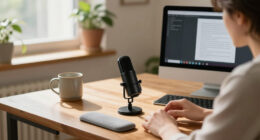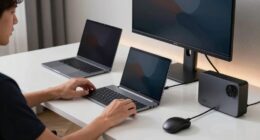
If your laptop’s built-in mic makes you sound like you’re calling from inside a tunnel, a USB microphone for Zoom calls is the fastest fix — no audio interface, no drivers, just plug and talk. The TONOR TM20 stands out as the best overall pick for most people: it captures voices across a desk, has a reliable mute button, and handles the realities of home-office calls better than anything else at its level. If you want richer, podcast-style voice quality for one-on-one meetings, the ZealSound K66 with gain and noise-reduction controls is the stronger choice, while the Amazon Basics condenser is the sensible entry point if you just want to upgrade from your laptop mic for as little as possible. The main tradeoff in this category is between directional condenser mics (better voice quality, but you must stay positioned in front of them) and omnidirectional conference mics (pick up multiple people or a moving speaker, but also more room noise). Read on for the full breakdown of all 14 options.

Get comfort and recovery gear delivered free with Prime
- Fast, free delivery on millions of items
- Prime Video, Amazon Music and more included
- Member-only deals all year
Complete the kit

Key Takeaways
- Conference-style omnidirectional mics (amazon.com/dp/B08NDB5NWP?tag=worksetuplab.com-20&ascsubtag=dc-531829″ target=”_blank” rel=”nofollow sponsored noopener”>TONOR TM20, TM310, AIRHUG 21, NEEWER UM04) won this comparison for Zoom specifically because they tolerate head movement, off-axis speaking, and multi-person calls — the situations where gooseneck and cardioid mics fall apart.
- Mute buttons proved to be the single most useful feature for Zoom: mics without one force you to hunt for the Zoom mute control mid-sentence, which is exactly when you need instant silencing.
- The budget gooseneck options (picks 1, 10, 12) are nearly identical in function — flexible positioning and LED indicators — so the choice between them comes down to cord length and mount style, not sound quality.
- Gain control separated the podcast-style mics from the pack: the ZealSound K66 and FIFINE K669 let you fix low volume or distortion at the mic, while cheaper models leave you adjusting Zoom’s input level after every call.
- Built-in noise reduction (CMTECK G009, ZealSound K66) helps with keyboard clatter and fan hum, but no mic in this price class replaces basic room treatment — a quiet room beats an expensive microphone every time.
| Plug & Play USB Computer Microphone with Flexible Gooseneck, Mute Button & LED Indicator |  | Best for Quick Desk Setup | Connectivity: USB | Pickup pattern: 360-degree omnidirectional | Mute control: Touch-sensitive button | VIEW ON AMAZON | See Our Full Breakdown |
| TONOR TM20 USB Conference Microphone with Mute Button |  | Best for Small Group Meetings | Connectivity: USB 2.0 | Pickup pattern: Omnidirectional, 360° | Pickup range: Up to 5 m / 16.4 ft | VIEW ON AMAZON | See Our Full Breakdown |
| Amazon Basics USB Condenser Microphone with Adjustable Stand |  | Best for Solo Callers in Shared Spaces | Microphone type: USB condenser | Diaphragm: 14 mm | Pickup pattern: Cardioid, unidirectional | VIEW ON AMAZON | See Our Full Breakdown |
| ZealSound K66 USB Podcast Microphone with Noise Reduction, Gain and Mute Controls |  | Best for Hands-On Audio Control | Microphone type: USB condenser | Pickup pattern: Cardioid | Frequency response: 40 Hz–18 kHz | VIEW ON AMAZON | See Our Full Breakdown |
| FIFINE K669 Silver USB Microphone |  | Best for Simple Laptop Calls | Model: K669 | Type: USB condenser microphone | Color: Silver | VIEW ON AMAZON | See Our Full Breakdown |
| TONOR TM310 USB Conference Microphone for Computers |  | Best for a Clutter-Free Desk | Model: TM310 | Pickup pattern: Supercardioid | Connection: USB Type-C | VIEW ON AMAZON | See Our Full Breakdown |
| CMTECK G009 USB Computer Microphone with Noise-Cancelling and Mute Function |  | Best for Beginners | Connectivity: USB | Polar pattern: Listed as unidirectional; description also says omnidirectional | Form factor: Gooseneck | VIEW ON AMAZON | See Our Full Breakdown |
| AIRHUG 21 USB Omnidirectional Microphone for Computers |  | Best Compact Pick for Small Group Calls | Microphone type: 360° omnidirectional | Pickup range: 6 ft | Sampling rate: 48 kHz | VIEW ON AMAZON | See Our Full Breakdown |
| TONOR G11 USB Conference Microphone for PC & Mac |  | Best for Wider Table Coverage | Connectivity: USB | Polar pattern: Omnidirectional | Pickup distance: 11.5 ft | VIEW ON AMAZON | See Our Full Breakdown |
| USB Computer Microphone with Flexible Gooseneck, Mute Button & LED |  | Best for Adjustable Solo Calls | Connectivity: USB, plug and play | Compatibility: Windows and Mac | Pickup pattern: Omnidirectional | VIEW ON AMAZON | See Our Full Breakdown |
| AIRHUG USB Microphone with Magnetic & Flat Mount for PC/Mac |  | Best Mounting Flexibility | Connectivity: USB (Type-C connector) | Polar Pattern: 360° omnidirectional | Pickup Range: 6 ft (2 m) | VIEW ON AMAZON | See Our Full Breakdown |
| USB Microphone with Adjustable Gooseneck, Mute Button, and LED Indicator |  | Best for Precise Positioning | Type: Omnidirectional condenser USB microphone | Adjustability: 360-degree flexible gooseneck | Controls: One-click mute button | VIEW ON AMAZON | See Our Full Breakdown |
| Mini USB Microphone for Laptop & Desktop |  | Best Budget Portability Pick | Connectivity: USB 2.0 | Microphone Type: Condenser (6x10mm, high-sensitivity) | Pickup Distance: Up to 10 ft | VIEW ON AMAZON | See Our Full Breakdown |
| NEEWER UM04 USB Omnidirectional Condenser Microphone |  | Best Feature Set | Model: UM04 | Microphone Type: USB omnidirectional condenser | Audio Resolution: 48 kHz / 24-bit | VIEW ON AMAZON | See Our Full Breakdown |
| usb microphone for zoom call | Compatibility | Connectivity | Pickup pattern |
|---|---|---|---|
| Plug & Play USB Computer Micro | Windows and Mac | USB | 360-degree omnidirectional |
| TONOR TM20 USB Conference Micr | Windows and macOS | USB 2.0 | Omnidirectional, 360° |
| Amazon Basics USB Condenser Mi | Windows 7 or higher; macOS 10.10 or higher | — | Cardioid, unidirectional |
| ZealSound K66 USB Podcast Micr | Windows PC, Mac, PS4, PS5, iPhone, iPad, and compatible USB-C devices | USB; USB-C and Lightning adapters included | Cardioid |
| FIFINE K669 Silver USB Microph | PC and laptop; works with Zoom, WebEx, Teams, and Discord | — | — |
| TONOR TM310 USB Conference Mic | Windows 7, 8, 10, and 11; macOS; PS4 and PS5 | — | Supercardioid |
| CMTECK G009 USB Computer Micro | Windows 7/8/10, Mac OS, and PS4; not compatible with Raspberry Pi, Linux, or Android | USB | — |
| AIRHUG 21 USB Omnidirectional | Windows 7, 8, 10, and 11; Mac OS | — | — |
| TONOR G11 USB Conference Micro | — | USB | — |
| USB Computer Microphone with F | Windows and Mac | USB, plug and play | Omnidirectional |
| AIRHUG USB Microphone with Mag | Windows 7/8/10/11, macOS, Zoom, Teams, Skype | USB (Type-C connector) | — |
| USB Microphone with Adjustable | Windows 7/8/10/11, macOS | — | — |
| Mini USB Microphone for Laptop | Windows, Mac, Linux, Chromebook, Raspberry Pi | USB 2.0 | — |
| NEEWER UM04 USB Omnidirectiona | Windows, macOS, iPhone, Android | — | 360° omnidirectional |
More Details on Our Top Picks
Plug & Play USB Computer Microphone with Flexible Gooseneck, Mute Button & LED Indicator
For a Zoom caller who wants a simple mic they can point toward their seat, this flexible metal gooseneck and touch mute with an LED indicator make a practical combination. It connects directly to Windows or Mac without drivers, and its compact base is easy to move between a home desk and a meeting room. Compared with the TONOR TM20, which is designed to pick up a group around a table, this mic is easier to aim at one person but its 360-degree pickup can still bring in room noise. The non-slip base helps keep it steady, while the included windproof caps may soften airflow noise. There is no gain control or headphone monitoring listed, so callers who want to fine-tune their level should look at the ZealSound K66 instead.
Pros:- Plug-and-play USB setup for Windows and Mac
- Flexible gooseneck makes it easy to aim the mic toward the speaker
- Touch mute button and LED show whether the mic is active
- Compact base is non-slip and described as shockproof
Cons:- Omnidirectional pickup may capture keyboard, room, and other background sounds
- No gain control or headphone monitoring is listed
- USB cable connection limits placement compared with a wireless mic
Best for: Solo Zoom callers who want a compact, easy-to-position USB mic with a clear physical mute status
Not ideal for: People in noisy rooms or callers who need gain adjustment and headphone monitoring, since neither directional pickup nor those controls are listed
- Connectivity:USB
- Pickup pattern:360-degree omnidirectional
- Mute control:Touch-sensitive button
- Mute indicator:LED: green working, red muted
- Cable length:1.8 m / 6 ft
- Compatibility:Windows and Mac
- Driver requirement:None
- Materials:Metal gooseneck, ABS base, silicone pad
Our verdict“Choose this for a straightforward, adjustable desk mic with visible mute status, but consider the ZealSound K66 if you need level controls or monitoring.”
TONOR TM20 USB Conference Microphone with Mute Button
The TM20 is the most meeting-focused choice here for calls where several people share one computer. Its boundary-mic form and stated pickup range of up to 5 m give speakers more freedom to sit around a table than the Amazon Basics cardioid mic, which is better aimed at one person. TONOR also lists noise reduction and echo elimination, features intended to make room conversations easier to follow; they do not change the fact that a 360-degree pickup pattern can hear activity from across the room. A one-touch mute button with an LED makes it easy to cut the mic quickly during a call. Setup is simple on Windows and macOS, but the wired USB connection limits where the unit can sit, and it has no speaker output.
Pros:- Omnidirectional pattern is suited to multiple speakers around a table
- Specified pickup range extends to 5 m
- Noise reduction and echo elimination are listed for meeting use
- Plug-and-play setup and one-button mute with LED
Cons:- Omnidirectional pickup can also collect room sounds and side conversations
- Wired USB connection restricts placement
- Microphone only, with no speaker output
Best for: Small teams, tutors, or families sharing a computer for Zoom calls around a table
Not ideal for: Solo callers in noisy spaces who need directional pickup or a mic they can position away from their computer
- Connectivity:USB 2.0
- Pickup pattern:Omnidirectional, 360°
- Pickup range:Up to 5 m / 16.4 ft
- Frequency range:60–16,000 Hz
- Signal-to-noise ratio:78 dB
- Form factor:Boundary microphone
- Compatibility:Windows and macOS
- Dimensions:5.79 × 5.79 × 1.3 in
Our verdict“Pick the TM20 when several people need to speak into one computer; solo callers may prefer the more directional Amazon Basics mic.”
Amazon Basics USB Condenser Microphone with Adjustable Stand
For a Zoom setup where the mic should favor the person at the desk over the room, the Amazon Basics model’s cardioid pickup gives it a different job from the group-oriented TONOR TM20. Its unidirectional pattern is intended to focus on sound from the front, which can help keep some surrounding activity less prominent on a call. The adjustable stand lets you angle it toward your mouth, and the one-tap mute is easy to reach during meetings. This is a wired, single-channel condenser mic with a 14 mm diaphragm; the listed details do not include headphone monitoring or dedicated noise-reduction controls. Compared with the feature-rich ZealSound K66, it is a simpler option, but callers who want to adjust gain or monitor their voice should choose the K66.
Pros:- Cardioid pattern is suited to focusing on one speaker
- Adjustable stand helps direct the mic toward the caller
- One-tap mute is convenient during meetings
- Standard 5/8-inch thread supports compatible stands and boom arms
Cons:- Single-channel, wired microphone
- No headphone monitoring or gain control is listed
- Directional pickup is less suited to several people sharing one mic
Best for: Remote workers who take solo calls at a desk in a shared home or office
Not ideal for: Groups gathered around one computer or callers who want built-in headphone monitoring and multiple physical audio controls
- Microphone type:USB condenser
- Diaphragm:14 mm
- Pickup pattern:Cardioid, unidirectional
- Frequency response:20 Hz–20 kHz
- Mute function:One-tap mute
- Mounting:Standard 5/8-inch thread
- Compatibility:Windows 7 or higher; macOS 10.10 or higher
- Weight:0.2 kg
Our verdict“Choose this for a simple, front-facing desk mic for solo calls; the TONOR TM20 is a better fit when multiple people need pickup.”
ZealSound K66 USB Podcast Microphone with Noise Reduction, Gain and Mute Controls
The K66 suits callers who want to manage their sound at the mic instead of relying only on Zoom’s settings. Its cardioid pattern is aimed at a single speaker, while physical controls for mic volume, monitoring volume, echo, and mute give it more adjustment than the Amazon Basics model. A 3.5 mm headphone jack supports zero-latency monitoring, so you can hear your voice without waiting for the call playback. The listed noise reduction mode may help with background sounds, though the description does not claim it removes them. USB-C and Lightning adapters broaden the devices it can connect to, unlike the PC-focused FIFINE K669. The tradeoff is a busier control set and no clear information about an included stand or accessories.
Pros:- Cardioid pickup is suited to a single speaker
- Physical controls cover mic volume, monitoring volume, echo, and mute
- 3.5 mm jack enables zero-latency headphone monitoring
- USB-C and Lightning adapters support compatible mobile devices
Cons:- Noise reduction is described as helping, not eliminating background sound
- Included stand and other accessories are not specified
- More controls may be unnecessary for callers who want a basic plug-in mic
Best for: Remote workers and presenters who want on-mic level controls and headphone monitoring during calls
Not ideal for: Buyers seeking the simplest out-of-box desk setup, or those who need certainty about included stand and mounting accessories
- Microphone type:USB condenser
- Pickup pattern:Cardioid
- Frequency response:40 Hz–18 kHz
- Sampling rate:46 kHz
- Monitoring:Zero-latency via 3.5 mm headphone jack
- Controls:Microphone volume, monitoring volume, echo, mute
- Connectivity:USB; USB-C and Lightning adapters included
- Compatibility:Windows PC, Mac, PS4, PS5, iPhone, iPad, and compatible USB-C devices
Our verdict“Choose the K66 if you want to adjust and monitor your call audio at the microphone; the FIFINE K669 is simpler for basic PC use.”
FIFINE K669 Silver USB Microphone
The K669 keeps the desk setup straightforward: plug it into a PC or laptop, place it on the included tripod, and use the front volume and mute knob when your call needs a quick adjustment. Its pivot mount helps angle the mic toward the speaker, giving it a more focused solo-call role than the room-covering TONOR TM20. The included stand and 6-foot cable also mean there are fewer mounting choices to sort out before a meeting. Compared with the ZealSound K66, it offers fewer audio controls and no headphone monitoring in the provided details, but that simpler approach may suit callers who do not need to tune echo or monitor their voice. The cable is non-detachable, and USB-C-only laptops need an adapter.
Pros:- Plug-and-play setup for PC and laptop
- Front knob provides volume adjustment and muting
- Pivot mount allows the mic angle to be adjusted
- Tripod stand and 6-foot USB cable are included
Cons:- Non-detachable cable limits replacement and cable-routing options
- USB-C-only laptops require an adapter
- Incompatible with Xbox
Best for: PC and laptop users who want an uncomplicated desk microphone with an included stand and reachable mute control
Not ideal for: USB-C-only laptop owners without an adapter, Xbox users, and callers who need headphone monitoring or advanced sound controls
- Model:K669
- Type:USB condenser microphone
- Color:Silver
- Cable:6 ft, non-detachable
- Controls:Front volume and mute knob
- Mount:Pivot mount and tripod stand included
- Compatibility:PC and laptop; works with Zoom, WebEx, Teams, and Discord
- Limitation:Incompatible with Xbox; USB-C-only laptops require an adapter
Our verdict“Pick the K669 for basic PC or laptop Zoom calls with an included stand, while the ZealSound K66 suits callers who need monitoring and extra controls.”
TONOR TM310 USB Conference Microphone for Computers
The clip-on design makes the TONOR TM310 a useful choice when a desktop stand would crowd a small work area. Its supercardioid pickup focuses on sound from the front, which may help keep side and rear noise less prominent than with the room-facing TONOR G11. The adjustable joint lets me aim it toward the speaker, while the combined mute and noise reduction control makes call adjustments easy to reach. It connects over USB-C and includes adapters for USB-A ports, so setup is flexible across many computers. The tradeoff is placement: I need a suitable monitor or computer edge to hold the clip, and it is not recommended for smartphones. Choose the G11 instead if several people need to speak around a table.
Pros:- Clip-on mounting frees desktop space
- Supercardioid pickup focuses on sound from the front
- Included USB-C cable and USB-A adapter support common computer ports
- Accessible mute and noise reduction control with an LED indicator
Cons:- Requires a suitable edge for clip mounting
- Not recommended for smartphones
- Front-focused pickup is less suited to capturing several people around a table
Best for: People who want a directional microphone without giving up desk space and have a suitable monitor edge for mounting
Not ideal for: Smartphone users and people whose computer or monitor has no suitable edge for the clip
- Model:TM310
- Pickup pattern:Supercardioid
- Connection:USB Type-C
- Mounting:Clip-on
- Adjustment:360° horizontal rotation; -25° to 10° vertical adjustment
- Controls:Mute and noise reduction button with LED indicator
- Compatibility:Windows 7, 8, 10, and 11; macOS; PS4 and PS5
- Included accessories:USB Type-C to Type-C cable and USB Type-C to USB-A adapter
Our verdict“Choose the TM310 for a compact, front-focused Zoom setup when your monitor or computer can support its clip.”
CMTECK G009 USB Computer Microphone with Noise-Cancelling and Mute Function
The CMTECK G009 suits someone who wants a simple desktop mic with an easy-to-reach mute button. Its flexible gooseneck can be aimed toward the speaker, while the compact base takes less room than a larger stand. A built-in pop filter and active noise cancellation add voice-focused features without requiring an external interface or driver installation. Compared with the AIRHUG 21, which is designed to pick up voices from around a table, the G009’s listed unidirectional pattern suggests a more focused position for one speaker. The product description also calls the pattern omnidirectional, though, so I would not rely on precise pickup behavior without confirming it. Its limited listed compatibility and conflicting pattern details make this a less predictable choice for mixed devices or group calls.
Pros:- Plug-and-play USB setup without drivers or external power
- Quick mute button with LED status indicator
- Flexible 360-degree gooseneck and compact base
- Built-in pop filter and active noise cancellation
Cons:- Product data conflicts on whether the pickup pattern is unidirectional or omnidirectional
- Not compatible with Raspberry Pi, Linux, or Android
- The listed battery requirement is unclear for a corded USB microphone
Best for: First-time USB mic buyers who use a Windows or Mac computer and want a compact base, flexible positioning, and a physical mute button
Not ideal for: Linux, Android, or Raspberry Pi users, and buyers who need clearly specified pickup behavior for group calls
- Connectivity:USB
- Polar pattern:Listed as unidirectional; description also says omnidirectional
- Form factor:Gooseneck
- Audio sensitivity:30 dB
- Signal-to-noise ratio:76 dB
- Dimensions:2.68 × 4.21 × 4.41 inches
- Compatibility:Windows 7/8/10, Mac OS, and PS4; not compatible with Raspberry Pi, Linux, or Android
- Material:Metal
Our verdict“Pick the G009 for a straightforward single-computer setup if its unclear pickup pattern and limited compatibility are acceptable.”
AIRHUG 21 USB Omnidirectional Microphone for Computers
The AIRHUG 21 is the better fit when a Zoom call includes several people near one table and a small, portable microphone matters. Its 360° pickup is specified for voices within 6 feet, giving it a more room-oriented role than the front-focused TONOR TM310. The flat 3.38-inch body and anti-slip base are easy to place in the middle of a shared workspace, and the USB-C to USB-A cable supports a straightforward computer connection. AI noise reduction and a mute control add useful call conveniences, with memory for the last sound mode. Its stated range is shorter than the TONOR G11‘s 11.5 feet, so larger tables may favor the G11. It also has no speaker or echo cancellation, which means it does not replace a speakerphone.
Pros:- 360° pickup suits nearby speakers seated around the microphone
- Compact, lightweight body with an anti-slip base
- AI noise reduction, mute control, and LED status indicator
- Plug-and-play USB connection with memory for the last sound mode
Cons:- Specified pickup range is 6 feet, shorter than the TONOR G11’s 11.5 feet
- No built-in speaker
- Echo cancellation is not included
Best for: Small teams or families who share a computer call from within six feet of a compact tabletop microphone
Not ideal for: People seated across a large conference table or anyone seeking an all-in-one speakerphone with echo cancellation
- Microphone type:360° omnidirectional
- Pickup range:6 ft
- Sampling rate:48 kHz
- Connection:USB-C to USB-A cable
- Cable length:6.5 ft (2 m)
- Dimensions:3.38 in diameter × 0.53 in thick
- Weight:0.33 lb (150 g)
- Features:AI noise reduction, mute function, LED status indicator, memory for last sound mode
- Compatibility:Windows 7, 8, 10, and 11; Mac OS
Our verdict“Choose the AIRHUG 21 for compact group calls within six feet when you already have separate speakers or headphones.”
TONOR G11 USB Conference Microphone for PC & Mac
For a small or medium meeting where participants sit farther apart, the TONOR G11’s stated 11.5-foot, 360° pickup range gives it a clear group-call role. That reach is longer than the AIRHUG 21’s specified 6 feet, making the G11 the more suitable of the two for a wider table. Its metal base and anti-slip mat help keep it planted, while a mute button with an indicator light makes call control visible. The shielded 1.8-meter cable is a practical touch for a desktop connection. This is a microphone only, though: unlike a speakerphone, it does not play remote participants’ voices. Its omnidirectional pickup also captures the room broadly, so the TONOR TM310 is a better match for one speaker in a noisy space.
Pros:- Omnidirectional pickup specified up to 11.5 feet
- Mute button with an indicator light
- Shielded 1.8-meter cable helps reduce signal interference
- Compact metal base with anti-slip mat
Cons:- Microphone only, with no speaker or speakerphone function
- Broad room pickup may capture surrounding noise
- Listed compatibility is limited to Windows and macOS computers
Best for: Small meeting groups using a Windows or macOS computer who need one tabletop mic with broader stated pickup reach
Not ideal for: Solo callers in noisy rooms or people who need a built-in speaker for hands-free calls
- Connectivity:USB
- Polar pattern:Omnidirectional
- Pickup distance:11.5 ft
- Cable length:1.8 m
- Signal-to-noise ratio:78 dB
- Weight:135 g
- Compatible devices:Laptop and PC (Windows and macOS)
- Power source:USB corded electric
- Materials:Metal and nylon
Our verdict“Choose the G11 for a computer-based group call where participants need to be heard from farther away than the AIRHUG 21’s stated range.”
USB Computer Microphone with Flexible Gooseneck, Mute Button & LED
This gooseneck model makes the most sense for a solo caller who wants to position the mic close to their voice and keep call controls on the desk. Its 5.7-inch metal neck bends through 360 degrees, while the weighted, padded base helps it stay put as I adjust its angle. The one-tap LED mute is easy to spot, and the listed noise reduction targets sounds such as keyboard clicks and fans. Compared with the room-facing TONOR G11, this design is more about placing a mic near one speaker than covering participants across a table. The listing calls its pickup omnidirectional, however, so I would not assume the gooseneck alone blocks room noise. Breathing lights can be switched off, but this is still a microphone-only device with no speaker.
Pros:- 360-degree 5.7-inch metal gooseneck allows flexible positioning
- One-tap LED mute button is easy to see
- Weighted ABS base with non-slip pads supports stable placement
- Plug-and-play USB setup for Windows and Mac
Cons:- Microphone only, with no built-in speaker
- Omnidirectional pickup may capture room sound despite listed noise reduction
- Compact desktop format is less suited to larger group calls
Best for: Solo Zoom callers who want a desk-mounted mic they can bend toward their mouth and mute at a glance
Not ideal for: Teams that need one microphone to cover a spread-out table or buyers who want a speakerphone
- Connectivity:USB, plug and play
- Compatibility:Windows and Mac
- Pickup pattern:Omnidirectional
- Gooseneck length:5.7 inches
- Gooseneck adjustment:360°
- Controls:One-tap LED mute button
- Features:Noise reduction; breathing lights can be turned off
- Materials:Metal gooseneck; ABS base with non-slip silicone pads
Our verdict“Pick this gooseneck mic for a solo computer setup where flexible positioning and visible mute control matter more than group coverage.”
AIRHUG USB Microphone with Magnetic & Flat Mount for PC/Mac
What sets the AIRHUG USB Microphone apart from every other desktop mic in this roundup is its three-way mounting system — lay it flat, clip it, or stick it magnetically to a monitor edge or desk frame. Compared with the USB Microphone with Adjustable Gooseneck, which forces you to bend a fixed stem into position, the AIRHUG lets you place the pickup element wherever your voice actually is. That flexibility pays off on Zoom calls where desk layouts vary. The 6 ft omnidirectional pickup range means it can cover a small huddle too, though the AI noise reduction is switchable rather than always-on, so expect some manual tuning. Note the tradeoff: no built-in speaker, and some users need to adjust OS privacy settings before it’s detected.
Pros:- Three mounting modes (flat, clip, magnetic) for flexible placement
- 6 ft omnidirectional pickup covers small group calls
- AI noise reduction with an original-sound mode switch
- Plug-and-play with no drivers, plus mute button and LED status indicator
Cons:- No built-in speaker or speakerphone capability
- May require tweaking computer privacy settings before detection
Best for: Remote workers with cluttered or unusual desk setups who want mounting options beyond a fixed stand
Not ideal for: Anyone expecting speakerphone functionality — this is microphone-only, with no audio output
- Connectivity:USB (Type-C connector)
- Polar Pattern:360° omnidirectional
- Pickup Range:6 ft (2 m)
- Form Factor:Desktop with magnetic mount
- Cable Length:2 m (6.5 ft)
- Compatibility:Windows 7/8/10/11, macOS, Zoom, Teams, Skype
- Special Features:AI noise reduction, mute button, three-color LED, plug & play
- Included:Microphone, 2m USB-C to USB-A cable, 3 nano adhesive dots, user guide
Our verdict“This pick makes the most sense for buyers whose desk layout demands creative mic placement rather than a one-position stand.”
USB Microphone with Adjustable Gooseneck, Mute Button, and LED Indicator
Sometimes you don’t want 360° room pickup — you want the mic pointed exactly at your mouth and nowhere else. That’s the case for this gooseneck USB microphone, whose flexible metal arm lets you dial in position in a way fixed pucks like the NEEWER UM04 or the Mini USB Microphone simply can’t. For solo Zoom calls in a noisy household, aiming the capsule at your voice and away from the door or window is a genuinely useful form of noise control that complements the built-in noise-canceling technology. The one-click mute with LED indicator is a practical mid-call control. The tradeoffs: compatibility stops at Windows and macOS — no phone, no Android, no Raspberry Pi — and the metal-and-ABS build prioritizes function over premium feel.
Pros:- 360-degree flexible gooseneck for precise aim at your voice
- Plug-and-play with no drivers required
- Mute button and LED indicator for clear mid-call control
- Noise-canceling technology helps reduce background noise and echo
Cons:- No compatibility with Xbox, Raspberry Pi, or Android devices
- Noise-reduction performance claims are seller-stated with no independent verification
Best for: Solo callers in noisy environments who want to physically aim the mic at their voice
Not ideal for: Anyone hoping to use it with phones, Android devices, or Raspberry Pi — it’s Windows and Mac only
- Type:Omnidirectional condenser USB microphone
- Adjustability:360-degree flexible gooseneck
- Controls:One-click mute button
- Indicator:LED status indicator
- Noise Control:Noise-canceling technology
- Cable Length:1.8 m (6 ft)
- Compatibility:Windows 7/8/10/11, macOS
- Materials:Metal pipe, ABS stand
Our verdict“A sensible choice for one-person Zoom calls where aiming the mic matters more than room coverage.”
Mini USB Microphone for Laptop & Desktop
If the AIRHUG is about placement options and the gooseneck model is about aim, this Mini USB Microphone is about one thing: being tiny. Roughly the size of a flash drive, it disappears into a laptop bag and upgrades any machine with a weak built-in mic — though honestly, the improvement over integrated laptop mics is modest rather than dramatic. Its real edge over everything else here is compatibility breadth: Windows, Mac, Linux, Chromebook, and even Raspberry Pi, which the gooseneck model explicitly doesn’t support. The 10 ft pickup distance is generous for its size, but this is a call-quality device, not a recording tool. The included metal carrying box reinforces that this is built for commuters and hybrid workers, not home-studio creators.
Pros:- Flash-drive-sized design that travels anywhere
- Plug-and-play with no drivers or setup
- Unusually wide OS support including Chromebook, Linux, and Raspberry Pi
- Clear voice capture up to 10 feet away, plus a metal carrying box
Cons:- Sound quality is only marginally better than built-in laptop microphones
- Not suitable for studio-grade recording quality
Best for: Students and hybrid workers on Chromebooks or Linux laptops who need a pocketable mic upgrade
Not ideal for: Podcasters or streamers — this is a step up from a laptop mic, not studio-grade recording gear
- Connectivity:USB 2.0
- Microphone Type:Condenser (6x10mm, high-sensitivity)
- Pickup Distance:Up to 10 ft
- Driver Required:No (plug-and-play)
- Compatibility:Windows, Mac, Linux, Chromebook, Raspberry Pi
- Warranty:12 months
- Includes:Metal carrying box
Our verdict“Buy this if portability and odd OS support matter more than audio refinement; skip it if you care about recording quality.”
NEEWER UM04 USB Omnidirectional Condenser Microphone
The NEEWER UM04 brings the most control surface in this batch: tap controls for mute, AI noise cancellation, and volume, gain adjustable in fine 2 dB steps, dynamic RGB lighting, and — uniquely here — a 3.5 mm headphone jack for real-time monitoring. That monitoring port is something the AIRHUG, the gooseneck mic, and the Mini USB all lack, and it matters if you want to hear exactly what Zoom participants hear. The 48 kHz/24-bit resolution gives it headroom above basic call mics, and unlike the gooseneck model it also works with iPhone and Android. The tradeoffs: optimal pickup is only 4.9 ft, tighter than the AIRHUG’s 6 ft, some phones need OTG enabled, and the headphone jack is 3.5 mm TRS only — no USB or wireless monitoring.
Pros:- Headphone jack for real-time, zero-latency audio monitoring
- Adjustable mic gain in precise 2 dB increments with 10 volume levels
- AI noise cancellation and mute via convenient tap controls
- 48 kHz/24-bit audio with compatibility across Windows, macOS, iPhone, and Android
Cons:- Optimal pickup distance of 4.9 ft is shorter than competing conference mics
- Some phones require OTG activation, and monitoring is limited to 3.5 mm TRS
Best for: Users who want hands-on control — gain tuning, noise cancellation, and zero-latency monitoring — during frequent calls
Not ideal for: Buyers wanting a simple set-and-forget puck — the controls and RGB lighting add complexity and desk clutter
- Model:UM04
- Microphone Type:USB omnidirectional condenser
- Audio Resolution:48 kHz / 24-bit
- Pickup Pattern:360° omnidirectional
- Optimal Pickup Distance:4.9 ft (1.5 m)
- Controls:Mute, AI noise cancellation, RGB lighting, 10 volume levels
- Gain Adjustment:2 dB increments
- Headphone Output:3.5 mm TRS
- Compatibility:Windows, macOS, iPhone, Android
Our verdict“The strongest pick for tinkerers and frequent callers who want monitoring and granular control, at the cost of simplicity.”

How We Picked
Every mic here was judged through one narrow lens: how does it perform on a live Zoom call, not how does it sound in a studio. That meant prioritizing speech clarity over music fidelity — a mic that captures a voice naturally at conversational volume beats one with wide frequency response but harsh sibilance. I weighed plug-and-play reliability heavily, because a Zoom mic that needs drivers or fights with Windows audio settings is a liability, not an upgrade. Physical controls mattered too: a hardware mute button and LED indicator are genuinely useful mid-call, while software-only muting is a recurring frustration.
From there, I separated the lineup into the three shapes this category actually takes — omnidirectional conference mics for desks and meeting rooms, cardioid condensers for solo callers who want broadcast-style voice, and gooseneck and mini mics for minimalists and travelers. Ranking within each group came down to pickup consistency, background noise handling, build quality, and how well the included stand or mount works on a real desk. Mics that picked up keyboard noise or dropped volume when the speaker turned their head were marked down, because those are the exact failure modes that show up on Zoom.
| usb microphone for zoom call | Connectivity |
|---|---|
| Plug & Play USB Computer Micro | USB |
| TONOR TM20 USB Conference Micr | USB 2.0 |
| Amazon Basics USB Condenser Mi | — |
| ZealSound K66 USB Podcast Micr | USB; USB-C and Lightning adapters included |
| FIFINE K669 Silver USB Microph | — |
| TONOR TM310 USB Conference Mic | — |
| CMTECK G009 USB Computer Micro | USB |
| AIRHUG 21 USB Omnidirectional | — |
| TONOR G11 USB Conference Micro | USB |
| USB Computer Microphone with F | USB, plug and play |
| AIRHUG USB Microphone with Mag | USB (Type-C connector) |
| USB Microphone with Adjustable | — |
| Mini USB Microphone for Laptop | USB 2.0 |
| NEEWER UM04 USB Omnidirectiona | — |
Factors to Consider When Choosing Usb Microphone For Zoom Calls
Before picking a specific model, it helps to understand what actually changes how you sound on Zoom. Most buyers overspend on the microphone itself and underspend on matching it to their room and how they actually sit during calls.Omnidirectional vs. Cardioid: Match the Pickup Pattern to How You Sit
This is the single biggest decision, and most buyers get it wrong by copying podcasters. A cardioid (directional) mic like the FIFINE K669 or ZealSound K66 captures what’s directly in front of it and rejects sides and rear — great for voice quality, but lean back or turn toward a second monitor and your volume drops noticeably. An omnidirectional conference mic like the TONOR TM20 or AIRHUG 21 hears you from any angle, which suits people who gesture, move around, or share the mic with someone else at the same desk. The tradeoff is that omnidirectional mics also hear your fan, keyboard, and hallway noise equally well. If you sit still and mostly face your screen, go directional; if your calls involve movement or multiple people, go omnidirectional.
Zoom’s software mute has a delay and requires you to find the window first — a real problem when someone walks into your office mid-call. A physical mute button with an LED indicator gives you instant, verifiable silencing, and the light tells you at a glance whether you’re live. Nearly every mic in this lineup includes one, but they vary: some buttons are small and recessed, others give clear tactile or visual feedback. My advice is to treat a mute button as non-negotiable for anyone who takes frequent calls, and to check that the LED is visible from your seating position. Tap-to-mute designs also beat slide switches because you can operate them without looking.
Gain Control: Why Some Mics Sound Quiet and Others Distort
Gain is the input volume control, and having it on the microphone itself — as on the ZealSound K66 and FIFINE K669 — saves you from Zoom’s clunky audio settings menu. Mics without gain control often arrive set too quiet (forcing you to boost levels in software, which adds hiss) or too hot (causing distortion when you speak up). If you speak softly, sit far from the mic, or share the room with others, a gain knob is worth paying extra for. If you’re a consistent talker at a fixed distance, you can skip it — but expect to fiddle with Zoom’s input slider once, and remember that some video apps reset that setting between sessions. headphone jacks for zero-latency monitoring, found on the podcast-style mics here, pair with gain control so you can hear exactly what’s being sent.
Your Room Matters More Than Your Mic
A $100 mic in an echoey kitchen will sound worse than a $25 mic in a carpeted bedroom with curtains. Zoom’s compression amplifies room reflections and background hum, so hard floors, bare walls, and loud HVAC hurt every option in this lineup equally. Before upgrading past a basic model, try simple fixes: call from a softer room, close the door, point any vents away from the mic, and keep the microphone 6–12 inches from your mouth. The noise-reduction circuitry on the CMTECK G009 and ZealSound K66 helps with steady background noise, but it can’t remove echo, and aggressive processing sometimes makes voices sound processed or robotic. Buy the room improvements first; they’re free.
Desk Real Estate and Mounting
Conference mics are flat pucks that sit unobtrusively on a desk, goosenecks take a small footprint but rise several inches, and condensers with tripod stands can dominate a small workspace. If your desk is shared or cramped, the AIRHUG magnetic and flat mount options or a mini mic tucked behind a monitor make more sense than a full mic-and-stand setup. Also check cord length: 6-foot cables like on the gooseneck models reach around a desk comfortably, while shorter captive cables can force awkward placement. And if you use a laptop dock, confirm the mic works through it — most of these are USB-A, so a hub or adapter may be part of your real setup.
When to Stop Spending
Zoom compresses audio substantially on both ends, which means the difference between a decent $30 USB mic and a $150 one is smaller on a call than it is in a recording. Above this lineup’s price range, you’re paying for features Zoom callers rarely use — multiple pickup patterns, XLR connectivity, shock mounts — rather than clearer meetings. The right time to spend more is when you also record podcasts, videos, or voiceovers with the same mic; that’s where the FIFINE K669 and ZealSound K66 justify their extra controls. For meetings only, a mid-pack omnidirectional mic with a mute button covers roughly 95% of the audible improvement available. Put the savings toward a better webcam or lighting, which Zoom shows off more than fine audio detail.
Frequently Asked Questions
Will a USB microphone make me sound noticeably better on Zoom than my laptop’s built-in mic?
Yes, and the improvement is usually immediate — built-in laptop mics are tiny, positioned far from your mouth, and sit right next to fans, which is why laptop audio sounds thin and echoey. Even the cheapest options in this lineup put a larger capsule closer to your voice and away from fan noise. The biggest gains come from clarity and consistency: you’ll sound more present, and listeners stop straining to hear you. That said, don’t expect studio quality from a budget mic — Zoom’s own compression limits how good any mic can sound on the other end. The realistic goal is sounding like a clear professional, not a radio host.
Do I need to change any Zoom settings after plugging in a USB microphone?
Almost always, yes — at least once. Zoom remembers the last audio device used, so after plugging in your new mic you should open Zoom’s audio settings and select it as both the microphone and (if it has one) the speaker. If your voice is too quiet or too loud, adjust the input volume slider there, or better, use the mic’s own gain knob if it has one. A common mistake is leaving Zoom’s ‘automatically adjust volume’ enabled, which can fight with a mic’s built-in gain and cause level pumping during calls. Also do Zoom’s built-in test recording before your first real meeting — it takes thirty seconds and catches problems while they’re still private.
Which type is better for Zoom: a gooseneck mic, a condenser mic, or a conference-style mic?
It depends entirely on how you work during calls. A conference-style omnidirectional mic like the TONOR TM20 is the safest default because it hears you from any angle and tolerates movement, leaning back, and even a second person at the desk. A condenser mic like the FIFINE K669 delivers the richest solo voice but demands that you stay positioned in front of it and in a reasonably quiet room. Gooseneck mics are a middle path — you can aim them precisely at your mouth, which helps in noisy spaces, but they capture one narrow spot. If you’re unsure, choose omnidirectional; under-delivery on voice quality is far less noticeable on Zoom than volume dropping every time you turn your head.
Can I use one of these microphones for multiple people in the same room?
Some of them, yes — and this is where the omnidirectional conference mics clearly beat the others. Models like the TONOR TM20 and TM310, AIRHUG 21, and NEEWER UM04 are designed to pick up voices from all sides across a small meeting table, which is exactly the Zoom-room scenario. Directional condensers and goosenecks are built for one speaker and will make everyone else sound distant or inaudible. Two caveats for group use: omnidirectional mics also pick up every side conversation and paper shuffle, so mute discipline matters, and pickup range is typically limited to a few feet — a large conference table may still need everyone to speak up or lean in.
Is a headphone monitoring jack necessary for Zoom calls?
For pure meetings, no — it’s a podcast feature, and Zoom’s own latency is high enough that monitoring your voice through the mic’s jack won’t reflect what callers hear anyway. Where it earns its place is setup: plugging headphones into the mic to hear its direct output is the fastest way to check your gain level and confirm the mic is actually capturing you before a call. If you also record content, monitoring becomes genuinely useful because you catch plosives, pops, and clipping as they happen rather than after. For most Zoom-only buyers, spending the same money on gain control or a better mute button delivers more everyday value than a headphone jack.
Conclusion
Matching the mic to the buyer matters more than any single spec here. For the best overall Zoom experience, the TONOR TM20 hits the sweet spot: omnidirectional pickup, instant mute, and hassle-free setup that handles real-world calling conditions. The best value pick is the Amazon Basics condenser — it delivers the core upgrade over any laptop mic at the lowest possible commitment, and it’s the right first mic for beginners who aren’t sure how much they care about call audio yet. At the premium end of this lineup, the ZealSound K66 earns its spot with gain, mute, and noise-reduction controls plus monitoring — the pick for anyone whose mic doubles for recordings, streams, or voiceovers. For specific needs: choose the FIFINE K669 for the richest solo voice, the TONOR TM310 or AIRHUG 21 for shared desks and small meeting rooms, the CMTECK G009 for noisy home offices, and the mini or magnetic-mount options for minimalists and frequent travelers. Whatever you choose, remember that a quiet room and a six-inch distance from the mic do more for your Zoom audio than the last $50 of microphone — pick the shape that fits how you actually work, and you’ll sound better on your very next call.
Halloween Picks
halloween
As an affiliate, we earn on qualifying purchases.