
To find the right size air purifier for your home office, measure the room’s square footage and ceiling height to determine the needed capacity. Consider your air quality standards—higher pollution or allergies call for a higher CADR. Avoid units that are too small or oversized, as they can be inefficient or noisy. Look for models with adjustable settings and quiet operation. Keep these tips in mind to optimize your air quality—more helpful advice awaits if you keep exploring.

Get comfort and recovery gear delivered free — and shop member deals
- Fast, free delivery on millions of items
- Access to Prime Big Deal Days deals on October 6–7
- Prime Video, Amazon Music and more included
Key Takeaways
- Measure your home office’s square footage and ceiling height to determine the appropriate purifier size.
- Match the purifier’s CADR rating to your room size and air quality needs for effective filtration.
- Choose units with adjustable settings to accommodate changing air quality or occupancy levels.
- Consider noise levels to ensure the purifier operates quietly during work or calls.
- Select a purifier with suitable filtration technology and capacity for your specific pollutant and allergy concerns.
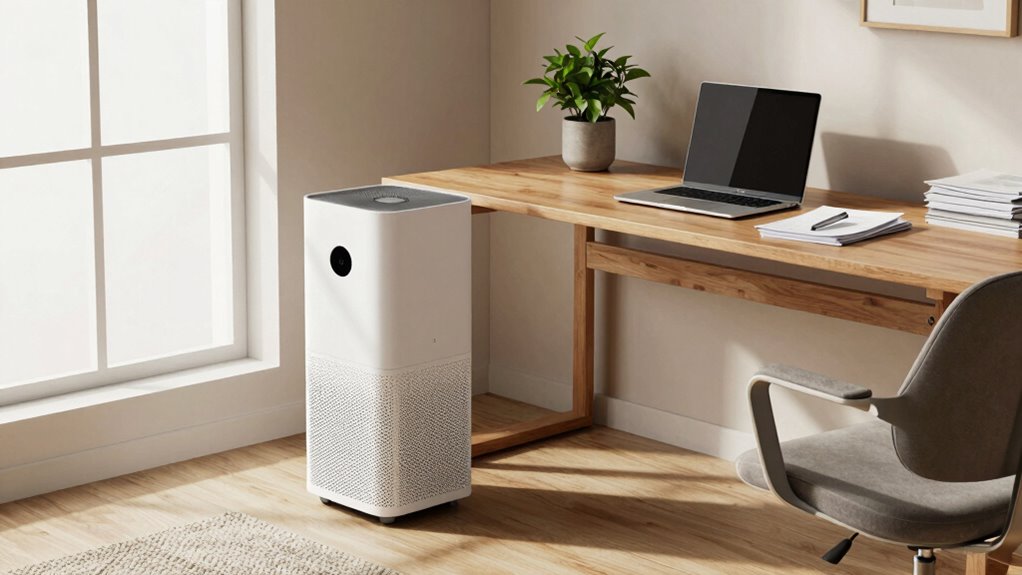
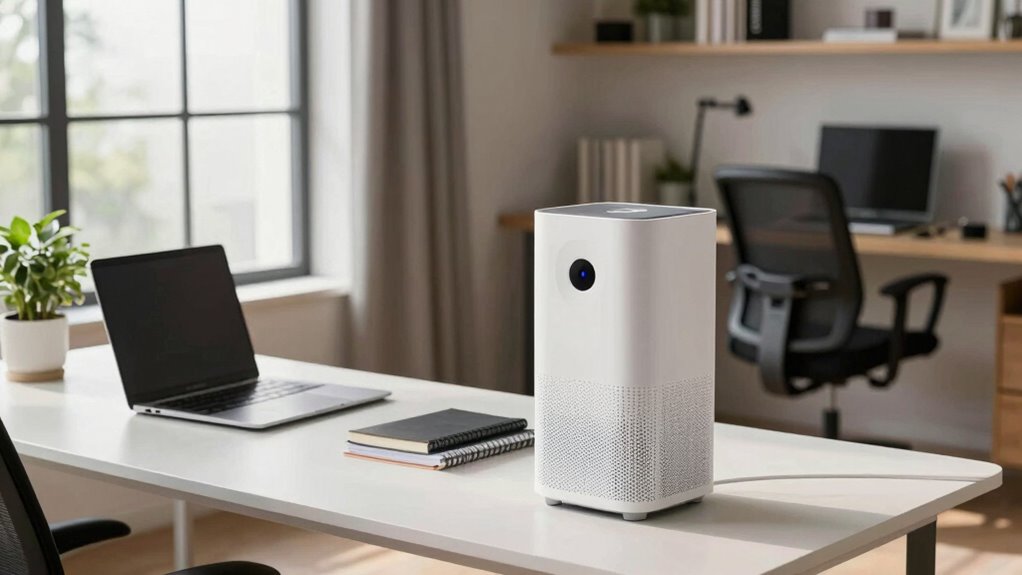
Choosing the right air purifier size for your home office is essential to guarantee clean, healthy air without wasting energy or money. The size of the unit determines how effectively it can filter the air in your space, and selecting one that’s too small can leave pollutants lingering, while an oversized purifier might be inefficient and noisy. To make the right choice, you should first consider your air quality standards—how clean you need the air to be. If you work in an area with high pollution levels or allergy triggers, you’ll want a purifier with a higher Clean Air Delivery Rate (CADR) to meet strict air quality standards. Conversely, if your environment is relatively clean, a smaller unit might suffice.
Noise levels are another critical factor. Air purifiers operate with fans, and some models can be quite loud, especially at higher settings. If your home office is a place where you need concentration or frequent communication calls, you’ll want a unit with low noise levels. Many modern purifiers are designed to operate quietly, often described as whisper-quiet, so look for those features when shopping. The last thing you need is a loud humming or whirring noise disrupting your focus or meetings. By balancing noise levels with air purification needs, you can find a unit that runs comfortably in the background without becoming a distraction. Additionally, understanding air quality standards can help you select the right filtration features for your needs. Knowing how to interpret these standards can also guide you in choosing a device with the appropriate filtration technology. Incorporating proper sizing ensures your purifier works efficiently and effectively in your designated space.
Next, measure your office space accurately. Calculate the square footage and consider the ceiling height, as these dimensions influence the air volume. Most air purifier specifications include the recommended room size; ensure the unit you choose can handle your space’s size. If your room is larger or has high ceilings, opt for a purifier with a higher capacity. This ensures that the air gets circulated and filtered thoroughly, maintaining ideal air quality standards. Proper sizing also means the purifier will cycle the air efficiently, reducing energy consumption and prolonging the device’s lifespan. Furthermore, selecting a unit with adjustable settings can help you fine-tune its operation based on changing air quality needs.
air purifier for home office 300 sq ft
As an affiliate, we earn on qualifying purchases.
As an affiliate, we earn on qualifying purchases.
Frequently Asked Questions
How Often Should I Replace the Air Purifier Filters in My Home Office?
You should replace your air purifier filters every 6 to 12 months, depending on usage and filter type. Regular filter maintenance guarantees maximum performance and air quality. Check your manufacturer’s guidelines for specific replacement frequency, especially if you notice reduced airflow or odors. Keep an eye on indicator lights that signal when it’s time for a change, and consider more frequent replacements if your home office has pets or high pollution levels.
Can an Air Purifier Eliminate All Indoor Allergens and Pollutants?
Can an air purifier eliminate all indoor allergens and pollutants? Not completely, but it substantially reduces many, including indoor pollutant sources like dust, pet dander, and smoke. Remember, proper air purifier maintenance guarantees peak performance. While it can’t remove every tiny particle, using a high-quality unit and keeping filters clean helps create a healthier home office environment, making it easier to breathe and stay focused.
Are There Specific Brands Recommended for Home Office Air Purifiers?
Yes, there are specific brands you should consider for your home office air purifier. When comparing brands, look at features like HEPA filters, CADR ratings, and noise levels. Brands like Dyson, Honeywell, and Blueair stand out for their reliability and advanced features. Doing a thorough comparison helps you find an air purifier that fits your needs, ensuring cleaner air and a healthier workspace.
How Noisy Are Typical Air Purifiers for Home Office Use?
You might worry about noise disrupting your work, but most air purifiers for home offices operate quietly. They typically have sound ratings between 20-50 decibels, comparable to a whisper or soft background music. Higher-end models often feature quiet modes, so you can breathe clean air without distraction. Overall, the noise levels are manageable, letting you focus while enjoying fresh, purified air in your workspace.
Do Air Purifiers Help Reduce COVID-19 or Other Virus Particles?
Yes, air purifiers help reduce virus particles in your home office through effective air filtration. They capture airborne virus particles, including COVID-19, by using HEPA filters that trap tiny contaminants. While they don’t eliminate viruses completely, running an air purifier can greatly improve air quality and lower your risk of airborne transmission. Just make sure your device has a HEPA filter and is properly maintained for maximum protection.
quiet air purifier with adjustable settings
As an affiliate, we earn on qualifying purchases.
As an affiliate, we earn on qualifying purchases.
Conclusion
Choosing the right air purifier isn’t just about size; it’s about creating a healthier workspace. While a small unit might be easy to move, it may struggle with your home’s air quality. Conversely, a larger purifier might seem bulky but guarantees cleaner air and better focus. Remember, your home office’s comfort isn’t just about furniture or décor — it’s about the air you breathe. Prioritize the right size, and breathe easier every day.
high CADR air purifier for allergies
As an affiliate, we earn on qualifying purchases.
As an affiliate, we earn on qualifying purchases.
compact air purifier for small rooms
As an affiliate, we earn on qualifying purchases.
As an affiliate, we earn on qualifying purchases.
Fall Picks
fall essentials
As an affiliate, we earn on qualifying purchases.