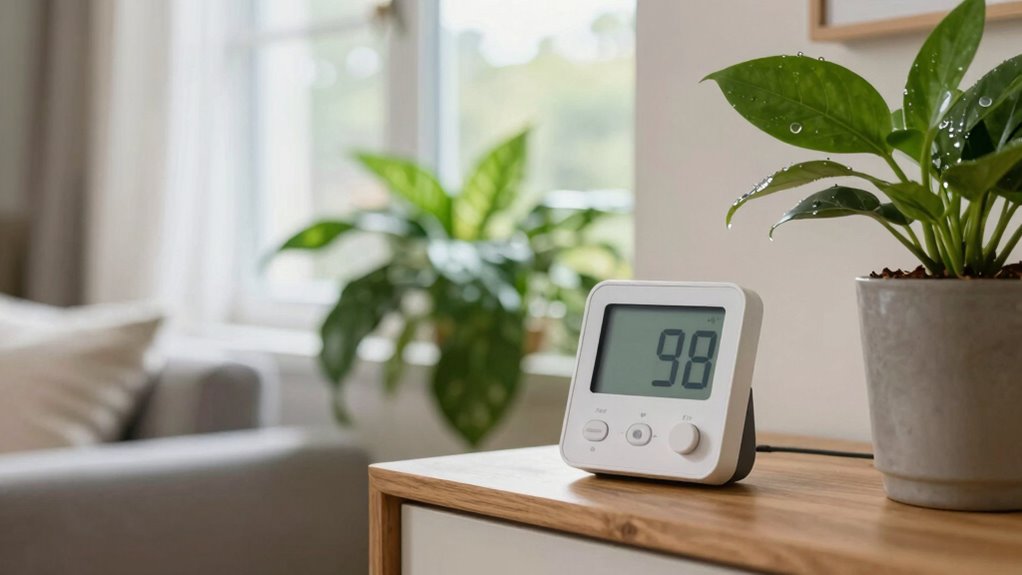

Most homes miss the ideal indoor humidity range of 40% to 60%, which balances comfort, health, and safety. Too high, and mold, mildew, and allergens thrive; too low, and skin, respiratory issues, and static increase. Maintaining the right humidity helps protect your home and well-being. If you want to discover how to keep your space within this perfect range, there’s more to learn about managing humidity effectively.
Key Takeaways
- The ideal indoor humidity range is 40% to 60%, which many homes fail to consistently maintain.
- Excess humidity above 60% promotes mold growth and property damage.
- Humidity below 30% causes skin dryness, respiratory issues, and static electricity.
- Proper use of hygrometers, humidifiers, and dehumidifiers helps achieve the optimal range.
- Maintaining the correct humidity enhances comfort, health, and protects household items from damage.
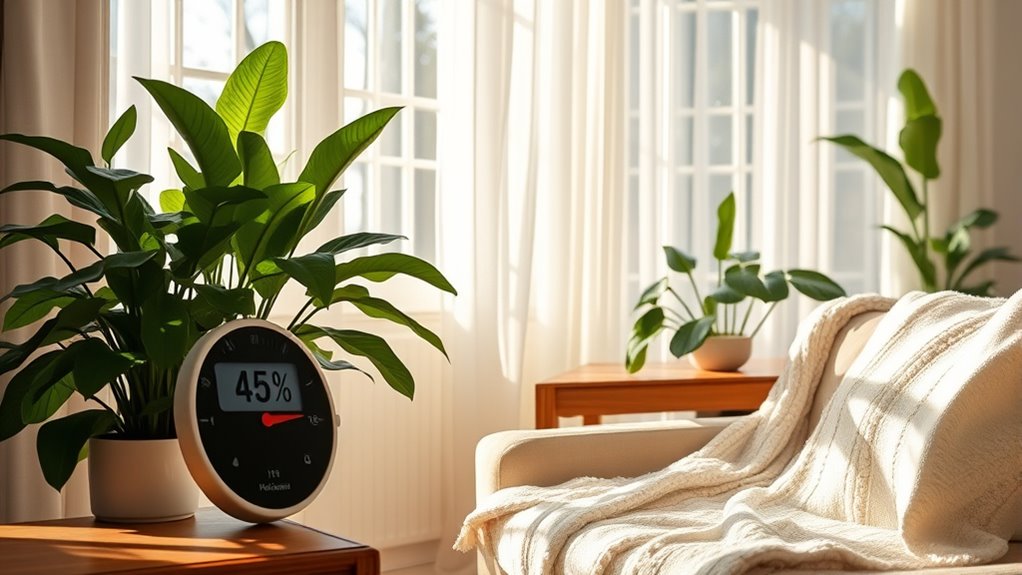
Have you ever wondered why some days your skin feels comfortable while others leave you feeling sticky or dry? It all comes down to humidity levels, and finding that perfect balance can make a huge difference in your home’s environment. When humidity is too high, it creates a breeding ground for mold and mildew, which can harm your health and damage your property. Conversely, if it’s too low, your skin and respiratory system suffer, and your indoor air quality drops. The goal is to maintain a humidity “sweet spot,” typically between 40% and 60%, where your home feels most comfortable and healthy. Unfortunately, many homes miss this range, either sitting in overly damp or overly dry conditions, which can lead to a host of issues.
One common mistake is setting your humidifier or dehumidifier without considering the actual air quality inside your home. When humidity levels creep above 60%, mold spores thrive, and mold prevention becomes more challenging. Mold can develop on walls, ceilings, furniture, and even behind walls where it’s hard to see. This not only damages your belongings but also releases spores into the air, which can worsen allergies and respiratory problems. Maintaining the right humidity helps keep mold in check, ensuring better air quality and a healthier living space. On the flip side, when the air is too dry, usually below 30%, your skin can become itchy and cracked, and respiratory issues like dry throat and sinus irritation can develop. Dry air also causes wood furniture and flooring to crack and may increase static electricity, making your home uncomfortable. Additionally, smart home devices such as connected hygrometers and climate controllers can help you monitor and adjust humidity more precisely for optimal comfort.
Getting the humidity right isn’t just about comfort; it’s a proactive way to improve indoor air quality and prevent mold growth. Using a hygrometer to monitor humidity levels helps you stay within that ideal range. Adjusting your home’s humidity with a humidifier or dehumidifier ensures your environment stays balanced. It’s about understanding that the air quality in your home is interconnected with humidity levels—too high or too low can create health risks and structural problems. If you keep the humidity within that sweet spot, you’ll notice a significant difference in how your home feels and how healthy your indoor air is. So, check your indoor humidity regularly, make adjustments as needed, and aim for that ideal range where your home feels just right—comfortable, healthy, and mold-free.
As an affiliate, we earn on qualifying purchases.
Frequently Asked Questions
How Does Humidity Affect Indoor Allergy Symptoms?
When humidity levels are too high or low, you’ll notice increased indoor allergy symptoms. Low humidity dries out your nasal passages, making you more susceptible to airborne allergens and nasal congestion. High humidity encourages mold growth and dust mites, which worsen allergies. Keep your home’s humidity within the ideal range to reduce airborne allergens and prevent nasal congestion, helping you breathe easier and feel more comfortable indoors.
Can Humidity Levels Influence Mold Growth?
Yes, humidity levels directly influence mold growth. When humidity is high, it creates an ideal environment for mold to thrive, making mold prevention harder. By practicing humidity control, you can keep indoor humidity between 30-50%, which discourages mold development. Regularly using dehumidifiers, fixing leaks, and ensuring proper ventilation are key steps to prevent mold growth and maintain a healthier indoor environment.
What Are the Health Risks of Too Low Humidity?
When humidity drops too low, you risk drying out your air quality and harming your respiratory health. You might experience dry skin, irritated sinuses, and increased susceptibility to colds and infections. Low humidity can also worsen asthma symptoms and make breathing uncomfortable. To protect yourself, maintain proper humidity levels, stay hydrated, and use humidifiers when needed. Taking these steps helps you breathe easier and keeps your air healthier.
How Often Should I Check My Home’s Humidity?
You should check your home’s humidity levels at least once a month to maintain proper humidity control. During colder months or if you notice signs of dryness or excess moisture, check more frequently. Use a hygrometer to monitor moisture levels, aiming for 30-50%. Regular checks help prevent issues like mold or dry skin, ensuring your home stays comfortable and healthy. Adjust your humidifier or dehumidifier as needed based on these readings.
Do Different Seasons Require Different Humidity Settings?
Yes, different seasons require different humidity adjustments for ideal comfort. In winter, you should aim for slightly higher humidity to prevent dry skin and respiratory issues, while in summer, lower humidity levels help keep your home cool and comfortable. Adjusting your humidity settings seasonally ensures better seasonal comfort, reduces energy costs, and protects your home from mold and damage. Keep an eye on indoor humidity and make changes as needed throughout the year.
automatic humidifier with humidity control
As an affiliate, we earn on qualifying purchases.
As an affiliate, we earn on qualifying purchases.
Conclusion
So, here you are, chasing the perfect humidity while missing the obvious. Ironically, the ideal range isn’t some secret formula—it’s right where you live, just waiting to be found. Instead of overcomplicating things, maybe it’s time to trust simple comfort over constant guessing. After all, in the quest for the perfect home environment, sometimes the biggest mistake is thinking you need to do more. Turns out, the sweet spot was within reach all along.
dehumidifier for mold prevention
As an affiliate, we earn on qualifying purchases.
As an affiliate, we earn on qualifying purchases.
As an affiliate, we earn on qualifying purchases.