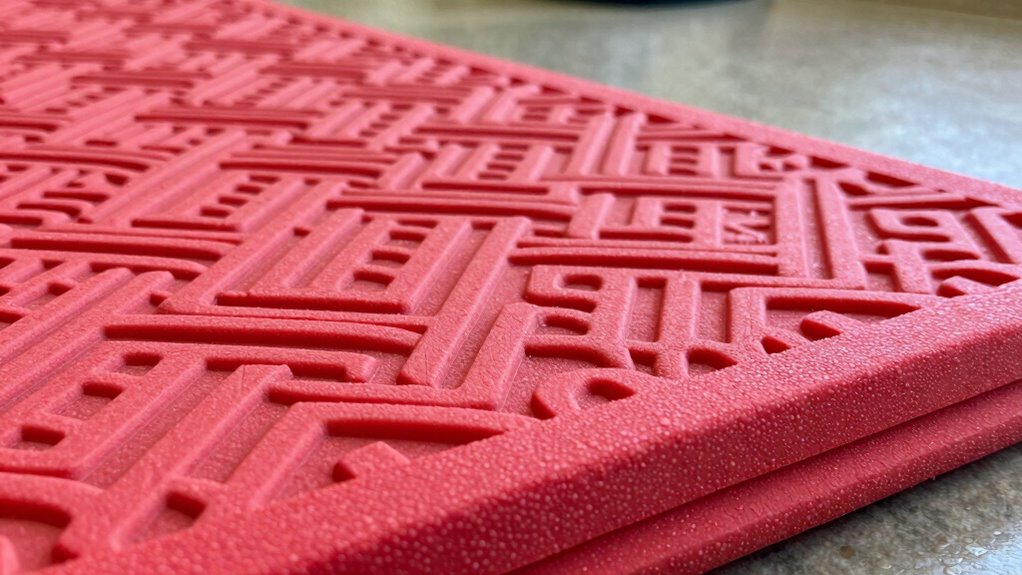

A comfortable anti-fatigue mat feels good because it strikes the right balance between supportive materials like high-density foam or rubber and smart ergonomic design. It encourages subtle movements to boost circulation, supports proper posture, and reduces muscle fatigue during long hours on your feet. The durability of the materials guarantees consistent comfort over time, even with heavy use. If you want to understand how these features come together for maximum comfort, just keep exploring.

Get comfort and recovery gear delivered free with Prime
- Fast, free delivery on millions of items
- Prime Video, Amazon Music and more included
- Member-only deals all year
Key Takeaways
- Proper cushioning and support distribute pressure evenly to reduce foot and leg discomfort.
- High-quality, durable materials maintain consistent softness and resilience over time.
- Ergonomic design encourages subtle movements that improve circulation and reduce fatigue.
- A non-slip, stable surface enhances safety and confidence during use.
- Easy-to-clean, spill-resistant surfaces maintain a fresh, comfortable feel throughout long shifts.

Ever wondered how a simple anti-fatigue mat can boost your comfort and productivity? It’s more than just a cushioned surface; it’s about how well it supports your body during long hours on your feet. When you’re standing for extended periods, your muscles tire quickly, your posture may suffer, and discomfort can distract you from your work. A good anti-fatigue mat helps mitigate these issues, but what truly makes it feel good is its ergonomic benefits combined with its material durability.
Ergonomics plays a *vital* role in how comfortable an anti-fatigue mat feels. A well-designed mat encourages subtle movements, which improve circulation and reduce muscle fatigue. When you stand on a surface that cushions your feet properly, it encourages your legs and lower back to stay in better alignment. This not only lessens strain but also helps you maintain focus and energy throughout your shift. The best mats are engineered to distribute your weight evenly, preventing pressure points and minimizing aches. When your body isn’t overexerted, you naturally feel more comfortable, which translates into increased efficiency and a better overall work experience.
Material durability is equally important because it determines how long your mat will continue to feel good over time. You need a surface that withstands daily wear and tear, resisting punctures, tears, and compression. Durable materials like high-density foam, rubber, or specialized polymers guarantee that your mat maintains its supportive qualities for months or even years. A sturdy construction prevents the mat from flattening or breaking down, ensuring consistent support. Plus, durable materials are often easier to clean, resistant to spills, and less prone to damage from heavy equipment or foot traffic. When your mat holds up over time, you won’t need to replace it frequently, which saves you money and hassle. Additionally, choosing materials with high durability ensures your investment remains effective and feels good throughout its lifespan.
Ultimately, what makes an anti-fatigue mat feel good isn’t just its initial softness or appearance but how well it combines ergonomic benefits with material durability. A high-quality mat adapts to your body’s needs, supporting your posture and reducing fatigue, while also standing up to the demands of your environment. When you find a mat that balances these qualities, you’ll notice the difference in your comfort level, your energy, and your productivity. It becomes a simple, effective tool that keeps you comfortable during those long hours on your feet, making your workday much more manageable.
Popular right now

Roborock Q7 M5+ Robot Vacuum and Mop with Self-Emptying Dock

KitchenAid Artisan 5-Quart Tilt-Head Stand Mixer with Flex Edge Beater

Breville BES870BSXL Barista Express Espresso Machine, Black Sesame
As an affiliate, we earn on qualifying purchases.
Frequently Asked Questions
How Long Does an Anti-Fatigue Mat Typically Last?
An anti-fatigue mat typically lasts between 1 to 3 years, depending on usage and quality. You’ll get the most ergonomic benefits and durability if you choose mats made from high-quality, resilient materials like rubber or vinyl. Regularly inspect for signs of wear, such as cracking or flattening, and replace it when necessary to maintain peak comfort and effectiveness. Proper maintenance extends its lifespan, ensuring consistent ergonomic support.
Are Anti-Fatigue Mats Suitable for Outdoor Use?
You might find anti-fatigue mats suitable for outdoor use, especially if they offer weather resistance and slip resistance. Coincidences happen when mats designed for durability withstand rain, sun, or snow, making them versatile. Look for mats with textured, non-slip surfaces that prevent accidents on wet or uneven ground. With the right features, your outdoor workspace stays safe and comfortable, no matter the weather or conditions.
Can Anti-Fatigue Mats Help Reduce Back Pain?
Yes, anti-fatigue mats can help reduce back pain by providing ergonomic benefits through their ergonomic design. When you stand on these mats, they absorb shock and reduce pressure on your lower back, promoting better posture. This encourages you to stand more comfortably and for longer periods without strain. The ergonomic benefits of the design support proper alignment, which ultimately alleviates back pain and improves overall comfort during prolonged standing tasks.
What Maintenance Is Required for These Mats?
Think of your anti-fatigue mat as a loyal companion that needs tending. You should clean it regularly—at least once a week—to prevent dirt buildup. Use gentle soap and water, avoiding harsh chemicals that can damage its material. Check its durability periodically, inspecting for tears or wear. Proper maintenance guarantees your mat remains effective and comfortable, extending its lifespan and keeping your workspace safe and supportive.
Do Anti-Fatigue Mats Come in Different Thicknesses?
Yes, anti-fatigue mats come in different thicknesses to suit various needs. Thicker mats, often made from materials like rubber or foam, provide extra cushioning and support, ideal for long hours of standing. They also feature design variations, including textured surfaces, beveled edges, and different materials, to enhance comfort and safety. You can choose the thickness based on your work environment, ensuring you get the right balance of durability and comfort.
Conclusion
Imagine standing on a cloud during your long workday—that’s what a good anti-fatigue mat can feel like. When you choose one with the right cushioning and surface, it’s like giving your feet a gentle hug every time you step down. Studies show that comfortable mats can reduce fatigue by up to 50%. So, invest in the right mat, and turn your daily grind into a more soothing experience—because your feet deserve that little bit of luxury.