
Cable setup failures in homes often happen because of overlooked wiring details, damaged or frayed cables, or incorrect connections. You might also face slow speeds or outages if cables are loose or outdated. Wired setups are prone to miswiring, while wireless signals can be affected by range issues. Proper cable care and troubleshooting can fix many problems. Stay with me to discover more ways you can prevent and fix common setup issues effectively.
Key Takeaways
- Incorrect or incompatible cable types can cause slow speeds or connection failures.
- Loose or improperly connected cables lead to intermittent or no signal.
- Damaged or frayed cables disrupt data transmission and network stability.
- Wireless interference and range limitations affect wireless setup reliability.
- Poor cable management and improper wiring practices increase the risk of setup failures.
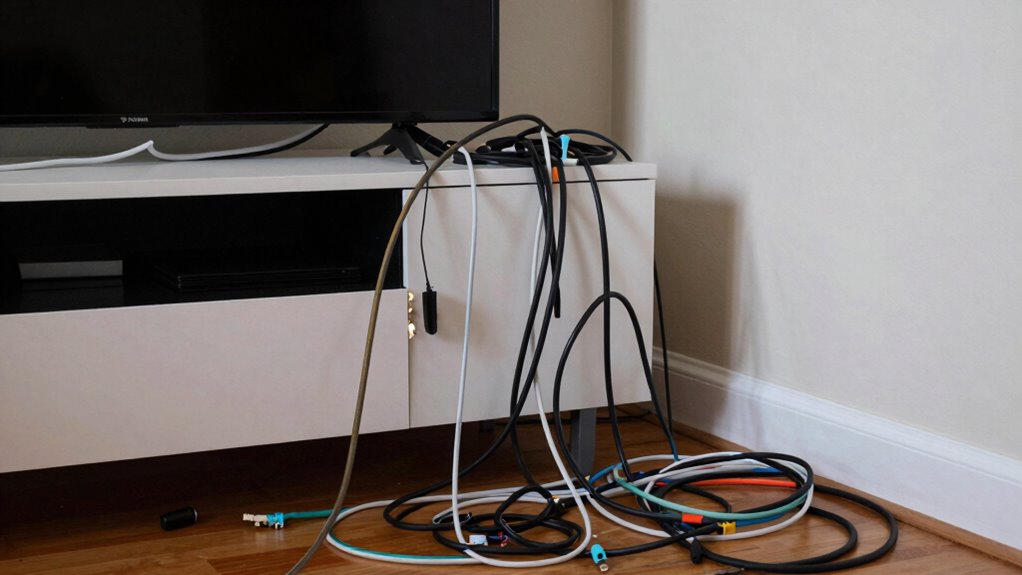
Setting up cable connections in your home can seem straightforward, but many homeowners encounter frustrating failures that disrupt their entertainment and communication systems. These failures often stem from overlooked details or common pitfalls that can be tricky to diagnose. You might find yourself frustrated, especially if you’re relying solely on traditional wired setups. Thankfully, wireless alternatives have become more reliable and accessible, offering a way to bypass some common cable connection issues altogether. Using Wi-Fi or mesh networks, you can stream, browse, and communicate without physically connecting every device, reducing the chances of miswired cables or loose connections. Additionally, understanding the importance of proper cable care and sterilization can extend the lifespan of your cables and prevent premature failures. Proper storage and handling of cables are also crucial for maintaining their integrity over time. Proper cable management, such as avoiding sharp bends and keeping cables off the floor, can further enhance their longevity. However, switching to wireless isn’t always the perfect fix; it requires proper configuration and understanding of your network’s range and capacity. Recognizing the limitations of wireless signals can help you decide when a wired connection remains necessary for optimal performance.
When your wired setup fails, DIY troubleshooting can be your best friend. Start by checking all physical connections—ensure cables are firmly plugged in, and none are damaged or frayed. Sometimes, a simple unplug and replug can restore the connection. If you’re still facing issues, consider testing the cables with a cable tester or replacing suspect cables altogether. Many connection problems stem from faulty or outdated cables that can’t handle the bandwidth needed for streaming or data transfer. Remember, not all cables are created equal, and using the wrong type can lead to slow speeds or complete failure.
Another common issue is incorrect configuration. Double-check your modem and router settings, making sure they’re compatible with your service provider’s requirements. Resetting your devices to factory settings and then reconfiguring them can often clear glitches blocking proper connections. If you’re comfortable, you can also update firmware or drivers, which can resolve compatibility issues and improve overall stability. Keeping your firmware up to date is an essential part of network maintenance that can prevent many connection issues before they happen.
Sometimes, the failure isn’t on your end but with the service provider’s infrastructure. In these cases, contacting your provider for support can save you hours of frustration. They can run remote diagnostics or send a technician if necessary. But before calling, confirm that your internal wiring is intact and that your devices are functioning properly. A quick reset or a new cable might resolve what seems like a service outage. Being familiar with home wiring can also help you identify potential issues early. Having a basic understanding of your home’s wiring layout can assist in diagnosing problems more efficiently.
Ultimately, understanding your home’s wiring and network setup helps prevent future cable setup failures. Embracing wireless alternatives when appropriate, combined with DIY troubleshooting, can make your home’s connectivity more resilient. Whether you’re replacing damaged cables, reconfiguring your network, or switching to wireless, taking a systematic approach ensures you won’t be left in the dark when connection issues arise.

TESMEN TLP-123A Network Cable Tester for RJ11 RJ45, Ethernet Wire Tool for CAT5/CAT5E/CAT6/CAT6A/CAT7/UTP&STP, LAN & TEL Continuity Test, Suitable for Cable Maintenance – Green
Multifunctional Network Cable Tester: TESMEN TLP-123A Supports RJ45 and RJ11, enabling rapid detection of line connectivity, short circuits,…
As an affiliate, we earn on qualifying purchases.
As an affiliate, we earn on qualifying purchases.
Frequently Asked Questions
How Can I Prevent Cable Tangling Over Time?
To prevent cable tangling over time, focus on effective cable organization. Use cable ties or Velcro straps to keep cables neatly bundled, and avoid excess slack that can cause tangles. Label your cables for easy identification, and store them in designated compartments or containers. Regularly check and re-organize your cables to uphold tangle prevention. These simple steps ensure your setup stays tidy, functional, and easy to manage.
What Tools Are Essential for a Successful Cable Setup?
Think of it as having the right tools to make your setup a breeze. You’ll need cable management accessories like clips, sleeves, and ties to keep things tidy. A cable tester guarantees everything works smoothly, while wireless alternatives can cut down clutter. Don’t forget a good pair of scissors or wire cutters to trim excess. With these tools, your cable setup will be neat, efficient, and ready to impress.
How Do I Choose the Right Cable Length for My Home?
To choose the right cable length, consider your device placement and the distance to your router or TV. Measure accurately to avoid excess slack or tight fits. Opt for high-quality cable material like copper for better signal, and select connector types compatible with your devices, such as HDMI or Ethernet. This guarantees a reliable connection, minimizes interference, and prevents setup failures, making your home network more efficient.
Are There Safety Tips for Handling Electrical Cables?
A stitch in time saves nine, so always prioritize electrical safety when handling cables. Wear insulated gloves, avoid damaging cable insulation, and never force cords into outlets. Keep cables away from water and heat sources, and unplug them by the plug, not the cord. Regularly inspect for wear or fraying, and replace damaged cables immediately. Staying cautious safeguards your home and prevents accidents caused by faulty electrical safety practices.
How Often Should I Inspect My Home Cable Installations?
You should inspect your home cable installations at least once a year to guarantee proper cable management and safety. Regular inspections help identify potential issues like wear, damage, or loose connections before they become hazards. If you notice any signs of deterioration, such as frayed insulation or exposed wires, perform inspections more frequently. Maintaining a consistent inspection schedule keeps your cables safe and prevents accidental failures or electrical hazards.

UGREEN Cat 6 Ethernet Cable Braided Cat6 Gigabit High Speed 1000Mbps Internet Cable RJ45 Shielded Network LAN Cord Compatible for PC PS5 PS4 PS3 Xbox Smart TV Router 6FT
Gigabit Ethernet Cable: UGREEN Cat6 Ethernet cable supports up to 1000Mbps data transfer (10x compared to Cat5e with…
As an affiliate, we earn on qualifying purchases.
As an affiliate, we earn on qualifying purchases.
Conclusion
In the end, avoiding cable setup failures is like tending a garden—you need patience, planning, and the right tools. When you understand your home’s unique needs and follow proper installation tips, you prevent common pitfalls. Don’t let tangled cables or weak connections frustrate you. Instead, approach your setup with care and attention, ensuring a smooth, reliable system. With a little effort, your home’s cable setup will work seamlessly, like a well-orchestrated symphony rather than a chaotic jumble.

TP-Link Deco X55 AX3000 WiFi 6 Mesh System – Covers up to 6500 Sq.Ft, Replaces Wireless Router and Extender, 3 Gigabit Ports per Unit, Supports Ethernet Backhaul, Deco X55(3-Pack)
Wi-Fi 6 Mesh Wi-Fi – Next-gen Wi-Fi 6 AX3000 whole home mesh system to eliminate weak Wi-Fi for…
As an affiliate, we earn on qualifying purchases.
As an affiliate, we earn on qualifying purchases.

Alex Tech 10ft – 1/2 inch Cord Protector Wire Loom Tubing Cable Sleeve Split Sleeving For USB Cable Power Cord Audio Video Cable – Protect Cat From Chewing – Black
Size: Diameter: 1/2"| Length: 10 Feet | Color: Black. Our wire loom is split and easy to load…
As an affiliate, we earn on qualifying purchases.
As an affiliate, we earn on qualifying purchases.