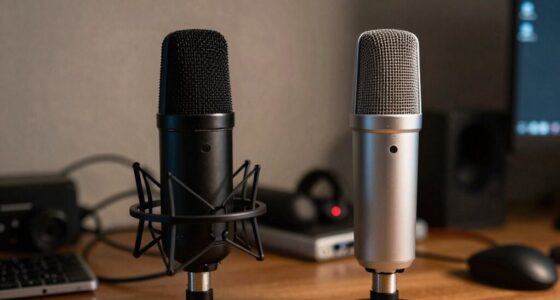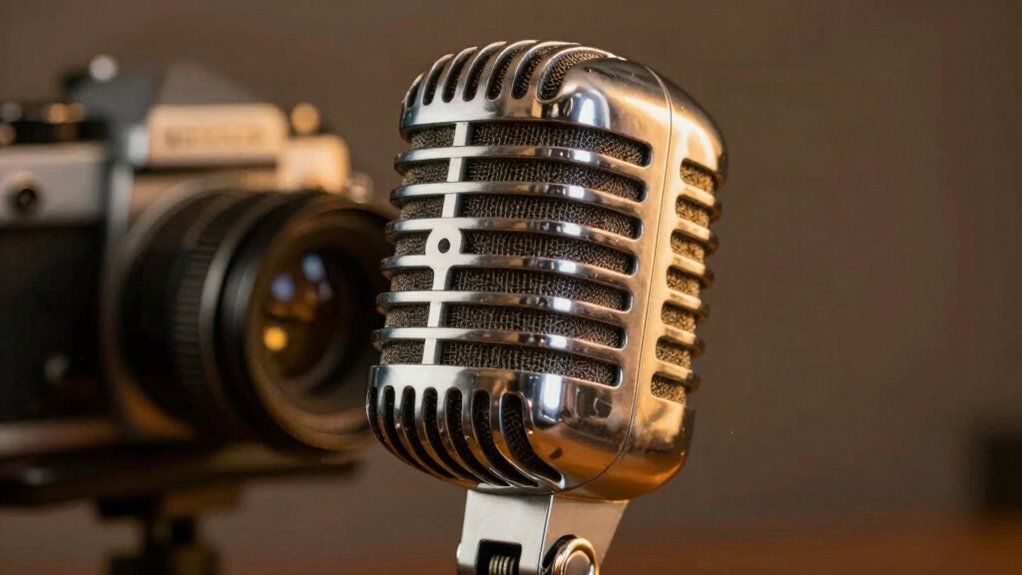

Your brain processes sound faster and more emotionally than visuals, so high-quality audio triggers instant trust. Clear, crisp sound influences your perception of credibility and sincerity without you even realizing it. Your emotional response is more strongly linked to tone, pitch, and rhythm, which shape your impressions quickly. Good audio bypasses cognitive filters, making your message feel genuine and trustworthy faster than visuals alone. Keep exploring to discover how mastering audio can boost your influence even further.
Key Takeaways
- Clear audio directly activates emotional centers, fostering trust more quickly than visual cues.
- Auditory signals bypass cognitive filtering, influencing perceptions before visual information is processed.
- Tone and pitch in sound convey sincerity and authenticity, strengthening trust faster than visuals alone.
- Brain processes sounds faster than images, allowing audio cues to impact impressions immediately.
- High-quality audio enhances perceived professionalism, accelerating credibility and emotional connection.

While high-quality video often grabs attention, recent research shows that audio quality can establish trust much faster. When you hear clear, crisp sound, your brain immediately responds on a deeper, more instinctive level. This isn’t just about hearing; it’s about feeling. Audio has a unique emotional impact that influences your perception of credibility and sincerity before you even realize it. You might not consciously notice the difference between a well-produced audio clip and a poor one, but your sensory perception is constantly working in the background, shaping your impressions. When sound is clean and natural, it feels more authentic, making you more receptive and trusting. Conversely, distorted or inconsistent audio signals a lack of professionalism, which can trigger skepticism.
Because our auditory system is highly sensitive and directly connected to emotion centers in the brain, good audio quality bypasses cognitive filtering and hits you at an emotional level. This emotional impact is key to building trust. When you listen to someone speak with clarity and warmth, you subconsciously associate those qualities with honesty and reliability. The tone, pitch, and rhythm of the voice all contribute to this perception, often more powerfully than visual cues. In fact, your sensory perception of sound influences how you interpret the speaker’s intentions and sincerity, often faster than visual information can. It’s why a heartfelt, genuine voice can establish rapport even if the video quality is lacking or the visuals are unremarkable. Additionally, the emotional connection created through audio can sometimes be more impactful than visual cues alone.
This isn’t to dismiss the importance of video, but it highlights why audio often has a more immediate effect. Visuals can be compelling, but they require more cognitive processing. Sound, on the other hand, reaches your subconscious directly, making it a potent tool for influence. When you experience audio-driven trust, it’s because sound triggers positive emotional responses that are processed more quickly than visual stimuli. The brain processes sound faster than visual information, which is why auditory cues can accelerate trust-building more effectively. Moreover, the consistency and tone of audio can serve as a trust indicator, reinforcing the viewer’s confidence in the message. Research also shows that cognitive load can diminish the impact of visuals, whereas sound can communicate key messages more efficiently. You’re more likely to believe and connect with someone whose voice sounds confident, warm, and clear. This is why brands and creators who prioritize audio quality often see faster trust-building results, even before the visual aspect of their content fully engages your attention. Ultimately, your sensory perception of sound shapes your emotional response and trust levels more quickly than what you see.

Pyle Microphone, Dynamic Cardioid, XLR Cable Included, Unidirectional, Rugged Construction, Built-in Pop Filter, Perfect for Stage & Studio, High Gain, Ultra-Wide Frequency Response, 15ft Cable
- Type: Dynamic Cardioid Microphone
- Cable Included: XLR Cable Included
- Design: Unidirectional for focused sound
As an affiliate, we earn on qualifying purchases.
As an affiliate, we earn on qualifying purchases.
Frequently Asked Questions
How Does Audio Influence Emotional Connection More Than Video?
You’re more emotionally connected through audio because it creates a vivid musical ambiance and uses sound symbolism that taps directly into your feelings. Unlike video, which relies on visuals, audio engages your imagination and memories, making the experience more personal. When the sound is clear and well-crafted, it evokes trust and warmth quickly, helping you form a stronger emotional bond with the message or brand without relying on visual cues alone.
Can Poor Audio Quality Still Build Trust?
Like a whisper in the dark, poor audio quality can still build trust if you prioritize sound clarity and listener engagement. While high-quality audio enhances connection, genuine tone and consistency can resonate deeply, fostering trust even with less-than-perfect sound. Your sincerity and effort show through, proving that authentic communication often outweighs technical perfection. Focus on engaging your audience; trust can flourish despite audio imperfections.
What Role Does Voice Tone Play in Trust?
Your voice tone plays a vital role in building trust because it conveys emotions and sincerity. Using clear speech and appropriate vocal inflection helps your audience understand your message and feel connected. When your speech is articulate and your tone matches your words, listeners are more likely to trust you quickly. Poor vocal inflection or unclear speech can create doubt, so mastering these elements boosts trust faster than visuals alone.
Does Background Noise Affect Perceived Credibility?
Background noise, like ambient distractions, considerably impacts your perceived credibility. When there’s disruptive noise, your listener’s focus shifts away from your message, making you seem less trustworthy. Clear audio helps maintain their attention and reinforces your professionalism. Conversely, poor sound quality suggests a lack of care, reducing trust faster than visual cues. So, minimizing ambient distractions ensures your audience stays engaged and perceives you as credible and reliable.
How Quickly Can Audio Cues Establish Trust?
You can establish trust in just a few seconds through audio cues. Imagine a customer service call where your calm, clear voice immediately conveys credibility. This rapid trust development relies on auditory perception—tone, pitch, and clarity—rather than visual cues. Within moments, listeners form impressions based on how you sound, making audio a powerful tool for building trust quickly and effectively.

Logitech H390 Wired Headset PC/Laptop Stereo Headphones – Black
- Digital Stereo Sound: Enhanced digital audio for various uses
- Rotating Noise Canceling Mic: Clear calls with noise reduction
- In-line Controls: Adjust volume and mute easily
As an affiliate, we earn on qualifying purchases.
As an affiliate, we earn on qualifying purchases.
Conclusion
Remember, your voice can build trust faster than your visuals. Studies show that listeners form judgments about credibility within just seconds of hearing someone speak. Imagine that—your tone and clarity can influence trust almost instantly, often before viewers even see your face. So, next time you’re communicating, focus on perfecting your audio. It’s a powerful tool that can make your message more genuine, impactful, and memorable—sometimes more than what’s on the screen.

PreSonus AudioBox USB 96 25th Anniversary Studio Recording Package
- Complete Home Recording Package: All-in-one recording and production set
- Durable Audio Interface: Rugged USB 96 audio/MIDI interface
- Versatile Microphone: M7 large-diaphragm condenser microphone
As an affiliate, we earn on qualifying purchases.
As an affiliate, we earn on qualifying purchases.

TOA Electronics PM-660U Desktop Paging Microphone, Unidirectional Dynamic Element, Push-to-Talk Switch with Locking Lever, 600 Ohm Balanced Output, Clear Voice Announcing, Communication Equipment
- Application: Public address and paging systems
- Talk Switch: Large lockable push-to-talk switch
- Output: 600 Ohm balanced with anti-vibration design
As an affiliate, we earn on qualifying purchases.
As an affiliate, we earn on qualifying purchases.