

To sleep well despite nighttime screen use, limit your screen time at least one hour before bed, and avoid social media or emails during your wind-down. Use night mode or blue light filters and keep devices out of your bedroom. Dim the lights and create a calming routine, like gentle stretching or relaxing activities. Avoid heavy meals and caffeine close to bedtime, and practice mindfulness. Stay with us to discover more effective tips for restful sleep.
Key Takeaways
- Limit screen use at least 1 hour before bed and replace it with calming activities like reading or listening to soothing music.
- Enable blue light filters or night mode to reduce eye strain and support melatonin production.
- Keep devices out of the bedroom or charge them outside overnight to minimize exposure.
- Dim lights with warm, soft lighting signals your body to wind down and prepares you for sleep.
- Establish a consistent sleep routine with a fixed bedtime and relaxing pre-sleep activities to improve sleep quality.
Limit Your Screen Time Before Bed

To improve your sleep quality, it’s important to limit your screen time before bed. Spending too much time on your devices late at night can interfere with your body’s natural sleep signals. The blue light emitted by screens suppresses melatonin, the hormone that helps you fall asleep. Set a specific cutoff time for device use at least an hour before bed. During this time, avoid checking social media, emails, or watching videos. Instead, consider relaxing activities like reading a book or listening to calming music. Creating a screen-free routine signals to your body that it’s time to wind down. By reducing your exposure to screens before sleep, you’ll help your body shift more smoothly into rest. This simple change can notably improve how quickly and deeply you sleep.
Use Night Mode or Blue Light Filters

Switching on night mode or blue light filters can make a big difference in reducing eye strain before bed. You should adjust your screen settings to display warmer tones, which are gentler on your eyes. These small changes help you wind down more easily and improve your sleep quality.
Adjust Screen Settings
Adjusting your screen settings can substantially reduce the impact of blue light emitted during nighttime use. To optimize your device, try these options:
- Enable Night Mode or Blue Light Filters to dim blue hues.
- Set your screen to auto-shift to warmer tones after sunset.
- Adjust brightness levels to lower, avoiding harsh glare before bed.
- Use app-specific settings to customize blue light exposure per application.
These simple tweaks help minimize blue light exposure, making it easier to fall asleep. By controlling your screen’s color temperature and brightness, you protect your melatonin production and promote better rest. Remember, small adjustments can make a significant difference in your sleep quality. Take a moment now to tweak your device’s settings for a more restful night.
Choose Warm Tones
Choosing warm tones on your device can markedly reduce blue light exposure, making it easier to wind down at night. When you activate night mode or blue light filters, your screen shifts to softer, warmer colors that are less stimulating. This change helps your brain produce melatonin, the hormone that regulates sleep, so you’re less likely to stay awake or toss and turn. Most smartphones and tablets have built-in options to enable these features easily. You can also download apps that automatically adjust the screen’s color temperature based on the time of day. By choosing warm tones, you’re creating a more sleep-friendly environment, helping your mind relax and prepare for rest. It’s a simple step that can substantially improve your quality of sleep at night.
Set a Consistent Sleep Schedule

To improve your sleep, you need to stick to a consistent schedule every day. Establish a regular bedtime routine, wake up at the same time each morning, and cut back on screens in the evening. These habits help your body recognize when it’s time to wind down and wake up naturally.
Regular Bedtime Routine
Establishing a regular bedtime routine helps your child’s body recognize when it’s time to wind down, making it easier for them to fall asleep and stay asleep through the night. Consistency signals to their brain that bedtime is approaching, reducing resistance and bedtime battles. To create an effective routine, consider these steps:
- Set a specific time for lights out every night.
- Include calming activities like reading or gentle stretching.
- Dim the lights and turn off screens at least 30 minutes before bed.
- Ensure the bedroom environment is cool, quiet, and dark.
Consistent Wake-Up Time
Setting a consistent wake-up time each morning helps regulate your child’s internal clock, making it easier for them to fall asleep at night and wake up refreshed. When your child wakes up at the same time every day, their body learns when to feel alert and when to wind down. This consistency reinforces their natural sleep rhythm, reducing morning grogginess and nighttime struggles. Even on weekends, try to keep wake-up times close to weekdays to maintain stability. Over time, your child’s body will anticipate these routines, resulting in more restful sleep overall. A steady wake-up time also helps improve daytime alertness and behavior, supporting a healthier sleep pattern. Stick to this schedule consistently, and you’ll notice better sleep quality for your child.
Limit Evening Screen Use
Keeping your child’s sleep schedule consistent is key to helping them rest well, and limiting evening screen use plays a big role in this. When screens stay on too late, they can interfere with melatonin production, making it harder for your child to fall asleep. To set a healthy routine, try these steps:
- Establish a screen-free hour before bedtime.
- Encourage calming activities like reading or gentle stretching.
- Keep devices out of the bedroom overnight.
- Set clear rules about screen time limits in the evening.
Create a Relaxing Evening Routine
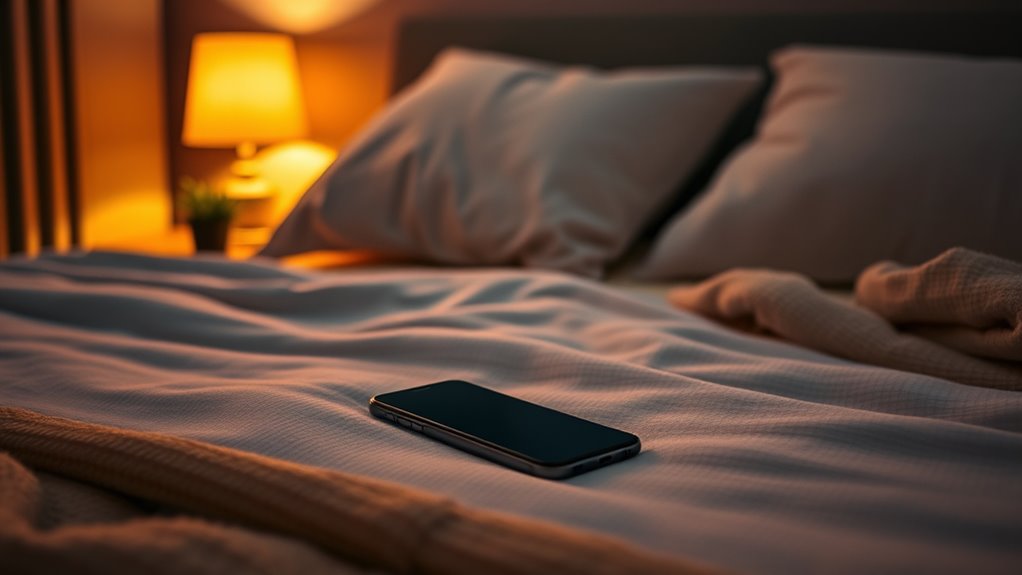
Creating a relaxing evening routine can help you unwind after a busy day and prepare your mind and body for restful sleep. Start by setting a consistent bedtime to signal your body it’s time to wind down. Dim the lights and avoid stimulating activities, like work or intense exercise. Instead, choose calming activities such as reading, gentle stretching, or listening to soothing music. Take time to practice deep breathing or meditation to relax your mind. Establishing a routine signals to your brain that it’s time to shift into sleep. Keep your environment quiet and comfortable, and avoid caffeine or heavy meals close to bedtime. By creating a peaceful, predictable routine, you’ll help ease your shift into restful sleep and improve your overall sleep quality.
Keep Devices Out of the Bedroom
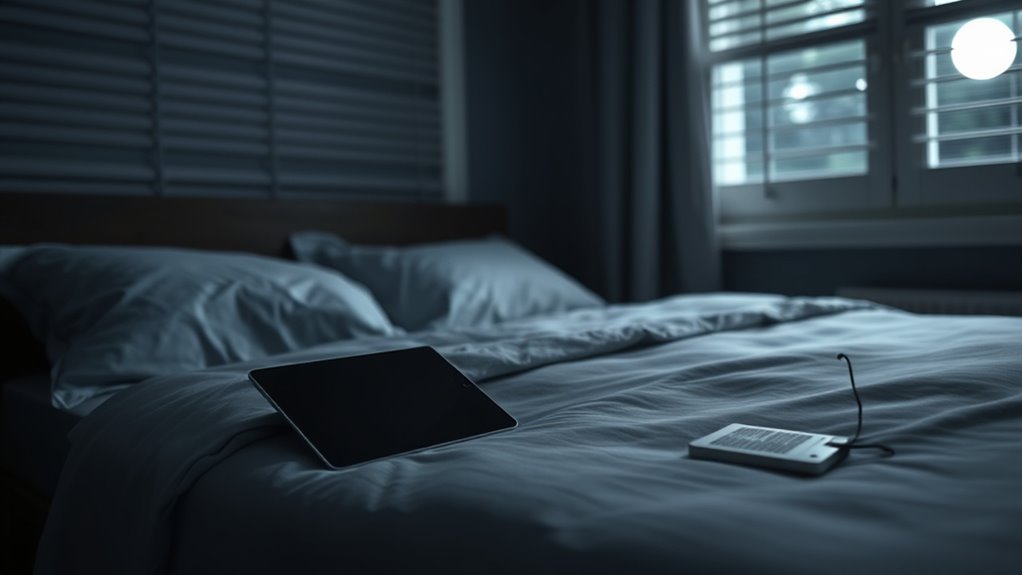
To improve your sleep quality, it’s important to keep devices out of the bedroom. Having screens nearby can tempt you to scroll or check notifications, disrupting your rest. Create a dedicated tech-free zone to foster better sleep habits. Here are four simple steps:
Keep devices out of the bedroom to promote better sleep and reduce distractions before bedtime.
- Remove smartphones, tablets, and laptops from your bedroom entirely.
- Use a traditional alarm clock instead of your phone to wake up.
- Charge devices outside the bedroom overnight.
- Set boundaries by establishing a device-free zone at least 30 minutes before bed.
Engage in Calming Activities Instead of Screens

Instead of screens, try reading a gentle book or practicing simple relaxation techniques to wind down. You might also explore soothing hobbies like journaling or listening to calming music. These activities help your mind relax and prepare you for a restful night.
Choose Gentle Reading
Choosing gentle reading as a calming activity before bed can help your mind unwind and prepare for restful sleep. Instead of screens, pick books that soothe rather than excite. Focus on engaging your imagination without stimulation that makes it hard to relax. To make this habit stick, consider these options:
- Read a few pages of fiction or poetry that calm your nerves.
- Choose a dim, warm light to create a cozy atmosphere.
- Keep your reading material free of bright colors or fast-paced plots.
- Establish a routine, like reading for 10-15 minutes, to signal your body it’s time to wind down.
Gentle reading helps your brain shift into a restful state, making it easier to fall asleep and enjoy quality rest.
Practice Relaxation Techniques
After settling into your gentle reading routine, try engaging in relaxation techniques to further prepare your mind for sleep. Deep breathing exercises can help slow your heart rate and calm racing thoughts. Inhale slowly through your nose for four seconds, hold for four seconds, then exhale gently through your mouth for four seconds. Progressive muscle relaxation is also effective; tense each muscle group for a few seconds, then release, working from your toes to your forehead. Guided imagery, where you visualize peaceful scenes, can distract your mind from stress and promote tranquility. These calming activities signal to your body that it’s time to wind down. By practicing relaxation techniques nightly, you create a routine that helps ease your *changeover* into restful sleep without screens or distractions.
Try Soothing Hobbies
Engaging in calming activities before bed can help you shift smoothly into sleep without relying on screens. Instead of scrolling or watching videos, try these soothing hobbies:
- Read a physical book or magazine to relax your mind.
- Practice gentle yoga or stretching to release tension.
- Listen to calming music or nature sounds to unwind.
- Draw, doodle, or do light crafts to focus your thoughts.
These activities keep your mind off screens and create a peaceful passage to sleep. They also help lower your stress levels and prepare your body for rest. Incorporating calming hobbies into your nightly routine can make a big difference in your sleep quality and overall well-being. Give it a try and enjoy a more restful night.
Dim the Lights in Your Environment
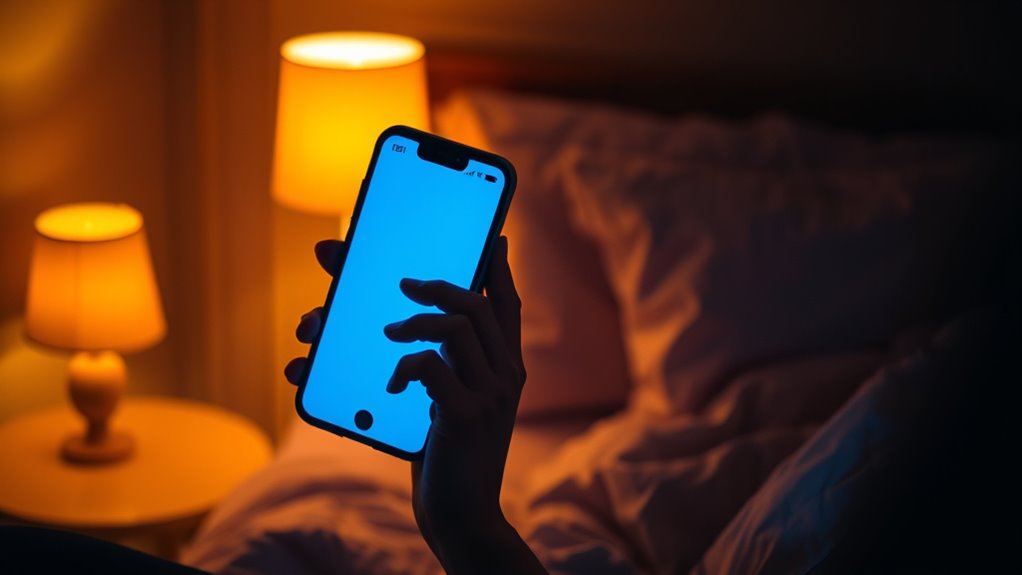
Dimming the lights in your environment signals to your brain that it’s time to wind down, making it easier to shift into sleep. Bright screens and harsh lighting can trick your brain into thinking it’s still daytime, delaying melatonin production. By lowering the light levels, you help your body recognize that bedtime is approaching. Use warm, soft lighting or lamps instead of overhead lights, and consider turning off electronic devices at least an hour before bed. This creates a calming atmosphere, reducing overstimulation and promoting relaxation. The darker environment not only cues your body to prepare for sleep but also minimizes exposure to blue light, which can interfere with melatonin. Small changes like these can markedly improve your ability to fall asleep faster and enjoy more restorative rest.
Avoid Heavy Meals and Caffeine Close to Bedtime

Consuming heavy meals or caffeine too close to bedtime can disrupt your sleep cycle and make it harder to fall asleep. These substances can cause indigestion, increase alertness, and delay your rest. To improve your sleep quality, consider these tips:
- Eat dinner at least 2-3 hours before bed to give your digestion time to settle.
- Choose light, easily digestible snacks if you’re hungry later.
- Limit caffeine intake after mid-afternoon, as it stays in your system for hours.
- Avoid coffee, tea, soda, and energy drinks in the evening to prevent interference with your sleep.
Practice Mindfulness or Gentle Stretching

Practicing mindfulness or gentle stretching before bed can help calm your mind and relax your body, making it easier to fall asleep. Mindfulness techniques, like deep breathing or meditation, shift your focus away from screen distractions and reduce stress. Gentle stretches, such as spinal twists or hamstring stretches, release muscle tension built up during the day. These practices signal to your brain that it’s time to wind down, promoting a smoother progression into sleep. Incorporating just a few minutes of mindfulness or stretching into your nightly routine can improve your sleep quality and help you feel more rested. Avoid rushing through these activities; instead, focus on slow, deliberate movements and deep breaths to maximize their calming effects.
Prioritize Quality Sleep Over Screen Time

Prioritizing quality sleep over screen time means recognizing how screens can interfere with your body’s natural sleep signals. The blue light emitted by devices suppresses melatonin, making it harder to fall asleep. To improve your sleep, consider these steps:
Prioritize sleep by limiting screen time and reducing blue light exposure before bed.
- Set a digital curfew: Turn off screens at least an hour before bed.
- Create a relaxing bedtime routine: Read a book or practice deep breathing instead.
- Keep devices out of the bedroom: Avoid temptation and reduce distractions.
- Use blue light filters or glasses: Minimize screen impact if you must use devices in the evening.
Frequently Asked Questions
How Does Blue Light Affect Melatonin Production?
Blue light suppresses melatonin production, making it harder for you to fall asleep. When you’re exposed to blue light from screens before bed, your body thinks it’s daytime, delaying melatonin release. This disruption can lead to difficulty falling asleep and poorer sleep quality. To avoid this, you should limit screen time an hour before bed or use blue light filters on your devices.
What Are Some Effective Relaxation Techniques Before Bed?
You can try deep breathing exercises or progressive muscle relaxation to calm your mind before bed. Establish a calming routine, like reading or listening to soothing music, to signal your body it’s time to wind down. Avoid screens and caffeine at least an hour before sleep. Practicing mindfulness or gentle stretches also helps reduce stress, making it easier for you to fall asleep naturally and enjoy restful, uninterrupted sleep.
How Long Before Sleep Should I Stop Using Screens?
You should stop using screens at least 30 to 60 minutes before bed. Ironically, you might think scrolling endlessly helps you relax, but it actually keeps you awake longer. Instead, try dimming the lights and engaging in calming activities like reading or stretching. Cutting off screen time early gives your brain a chance to wind down naturally, helping you fall asleep faster and enjoy better quality rest.
Can Certain Foods Improve Sleep Quality?
Yes, certain foods can improve your sleep quality. Eating foods rich in tryptophan, like turkey, nuts, and seeds, helps your body produce serotonin and melatonin, promoting better sleep. Incorporate magnesium-rich foods such as spinach, almonds, and bananas to relax your muscles. Drinking a warm cup of chamomile or herbal tea before bed can also calm your mind. Avoid heavy, spicy, or sugary foods close to bedtime to prevent disruptions.
What Are the Best Calming Activities to Replace Screen Time?
Think of calming activities as your personal lullabies before bed. You can try reading a book, practicing deep breathing, or gentle stretching. Journaling your thoughts helps clear your mind like clouds parting after a storm. Listening to soothing music or meditating also eases your worries. These activities create a peaceful routine, guiding you toward restful sleep and helping you unwind from the day’s chaos.
Conclusion
You might think cutting screen time at night is tough, but it’s worth it for better sleep. By setting boundaries and creating relaxing routines, you’ll fall asleep faster and wake up refreshed. Even if you feel tempted to scroll, remember that quality sleep boosts your mood and energy. So, give these tips a try—your body and mind will thank you for it. Sleep well tonight, and every night!