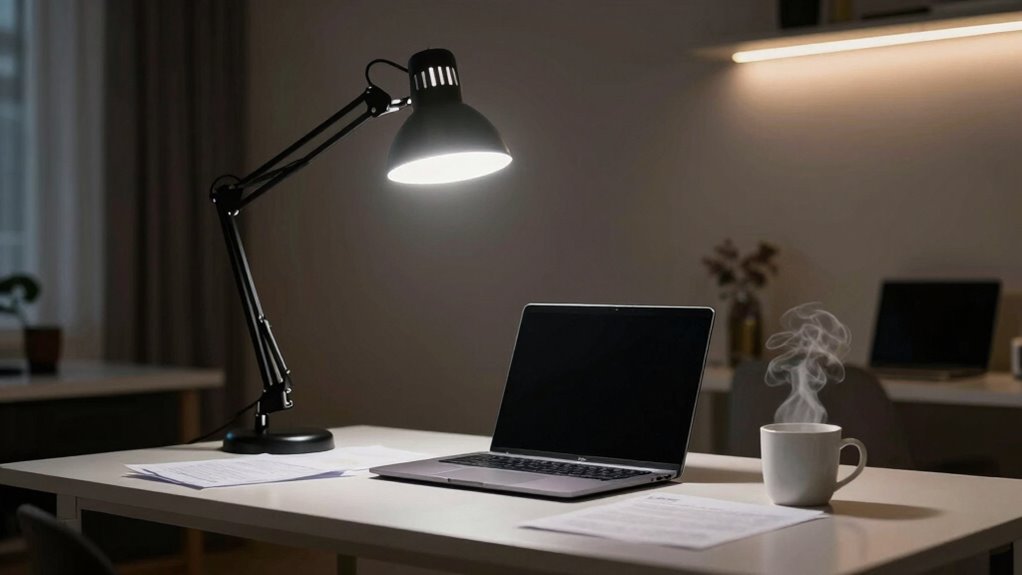

To achieve effective task lighting, focus on placing bright, adjustable fixtures directly over your work surfaces or reading areas. Use tools like under-cabinet lights, desk lamps, or pendant fixtures to direct focused illumination precisely where you need it. Keep surrounding areas softer and calmer with ambient or dimmed lights, avoiding harsh glare. Balancing these layers creates a comfortable space that’s functional yet inviting. If you want to learn more about perfecting your lighting setup, keep exploring these key tips.
Key Takeaways
- Use focused task lights directly over work surfaces to ensure bright, efficient illumination where needed.
- Incorporate dimmable fixtures to adjust brightness levels, creating calm ambiance in surrounding areas.
- Layer task lighting with softer ambient lights to balance functionality and relaxation.
- Position lights at or just above eye level to reduce shadows and glare, enhancing comfort.
- Select energy-efficient LED fixtures with adjustable features for personalized, sustainable lighting solutions.
Understanding the Role of Task Lighting
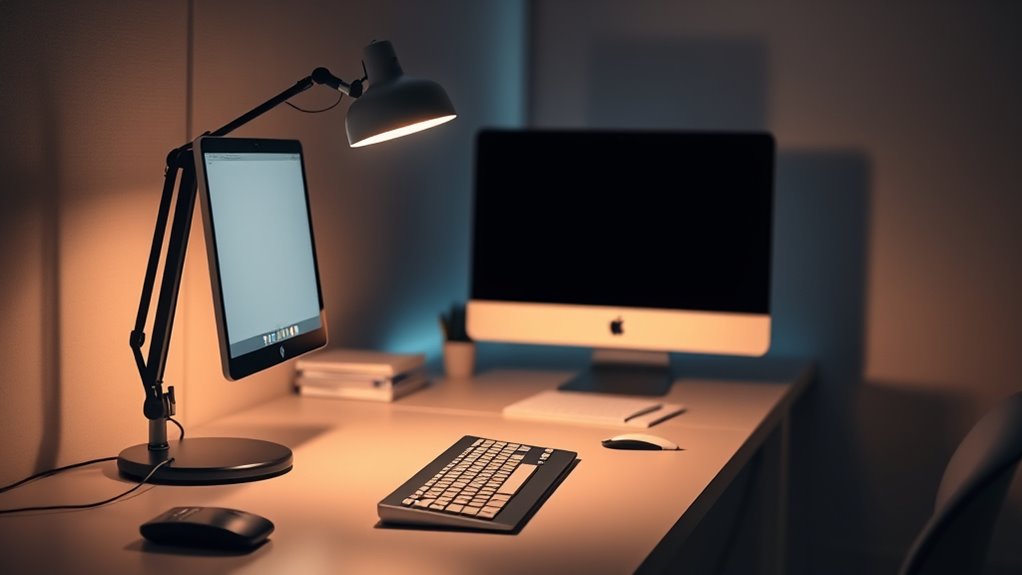
Understanding the role of task lighting is essential because it directly affects how comfortably and efficiently you perform specific activities. When you have proper lighting, you can see details clearly, reducing eye strain and mistakes. Whether you’re reading, cooking, or working on a project, targeted lighting helps you focus without glare or shadows. It enhances safety by illuminating potential hazards, like steps or sharp tools. Proper task lighting also creates a more comfortable environment by reducing overall brightness and minimizing fatigue. You’ll feel less frustrated and more productive when your workspace is well-lit. Remember, the goal isn’t just brightness but directing light exactly where you need it most. Effective task lighting makes everyday tasks easier, safer, and more enjoyable.
Types of Task Lighting and Their Uses

You have several options for task lighting, each suited to different needs. Under-cabinet lights brighten up counters, adjustable desk lamps focus light where you need it, and pendant fixtures add style while illuminating specific areas. Choosing the right type depends on your space and tasks.
Under-Cabinet Lights
Have you ever wondered how under-cabinet lights can transform your kitchen workspace? These lights provide focused illumination right where you need it, making cooking and prep easier. They come in various types, such as LED strips, puck lights, and fluorescent bars, each suited for different needs. LED strips are energy-efficient and easy to install, while puck lights offer a more traditional look. Fluorescent bars provide bright, even lighting over larger areas. Here’s a quick comparison:
| Type | Brightness | Installation Ease |
|---|---|---|
| LED Strips | High | Simple, flexible |
| Puck Lights | Medium | Moderate, direct focus |
| Fluorescent Bars | Very bright | Slightly complex |
Choose the right one to keep your workspace well-lit and efficient.
Adjustable Desk Lamps
Adjustable desk lamps are versatile task lighting options that can be tailored to suit various needs and preferences. They offer flexibility with features like adjustable arms, swivel heads, and dimming controls, allowing you to direct light exactly where you need it. Whether you’re reading, writing, or working on detailed projects, these lamps provide focused illumination without disturbing others. You can choose from different styles, such as traditional desk lamps, modern LED designs, or clamp-on models that save space. Their portability makes them ideal for changing tasks or locations. By customizing the angle, brightness, and position of your desk lamp, you guarantee sufficient light for your work while minimizing glare and eye strain. Adjustable desk lamps are essential for creating an efficient, comfortable workspace.
Pendant Task Fixtures
Pendant task fixtures are a popular choice for focused lighting in kitchens, dining areas, and workspaces, offering direct illumination where it’s needed most. They hang from the ceiling and come in various styles, sizes, and materials to suit your space. Their adjustable heights help target specific work areas, reducing shadows and glare. Pendant fixtures are versatile; you can select sleek modern designs or traditional styles to match your decor.
| Feature | Benefit |
|---|---|
| Adjustable Height | Customize light focus and coverage |
| Variety of Styles | Match your aesthetic preferences |
| Focused Illumination | Brightens specific work zones |
| Space-Saving | Doesn’t clutter your surface area |
Choosing the Right Fixtures for Your Space
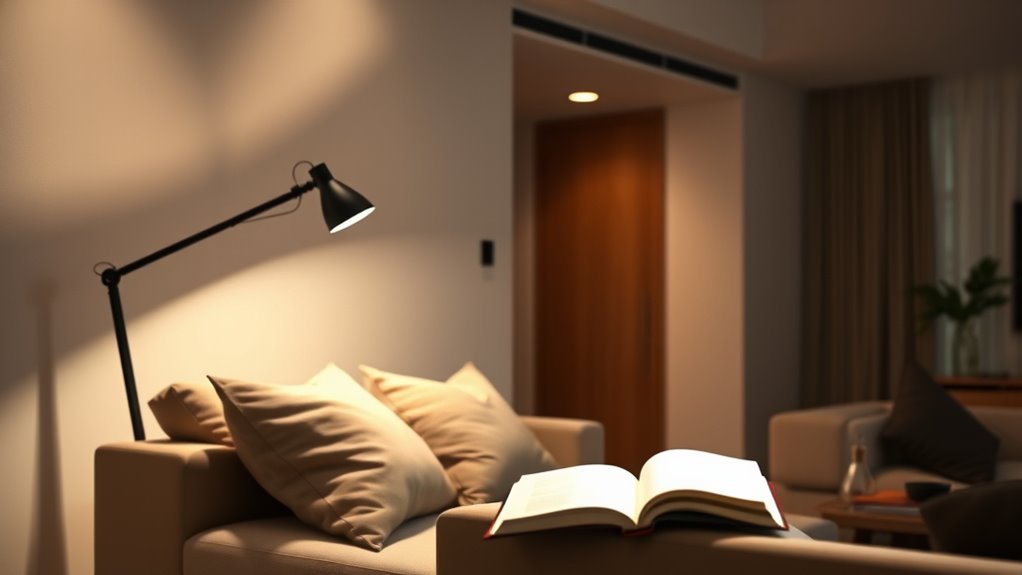
Choosing the right fixtures depends on your space and style, so consider the variety of fixture types and designs available. You’ll want to balance different lighting layers to create a functional and inviting environment. By selecting the appropriate styles and layering strategies, you can enhance both the form and function of your space.
Fixture Types and Styles
Selecting the right fixture types and styles is essential to creating effective task lighting that meets your needs. The fixtures you choose should complement your space while providing focused illumination where you need it most. For example, adjustable desk lamps give you flexibility, while under-cabinet lights are perfect for kitchens. Consider the style to match your decor—sleek, modern fixtures work well in contemporary spaces, whereas vintage or industrial designs add character. Think about ease of use and installation, too. Here are some popular options:
- Desk and task lamps for direct, adjustable light
- Track lighting to illuminate larger areas with flexibility
- Under-cabinet fixtures for kitchen or workspace accents
Choosing the right combination guarantees your task areas are bright and comfortable.
Lighting Layering Strategies
To effectively layer your lighting, you need to pick fixtures that serve different functions and work together seamlessly. Start by identifying your main activities in the space, then choose ambient lighting for overall brightness. Use ceiling-mounted fixtures or recessed lights to provide even illumination without overwhelming the room. Add task lighting where specific activities occur, like under-cabinet lights in the kitchen or reading lamps beside a chair. Incorporate accent lighting to highlight artwork, architectural features, or decorative elements, creating visual interest. By mixing different fixture types—ambient, task, and accent—you create a balanced environment that’s flexible and inviting. Proper layering guarantees each area is adequately lit for its purpose while maintaining a calming atmosphere elsewhere.
Placement Tips for Effective Illumination
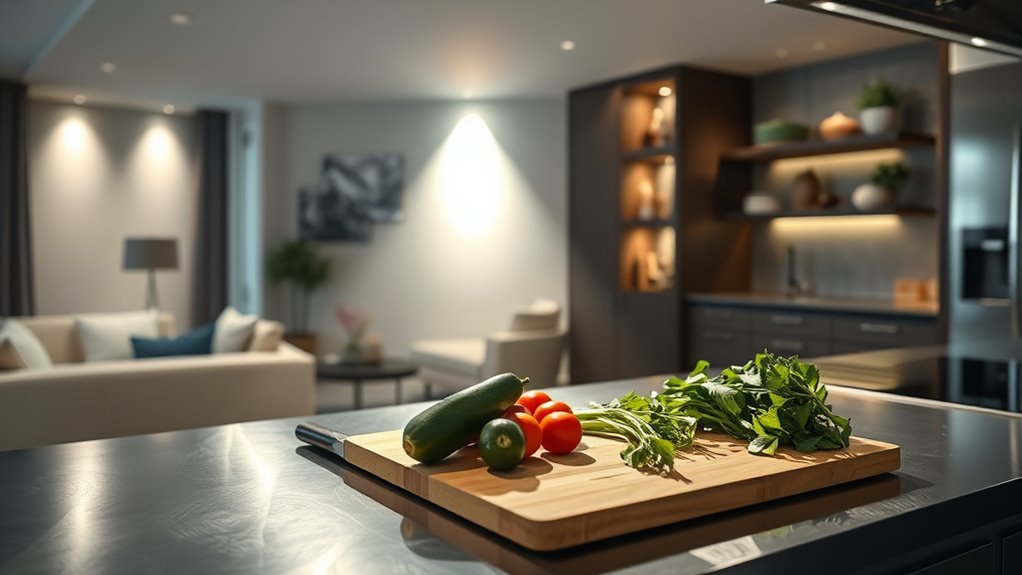
Proper placement is key to maximizing the effectiveness of your task lighting. To do this, position your lights directly where you need the most visibility, like over a work surface or reading area. Keep the bulb or light source at eye level or just above to reduce shadows and glare. Avoid placing lights behind objects or too far away, which can cause uneven lighting and strain your eyes. Think about the natural flow of your space—aim for a balanced distribution that illuminates without overwhelming. Here are some tips to help:
- Mount lights close to the task surface for focused brightness
- Use adjustable fixtures to direct light exactly where needed
- Avoid placing lights where they create glare or cast shadows on your work area
Balancing Brightness and Ambiance
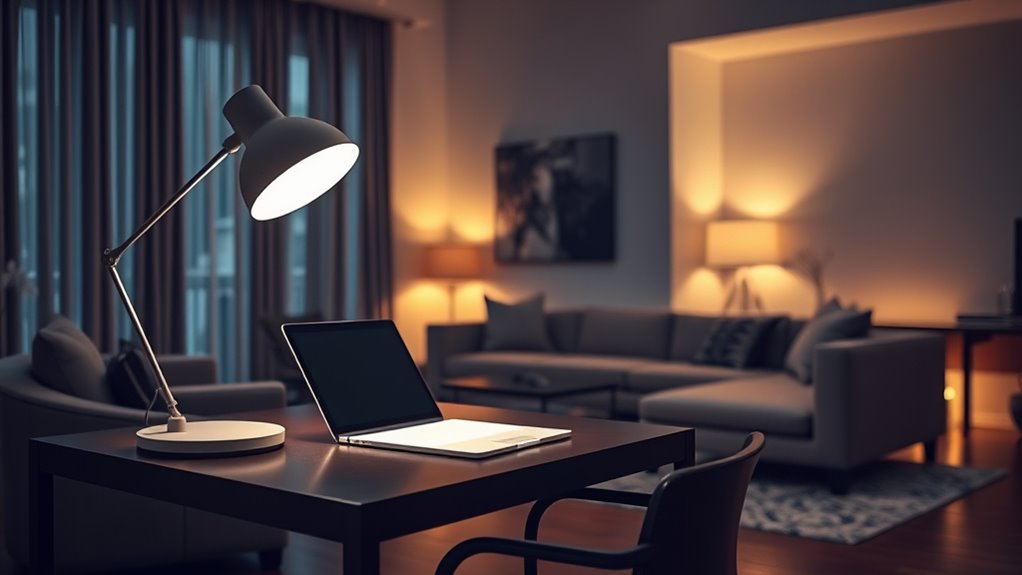
While focusing on the placement of task lighting enhances functionality, achieving the right balance between brightness and ambiance creates a comfortable, inviting environment. Too much light can feel harsh, while too little can be frustrating. To strike this balance, consider layering your lighting sources—combine task lights with softer, ambient fixtures. Use dimmers to adjust brightness easily and create mood. The goal is to highlight work areas without overwhelming the space. Here’s a simple guide:
| Brightness Level | Ideal Use | Tips |
|---|---|---|
| Bright | Tasks | Use focused, high-intensity lights |
| Moderate | General | Fill the room with gentle light |
| Soft | Ambiance | Add warm, dim lights for comfort |
Balancing these elements ensures both productivity and relaxation coexist seamlessly.
Energy Efficiency and Safety Considerations
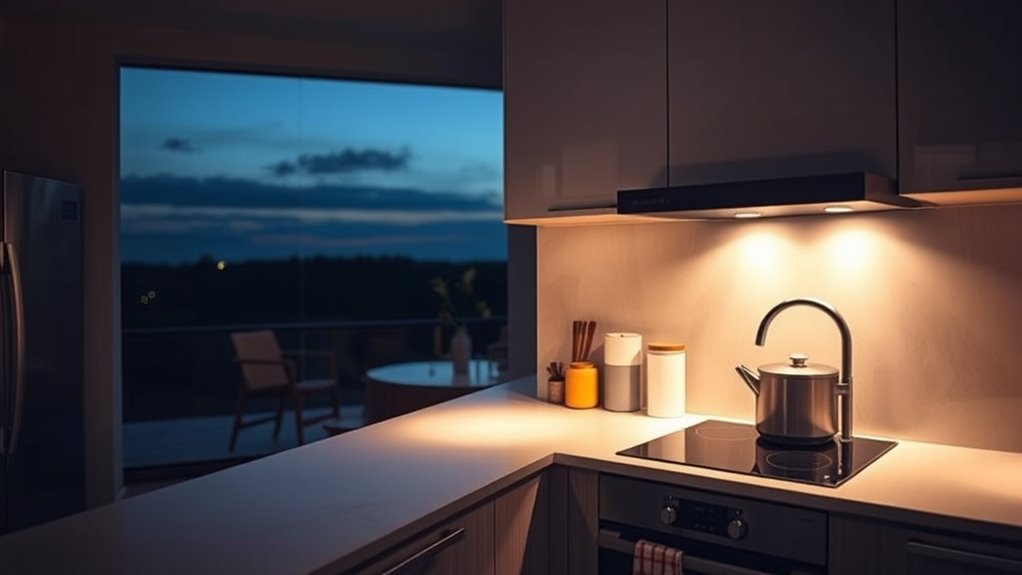
Ensuring your task lighting is energy-efficient and safe not only saves you money but also protects your home and the environment. Choose LED bulbs, which use less energy and last longer than traditional incandescent bulbs. Make sure fixtures are certified for safety, preventing electrical hazards. Proper placement is key; avoid overloading circuits or placing lights where they could be knocked over or cause a fire. Regularly inspect cords and switches for damage, replacing any worn parts immediately. Consider motion sensors or timers to reduce unnecessary energy use. By prioritizing energy efficiency and safety, you create a well-lit space that’s both practical and eco-friendly.
- Use LED bulbs and energy-efficient fixtures
- Regularly check for wiring and fixture safety
- Incorporate sensors or timers to save energy
Creative Ideas for Incorporating Task Lighting
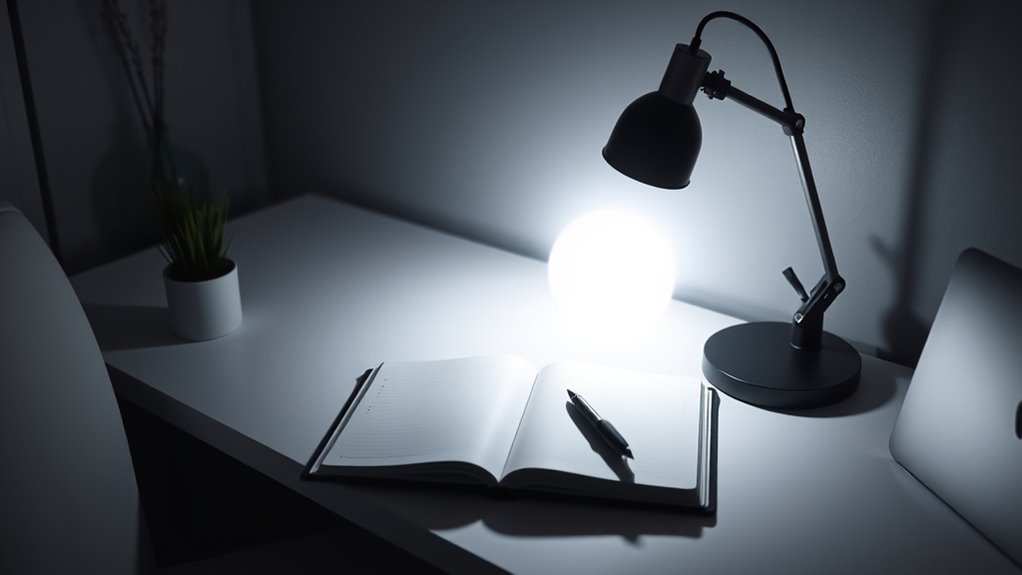
Incorporating task lighting creatively can transform your space from functional to stylish. Think outside the box—install adjustable wall-mounted lamps next to your favorite reading chair or use pendant lights over your kitchen island for focused illumination. Under-cabinet LED strips can brighten up countertops while adding a modern touch. Consider using vintage desk lamps or clip-on lights to add personality and flexibility. Recessed lighting with dimmers allows you to customize brightness levels depending on your activity. You can also incorporate decorative fixtures that double as art pieces, blending form and function seamlessly. By mixing different styles and sources, you add visual interest while maintaining practical lighting. These creative ideas help you maximize task lighting’s effectiveness without sacrificing your interior design aesthetic.
Frequently Asked Questions
How Can I Optimize Task Lighting in a Small or Oddly Shaped Room?
You can optimize task lighting in a small or oddly shaped room by using adjustable, focused fixtures like desk lamps or wall-mounted lights that direct light precisely where you need it. Place lighting near work areas, avoiding shadows, and incorporate layered lighting to add flexibility. Use dimmers to control brightness, and consider using multiple smaller lights instead of one large fixture to adapt to unique space layouts effectively.
What Are the Latest Innovations in Energy-Efficient Task Lighting?
Your quest for cutting-edge, energy-efficient task lighting is like chasing a lightning bolt—fast and exhilarating. Today’s innovations include smart LEDs with adjustable color temperatures, motion sensors that turn lights off when idle, and highly efficient OLED panels. These advancements slash energy use while providing ideal illumination, making your space both eco-friendly and beautifully lit. Embrace these new technologies to create a workspace that’s smart, sustainable, and perfectly tailored to your needs.
How Do I Maintain and Clean Different Types of Task Lighting Fixtures?
You should regularly dust your fixtures with a soft cloth or a duster to prevent dirt buildup. For cleaning, use a damp cloth with mild soap for glass or metal surfaces, avoiding harsh chemicals. For LED fixtures, gently wipe the surfaces without applying too much pressure. Always turn off and unplug fixtures before cleaning, and check manufacturer instructions for specific care tips to keep your task lighting in top shape.
Can Smart Lighting Systems Enhance Task Lighting Customization?
Yes, smart lighting systems can considerably enhance your task lighting customization. You might worry about complexity, but many systems are user-friendly and intuitive. You can easily adjust brightness, color temperature, and even set schedules for different tasks. This guarantees you get the perfect lighting for reading, working, or crafting without hassle. With a little setup, you’ll enjoy tailored, efficient lighting that fits your needs seamlessly.
What Safety Precautions Should I Follow When Installing Task Lighting?
When installing task lighting, you should turn off the power supply first to avoid shocks. Use insulated tools and wear gloves for safety. Check that your fixtures are compatible with your electrical system and follow the manufacturer’s instructions carefully. Avoid overloading circuits and ensure all wiring is secure and properly insulated. If you’re unsure, it’s best to consult a licensed electrician to prevent accidents and ensure a safe installation.
Conclusion
By thoughtfully selecting and placing your task lighting, you create a space that energizes your mornings and calms your evenings. Imagine a warm glow guiding your hands as you cook, then softening into gentle shadows as you unwind. When brightness meets comfort, your home becomes a sanctuary where productivity and relaxation coexist effortlessly. Embrace the power of well-placed task lighting, and transform your everyday routines into moments of clarity and peace.