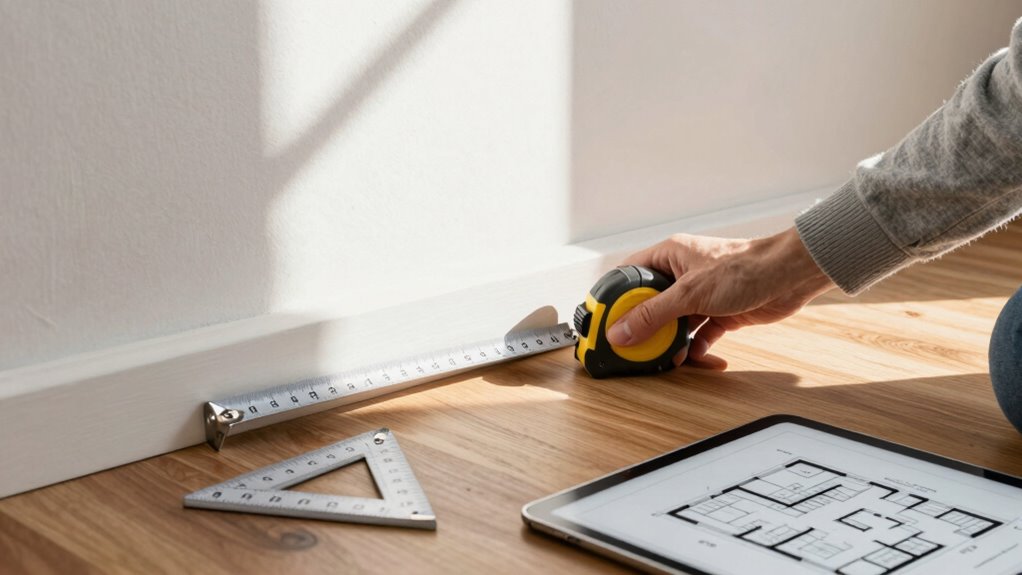

Start by gathering a reliable tape measure, a pencil, and paper or a device to record your measurements. Clear your space of furniture and obstacles, and then measure the length and width of each room, noting any irregular shapes or features like alcoves. Don’t forget to measure ceiling heights, door and window placements, and existing furniture dimensions. Double-check your numbers for accuracy, and if you want to avoid regrets, learn more about perfecting your measurement process.
Key Takeaways
- Gather reliable tools like a tape measure and notebook, and clear the space of obstacles before measuring.
- Measure length, width, and height at multiple points for accuracy, noting specific locations.
- Record door, window, and architectural feature positions to ensure furniture fits and functions properly.
- Double-check measurements using different tools or methods to verify precision before making purchases.
- Use your measurements to compare with furniture dimensions, ensuring proper fit and adequate clearance for a stress-free setup.
Top picks for "measure space before"
Open Amazon search results for this keyword.
As an affiliate, we earn on qualifying purchases.
Gather Your Tools and Prepare Your Space

Before you begin measuring, gather all the necessary tools and clear your space. Make sure you have a reliable tape measure, a pencil, and a notebook or device to record your measurements. Check that your tape measure is in good condition and long enough for your needs. Clear the floor of any furniture, rugs, or items that could obstruct your measurements. This step guarantees you won’t accidentally measure around obstacles, which could lead to inaccurate results. A tidy space makes it easier to identify exact points for measuring. Having everything ready before you start saves time and prevents interruptions. Once your tools are at hand and the space is clear, you’re ready to proceed with precise measurements to make sure your new furniture fits perfectly.
Measure Floor Dimensions and Room Shape

To accurately measure your room’s floor dimensions and shape, start by identifying the longest and widest points, which may not always align with the walls directly. Use a tape measure or laser measure to find the length and width at these points. Measure multiple sections if the room isn’t perfectly rectangular to capture irregular shapes. Record each measurement carefully, noting where they apply. If your room has unusual angles or alcoves, sketch a rough diagram and mark measurements accordingly. This helps you understand the true footprint of the space. Remember, don’t rely solely on wall-to-wall measurements; consider any protrusions or indentations that could affect furniture placement or layout. Precise measurements now save you from costly mistakes later.
Note the Location of Doors, Windows, and Architectural Features

Start by marking the positions of doors and windows on your floor plan to see how they fit within your space. Note architectural features clearly, so you understand their impact on layout and furniture placement. Always measure from the wall to each feature to guarantee accuracy and proper planning.
Mark Door and Window Positions
Carefully noting the location of doors, windows, and architectural features is essential for accurate space planning. Once you’ve identified these elements, mark their positions on your floor plan. Use a pencil or painter’s tape to mark door swings and window openings clearly. Measure the distance from each feature to nearby walls or corners, recording these measurements precisely. This helps you understand how furniture will fit and ensures no surprises later. Pay attention to door swings and whether windows are centered or off to one side. Marking these features accurately prevents furniture from blocking access or light sources. By clearly noting their positions, you create a reliable reference that guides your decisions and prevents costly mistakes when arranging or purchasing new furnishings.
Note Architectural Details Clearly
Knowing the exact location of doors, windows, and architectural features is essential for effective space planning. These details influence furniture placement, traffic flow, and overall layout. To capture these features accurately:
- Note the exact position of each door and window relative to the room’s corners and floor.
- Identify any built-in or decorative architectural elements like arches, moldings, or columns.
- Record their dimensions and distances from nearby walls or features for precise placement.
Measure From Wall to Feature
Measuring from the wall to doors, windows, and architectural features guarantees you capture their exact locations within the room. Start by noting the distance from each wall to these features, using a tape measure for accuracy. Mark the measurements clearly on a sketch or plan, noting which wall each feature is on. Pay attention to the height of windows and the placement of doors, as these impact furniture arrangement and flow. Be precise—small errors can lead to misfitting furniture or overlooked space. Remember to measure from the wall’s edge to the feature’s edge, not the center. Document all measurements carefully, and double-check them to avoid mistakes. This detailed approach ensures you know exactly where everything sits, helping you plan your space effectively before making any purchases.
Record Ceiling Heights and Special Ceiling Details

Make sure you measure ceiling heights accurately to get a clear sense of the space. Take note of any unique ceiling features, like beams or tray ceilings, that could affect your plans. These details can influence your design choices and how you visualize your new home.
Measure Ceiling Heights Precisely
Accurately recording ceiling heights is vital to guarantee your furniture and fixtures fit perfectly in your new space. Use a reliable tape measure and stand directly underneath the ceiling to get the most accurate reading. Make certain the tape stays straight and tight as you measure from the floor to the ceiling. Keep these tips in mind:
- Measure at multiple points—especially corners and near any beams or fixtures—to spot variations.
- Record the shortest and tallest measurements to understand ceiling height differences.
- Note any sloped or vaulted ceilings, as these require special measurements and considerations.
Taking precise measurements prevents surprises later. It helps you choose furniture that fits comfortably and avoids costly adjustments. Accurate ceiling heights are vital for a seamless, well-designed space.
Note Unique Ceiling Features
Recording ceiling heights is just the start; paying attention to unique ceiling features guarantees your measurements reflect the full character of the space. Look for crown molding, tray ceilings, beams, or decorative panels that add visual interest. These elements can affect furniture placement and lighting choices, so note their locations and dimensions. For example, a tray ceiling might have varying heights, influencing the placement of fixtures or artwork. Be aware of unusual shapes or slopes that could impact how you arrange furniture or install fixtures. Taking detailed measurements of these features ensures you understand the space’s full design. By documenting special ceiling details, you avoid surprises later and make smarter decisions when selecting furnishings or planning renovations.
Measure Existing Furniture and Plan for New Pieces
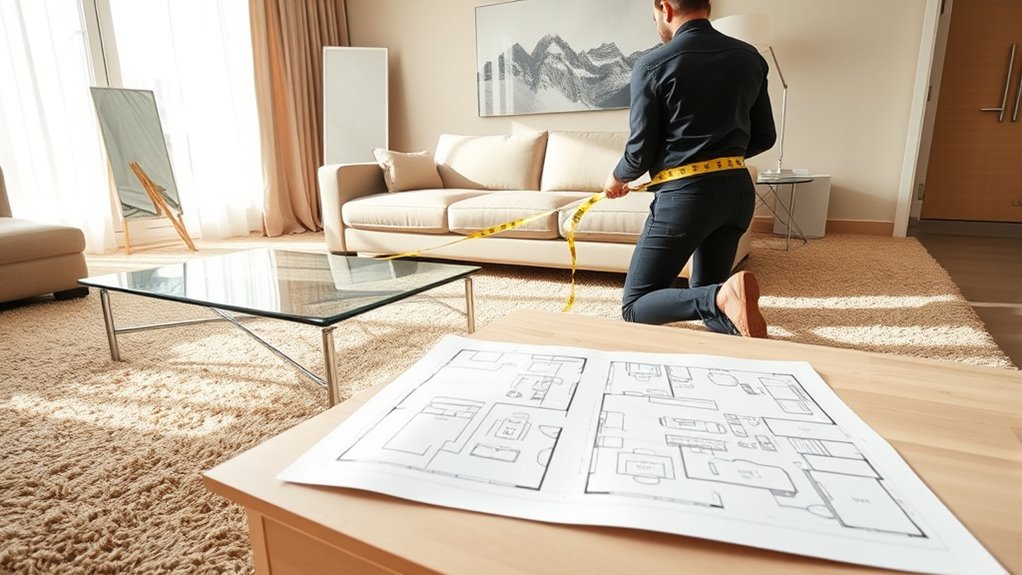
To guarantee your new furniture fits perfectly, start by measuring your existing pieces carefully. This helps you understand what size works best and prevents overbuying or underestimating space. First, measure the length, width, and height of each piece you plan to keep or replace. Second, note the clearance space needed around furniture for easy movement—at least 18 inches for walkways. Third, create a list of dimensions for each piece, including any protrusions like armrests or legs. This ensures your new furniture complements your current layout. Remember, accurate measurements help avoid costly mistakes and make planning easier. Keep these details handy when shopping to confidently select pieces that fit seamlessly into your space.
Create a Scaled Floor Plan or Sketch

Creating a scaled floor plan or sketch is a essential step in visualizing how your furniture will fit in your space. Use graph paper or digital tools to draw your room to scale, marking doors, windows, and outlets. Include all existing furniture and the new pieces you plan to buy, ensuring proportions are accurate. This visual map helps you see how everything fits and flows, avoiding clutter or awkward placement. As you sketch, consider pathways and clearance space for movement. Keep labels clear for each item, and compare the sizes visually. A well-crafted scaled plan makes it easier to identify potential issues before purchasing, saving you time and money. It’s an effective way to bring your space to life and make confident furniture choices.
Double-Check Your Measurements for Accuracy

Even if you’ve measured your space once, it’s essential to double-check those numbers before making any purchases. Mistakes can lead to ill-fitting furniture or wasted money. To guarantee accuracy, follow these steps:
Always double-check your measurements to avoid costly mistakes and ensure furniture fits perfectly.
- Re-measure key dimensions, such as width, length, and height, to confirm your initial numbers.
- Use a different measuring tool or method to verify results—like switching from a tape measure to a laser ruler.
- Cross-reference your measurements with your floor plan or sketch to catch any discrepancies.
Use Your Measurements to Make Confident Shopping Decisions
Once you have accurate measurements, you can confidently select furniture that fits perfectly in your space. Use your measurements to compare with product dimensions before shopping. Check the width, depth, and height to ensure items won’t overcrowd or look lost in the room. Visualize how each piece will fit alongside existing furniture and pathways. Don’t forget to account for clearance space for doors, drawers, and walking routes. If you’re shopping online, use the measurement data to filter options that match your space. This prevents costly mistakes and helps you avoid returns. Trust your measurements to guide your choices, making sure each piece enhances your room without sacrificing comfort or style. Confident decisions lead to a more satisfying, stress-free shopping experience.
Frequently Asked Questions
How Do I Measure Irregularly Shaped Rooms Accurately?
To measure irregularly shaped rooms accurately, you should break the space into smaller sections and measure each one separately. Use a tape measure or laser measure to get precise lengths, then record each measurement. Draw a rough sketch, noting the measurements for each segment. Add up the measurements to determine total area, ensuring you account for any angles or alcoves, so your furniture or decor fits perfectly without surprises.
What Tools Are Best for Measuring Large or Awkward Spaces?
You should use a laser measure for large or awkward spaces because it provides quick, precise readings over long distances. A tape measure can also work, but make certain you have a sturdy, extendable one for accuracy. For very irregular shapes, consider using a measuring wheel or graph paper to sketch out the space. These tools help you get accurate measurements, so your furniture fits perfectly without surprises.
How Can I Record Measurements Quickly and Efficiently?
You can record measurements quickly by using a digital laser measure—it’s like having a quick, accurate scout with you. When I measured my living room, I kept a small notebook nearby and jotted down measurements immediately after each scan. To save time, create a simple template or photo notes. This way, you avoid rewriting and guarantee your measurements stay organized, making your shopping trips more efficient.
Should I Include Door Swings and Furniture in My Measurements?
Yes, you should include door swings and furniture in your measurements. Doing so helps you understand how much space is available and guarantees that doors won’t hit furniture or walls when opened. Measure the full swing of doors and the dimensions of existing furniture to plan your space accurately. This way, you avoid surprises and make confident buying decisions, creating a comfortable, functional environment.
How Do I Handle Measuring High Ceilings or Unusual Architectural Features?
Think of high ceilings and architectural quirks as the skyline of your room—unique and striking. To measure them, use a telescoping pole or laser measure for accuracy and ease. Start from the floor to the ceiling’s highest point, noting any architectural features like crown molding or beams. Include these measurements in your plan, ensuring your furniture and decor fit comfortably under your room’s unique skyline.
Conclusion
By taking accurate measurements and planning ahead, you’ll avoid costly mistakes and regrets. It’s funny how a simple tape measure can save you from ending up with furniture that doesn’t fit or missing out on the perfect piece. When your new sofa finally arrives, you’ll smile knowing you did your homework. In the end, measuring your space isn’t just about numbers—it’s about creating a home that fits perfectly and feels just right.