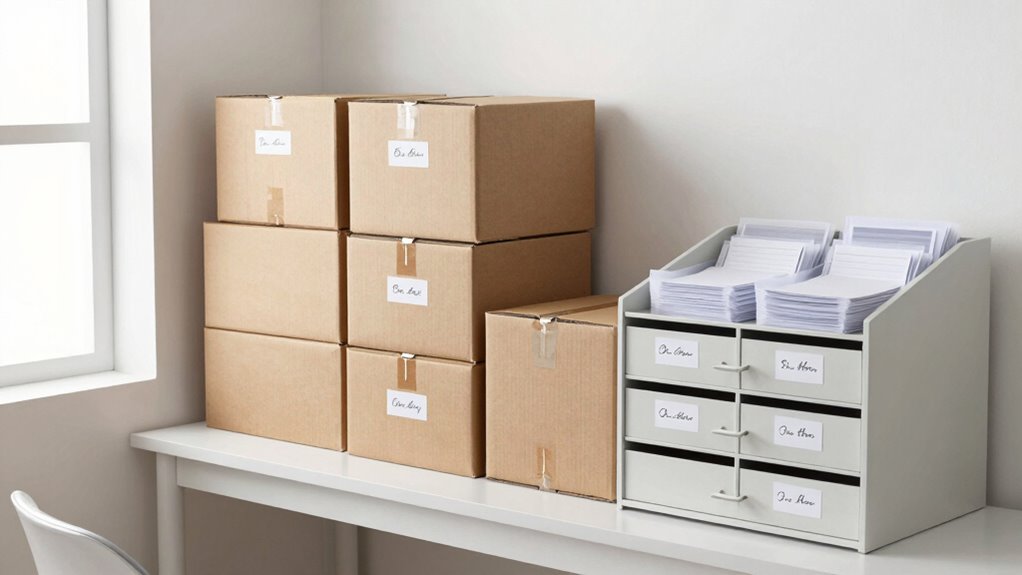

To store boxes and receipts without becoming a packrat, start by evaluating and categorizing your items to keep only what’s necessary. Choose sturdy, labeled storage solutions that are easy to access, like clear bins or filing folders. Regularly purge outdated or duplicate items, and consider digitizing important receipts for space-saving convenience. Develop a routine to review and maintain your system. Keep these tips in mind, and you’ll find a simple way to stay organized for good.
Key Takeaways
- Regularly assess and purge unnecessary boxes and receipts to prevent clutter buildup.
- Use labeled, clear containers and filing systems for easy identification and organization.
- Categorize receipts by date or purpose and maintain a digital backup for important documents.
- Schedule routine review sessions to remove outdated items and keep storage manageable.
- Incorporate organization into daily habits to maintain a clutter-free environment long-term.
Top picks for "store receipt without"
Open Amazon search results for this keyword.
As an affiliate, we earn on qualifying purchases.
Assess and Categorize Your Items
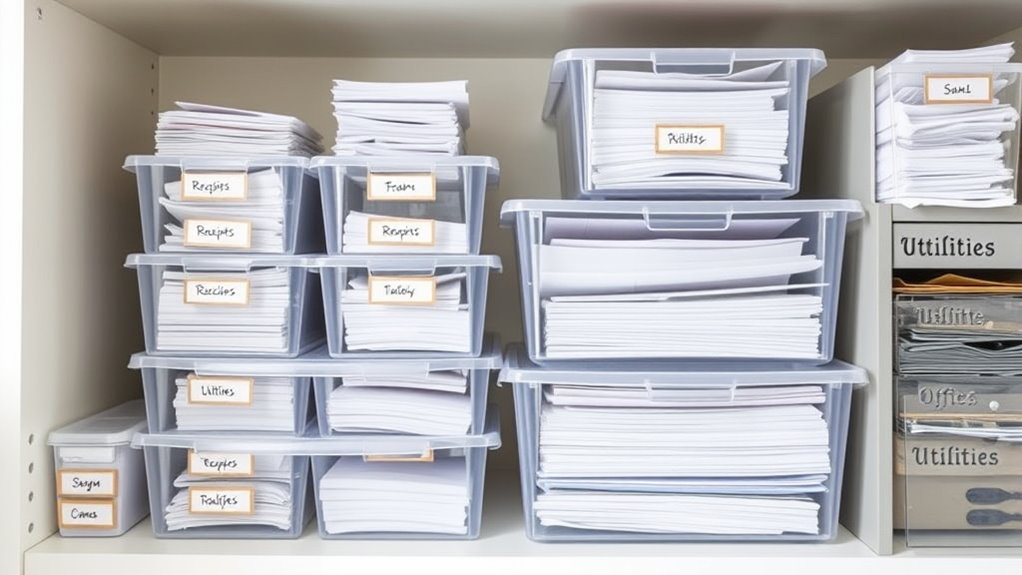
Before you begin organizing, it’s essential to assess and categorize your items. Start by gathering all your boxes and receipts in one place. As you go through them, decide which items are worth keeping and which can be discarded. Categorize your receipts by date, purpose, or account, so you can easily find what you need later. For boxes, group similar items together—like documents, sentimental items, or household supplies. Be honest about what’s necessary; don’t hold onto duplicates or things you no longer use. This step helps you understand what you have, reduces clutter, and makes storage more manageable. Taking the time now to evaluate your items ensures a smoother, more efficient organization process later.
Choose the Right Storage Solutions
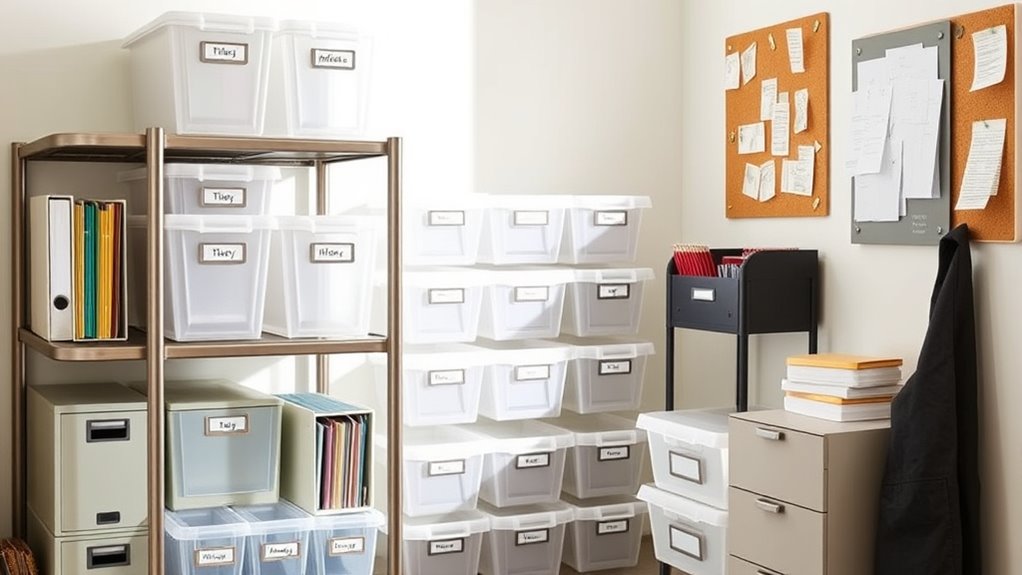
Choosing the right storage solutions is essential to keep your boxes and receipts organized and easily accessible. Start by selecting sturdy, stackable storage bins with clear labels so you can quickly identify contents. Consider using transparent containers to see what’s inside without opening them. For receipts, small filing boxes or drawer organizers work well, especially if they fit neatly on your shelves or desks. If space is limited, vertical storage options like wall-mounted shelves or stackable crates maximize room. Make sure your storage solutions are durable and appropriate for the items’ weight and size. Avoid overstuffing boxes or using flimsy containers that could collapse. The goal is to find solutions that keep your items protected, organized, and simple to retrieve when needed.
Implement a Filing System for Receipts

Creating an organized filing system for your receipts guarantees you can find any document quickly when you need it. Start by categorizing receipts based on expense type or date. Use labeled folders or envelopes for each category, such as “Utilities,” “Groceries,” or “Business Expenses.” Keep a master index or spreadsheet to track where each receipt is stored. This way, you avoid digging through piles. Consider color-coding folders for visual cues. Here’s a simple layout:
| Category | Storage Method | Frequency of Review |
|---|---|---|
| Utilities | Folders by month | Quarterly |
| Groceries | Envelopes by store | Monthly |
| Business | Digital scans | Annually |
This approach keeps your receipts accessible and manageable.
Regularly Purge Unnecessary Items
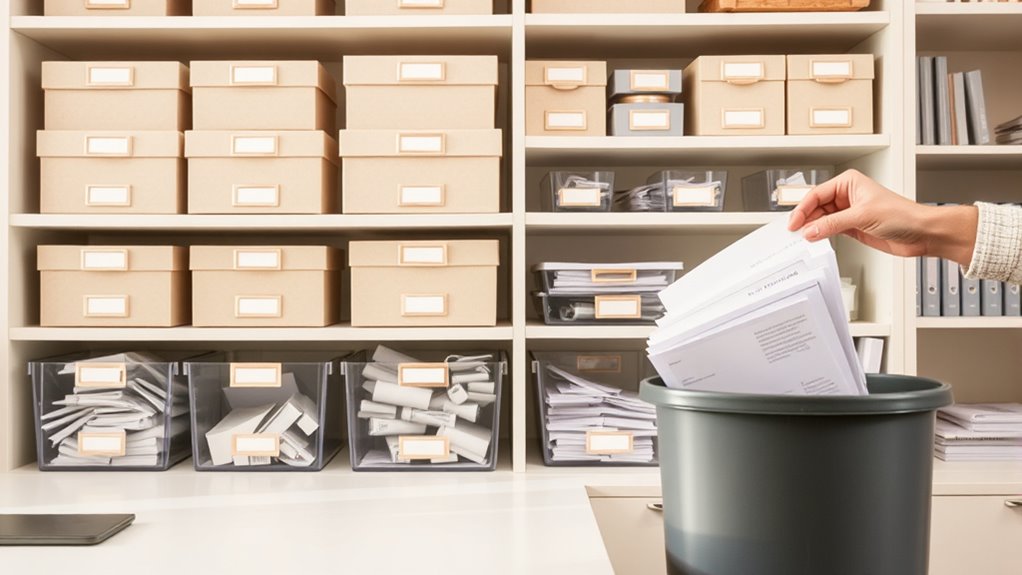
Regularly purging unnecessary items from your storage keeps your filing system streamlined and prevents clutter from accumulating. Set aside time monthly or quarterly to review your boxes and receipts. Ask yourself if each item is still relevant, useful, or required for tax or legal reasons. Dispose of duplicates, outdated receipts, or documents no longer needed. Be honest about what’s truly important—keeping everything just because it’s there creates chaos. If you find items you’re unsure about, create a temporary holding spot, then revisit later to decide. Regular decluttering saves space, makes finding important documents easier, and reduces stress. Staying disciplined in this habit ensures your storage remains functional and manageable over time.
Use Labels to Keep Things Organized
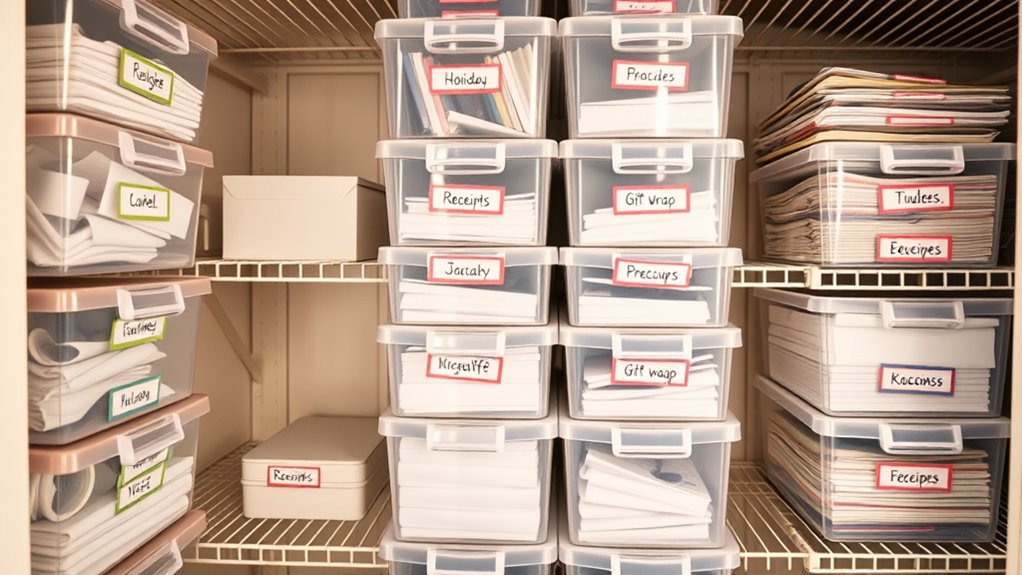
Have you ever spent valuable time searching for a specific receipt or document? Labels are your best tool for quick, efficient organization. Use clear, descriptive labels on your boxes and folders so you can identify contents instantly. Color-coding labels can also help differentiate categories at a glance. For example, use one color for receipts, another for important documents, and a third for miscellaneous items. Here’s a simple idea for labeling:
| Box Number | Content Type | Date Acquired |
|---|---|---|
| 001 | Receipts | Jan 2024 |
| 002 | Tax Documents | 2023 |
| 003 | Warranty Info | Various |
| 004 | Personal Items | N/A |
| 005 | Work Documents | 2022-2023 |
Effective labeling saves time and keeps your storage neat.
Store Items in Accessible and Secure Locations
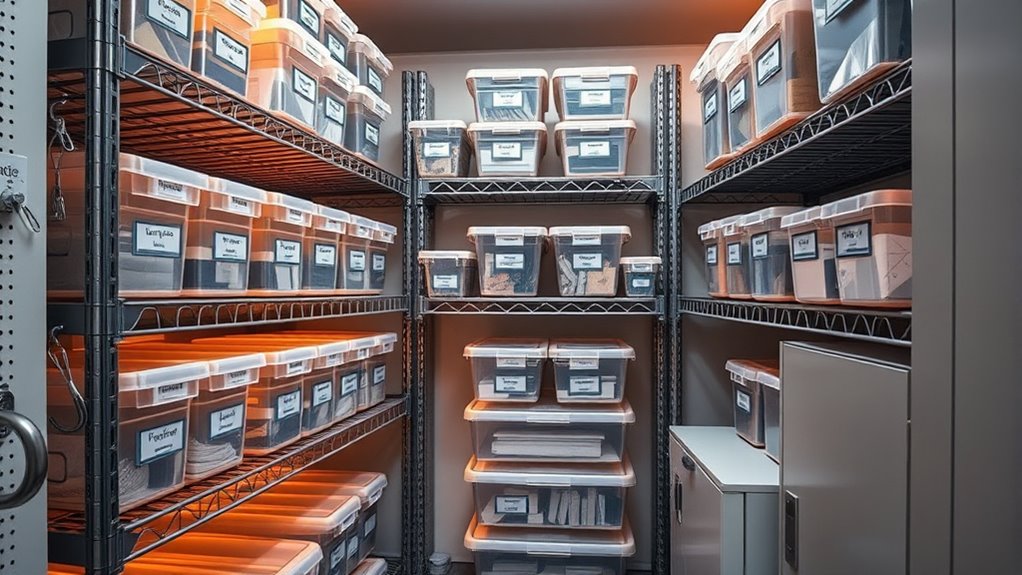
To keep your boxes and receipts safe and easy to find, you should assign clear storage areas. Use lockable containers for valuable items and label everything for quick retrieval. This approach guarantees your belongings are both accessible and protected.
Designate Clear Storage Areas
Choosing the right storage locations is essential for keeping your boxes and receipts organized. You want areas that are easy to access so you don’t waste time searching for items. Pick a dedicated space, like a shelf or cabinet, that’s clearly labeled for receipts or boxes. Keep frequently used items within reach, while less-used ones can go higher up or further back. Make sure your storage area is secure and protected from moisture, pests, or extreme temperatures. Use sturdy containers to prevent damage and keep boxes in designated zones to avoid clutter. Clear, well-defined spaces help you maintain order and make it simple to find what you need quickly. Properly designated storage areas keep your collection manageable and prevent chaos from taking over.
Use Lockable Containers
Using lockable containers adds an extra layer of security to your storage system, ensuring your valuable receipts and boxes stay safe from theft, tampering, or accidental damage. These containers help prevent unauthorized access and protect sensitive documents from environmental hazards like moisture or pests. Place them in accessible yet secure locations, such as a closet, basement, or dedicated storage room. Choose containers made from durable, lockable materials, like plastic or metal, that resist wear and tampering. Keep the keys in a safe spot separate from the containers to avoid losing access. Using lockable containers gives you peace of mind, knowing your important items are protected while remaining easy to access when needed. This simple step enhances your overall organization and security.
Label for Easy Retrieval
Have you ever spent time searching for a specific receipt or document? Labeling your boxes and folders makes retrieval quick and easy. Use clear, descriptive labels like “Tax Receipts 2023” or “Warranty Info.” Place labels on the front for visibility. Organize items by category or date, so you know exactly where to look. Here’s a simple way to categorize:
| Category | Year | Contents |
|---|---|---|
| Receipts | 2022-2023 | Electronics, Travel |
| Important Docs | 2021 | Warranties, Insurance |
| Personal | 2020-2022 | Medical, Education |
Proper labeling saves time and keeps your storage organized, ensuring you find what you need without rummaging through everything.
Digitize Receipts and Important Documents

Digitizing your receipts and important documents is a smart way to keep your records organized and easily accessible. Use a scanner or your smartphone to create clear digital copies of receipts, warranties, and essential papers. Save these files in well-labeled folders on your computer or cloud storage services like Google Drive or Dropbox. This reduces paper clutter and guarantees you can find documents quickly when needed. Be consistent in naming files with descriptive titles and dates for easy retrieval. Consider creating backups to prevent data loss. Avoid printing unnecessary copies of digital files to keep your storage space minimal. Digitization not only streamlines your organization but also protects your documents from damage or loss over time.
Develop a Maintenance Routine

To keep your storage system organized and efficient, establishing a regular maintenance routine is essential. Set aside time weekly or monthly to review your boxes and receipts. Toss out outdated or unnecessary items, and file new documents promptly. Revisit your labeling system to ensure everything remains clear and accessible. Keep your digital backups updated as well. Consistency prevents clutter from piling up and helps you stay aware of what you have. Incorporate quick checks into your schedule so that organizing becomes part of your regular habits, not a formidable task. Over time, this routine keeps your storage tidy, makes finding items easier, and reduces the risk of becoming overwhelmed by clutter. Staying proactive ensures your system remains functional and stress-free.
Frequently Asked Questions
How Often Should I Review and Update My Stored Items?
You should review and update your stored items at least once a year to keep everything organized and relevant. Set a reminder to go through your boxes and receipts regularly, discard outdated or unnecessary items, and guarantee everything is properly labeled. This habit helps prevent clutter from building up and makes it easier to find what you need when you need it, keeping your storage system efficient and manageable.
What Are Eco-Friendly Options for Storing Paper Receipts?
Your paper receipts deserve eco-friendly storage options that are as gentle on the planet as a whisper. Use digital apps like Evernote or Scanbot to scan and store receipts electronically, reducing paper clutter and waste. Reuse or repurpose sturdy folders made from recycled materials for physical storage. Compost receipts when possible, or opt for biodegradable storage solutions. These choices help you stay organized while protecting Earth’s fragile beauty.
How Can I Prevent Mold and Pests in Storage Areas?
To prevent mold and pests, keep your storage area dry and well-ventilated. Use silica gel packets or moisture absorbers to control humidity. Regularly inspect your boxes and receipts for signs of mold or pests, and clean the area with vinegar or mild disinfectants. Store items in airtight containers, and avoid stacking boxes directly on the floor. Maintaining cleanliness and proper airflow helps protect your stored belongings effectively.
Is There a Recommended Maximum Number of Boxes to Store?
You should aim to store no more than 50 boxes in one area to keep it manageable. Studies show clutter can reduce productivity by up to 40%. To prevent overload, regularly assess your storage, discarding duplicates or items you no longer need. Use clear labels and organize by category. This way, you avoid becoming overwhelmed and maintain easy access, ensuring your storage stays efficient and less stressful.
How Do I Store Sentimental Items Without Cluttering?
You should store sentimental items in a dedicated, organized space like a labeled box or bin, keeping only the most meaningful pieces. Limit yourself to a manageable number of containers to avoid clutter. Regularly review your collection, discarding items that no longer hold significance. Consider digitizing photos or letters to reduce physical space. By staying intentional, you preserve precious memories without overwhelming your home.
Conclusion
By following these steps, you’ll create a system that keeps your space tidy and stress-free. But beware—what you decide to keep or toss might reveal surprises you never expected. Will you uncover hidden gems or remnants of the past better left behind? The choice is yours, and the journey towards a clutter-free life is just beginning. Stay consistent, stay vigilant, and see where your organized efforts take you next. The next discovery could be closer than you think.