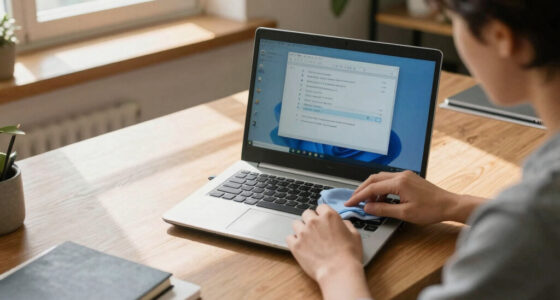
If your laptop fans are getting loud, start by cleaning out dust and debris from vents and fans with compressed air to improve airflow. Confirm you’re using the device on a hard, flat surface to prevent obstruction. Close unnecessary background apps to reduce hardware strain. Update your system drivers and thermal management settings to optimize performance. Monitoring temperatures and adjusting power settings can help keep things cool. For more tips, stay tuned to learn how to prevent overheating.

Get comfort and recovery gear delivered free with Prime
- Fast, free delivery on millions of items
- Prime Video, Amazon Music and more included
- Member-only deals all year
Key Takeaways
- Clean vents and fans with compressed air to remove dust buildup and improve airflow.
- Ensure the laptop is on a hard, flat surface to prevent ventilation blockage.
- Close unnecessary background applications to reduce CPU and GPU workload.
- Monitor system temperatures regularly with tools like HWMonitor or SpeedFan.
- Update your BIOS, drivers, and operating system for better thermal management and performance.
laptop dust cleaning compressed air
As an affiliate, we earn on qualifying purchases.
As an affiliate, we earn on qualifying purchases.
Check for Dust and Debris Inside Your Laptop

Dust and debris can quickly accumulate inside your laptop, causing the fans to work harder and become noisier. When dust builds up on the internal components and cooling vents, it blocks airflow and traps heat. This forces your fans to run at higher speeds to keep temperatures in check, resulting in louder noise. To fix this, turn off your laptop and unplug it. Carefully open the case or access panel, if possible, and use compressed air to blow out dust from vents, fans, and internal parts. Be gentle and avoid touching delicate components. Regular cleaning prevents overheating and reduces noise. Keeping the inside of your laptop free of dust guarantees proper cooling and quieter operation, prolonging your device’s lifespan.
As an affiliate, we earn on qualifying purchases.
Ensure Proper Ventilation and Placement

Make certain your laptop has plenty of space around it to breathe by removing obstructions. Use a stable, flat surface to prevent blocking vents and ensure proper airflow. Keeping these in mind helps your fans stay quiet and your laptop cool.
Clear Obstructions Regularly
To keep your laptop’s fans running quietly, it’s essential to regularly clear any obstructions that may block ventilation openings. Dust, lint, and debris can accumulate over time, restricting airflow and causing the fans to work harder. Use a soft brush or compressed air to gently clean vents, ensuring dirt doesn’t settle inside. Check for objects like papers, cables, or clothing that might be covering vents when you use your laptop. Keeping vents unobstructed allows heat to dissipate effectively, reducing the need for the fans to run quietly. Make a habit of inspecting and cleaning vents every few weeks, especially if you notice increased noise or overheating. Proper ventilation not only quiets your laptop but also prolongs its lifespan and maintains ideal performance.
Use Stable Surfaces
Placing your laptop on a stable, flat surface helps guarantee proper airflow and prevents accidental blockage of vents. This positioning ensures heat dissipates efficiently, reducing fan noise and preventing overheating. Avoid soft surfaces like beds or cushions, which can trap heat and obstruct vents. Instead, choose a hard, even surface for ideal performance. To understand the importance of stable placement, consider this table:
| Surface Type | Ventilation Quality | Risk of Overheating |
|---|---|---|
| Flat Desk | Excellent | Low |
| Soft Bed | Poor | High |
| Portable Stand | Very Good | Very Low |
| Uneven Surface | Variable | Moderate |
| Carpeted Floor | Poor | High |
Proper placement directly impacts your laptop’s cooling efficiency and longevity.
As an affiliate, we earn on qualifying purchases.
Close Unnecessary Background Applications

You should check which apps are running in the background and see if any are unnecessary. Ending unused programs can free up system resources and reduce overheating. Keeping only essential applications open helps your laptop run cooler and quieter.
Identify Running Apps
Ever wonder which applications are quietly running in the background and causing your laptop fans to ramp up? To find out, open your Task Manager (Windows) or Activity Monitor (Mac). Look for processes or apps using a lot of CPU or memory. Sometimes, updates or background scans run without you noticing. Identify any programs you don’t recognize or no longer need. These might be consuming resources unnecessarily. You can right-click and end these processes, but be cautious not to close essential system tasks. Keeping track of what’s running helps you spot the culprits behind the overheating. Regularly reviewing active applications guarantees your system runs smoothly and keeps your laptop cooler, preventing those loud fan noises from continuing.
End Unused Programs
Closing unused programs can markedly reduce your laptop’s workload and quiet the fans. When you leave applications running in the background, they continue to use CPU and RAM, causing your system to work harder and generate more heat. To improve airflow and cooling, close any programs you’re not actively using. On Windows, open Task Manager by pressing Ctrl + Shift + Esc, then select the applications you don’t need and click “End Task.” On Mac, open Activity Monitor from Applications > Utilities, find the processes consuming resources, and quit them. Regularly managing background apps prevents unnecessary strain on your system, helping to keep your laptop cooler and quieter. This simple step can prevent overheating and prolong your device’s lifespan.
As an affiliate, we earn on qualifying purchases.
Update Your Operating System and Drivers

Have you checked if your operating system and device drivers are up to date? Outdated software can cause your laptop to work harder, leading to increased heat and louder fans. Updating your OS guarantees you have the latest security patches and performance improvements, which can help optimize system efficiency. Similarly, current device drivers enable hardware components to function smoothly, reducing unnecessary strain on your system. To update, visit your OS provider’s website or use built-in update tools. For drivers, check your manufacturer’s support page or use automatic update utilities. Regular updates fix bugs, improve compatibility, and help keep your laptop running cooler. Keeping everything current is one of the simplest ways to prevent overheating and reduce fan noise.
Monitor Your Laptop’s Temperature and Performance

Monitoring your laptop’s temperature and performance is essential to prevent overheating and loud fan noise. By keeping an eye on these metrics, you can catch issues early and take action before damage occurs. Use reliable tools like HWMonitor, Core Temp, or SpeedFan to see real-time data. Picture yourself opening a program that shows your CPU and GPU temperatures, with numbers rising as you run demanding apps. Imagine the quiet hum turning into loud fans as temperatures climb past safe limits. Keep a close watch on system performance, noting any sluggishness or unusual behavior. Regular monitoring helps you identify patterns—like spikes during gaming or video editing—so you can adjust usage accordingly and keep your laptop cool and quiet.
Adjust Power Settings for Better Cooling

Adjusting your laptop’s power settings can considerably improve cooling and reduce fan noise. Start by accessing your power options in the control panel or system settings. Lower the maximum processor state to around 80-90%, which limits CPU performance slightly but reduces heat generation. Enable power-saving modes like “Balanced” or “Power Saver” to optimize energy usage and cooling. Disable unnecessary background processes that cause the CPU to work harder. Adjust screen brightness and turn off unused peripherals to lessen power consumption. These tweaks help lower the workload on internal components, leading to less heat and quieter fan operation. Remember, balancing performance with cooling is key; don’t reduce power so much that it hampers your productivity. Proper power management keeps your laptop cooler and quieter during regular use.
Consider Replacing or Upgrading Cooling Components
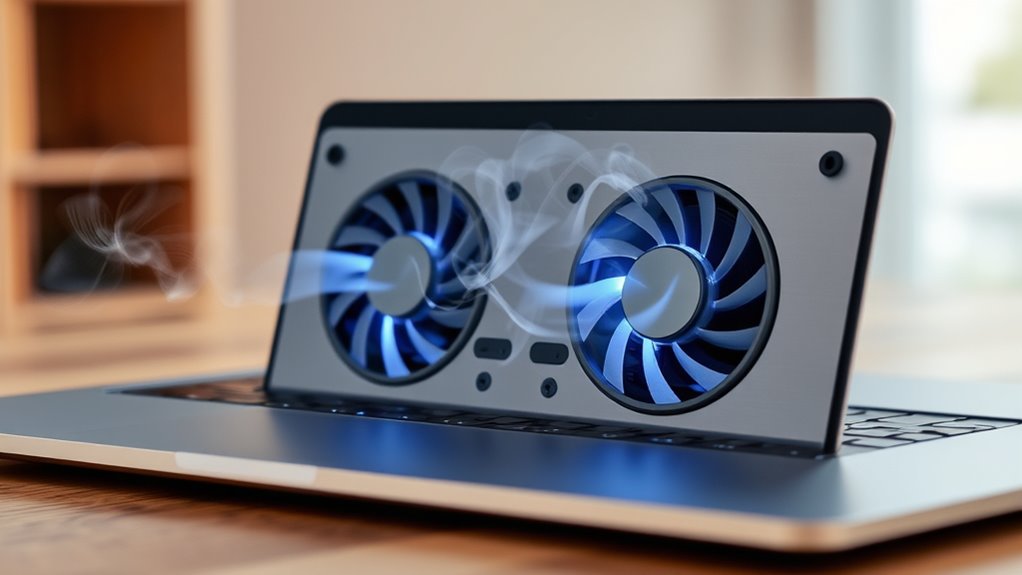
If your laptop’s fans remain loud despite software tweaks, upgrading or replacing cooling components can make a significant difference. Over time, thermal paste can dry out, heat sinks may become clogged, and fans can wear down, reducing cooling efficiency. By replacing these parts, you improve airflow and heat dissipation, lowering fan noise and preventing overheating. Imagine opening your laptop to see a shiny new heat sink that fits snugly, or a fresh fan spinning smoothly without strain. You might also consider upgrading to a more efficient cooling pad or adding a custom fan controller. These upgrades help your laptop run cooler and quieter, extending its lifespan and boosting performance. Taking these steps can transform your overheating, noisy machine into a cool, whisper-quiet device.
Frequently Asked Questions
How Can I Identify if My Laptop’s Fan Is Failing?
You can identify if your laptop’s fan is failing by listening for unusual noises like grinding or rattling, which indicate a problem. Check if your laptop overheats quickly or slows down under load, as these signs often point to fan issues. Use system monitoring tools to see if the fan runs constantly or at high speeds when unnecessary. If you notice these signs, it’s time to clean or replace the fan.
Are There Specific Tools to Measure My Laptop’s Internal Temperature?
You can use free tools like HWMonitor, SpeedFan, or Core Temp to measure your laptop’s internal temperature. Download and install one of these programs, then open it to see real-time temperature readings for your CPU and GPU. Keep an eye on these temps during heavy use; if they stay unusually high, it’s a sign your cooling system needs attention. Regular monitoring helps prevent overheating and prolongs your laptop’s life.
Can External Cooling Pads Significantly Reduce Fan Noise?
External cooling pads can greatly reduce your laptop’s fan noise by improving airflow and keeping temperatures lower. Many users find that using a cooling pad lessens the workload on internal fans, leading to quieter operation. While some models work better than others, investing in a quality cooling pad is often a practical step to quiet your laptop and prevent overheating. Just make sure it’s compatible with your device for the best results.
Is Overclocking My CPU Responsible for Increased Fan Noise?
Yes, overclocking your CPU can cause increased fan noise. When you push your processor beyond its default settings, it generates more heat. Your laptop’s cooling system responds by ramping up fan speed to keep temperatures in check, which results in louder noise. To reduce this, consider dialing back your overclock settings or improving cooling solutions, like using a cooling pad or cleaning out dust from vents.
How Often Should I Clean or Replace My Laptop’s Thermal Paste?
You should clean or replace your laptop’s thermal paste every 2 to 3 years to keep it running smoothly. Over time, thermal paste dries out and loses effectiveness, leading to higher temperatures and louder fans. Think of it as giving your laptop a fresh coat of armor. Regular maintenance helps prevent overheating, prolongs lifespan, and keeps your system cool under pressure. Don’t wait until it’s too late—stay proactive!
Conclusion
To tame tinnitus-like turbulence, take timely steps to clean, cool, and configure your computer. By checking for dust, optimizing placement, closing cluttered apps, and updating drivers, you’ll prevent overheating and prolong your laptop’s life. Remember, proactive practice paves the way for peaceful, productive performance. Keep your device cool and quiet by staying vigilant—your laptop will thank you with longer life and better performance. Stay savvy, stay cool!
Halloween Picks
halloween
As an affiliate, we earn on qualifying purchases.