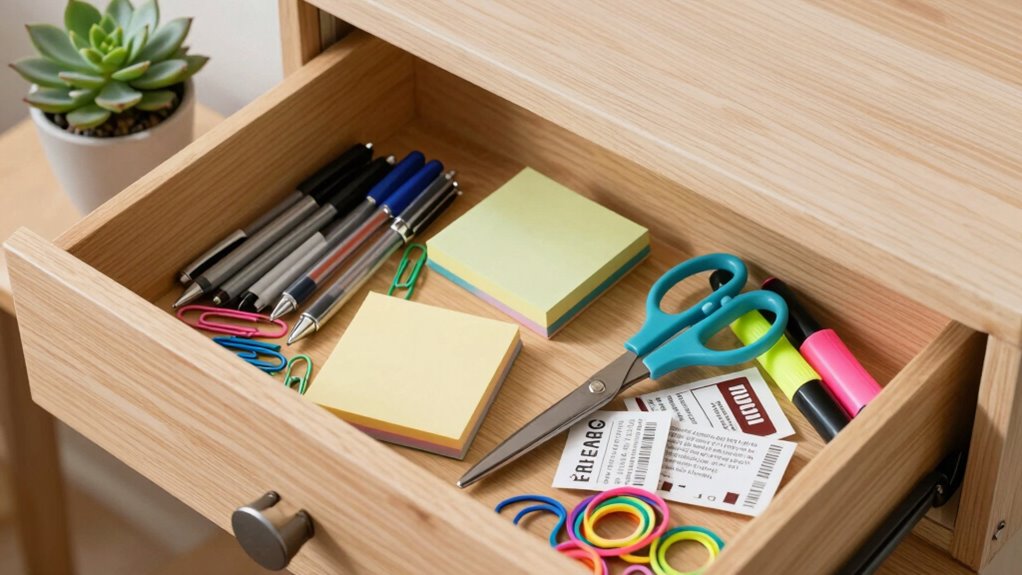

Start your spring cleaning by emptying your desk drawer and sorting items into keep, toss, or relocate piles. Keep essentials like useful pens, sticky notes, and small tools that you use regularly. Toss expired coupons, damaged stationery, and items you haven’t touched in over six months. Organize what you keep with dividers for easy access and clear space for non-office items elsewhere. Keep your workspace tidy, and you’ll discover simple ways to maintain it—if you continue, you’ll find out how.
Key Takeaways
- Empty the drawer completely to assess all items and identify what’s necessary or obsolete.
- Keep only frequently used, functional office supplies like pens, sticky notes, and small tools.
- Toss expired, damaged, or unused items such as broken stationery or old coupons.
- Organize essentials with dividers, placing most-used items at the front for easy access.
- Regularly review and tidy the drawer every few months to maintain a clutter-free workspace.
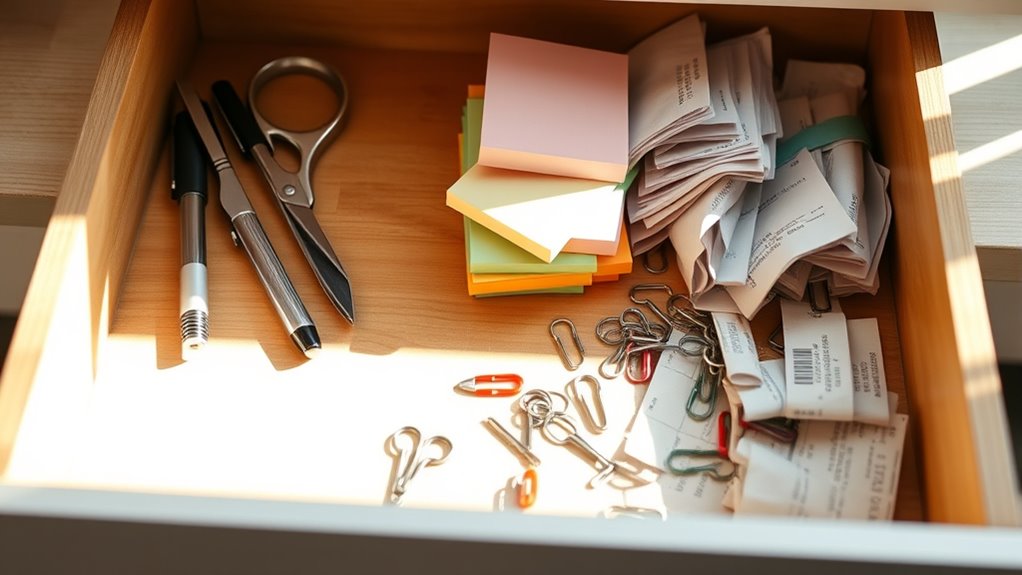
Spring is the perfect time to declutter your workspace, starting with your desk drawer. This small space can quickly become a chaotic collection of forgotten pens, outdated receipts, and miscellaneous items that clutter your mind as much as your desk. By tackling your desk drawer now, you take the first step toward better office organization and more effective clutter management. Clearing out your drawer isn’t just about tidiness; it’s about creating a functional space that helps you work more efficiently.
Begin by emptying the entire drawer onto your desk. As you do, sort everything into categories: keep, toss, and relocate. Be honest with yourself—if you haven’t used an item in the last six months or it’s broken, it probably doesn’t belong in your drawer. Toss expired coupons, empty paper clips, and damaged stationery. This step immediately reduces clutter and gives you a clearer picture of what you truly need to keep on hand. Remember, less is more when it comes to office organization; a streamlined drawer minimizes distractions and saves time when searching for essentials.
Empty your drawer, sort items into keep, toss, and relocate; prioritize essentials for a clutter-free workspace.
When deciding what to keep, prioritize items that are useful and frequently needed. Pens that write smoothly, a stapler that works, or a small pair of scissors—these should stay. Consider investing in small containers or dividers to organize these items neatly. Proper clutter management means not only removing unnecessary items but also arranging the essentials in a way that’s easy to access. For example, place your most-used pens and sticky notes at the front, so you’re not rummaging through your drawer daily. This way, your drawer becomes a well-organized extension of your workspace, not a dumping ground.
Relocating items that don’t belong in your desk drawer is equally important. Bills, personal items, or electronics should find a home elsewhere, freeing up space for office-related items. Use your desk or nearby shelves for these items, keeping only what’s necessary close at hand. This ensures your desk drawer stays dedicated to supplies and tools essential for your work.
Maintaining office organization and clutter management requires regular check-ins. Set a reminder to revisit your desk drawer every few months, refilling it with necessary supplies and tossing out what’s no longer needed. A clean, organized drawer enhances your productivity and reduces stress, making your workspace a more inviting place to work. Additionally, high-quality projectors can be integrated into your workspace setup for presentations or visual aids, further boosting your efficiency. By making this small effort now, you’ll enjoy a more efficient and clutter-free environment all year round.
Top picks for "desk drawer clean"
Open Amazon search results for this keyword.
As an affiliate, we earn on qualifying purchases.
Frequently Asked Questions
How Often Should I Spring Clean My Desk Drawer?
You should spring clean your desk drawer at least twice a year to stay organized. During this process, evaluate your storage solutions and remove items you no longer need. Use recycling tips to dispose of paper clutter responsibly, and consider donating or repurposing useful items. Regular cleaning prevents buildup, saves time, and keeps your workspace efficient. Set a reminder so you don’t forget to refresh your drawer and maintain a tidy environment.
What Are Eco-Friendly Disposal Options for Old Items?
You should consider eco-friendly disposal options like recycling electronics at certified centers to guarantee proper handling. For supplies in good condition, donate them to schools or charities instead of throwing them away. This way, you’re reducing waste and giving items a second life. Always check local guidelines for recycling and donation to make sure you’re disposing of old items responsibly and sustainably.
How Can I Organize Small Items Effectively?
You can organize small items effectively by using storage containers to keep everything neat and accessible. Choose clear containers so you can easily see what’s inside, and use labeling techniques to identify each container’s contents. Regularly revisit your organization system, and update labels if needed. This approach helps prevent clutter, saves time searching for items, and keeps your desk tidy and functional.
What Tools Are Best for Cleaning Out a Desk Drawer?
To clean out your desk drawer effectively, start with cleaning sprays to remove dust and grime. Use soft cloths or microfiber towels for wiping surfaces. Grab drawer dividers to organize small items and prevent clutter. These tools make the process easier and more thorough, helping you maintain a tidy space. Regular cleaning with sprays and proper organization with dividers keeps your desk drawer neat and functional.
How Do I Prevent Clutter From Accumulating Again?
To prevent clutter from returning, you should implement smart storage solutions like small containers or drawer dividers to organize items. Regularly set aside a few minutes for quick decluttering tips, such as tossing out unnecessary papers and unused supplies. Make it a habit to reassess your drawer weekly, ensuring everything has a designated spot. This proactive approach keeps your workspace tidy and makes future cleanouts much easier.
Conclusion
Now that you’ve sorted through your desk drawer, remember the saying, “A cluttered space is a cluttered mind.” Keep only what you need and use regularly, and let go of the rest. Regularly tidying your workspace keeps you focused and stress-free. A little effort now saves you time later. So, embrace the habit of spring cleaning—your productivity will thank you for it. Clear space, clear mind, and go conquer your day!