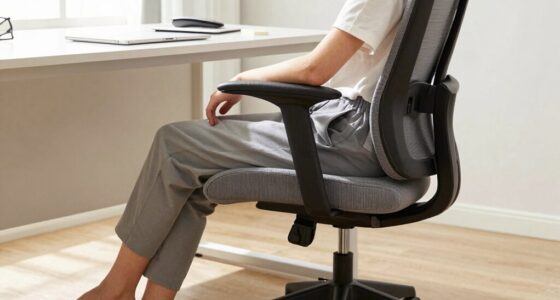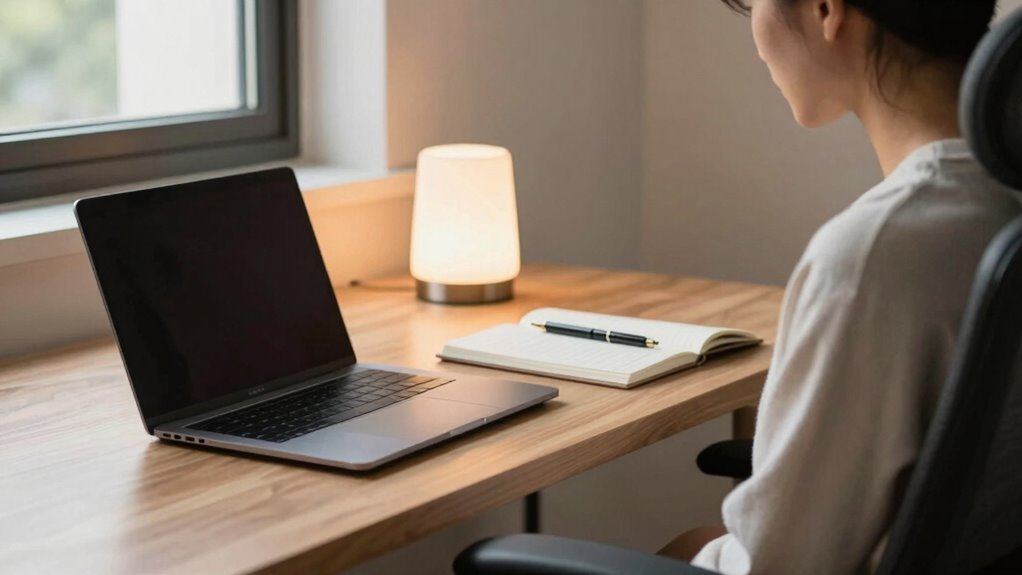

Positioning your monitor too low quietly creates neck tension because you have to tilt your head downward constantly, straining your neck and shoulders over time. This poor setup forces you to hold awkward positions that add pressure and lead to discomfort. Small adjustments, like raising your screen to eye level, can help prevent this tension before it becomes a problem. Keep going to discover more simple ways to protect your neck and stay comfortable throughout the day.

Get comfort and recovery gear delivered free — and shop member deals
- Fast, free delivery on millions of items
- Access to Prime Big Deal Days deals on October 6–7
- Prime Video, Amazon Music and more included
Key Takeaways
- Positioning the monitor too low causes constant downward head tilting, increasing neck tension over time.
- Failing to elevate the screen to eye level encourages poor posture and muscle strain.
- Using an improper monitor stand or stacking books can lead to inconsistent screen height, fostering tension.
- Neglecting to adjust or check ergonomic setup may result in unnoticed neck strain.
- Staying unaware of posture while working can cause prolonged tension, especially if the screen position isn’t optimal.

If you spend long hours at your desk, there’s a common habit that can silently lead to neck tension: consistently looking down at your computer screen. Over time, this habit strains your neck muscles and can cause discomfort or even chronic pain. The key to preventing this lies in understanding the significance of ergonomic adjustments and maintaining posture awareness throughout your workday. When your screen is positioned too low, you naturally tilt your head downward, which puts unnecessary pressure on your neck and shoulders. This may seem insignificant at first, but the cumulative effect of this habit can be quite damaging.
To combat this, you need to make ergonomic adjustments that promote a more neutral head and neck position. Start by elevating your monitor so the top of the screen is at or slightly below eye level. You can do this with adjustable stands or by stacking books underneath your monitor. The goal is to guarantee you don’t have to look down or strain your neck to see your screen clearly. Proper ergonomic adjustments help you maintain a straight, relaxed posture, reducing the risk of tension buildup. It’s also important to position your keyboard and mouse within easy reach, so your shoulders stay relaxed and your arms are at a comfortable angle. Paying attention to ergonomic principles can further enhance your workspace setup and prevent strain. Additionally, incorporating ergonomic assessments into your routine can help identify potential issues before they develop into chronic discomfort.
Posture awareness plays a vital role in preventing neck tension. Throughout the day, check in with yourself regularly. Are you slouching or leaning forward? Are your shoulders creeping up towards your ears? These signs indicate poor posture that can exacerbate neck issues. Make a conscious effort to sit upright, keeping your back supported and your head aligned over your shoulders. Small habits like taking short breaks to stretch and move your neck can make a big difference. Incorporate simple exercises into your routine, such as gently turning your head from side to side or tilting your chin toward your chest. Recognizing the importance of biodiversity in our environment can also inspire us to adopt healthier habits that promote overall well-being. Additionally, being aware of how ergonomics impacts your comfort can motivate you to make necessary adjustments to your workspace.
As an affiliate, we earn on qualifying purchases.
Frequently Asked Questions
How Can I Tell if My Desk Setup Is Causing Neck Tension?
You can tell if your desk setup causes neck tension by paying attention to your ergonomics awareness. If you notice persistent neck stiffness, headaches, or discomfort after working, your posture might need correction. Check if your monitor is at eye level, your shoulders stay relaxed, and your chair supports proper alignment. Making small posture corrections throughout the day can help relieve tension and improve overall comfort at your desk.
Are There Specific Chair Adjustments That Help Reduce Neck Strain?
Adjust your chair to keep your feet flat on the floor and your knees at a 90-degree angle. Use ergonomic accessories like lumbar supports and adjustable armrests to promote good posture awareness. Make sure your chair height allows your monitor to be at eye level, preventing neck strain. Regularly check your posture and make small adjustments to stay comfortable, reducing the risk of neck tension during long work hours.
What Exercises Can I Do to Relieve Neck Tension From Desk Work?
To relieve neck tension from desk work, focus on posture correction and use ergonomic accessories like adjustable chairs and monitor stands. Do gentle neck stretches, such as tilting your head side to side or slowly rolling your shoulders, every hour. Incorporate regular breaks, maintain a neutral spine position, and make sure your workspace supports good posture. These habits help reduce strain and keep your neck comfortable throughout the day.
How Often Should I Take Breaks to Prevent Neck Discomfort?
They say, “A stitch in time saves nine,” so take breaks every 30 to 60 minutes to prevent neck discomfort. During breaks, stretch and move, and use ergonomic accessories to support good posture. Stay mindful of your posture awareness, adjusting your chair, monitor, and desk height as needed. Regular short breaks help reduce tension, improve circulation, and keep your neck healthy while working at your desk.
Does Screen Size Affect Neck Tension During Desk Work?
Yes, screen size affects neck tension during desk work. Larger screens improve screen ergonomics by allowing you to view content without craning your neck or leaning forward, enhancing visual comfort. When your screen is appropriately sized and positioned at eye level, you reduce strain and prevent neck discomfort. Prioritize a screen that fits your workspace and allows you to maintain good posture, ultimately supporting better neck health during long hours of work.
As an affiliate, we earn on qualifying purchases.
Conclusion
If you keep your screen too high or too low, it’s like tossing a pebble into still water—tiny adjustments ripple into bigger problems. That sneaky habit of poor desk setup quietly tugs at your neck, like an unspoken weight you carry all day. But with small changes, you can straighten the ship and set your gaze on calmer waters. Don’t let bad habits anchor you; steer your workspace toward comfort and ease.
As an affiliate, we earn on qualifying purchases.
As an affiliate, we earn on qualifying purchases.
Fall Picks
fall essentials
As an affiliate, we earn on qualifying purchases.