If you notice persistent eye discomfort like headaches, blurred vision, dryness, or sensitivity to light, don’t ignore these signs. These red flags can signal you’re overstrained or exposed to too much blue light, risking long-term damage. Ignoring early symptoms might worsen your condition and lead to chronic problems. If you want to protect your eye health and avoid serious issues, keep paying attention to these warning signs—there’s important information ahead.
Key Takeaways
- Persistent headaches after screen use may indicate significant eye strain needing professional evaluation.
- Blurred or double vision that doesn’t improve with breaks signals a red flag.
- Increased light sensitivity and eye watering could be signs of underlying eye health issues.
- Eyes feeling exhausted or gritty despite rest suggest overexposure to blue light.
- Continuous discomfort or worsening symptoms require prompt medical attention to prevent long-term damage.
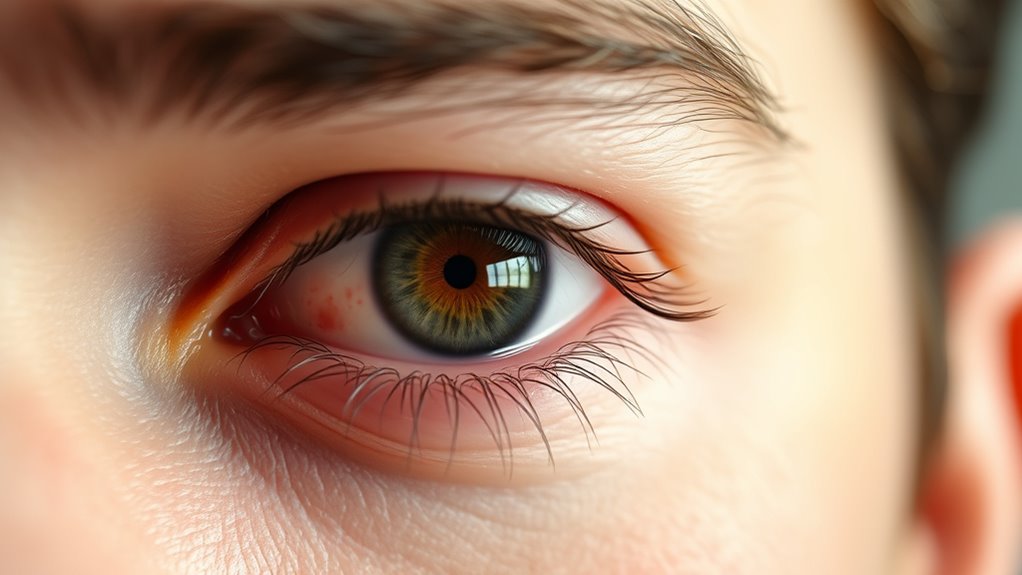
Have you noticed any discomfort or unusual symptoms in your eyes lately? If so, you might be experiencing the early signs of eye strain, which is increasingly common in our digital world. Modern lifestyles often involve prolonged screen time, exposing your eyes to blue light exposure from devices like computers, smartphones, and tablets. This constant exposure can lead to a condition known as computer vision syndrome, which encompasses a range of eye-related problems. Recognizing these red flags early is vital to prevent further damage and maintain your eye health.
When you spend hours staring at screens without proper breaks, your eyes can start to feel tired, dry, or gritty. You might notice blurred vision or difficulty focusing after extended use. These symptoms are classic signs of eye strain caused by overexposure to blue light, which penetrates deep into your eyes and can cause discomfort or even damage over time. If you find yourself blinking less often or experiencing a burning sensation in your eyes, it could be a sign that your eyes are struggling to cope with the digital demands placed on them. Many people dismiss these symptoms as temporary, but persistent discomfort warrants attention.
Another red flag is headaches that seem to originate from your eye area, especially after long periods of screen use. These headaches often occur because your eyes are working harder than they should to process the images on your device, a common consequence of computer vision syndrome. If you notice your eyes feeling exhausted even after a break or experiencing double vision or difficulty focusing, it’s time to think about your eye health seriously. Ignoring these signs can lead to more severe issues, including chronic eye strain or long-term vision problems.
Red eyes, sensitivity to light, or increased eye watering are also indicators that your eyes are under stress. These symptoms can result from eye strain or improper lighting conditions combined with excessive screen time. Make sure your workspace is well-lit and take regular breaks using the 20-20-20 rule: every 20 minutes, look at something 20 feet away for at least 20 seconds. Adjusting the brightness and contrast of your screens, using blue light filters or glasses, can also help reduce blue light exposure and ease the strain on your eyes. Recognizing early signs of eye strain can help prevent more serious complications and protect your vision over time.

livho High Tech Blue Light Glasses – Advanced Blue Light Blocking Computer Glasses – Screen Fatigue & UV Protection
Elevate your screen time comfort with these stylish women's/men's eyewear frame blue light blocking glasses, designed to reduce…
As an affiliate, we earn on qualifying purchases.
As an affiliate, we earn on qualifying purchases.
Frequently Asked Questions
Can Eye Strain Lead to Permanent Vision Damage?
Eye strain alone usually doesn’t cause permanent vision damage, but ignoring it can lead to discomfort and worsening issues. If you don’t get proper vision correction or neglect eye exercises, your eyes might strain more over time, possibly affecting your vision quality. To prevent this, take breaks, do eye exercises, and see an eye specialist if symptoms persist. Early intervention helps protect your eyes from future problems.
How Long Does Eye Strain Typically Last?
Eye strain typically lasts a few hours to a couple of days, especially if you don’t take breaks. Did you know that over 60% of people experience eye fatigue from prolonged screen glare? If you ignore symptoms, it can linger longer. To speed recovery, reduce screen glare, take regular breaks, and practice eye exercises. Addressing these habits can help minimize discomfort and shorten recovery time.
Are Children More Susceptible to Eye Strain?
Yes, children are more susceptible to eye strain because their developing pediatric vision makes their eyes more vulnerable to fatigue from prolonged screen time or close-up activities. You should monitor their childhood eye health closely, as symptoms like headaches, blurred vision, or eye discomfort can indicate strain. Ensuring regular eye checkups and encouraging breaks can help protect their eyes and promote healthy visual development.
What Role Does Digital Device Usage Play?
A picture is worth a thousand words, and when you spend too much screen time, you’re exposing your eyes to blue light that can cause strain and discomfort. Digital device usage plays a significant role in eye strain, especially if you don’t take breaks. Limiting screen time and using blue light filters can help protect your eyes and reduce fatigue, so you stay comfortable and focused longer.
When Should I See an Eye Specialist?
You should see an eye specialist if you experience persistent eye discomfort despite taking regular screen breaks and doing eye exercises. If your vision worsens, you notice sudden changes, or your eyes feel extremely dry or painful, don’t delay. Regular check-ups help catch issues early. Prioritize professional care when symptoms linger or worsen, ensuring your eyes stay healthy and comfortable as you continue using digital devices.

SANSUI Monitor 24 Inch 100Hz PC Monitor, HDMI VGA Ports VESA Mount, FHD Computer Monitor Ultra-Slim Ergonomic Tilt Eye Care for Home Office (ES-24F2, HDMI Cable Included)
24” Full HD 100Hz VA(1920*1080) HDR10 Monitor for Home, Game and Office
As an affiliate, we earn on qualifying purchases.
As an affiliate, we earn on qualifying purchases.
Conclusion
If you notice persistent headaches, blurred vision, or ongoing discomfort, don’t dismiss these warning signs. Recognize the importance of listening to your eyes, addressing issues early, and seeking professional help. Take action to rest your eyes, adjust your habits, and protect your vision. Because ignoring eye strain can lead to more serious problems, prioritize your eye health, stay vigilant, and remember: your eyes deserve care, attention, and respect every day.

VizoBlueX – 15.6 inch Diagonal Blue Light Blocking Screen Protector Filter. Panel LED PC Laptop Anti-UV Eye Protection Panel Cover – Widescreen Laptop Frame Hanging Type (W 14" X H 8.6")
Thanks to VizoBlueX thousands of Americans enjoy their computer screen with Better Sleep, reduced Eye strain and Headaches
As an affiliate, we earn on qualifying purchases.
As an affiliate, we earn on qualifying purchases.

Blue Light Blocking Glasses For Men/Women Anti-Fatigue Computer Monitor Gaming Glasses Reduce Eye Strain Game Glasses
Blue Light Glasses for Screen Protection: Staring at electronic screens can have negative health effects. While it may…
As an affiliate, we earn on qualifying purchases.
As an affiliate, we earn on qualifying purchases.