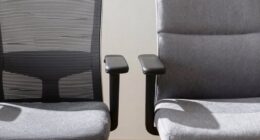

To fix a squeaky chair quickly, start by tightening all loose joints with a screwdriver or wrench. If that doesn’t work, remove and replace worn hardware or add wood glue to strengthen connections. Replacing old cushions with firm foam can reduce shifting and noise, while lubricating moving parts with silicone spray can stop squeaks. For more tips that could save your sanity, follow along to learn how simple adjustments can make your chair silence perfect again.
Key Takeaways
- Tighten all loose screws, bolts, and joints to eliminate friction causing squeaks.
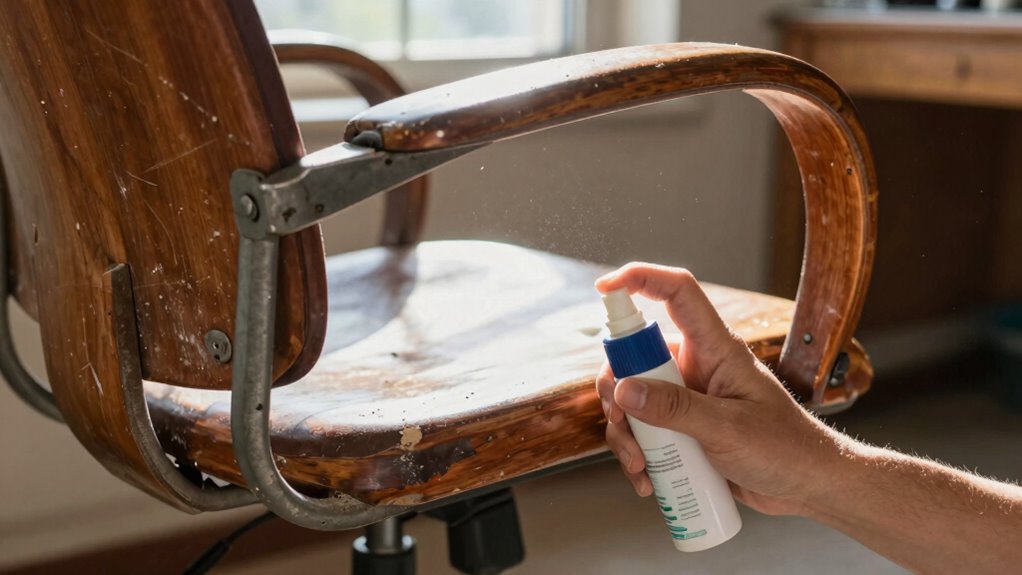
- Apply a small amount of silicone spray or WD-40 to moving parts carefully.
- Check and replace worn or damaged hardware for added stability.
- Remove and re-glue loose joints with wood glue, then clamp until dry.
- Inspect and replace old cushions to reduce shifting and squeaking.

A squeaky chair can be be incredibly annoying, but fixing it is often simpler than you might think. The sound usually comes from loose joints, worn-out parts, or even old cushions that have lost their padding. Before you consider buying a new chair, try some straightforward fixes to silence the squeak and restore comfort. One common cause of squeaking is loose or damaged lumber, especially in wooden chairs. Over time, the joints can loosen, causing friction that results in that irritating squeal. To address this, you can perform some simple lumber repair. First, inspect all the joints, especially where the backrest meets the seat or the legs connect to the frame. If you notice any gaps or looseness, tighten the screws or bolts. If they’re stripped or damaged, replacing them with new hardware is your best bet. Applying wood glue to the joints can also strengthen the structure once you tighten everything back together. For larger repairs, you might need to disassemble the chair, re-glue the joints, and clamp them until dry, ensuring a snug fit that prevents squeaking in the future.
Another quick fix for squeaky chairs involves cushion replacement. Over time, cushions tend to flatten or develop uneven spots, causing the seat to shift and squeak when you sit or move around. Removing the old cushion and replacing it with a fresh, well-padded one can make a significant difference. Not only does this eliminate squeaks caused by padding compression, but it also enhances overall comfort. When choosing a cushion, look for dense foam or high-quality padding that retains its shape. Cover it with a durable fabric or upholstery to match your decor. Installing the new cushion is usually straightforward—just remove the old one, align the new pad, and secure it with staples, Velcro, or fabric ties, depending on your chair’s design. This simple cushion replacement can dramatically reduce movement and noise, keeping your chair silent and comfortable. Additionally, selecting home furniture made with quality materials can help prevent future squeaks and maintain durability.
In addition to these specific fixes, don’t forget to check for any debris or dirt lodged in the moving parts or joints. Sometimes, a quick cleaning can eliminate squeaks without the need for repairs. Lubricating moving parts with a silicone spray or WD-40 can also help, but be careful to avoid excess, which might attract dust. Regular maintenance, like tightening screws and replacing worn cushions, will keep your chair squeak-free longer. Remember, you don’t need to throw out your favorite chair just because it squeaks. With a little effort in lumber repair and cushion replacement, you can restore its silence and comfort, saving you time and money while extending its lifespan.
Top picks for "squeaky chair quick"
Open Amazon search results for this keyword.
As an affiliate, we earn on qualifying purchases.
Frequently Asked Questions
Can Squeaky Chairs Cause Long-Term Damage?
Squeaky chairs usually won’t cause long-term damage if you address the squeak early. Over time, persistent squeaks might wear down parts, potentially affecting your chair’s lifespan. To prevent this, you should focus on squeak prevention by lubricating moving joints and tightening loose screws. Regular maintenance keeps your chair functioning smoothly, ensuring it lasts longer and avoids costly repairs down the line.
Are Certain Chair Materials More Prone to Squeaking?
Certain chair materials, like fabric and plastic, are more prone to squeaking. Fabric durability impacts squeak frequency; low-quality fabrics may loosen or fray, causing noise. Plastic wear over time leads to creaking as parts rub or loosen. You should regularly check and tighten joints, especially in plastic chairs, and consider upgrading to higher-quality fabrics or plastics to minimize squeaks and prolong your chair’s lifespan.
How Often Should I Lubricate My Chair?
You should lubricate your chair every few months, or whenever it starts squeaking like a haunted house. Regular lubrication keeps it smooth, preventing annoying noises that threaten your sanity. This simple step enhances ergonomic benefits by ensuring your chair moves effortlessly and supports proper posture. Plus, it allows for easy chair customization, making your workspace more comfortable and personalized. Don’t wait—stay ahead of squeaks and keep your chair whisper-quiet!
Is It Safe to Use Household Oils on My Chair?
Using household oils on your chair can be safe if you choose the right ones and follow safety precautions. Avoid harsh or thick oils like cooking oils, which can gum up or damage the mechanism. Instead, opt for light lubricants like silicone spray or WD-40, and apply sparingly. Always test a small area first, guarantee good ventilation, and wipe away any excess to prevent buildup and assure smooth, safe operation.
Do Professional Repairs Guarantee a Squeak-Free Chair?
Professional repairs can considerably reduce squeaks, but they don’t guarantee a squeak-free chair forever. Skilled technicians identify and fix the root causes, offering effective squeak prevention. However, ongoing use, wear, and environmental factors can still cause noises over time. Regular maintenance and inspections help maintain the results of professional repair, ensuring your chair stays quieter longer. Remember, no fix is completely permanent, but professional repair is your best bet for minimal squeaking.
Conclusion
Did you know that a squeaky chair can cause up to a 20% decrease in your focus and productivity? Now that you’ve learned the quick fix, you can silence that annoying squeak in seconds and regain your concentration. Don’t let a simple noise drive you crazy or disrupt your day. With this easy fix, you’ll keep your workspace peaceful and your mind clear—so go ahead, fix that squeak and get back to being your best self!