TL;DR

Get comfort and recovery gear delivered free with Prime
- Fast, free delivery on millions of items
- Prime Video, Amazon Music and more included
- Member-only deals all year
Physical therapist Devin Trachman recommends the sit-to-stand as a practical strength exercise that can support the muscles used in walking and everyday movement. Fit&Well’s report suggests 2–3 sets of 8–10 repetitions, with chair or hand support as needed; it does not report clinical trial results showing the exercise improves walking for everyone.
Physical therapist Devin Trachman recommends the sit-to-stand—standing up from a chair and lowering back down—as one exercise to build strength for walking and everyday movement. The advice, reported by Fit&Well, offers a simple starting point for people who want to work on lower-body strength, but it is an expert recommendation, not evidence that the exercise will improve walking for every person.
Trachman, identified by Fit&Well as a clinic director and physical therapist at Physical Therapy Central in West Edmond, says the movement works the quadriceps, gluteus maximus and core stabilizers. These muscle groups contribute to activities such as rising from a chair, walking and climbing stairs. Her recommendation is to complete two to three sets of eight to 10 repetitions, resting for 60 seconds between sets.
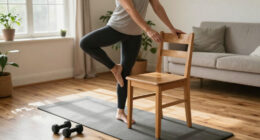
For the exercise, sit near the front of a sturdy chair with feet flat and about shoulder-width apart. Lean the chest slightly forward while keeping the back straight, then push through the heels to stand upright. Lower back into the chair slowly and with control. Trachman advises avoiding hand support if possible, but the report says people who need assistance can use a chair with armrests or a sturdy support in front of them.
The report frames the movement as a way to strengthen muscles used in functional daily tasks. It does not provide a study, outcome data or a comparison with other exercises. The specific repetition plan is Trachman’s recommendation, rather than a universal prescription for people with different abilities, symptoms or health conditions.
Building Strength for Daily Walking
The recommendation addresses a common practical concern: walking can feel harder when strength, balance or endurance declines. Trachman says reduced activity can contribute to weaker walking muscles and lower endurance, which may make walking more tiring and lead people to move less. The sit-to-stand offers a way to practice a familiar movement while building lower-body strength.
That makes the advice relevant to people looking for an accessible exercise to do at home, particularly because the movement can be adjusted with armrests or support. But the report does not establish that sit-to-stands alone prevent falls, restore independence or improve walking capacity. Those outcomes depend on individual circumstances, and a person experiencing pain, instability or difficulty standing may need tailored advice from a qualified clinician.
ergonomic chair for sit-to-stand exercises
As an affiliate, we earn on qualifying purchases.
As an affiliate, we earn on qualifying purchases.
Why a Chair-Rise Exercise
Fit&Well’s report places the recommendation within the effects that aging and changes in activity can have on muscle mass and mobility. It also quotes Trachman describing other possible reasons people walk less, including busy schedules, pain and walking becoming more tiring. The report presents inactivity as a cycle: declining activity may weaken muscles and reduce balance and endurance, potentially making movement feel harder.
Trachman argues that building strength and confidence can be a more useful starting point than simply telling someone to walk more. She says even small strength gains may support walking endurance and quality of life. These are her professional views as quoted in the report; the source material does not include research findings quantifying the effect of this particular exercise.
The article identifies Trachman as a doctor of physical therapy and board-certified orthopaedic clinical specialist. Her recommendation is therefore attributed to a practicing physical therapist, while readers should distinguish that expert guidance from a tested treatment protocol or a guarantee of results.
“If I could only prescribe one exercise to improve walking, this would be it.”
— Devin Trachman, physical therapist, as quoted by Fit&Well
As an affiliate, we earn on qualifying purchases.
Limits of the Exercise Advice
The report does not say how quickly a person might notice a change, how often to perform the exercise each week, or whether sit-to-stands improve measured walking outcomes. It provides no clinical trial data and does not compare the exercise with other strength or balance routines. The phrase “improve walking” is Trachman’s recommendation, not a reported result from a study in the article.
It is also unclear who can safely follow the suggested sets and repetitions without modification. The report offers support options but does not set out screening guidance for people with pain, balance problems, recent surgery or other health concerns. Anyone unsure about their ability to exercise safely can seek individualized guidance from a physical therapist or other health professional.
lower body strength training equipment
As an affiliate, we earn on qualifying purchases.
As an affiliate, we earn on qualifying purchases.
Choosing a Safe Starting Point
Readers who try the movement can start with a sturdy chair and use armrests or a stable support if needed, following the modifications described in the report. The suggested target is two to three sets of eight to 10 repetitions with 60 seconds of rest, but the article does not say that everyone should begin at that volume. People should stop if the exercise causes concerning symptoms and ask a qualified professional about a suitable adaptation.
Fit&Well’s report does not announce a follow-up study, new clinical guidance or an upcoming milestone. The next practical step for a person seeking help with walking is to discuss their specific goals and limitations with a physical therapist, who can advise whether chair rises fit into a broader, individualized program.
As an affiliate, we earn on qualifying purchases.
Key Questions
Which exercise does Devin Trachman recommend for walking strength?
She recommends the sit-to-stand: rising from a chair and lowering back down with control. She links it to strengthening muscles used in walking and other daily activities.
How many sit-to-stands does the report suggest?
The report lists two to three sets of eight to 10 repetitions, with 60 seconds of rest. That is Trachman’s suggested routine, not a personalized prescription for every reader.
Can I use my hands or chair arms?
Yes. The report says people who need help can use a chair with armrests for light support or a sturdy support in front of them. Trachman recommends going hands-free only if possible.
Does the report prove sit-to-stands improve walking?
No. It reports a physical therapist’s recommendation but does not include trial results or measured outcomes showing that the exercise improves walking for everyone.
Should I check with a professional before trying it?
If you have pain, balance difficulties, a health condition or uncertainty about standing safely, ask a physical therapist or another qualified health professional for individualized guidance.
Source: rss
Halloween Picks
halloween
As an affiliate, we earn on qualifying purchases.