
To pack cables like a pro and stop crushing connectors, start by carefully coil each cable using the over-under method to prevent internal damage. Secure coils with Velcro straps or reusable twist ties, and store them in small, dedicated pouches or mesh compartments to keep them separate from heavier gear. Place your organized pouches on top of lighter items and avoid packing heavy objects on top of cables. For more tips on protecting your gear, keep exploring.
Key Takeaways
- Coil cables carefully using the over-under method to prevent internal wire stress and connector damage.
- Use dedicated, padded cable pouches or organizers to keep cables separate and protected from crushing.
- Place organized cable pouches on top of lighter items to avoid weight pressing down on connectors.
- Avoid overstuffing your bag; leave space around cables to prevent sharp bends and crushing.
- Store cables in mesh or external pockets to keep them accessible and shielded from heavy gear.
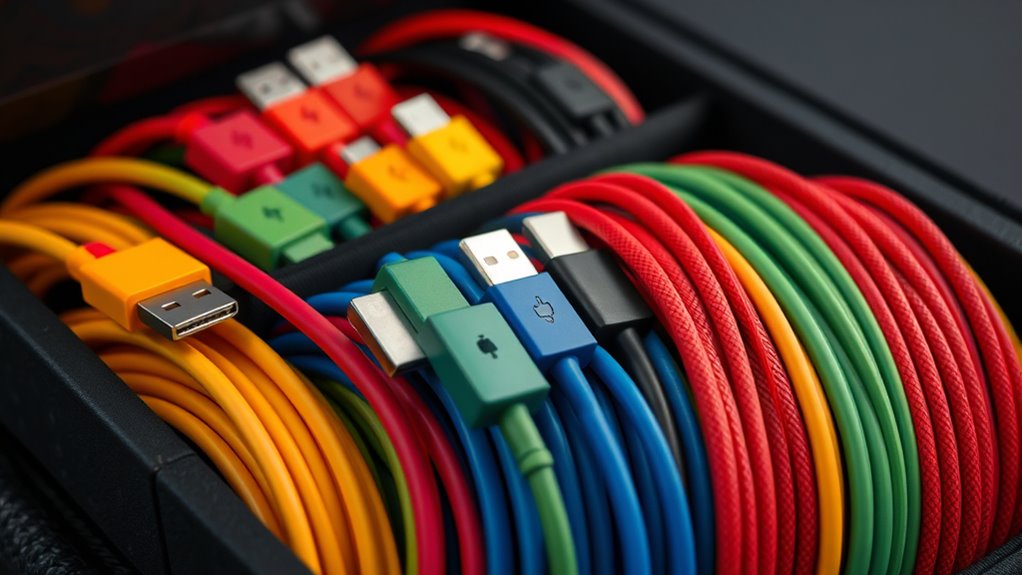
Packing cables neatly can save you time and frustration when setting up or breaking down your gear. When you’re on the go with portable tech, cluttered cables can turn into a tangled mess, making setup slow and risking damage to connectors or delicate wires. Proper cable organization isn’t just about keeping things tidy; it’s about protecting your gear and ensuring quick, hassle-free access when you need it most.
Neatly packed cables save time, prevent damage, and ensure quick access for your portable tech needs.
To start, invest in small, durable cable organizers or pouches designed for portable tech. These are compact and keep your cables separated, preventing them from tangling or crushing delicate connectors. When packing, coil each cable carefully using the over-under method—this reduces stress on the wires and keeps them from developing kinks or breakages. Once coiled, secure each cable with a Velcro strap or a reusable twist tie. This prevents unrolling during transit and maintains neatness.
Avoid stuffing cables haphazardly into your bag, because crushing connectors or bending cables sharply can cause internal damage. Instead, dedicate a specific pocket or compartment for your cables. If you’re carrying multiple cables, consider using color-coded or labeled pouches so you can quickly identify the one you need without rummaging through everything. This not only improves cable organization but also speeds up your setup process, especially when you’re rushing between locations or events.
Another tip for protecting your portable tech cables is to keep them away from heavy or sharp objects. Don’t throw your bag into the trunk or under a pile of gear without considering how the cables are arranged. Placing your organized cable pouch on top of lighter items can help prevent crushing or bending connectors. If your bag has mesh pockets, they’re perfect for storing cables separately from larger equipment, offering extra protection against pressure and minimizing the risk of damage.
When you arrive at your destination, unpacking becomes just as easy as packing. Because your cables are neatly organized, you’ll save time and avoid frustration. Plus, knowing your cables are stored properly reduces the chances of damaging connectors or internal wiring, prolonging the lifespan of your portable tech. Taking a few moments to implement effective cable organization techniques ensures your gear stays in top condition, ready for your next adventure. Well-organized cables also help prevent damage to connectors, which can be costly to repair or replace. In the long run, this simple habit keeps your setup quick, efficient, and safe, so you can focus on what really matters—your work, entertainment, or creativity.
Frequently Asked Questions
What Are the Best Types of Bags for Cable Protection?
The best bags for cable protection feature durable materials like rugged nylon or ballistic fabric, which resist wear and tear. Look for padded compartments to cushion your cables and prevent crushing connectors. A bag with reinforced corners and sturdy zippers adds extra protection, ensuring your cables stay safe during transport. Opt for a design with customizable compartments to organize your cables efficiently and keep everything secure, no matter how hectic your day gets.
How Do Temperature Changes Affect Cable Connectors?
Temperature changes can turn your cable connectors into a dance floor, causing thermal expansion that stresses and weakens them. When it gets hot, connectors expand, risking damage; in cold, they contract, risking disconnections. To protect connector durability, avoid exposing cables to extreme temperatures and store them in a controlled environment. This way, you’ll keep your connections solid and reliable, no matter the weather’s mood swings.
Can Cable Coatings Prevent Damage During Packing?
Yes, cable coatings can prevent damage during packing. Using protective cable insulation helps cushion connectors from impacts and pressure, boosting connector durability. When you wrap cables with proper coatings or sleeves, you reduce the risk of crushing or bending connectors, especially when packing tightly. This extra layer guarantees your cables stay intact and functional, making your packing more efficient and prolonging the lifespan of your equipment during transportation.
What Are Eco-Friendly Ways to Store Cables?
Imagine giving your cables a green hug—sustainable storage makes that possible. You can use biodegradable pouches to keep your cords organized without harming the environment. Reusable fabric wraps or eco-friendly cable organizers are great options, too. These choices reduce plastic waste and promote eco-conscious habits. By switching to biodegradable pouches and sustainable storage solutions, you actively protect the planet while keeping your cables tidy and accessible.
How Often Should I Replace Damaged Cables?
You should replace damaged cables as soon as you notice any fraying, exposed wires, or bent connectors. Typically, consider your cable lifespan and establish a replacement schedule, like every 1-2 years, depending on usage. Regularly inspecting your cables helps prevent failures and potential damage to your devices. Don’t ignore signs of wear; timely replacement ensures peak performance and safety.
Conclusion
Remember, a stitch in time saves nine. By packing your cables carefully, you prevent damage and keep them lasting longer. Wrap them gently, avoid crushing connectors, and use proper organizers. It’s a small step that makes a big difference in your tech life. Don’t wait until you’re frustrated with broken cables—be proactive and pack like a pro. Your gadgets will thank you, and you’ll save money and hassle down the road.