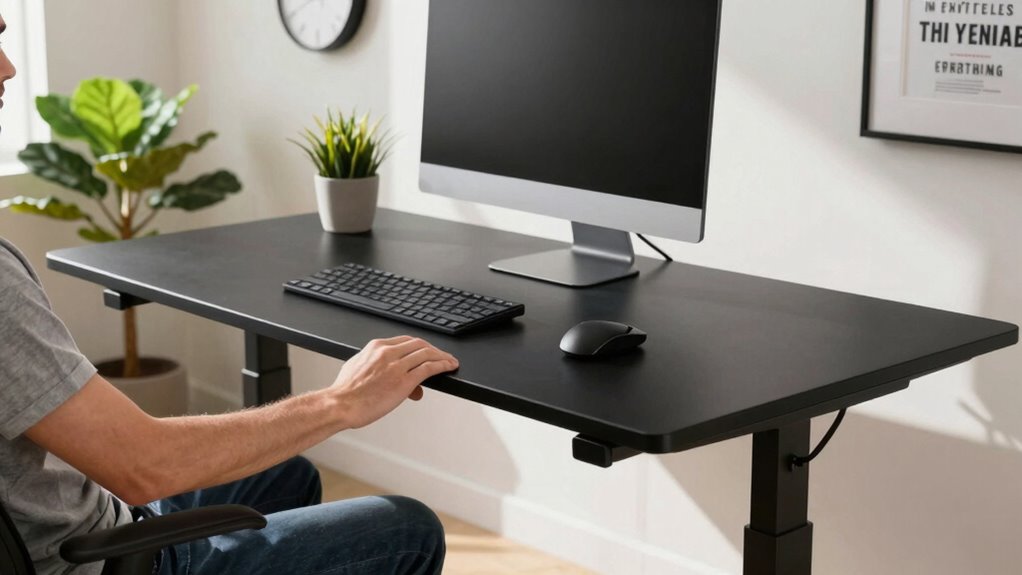

To avoid burnout, create a balanced sit-stand schedule that aligns with your energy levels and personal comfort. Start with short standing intervals, gradually increasing them while paying attention to your body’s signals. Incorporate movement breaks and ergonomic tools like cushioned mats and adjustable desks. Stay flexible by adjusting your routine based on how you feel throughout the day. Keep listening to your body, and you’ll find a sustainable rhythm that keeps you energized and comfortable.
Key Takeaways
- Gradually increase standing intervals to allow your body to adapt comfortably.
- Listen to body signals like fatigue or discomfort and adjust sit-stand ratios accordingly.
- Incorporate regular movement breaks and stretching to prevent stiffness and fatigue.
- Use ergonomic tools and supportive footwear to maintain comfort during longer standing periods.
- Personalize your schedule based on energy levels and task demands for sustainable, burnout-free routines.
Understanding the Benefits of a Balanced Sit-Stand Routine

A balanced sit-stand routine offers numerous health benefits that can improve your overall well-being. When you alternate between sitting and standing, you reduce the risk of developing health issues like cardiovascular disease, obesity, and muscle strain. This variation helps improve circulation, boosts energy levels, and reduces fatigue caused by prolonged sitting. Additionally, it encourages better posture, decreasing the likelihood of back and neck pain. By maintaining a consistent balance, you promote movement throughout your day, which supports your musculoskeletal health. A well-structured routine also enhances focus and productivity, making your work sessions more effective. Overall, integrating a balanced sit-stand schedule into your daily routine supports physical health, mental clarity, and long-term wellness, creating a sustainable approach to staying active during work hours.
Recognizing Your Body’s Signals and Limits

Pay attention to how your body feels as you switch between sitting and standing. If you notice discomfort or fatigue, honor those signals and adjust your schedule accordingly. Respecting your limits helps prevent burnout and keeps your routine sustainable.
Notice Physical Cues
Your body constantly sends signals that reveal how you’re really doing, so staying alert to these cues is essential for avoiding burnout. When you notice subtle changes, like tension or fatigue, you can adjust before exhaustion sets in. Pay attention to these physical cues:
- Tight or sore muscles, especially in your neck, shoulders, or back
- Feeling unusually tired or sluggish
- A sense of restlessness or inability to focus
- Headaches or eye strain from prolonged screen time
Recognizing these signs early helps you modify your sitting or standing patterns. If you notice any of these cues, take a break, stretch, or shift your position. Listening to your body’s signals keeps you balanced and prevents overexertion.
Respect Personal Boundaries
Understanding and respecting your body’s signals is essential for maintaining a healthy work routine. When you listen to what your body tells you, you can set boundaries that prevent burnout. If you start feeling tense, sore, or fatigued, don’t push through without a break. Instead, honor these signals by adjusting your schedule—sit down, stretch, or take a brief walk. Remember, your limits are unique; respecting them helps avoid overexertion. It’s okay to say no to extra tasks or to pause when needed. Setting clear boundaries around your work and break times keeps you energized and focused. By recognizing and honoring your body’s cues, you create a sustainable rhythm that supports your well-being and productivity.
Crafting a Personalized Schedule That Fits Your Day
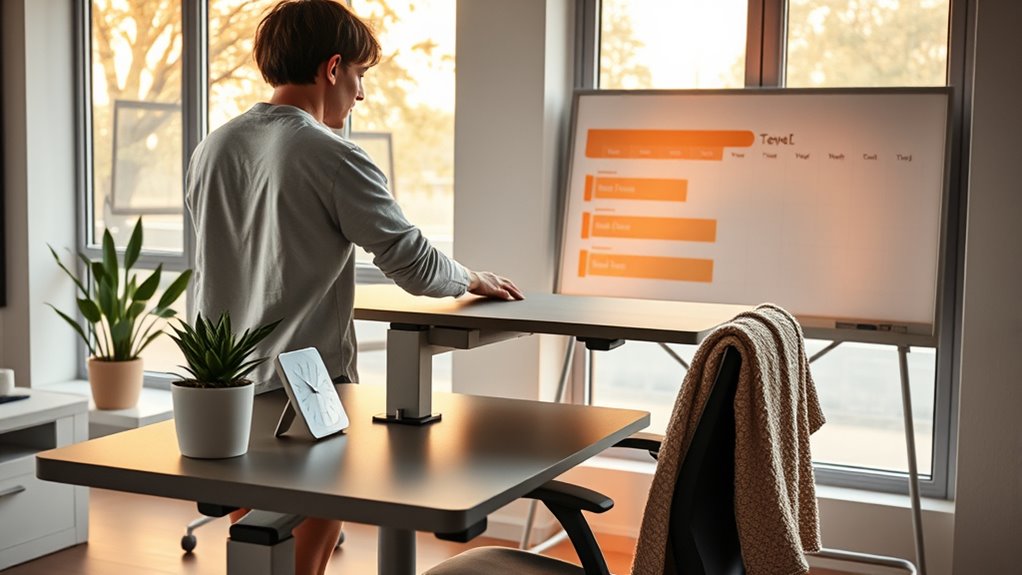
Creating a personalized sit-stand schedule begins with evaluating your daily routines and energy patterns. Pay attention to when you feel most alert and when fatigue hits. This awareness helps you identify ideal times to stand or sit. To tailor your schedule effectively:
- Identify your peak energy periods during the day.
- Determine tasks that require more focus, fitting them into standing intervals.
- Plan breaks to prevent fatigue and maintain productivity.
- Adjust standing durations based on your comfort and workload.
Gradually Increasing Standing Time to Prevent Fatigue

To prevent fatigue, start by increasing your standing time gradually, focusing on short intervals first. Make sure to include regular rest breaks to give your muscles a chance to recover. Keep an eye on how you feel and adjust your schedule if you notice signs of tiredness.
Start With Short Intervals
Starting with short standing intervals is essential to prevent fatigue and build endurance gradually. Jumping into long periods of standing can leave you sore and discouraged. Instead, begin with manageable durations to allow your body to adapt comfortably.
Here’s how to get started:
- Set a timer for 5–10 minutes of standing, then sit for an equal or longer period.
- Increase your standing interval by a minute or two every few days.
- Pay attention to how you feel; stop if you experience discomfort.
- Use supportive footwear and a cushioned mat to reduce strain during these short stands.
Incorporate Rest Breaks
Incorporating regular rest breaks is key to gradually increasing your standing time without risking fatigue. Taking short, scheduled breaks helps your muscles recover and prevents strain. During these breaks, sit down, stretch, or walk around to boost circulation and reduce stiffness. Consistency is essential—don’t skip breaks, even if you feel fine. As your stamina improves, you can extend your standing periods slightly, but always listen to your body. Rest breaks also give you mental clarity and help you stay focused throughout the day. Using timers or alarms can remind you when to sit or stand. Remember, the goal is a manageable, sustainable routine that builds endurance without overtaxing your body. Proper rest ensures you stay comfortable and energized over time.
Monitor Fatigue Levels
As you build your stamina with regular rest breaks, keeping an eye on how your body responds is essential. Monitoring fatigue levels helps you adjust your schedule before exhaustion sets in. Pay attention to signals like muscle soreness, joint stiffness, or decreased focus—these indicate you may need to sit or take a break. To effectively gauge your fatigue, consider these key points:
- Track how long you can stand comfortably without discomfort
- Notice when your posture begins to decline
- Observe if your energy dips or concentration wavers
- Recognize physical signs like tingling or heaviness in your legs
Incorporating Movement Breaks and Stretching

To prevent burnout and boost productivity, incorporating movement breaks and stretching into your daily routine is essential. Schedule short breaks every 30 to 60 minutes to stand, walk, or stretch. Simple stretches, like neck rolls, shoulder shrugs, and leg lifts, can reduce muscle tension and improve circulation. Moving regularly helps prevent stiffness and keeps your energy levels stable throughout the day. Avoid staying in the same position for too long, as this can cause discomfort and fatigue. Even a quick two-minute stretch or a brief walk around your workspace can make a significant difference. Consistently integrating these small moments of movement helps maintain focus, reduces strain, and supports overall well-being during long sitting or standing periods.
Using Tools and Ergonomics to Support Comfort

Using the right tools and ergonomic setups can considerably enhance your comfort and reduce strain during long work hours. Proper equipment helps maintain good posture and prevents discomfort. Consider these essentials:
- An adjustable sit-stand desk that allows seamless shifts between sitting and standing.
- An ergonomic chair with lumbar support to keep your back aligned.
- A keyboard and mouse positioned at elbow height to reduce wrist strain.
- Anti-fatigue mats to provide cushioning and support during standing periods.
Adjusting Your Routine Based on How You Feel

Listening to your body is key to maintaining comfort and preventing fatigue. Pay attention to signals like soreness, stiffness, or tiredness, and adjust your schedule accordingly. If you notice discomfort after sitting for a while, switch to standing sooner or take a short walk. Conversely, if standing causes strain, sit down longer or try gentle stretches. Flexibility is essential; don’t stick rigidly to a set routine if it doesn’t feel right. Regularly check in with how you feel throughout the day and modify your standing and sitting intervals as needed. This approach helps you stay comfortable, maintain productivity, and avoid burnout. Your body’s feedback guides you to create a personalized routine that balances activity and rest seamlessly.
Frequently Asked Questions
How Can I Stay Motivated to Stick With My Sit-Stand Schedule?
To stay motivated, set clear goals like improving posture or boosting energy. Track your progress and celebrate small victories to stay encouraged. Mix up your routine by changing stand and sit intervals, and use reminders or alarms to stay on schedule. Remember, consistency is key, so focus on how this habit benefits your health and productivity. Keep reminding yourself why you started, and gradually it’ll become second nature.
What Are Common Mistakes to Avoid When Starting a Sit-Stand Routine?
You should avoid rushing into your sit-stand routine, ignoring your body’s signals, and neglecting proper setup. Don’t skip warming up or stretching, as these prevent discomfort and injury. Steer clear of inconsistent timing, ignoring your comfort level, and overdoing it early on. Instead, start gradually, listen to your body, and adjust your schedule as needed. Consistency, mindfulness, and patience are key to a sustainable, healthy routine.
How Do I Manage Distractions While Alternating Between Sitting and Standing?
To manage distractions while alternating between sitting and standing, set clear boundaries for your workspace. Use noise-canceling headphones or calming background music to block out interruptions. Keep your workspace organized, so you’re not searching for things. Also, communicate your schedule to colleagues to minimize unexpected distractions. Take short breaks to reset your focus, and practice mindfulness to stay present, making shifts smoother and more productive.
Can a Sit-Stand Schedule Improve My Overall Productivity?
A sit-stand schedule can definitely boost your productivity by reducing fatigue and increasing alertness. When you switch positions regularly, you keep your energy levels steady, helping you stay focused longer. Visualize your workday as a series of purposeful movements rather than static periods. This approach keeps your mind engaged and prevents burnout, making it easier to complete tasks efficiently while maintaining comfort and motivation throughout the day.
What Should I Do if I Experience Persistent Discomfort or Pain?
If you experience persistent discomfort or pain, stop using the sit-stand desk and consult a healthcare professional. Adjust your desk height to guarantee proper ergonomics, and take regular breaks to stretch and move. Consider adding supportive accessories like an anti-fatigue mat or ergonomic cushion. Pay attention to your body signals and don’t ignore pain — addressing issues early can prevent long-term problems and help you stay comfortable and productive.
Conclusion
By finding the right balance in your sit-stand routine, you’ll avoid burning out and keep your energy up all day. Listen to your body’s signals and adjust as needed—after all, you don’t want to push yourself to the breaking point. Remember, a little patience goes a long way; Rome wasn’t built in a day. With steady steps and mindful moves, you’ll create a setup that works for you and keeps you feeling your best.