
You probably don’t need a 5K display for office tasks like emails, spreadsheets, or browsing, as most 4K monitors already deliver sharp, clear images suitable for daily work. Higher resolution doesn’t boost productivity or performance for typical tasks, and it can be more expensive with increased power consumption. If you’re involved in graphic design or visual projects, 5K might offer some advantages. To see if 5K is worth it for your needs, keep exploring the details ahead.

Get comfort and recovery gear delivered free — and shop member deals
- Fast, free delivery on millions of items
- Access to Prime Big Deal Days deals on October 6–7
- Prime Video, Amazon Music and more included
Key Takeaways
- Most office tasks like emails and spreadsheets do not benefit from 5K resolution; 4K is typically sufficient.
- Higher resolutions increase costs and power consumption without improving productivity for standard office activities.
- 5K displays are more advantageous for professional graphic design or visual editing, not everyday office work.
- Compatibility issues and hardware requirements may limit the practical benefits of 5K monitors for typical office setups.
- Lower resolution monitors offer a better balance of affordability, performance, and suitability for regular office tasks.
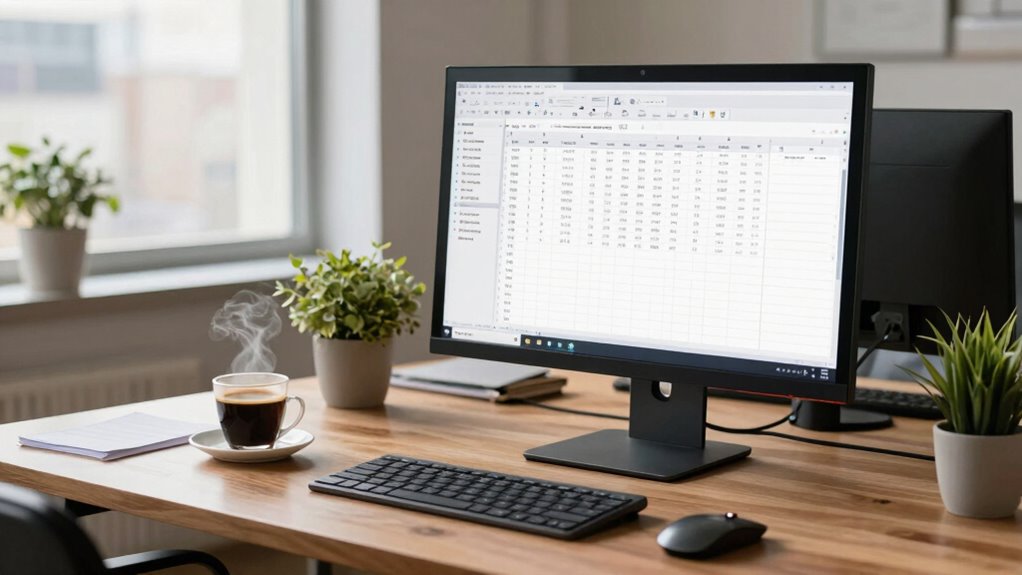
Is a 5K display really necessary for everyday office tasks? Probably not, especially if your work primarily involves emails, spreadsheets, document editing, or browsing the web. These activities don’t demand such high resolution, and most screens in the 4K range already offer sharp, clear images that are more than sufficient for daily use. Pushing for a 5K display might seem impressive, but it often isn’t justified unless you have specific needs that require ultra-high detail. Additionally, many standard office applications are optimized for lower resolutions, making a 5K screen unnecessary for most users. When it comes to gaming performance, a 5K monitor isn’t typically a priority for office workers. Gaming performance is more about refresh rates and graphics card compatibility than raw resolution. While a 5K screen might look stunning for high-end gaming, it can also demand more from your GPU, possibly leading to decreased performance on lower-end systems. For regular office work, that extra resolution doesn’t translate into better productivity. Instead, it could mean higher costs and more power consumption without tangible benefits. Graphic design is a different story. If your job involves detailed photo editing, complex illustrations, or professional visual projects, then a 5K display can be a game-changer. The increased pixel density allows you to see finer details, offering more accurate color representation and sharper images. This level of clarity can improve your workflow by reducing the need to zoom in and out constantly or switch between multiple screens. Moreover, the availability of high-resolution content is increasing, making 5K displays more appealing for certain specialized tasks. However, you should consider whether your existing hardware and software support such high resolutions effectively. Not all applications are optimized for 5K displays, and some may require additional calibration or adjustments to deliver the best results. It’s also crucial to ensure your graphics hardware can handle high-resolution displays smoothly, especially when working with demanding visual content. For most typical office tasks, a 4K monitor offers a perfect balance of clarity, affordability, and compatibility. It provides enough resolution to make multitasking smoother, with plenty of screen real estate for multiple windows, without the need for the expensive hardware upgrades that come with 5K displays. If you’re a professional graphic designer or involved in detailed visual work, investing in a 5K monitor might be worthwhile. But if you’re simply managing spreadsheets, writing reports, or browsing the internet, a 5K setup is overkill and unlikely to improve your productivity or experience significantly. Ultimately, the decision hinges on your specific needs and whether your work benefits from ultra-high resolution or if standard 4K or even Full HD screens serve you just fine.
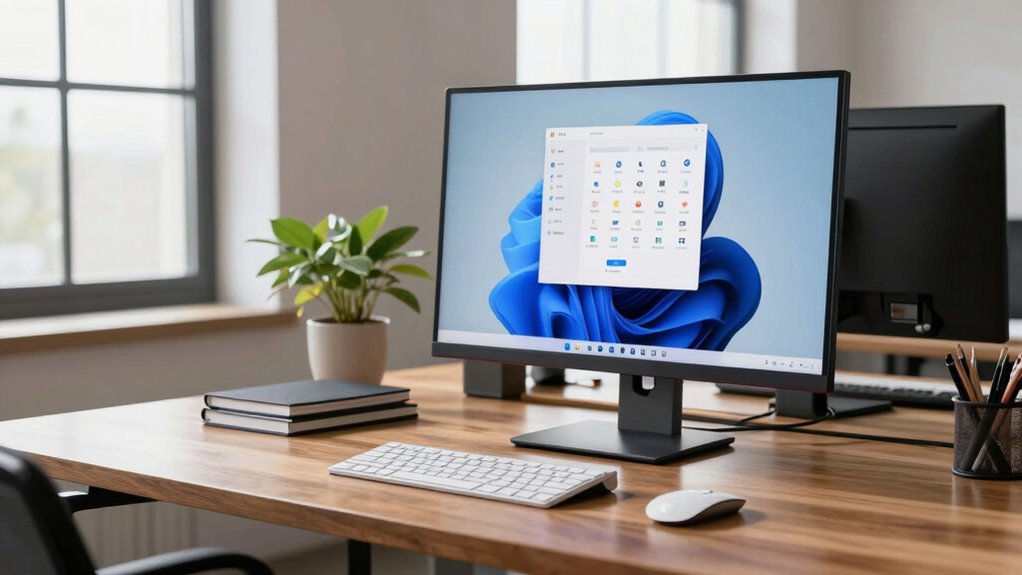
4K computer monitor for office work
As an affiliate, we earn on qualifying purchases.
As an affiliate, we earn on qualifying purchases.
Frequently Asked Questions
Can a 4K Monitor Suffice for Professional Office Tasks?
A 4K monitor can easily suffice for professional office tasks. It offers sharp image quality, which aids in tasks like document editing and data analysis. While it may not excel in color accuracy or high refresh rates like specialized monitors, for most office work, it balances clarity and performance. If your tasks involve detailed design or color grading, consider a monitor with better color accuracy, but for general productivity, 4K is more than enough.
What Are the Cost Differences Between 4K and 5K Monitors?
The cost difference between 4K and 5K monitors can be significant, with 5K models often costing 1.5 to 2 times more. You’ll find that 5K monitors tend to have better ergonomic design and superior color accuracy, which are essential for detailed work. However, if your tasks don’t demand ultra-high resolution, a 4K monitor offers excellent performance at a more affordable price, balancing ergonomics and color fidelity effectively.
How Does Screen Size Impact Productivity in Office Work?
Screen size is like a window to your work, directly impacting productivity. Larger screens let you see more without constant scrolling, boosting efficiency. When choosing size, consider color accuracy and refresh rate—key for clear visuals and smooth updates. A bigger monitor with high color accuracy helps you multitask better and reduces eye strain, making your work more comfortable. Just guarantee your hardware supports the size and specs for peak performance.
Are There Any Health Benefits to Higher Resolution Screens?
Higher resolution screens offer notable health benefits, including improved ergonomics and eye strain reduction. With clearer images and sharper text, you won’t need to squint or tilt your head as much, which helps prevent neck and eye discomfort. These screens allow you to work more comfortably for longer periods, reducing fatigue and enhancing overall productivity. Investing in higher resolution displays can make your workspace healthier and more efficient.
Is 5K Necessary for Multitasking and Multiple Window Management?
Absolutely, 5K isn’t necessary for multitasking and window management. You can efficiently manage multiple windows on a 4K display, which offers sharp visuals and sufficient workspace. While 5K provides enhanced color accuracy and crisp clarity, it doesn’t markedly boost gaming performance or productivity for office tasks. Focus on balancing resolution with your device’s capabilities, ensuring smooth, seamless multitasking without overspending on ultra-high resolutions.
professional graphic design 5K monitor
As an affiliate, we earn on qualifying purchases.
As an affiliate, we earn on qualifying purchases.
Conclusion
So, do you really need that shiny 5K monitor for your office tasks? Honestly, unless you’re into high-res graphics or video editing, a good 1080p or 1440p display will do just fine. Remember, it’s not about having the latest gizmo, but about working smarter, not harder. Don’t be a modern-day Don Quixote chasing after the perfect screen—sometimes, a trusty old setup gets the job done just as well!
affordable 4K display for productivity
As an affiliate, we earn on qualifying purchases.
As an affiliate, we earn on qualifying purchases.
high-resolution monitor for photo editing
As an affiliate, we earn on qualifying purchases.
As an affiliate, we earn on qualifying purchases.
Fall Picks
fall essentials
As an affiliate, we earn on qualifying purchases.