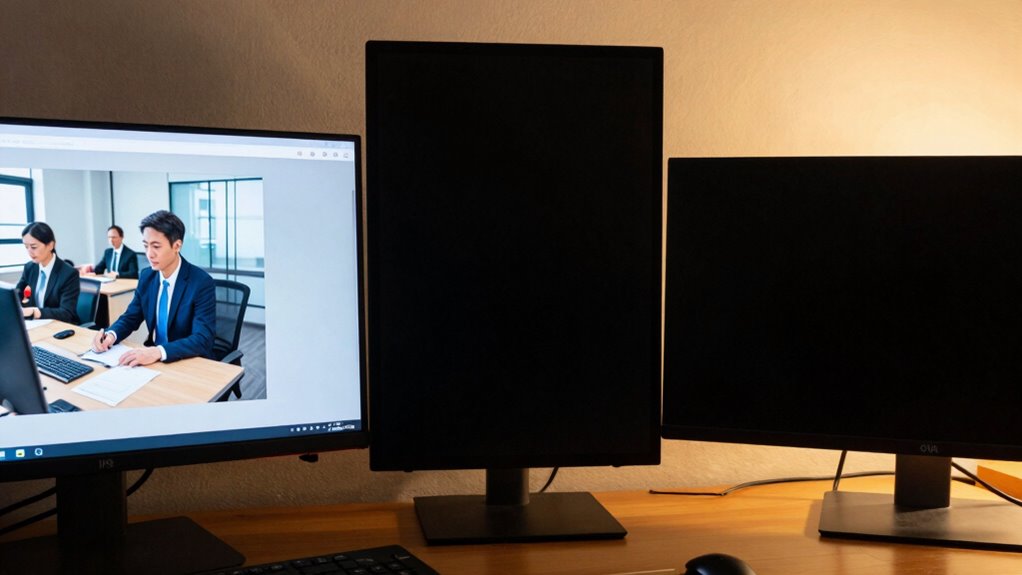

If you’re choosing a display for office work, understanding the differences helps you pick the best. IPS screens offer accurate colors and wide angles, reducing eye strain during long tasks. VA panels provide deep blacks and high contrast, making details pop. OLED displays deliver vibrant visuals, true blacks, and fast response times, ideal for multimedia or detailed work. To discover which technology suits your needs best, explore the key features further and find out more.

Get comfort and recovery gear delivered free with Prime
- Fast, free delivery on millions of items
- Prime Video, Amazon Music and more included
- Member-only deals all year
Key Takeaways
- IPS panels offer consistent, vibrant colors and wide viewing angles, reducing eye strain during long office sessions.
- VA screens provide higher contrast ratios and deeper blacks, improving document clarity and visual comfort.
- OLED displays deliver true blacks, high contrast, and sharp imagery, enhancing multimedia and detailed work.
- Response times are fastest on OLEDs, minimizing motion blur; IPS panels have slightly slower response times.
- For office use, IPS is ideal for color accuracy and viewing comfort, while OLED excels in contrast and visual immersion.
As an affiliate, we earn on qualifying purchases.
Understanding Display Technology Fundamentals
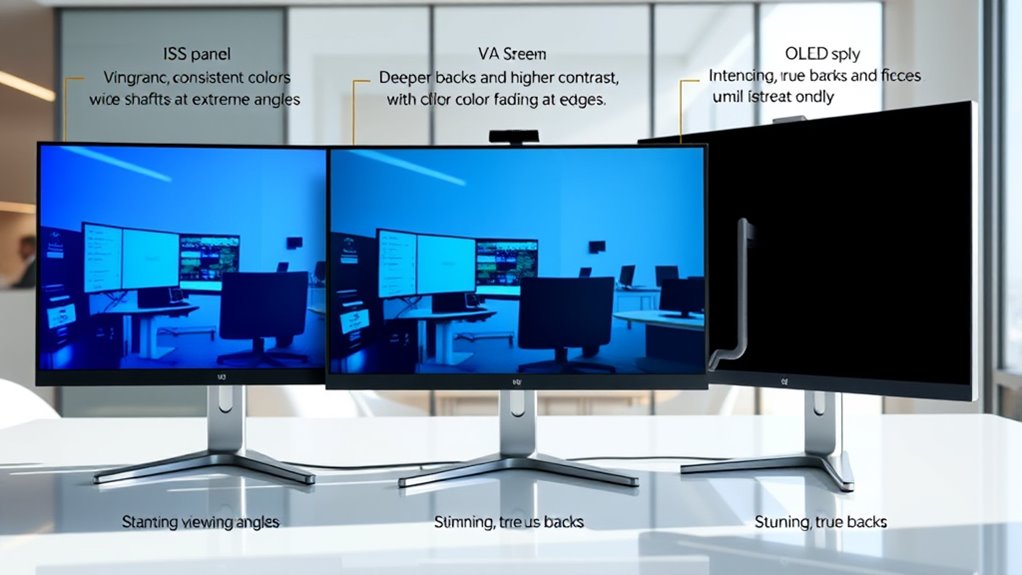
Understanding display technology fundamentals is essential to grasp the differences between IPS, VA, and OLED screens. Each technology uses a unique method to produce images, affecting performance in various settings. IPS panels use liquid crystals aligned for wide viewing angles and consistent color, making them ideal for tasks requiring color accuracy. VA panels employ liquid crystals that produce deeper blacks and high contrast ratios, enhancing visual depth. OLED screens consist of organic compounds that emit light individually, allowing for true blacks and vibrant colors. Unlike LCDs, OLEDs don’t rely on backlights, resulting in faster response times and thinner displays. Knowing these basics helps you understand why each panel type suits different uses, from office work to multimedia consumption. This foundation is key to making informed display choices.
As an affiliate, we earn on qualifying purchases.
Color Accuracy and Visual Quality Differences
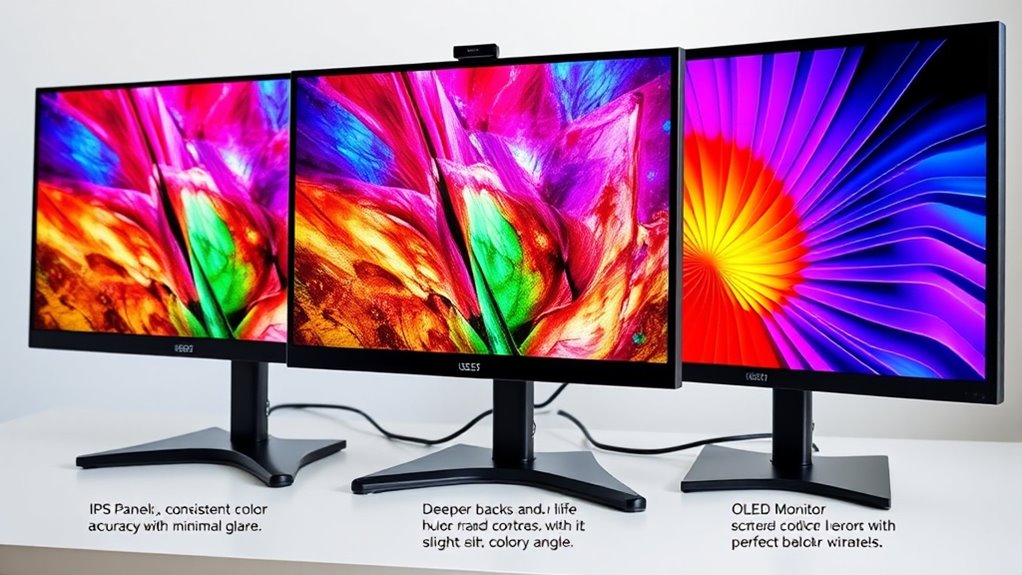
When comparing IPS, VA, and OLED screens, color accuracy and visual quality stand out as key differences that influence your viewing experience. IPS panels deliver consistent, vibrant colors with wide viewing angles, making them ideal for tasks requiring color precision. VA screens tend to produce richer colors but may have slight shifts at extreme angles, which can affect visual consistency. OLED displays excel in delivering deep, true blacks and vibrant hues due to their self-emissive pixels, creating a more immersive experience. They also offer superior contrast and sharper images. However, OLEDs can sometimes exhibit color shifting over time or with prolonged use. Overall, if color accuracy and visual clarity are priorities, IPS and OLED screens generally outperform VA, but each has strengths suited to different work needs.
As an affiliate, we earn on qualifying purchases.
Contrast Ratios and Black Levels
Contrast ratios and black levels are essential factors that determine a display’s ability to produce deep, rich images. Higher contrast ratios mean you’ll see more distinction between dark and bright areas, enhancing image depth. OLED screens excel here, offering near-infinite contrast ratios and absolute blacks, making dark scenes look more realistic. VA panels also provide better black levels than IPS, delivering deeper blacks and improved contrast, ideal for detailed office visuals. IPS panels typically have lower contrast ratios, resulting in grayer blacks and less punch in dark scenes or shadows. If you work with multimedia or need vivid visuals, OLED’s superior contrast gives a significant advantage. However, for everyday office tasks, VA panels strike a good balance between contrast and affordability.
As an affiliate, we earn on qualifying purchases.
Viewing Angles and Response Times
Viewing angles and response times are vital factors that affect your experience with different display types. With IPS panels, you benefit from wide viewing angles, so colors and details stay consistent even when you look from the side. VA panels have narrower angles, causing color shifts and contrast loss if you’re not directly in front of the screen. OLED displays also offer excellent viewing angles, maintaining color accuracy across a broad range of viewing positions. Response times are essential for smooth visuals; IPS panels typically have slower response times, which can lead to motion blur. VA panels are faster but may still lag behind OLED, which boasts near-instant response times, reducing ghosting and motion artifacts. For office work, these differences influence clarity and comfort during prolonged use.
Practical Implications for Office Productivity
Clear and consistent visuals are essential for maintaining focus and productivity during long office hours. An IPS panel’s accurate colors and wide viewing angles reduce eye strain, helping you stay alert and comfortable. VA screens offer high contrast, making it easier to read documents and view detailed images without flicker or color distortion. OLED displays provide vibrant visuals and deep blacks, which can enhance your overall viewing experience. Choosing the right panel affects your ability to work efficiently, especially when multitasking or reviewing content for extended periods. Reduced eye fatigue means less downtime and more productive hours. By selecting a display suited to your office tasks, you ensure clearer visuals, minimize distractions, and maintain high levels of focus throughout your workday.
Frequently Asked Questions
Which Display Type Is Best for Long Hours of Office Use?
For long hours of office use, an IPS display is your best choice. It offers wider viewing angles, consistent color accuracy, and less color shift, helping you stay comfortable and productive throughout the day. Its reliable image quality reduces eye strain, even during extended work sessions. While VA and OLED screens have their advantages, IPS panels provide the balance of clarity and comfort you need for all-day office tasks.
How Do IPS, VA, and OLED Screens Compare in Energy Efficiency?
You’ll find that VA screens generally consume less energy than IPS displays, thanks to their better black levels and contrast. OLED screens can be more energy-efficient when displaying darker images because they turn off pixels completely, saving power. However, bright scenes may drain OLED batteries faster. IPS panels usually use more power due to their backlighting but provide consistent color accuracy, making them a balanced choice for office work.
Are There Significant Cost Differences Among IPS, VA, and OLED Monitors?
You’ll find that IPS monitors tend to be more budget-friendly, making them great for office setups without breaking the bank. VA screens usually fall in the mid-range, offering a good balance of cost and performance. OLED displays, while delivering stunning visuals, often come with a higher price tag due to their advanced technology. So, your choice depends on your budget and how much you value display quality.
Do OLED Displays Have Issues With Burn-In During Office Tasks?
Yes, OLED displays can experience burn-in during office tasks, especially if you display static images or icons for extended periods. This issue occurs because pixels degrade unevenly over time. However, with regular use and built-in screen protections like screen savers, you can minimize burn-in risks. If you’re concerned, consider using monitors with OLED technology for vibrant colors but be mindful of static content to preserve screen longevity.
How Does Each Technology Impact Eye Strain Over Extended Work Periods?
OLED screens can reduce eye strain during long work sessions because they offer high contrast and deep blacks, making text easier to read. IPS displays provide consistent color and wide viewing angles, which can minimize eye fatigue. VA panels often have higher contrast than IPS, but slower response times might cause slight eye strain. Overall, choosing a display with flicker-free backlighting and adjustable brightness helps prevent eye fatigue regardless of the technology.
Conclusion
Choosing between IPS, VA, and OLED displays is like selecting the right lens for your workspace. IPS offers sharp clarity for detailed tasks, VA provides deep contrast for rich visuals, and OLED delivers vibrant colors with perfect blacks. Imagine your screen as a window — each technology shapes what you see through it. By understanding these differences, you can pick the ideal display, turning your office into a space where productivity and visual comfort come into focus effortlessly.
Fall Picks
fall essentials
As an affiliate, we earn on qualifying purchases.