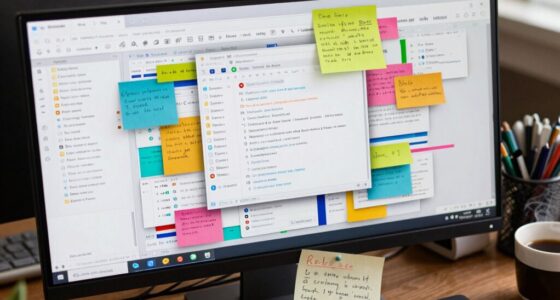
To fix notification fatigue in just 15 minutes, start by turning off non-essential alerts on your devices. Set specific times to check messages instead of reacting immediately. Use ‘Do Not Disturb’ mode during work or focused tasks to block interruptions. These simple steps help reduce mental clutter, boost your focus, and improve well-being. If you stay consistent with these rules, you’ll find it easier to regain control and enjoy a calmer digital life—discover how to maximize your time and peace.
Key Takeaways
- Turn off non-essential app notifications to reduce constant alerts and digital clutter.
- Schedule specific times daily to review notifications, preventing impulsive checking.
- Enable ‘Do Not Disturb’ mode during work or focus periods to minimize interruptions.
- Adjust app settings in 15 minutes to disable unnecessary alerts and prioritize important ones.
- Practice single-tasking by creating designated notification times for improved mental clarity.

In today’s digital world, constant notifications can quickly become overwhelming, leading to what’s known as notification fatigue. You might find yourself checking your phone dozens of times a day, feeling anxious or distracted without even realizing it. This relentless stream of alerts can chip away at your mental health, leaving you stressed, overwhelmed, and unable to focus. To combat this, embracing digital minimalism can be a game-changer. By intentionally reducing the number of notifications you receive, you regain control over your attention and mental well-being. It’s about creating space for meaningful activities and connection without the constant interruption of pings and alerts.
One of the simplest ways to start fixing notification fatigue is to turn off non-essential alerts. Take a quick 15-minute window to go through your app settings and disable notifications from apps that don’t require immediate attention. Social media, news apps, and even some messaging platforms can wait. This small step minimizes distractions, helping you focus on tasks that matter most. As you do this, you’ll notice a boost in your mental health because you’re no longer constantly reacting to every beep or vibration. Instead, you’re choosing when and how to engage with notifications, which fosters a sense of control and reduces anxiety.
Another effective rule is to designate specific times during the day for checking notifications. Instead of reacting impulsively whenever your phone buzzes, set aside 15-minute blocks, perhaps in the morning, lunch, and evening. During these times, you can review messages, emails, and social updates intentionally, rather than allowing notifications to dictate your schedule. This habit not only helps you stay present in the moment but also reinforces digital minimalism, as you limit your exposure to digital clutter. Additionally, understanding how contrast ratio affects image quality can help you choose the right projector or display to create a more immersive environment. Over time, you’ll find that your mental health improves because you’re reducing the constant mental load caused by interruptions.
Finally, consider adopting the rule of ‘single-tasking’ by turning off all notifications while working or engaging in focused activities. Use ‘Do Not Disturb’ mode or airplane mode if necessary. This reinforces a healthy boundary between your digital life and mental well-being. Remember, your mental health benefits immensely from these small, deliberate actions. They help you reclaim your attention, avoid burnout, and foster a more peaceful relationship with technology. In just 15 minutes, you can implement these rules, and the positive impact on your mental health and digital minimalism will be well worth it.
Top picks for "notification fatigue minut"
Open Amazon search results for this keyword.
As an affiliate, we earn on qualifying purchases.
Frequently Asked Questions
Can Notification Fatigue Affect Mental Health Long-Term?
Yes, notification fatigue can affect your mental health long-term. Constant interruptions and the pressure to stay updated increase stress and anxiety, leading to burnout over time. This ongoing mental strain can impair your focus, mood, and overall well-being. If you don’t manage notification overload, it could result in lasting negative effects on your mental health, making it vital to set boundaries and prioritize your mental wellness daily.
What Tools Help Manage Notification Overload Effectively?
You can manage notification overload effectively by using tools like focus enhancement apps that block or silence notifications during work periods. A digital detox, where you disconnect from devices for a set time, also helps reset your focus. Enable Do Not Disturb modes on your devices and customize notification settings to only receive essential alerts. These strategies help reduce distraction and keep your mental clarity sharp, preventing long-term fatigue.
How Does Notification Fatigue Impact Productivity Levels?
Notification fatigue can markedly reduce your productivity by distracting you and breaking your focus. It hampers your ability to concentrate on tasks, leading to decreased efficiency and increased stress. To combat this, try a digital detox by turning off non-essential notifications, which enhances focus and helps you regain control. Implementing these strategies boosts your focus enhancement and keeps you productive throughout the day, preventing burnout caused by constant interruptions.
Are There Specific Apps Designed to Reduce Notification Stress?
Yes, there are apps designed to reduce notification stress, helping you manage digital detox and stay focused. Apps like Freedom, Offtime, and Moment block distracting notifications and apps, allowing you to regain control over your digital environment. By using app blockers, you can limit interruptions, improve productivity, and reduce notification fatigue. Incorporate these tools into your routine to create a healthier balance between work and relaxation.
Can Adjusting Device Settings Prevent Notification Fatigue?
Think of your device as a garden—adjusting its settings is like pruning unnecessary branches. Yes, tweaking personalization settings and notification frequency can prevent notification fatigue. By customizing alerts, you control which messages bloom and which get cut back. This active management guarantees you stay focused on what matters, reducing stress and overwhelm. So, take a few minutes to fine-tune your device—you’ll enjoy a calmer, more balanced digital life.
Conclusion
Think of your notifications as a constant drumbeat. If you don’t set boundaries, it’ll drown out your focus and peace. But with these simple rules, you can silence the noise and regain control, turning your notifications into a well-tuned symphony rather than chaos. Remember, you’re the conductor of your digital life. By fixing notification fatigue, you’ll find clarity and calm amid the noise—so you can focus on what truly matters.