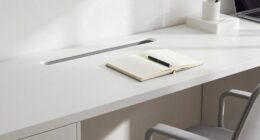
In poorly designed spaces, switching between tasks feels more exhausting because physical discomfort from bad furniture and monitor placement drains your energy. Visual clutter and distractions force your brain to work harder to focus, which slows your progression. Without an organized environment, your mind struggles to reorient quickly, leading to frustration. Spending extra mental effort reduces stamina and focus over time. Keep exploring to discover how better workspace design can ease these challenges and boost your productivity.

Get comfort and recovery gear delivered free — and shop member deals
- Fast, free delivery on millions of items
- Access to Prime Big Deal Days deals on October 6–7
- Prime Video, Amazon Music and more included
Key Takeaways
- Clutter and disorganization increase visual noise, making it harder to quickly refocus during task switches.
- Poor ergonomic setup causes physical discomfort, leading to increased fatigue and reduced mental agility.
- Unoptimized environments require extra mental effort to reorient, slowing down transitions between tasks.
- Lack of logical workspace arrangement hampers cognitive flexibility and delays mental shifts.
- Environmental distractions divert attention, increasing cognitive load and making task switching more stressful.

Switching between tasks in a poorly designed space can feel more frustrating and draining than it needs to be. When your environment isn’t optimized for productivity, every shift from one activity to another becomes an unnecessary hurdle. Without the right setup, your brain has to work harder to reorient itself, which increases mental fatigue and decreases focus. One key factor is the absence of ergonomic furniture. If your desk and chair aren’t adjustable or supportive, you’ll find yourself uncomfortable, distracting you from your tasks. An uncomfortable seat or poorly positioned monitor can cause physical strain, making it harder to switch gears smoothly. Over time, this discomfort chips away at your stamina, making task transitions feel more burdensome.
Poor workspace design amplifies frustration and fatigue, making task switching harder and draining your focus over time.
Visual clutter plays a big role too. When your workspace is cluttered or disorganized, your eyes are constantly darting around, trying to find what you need. Instead of a clean, focused environment, you’re met with chaos that pulls your attention in multiple directions. This scattering of focus hampers your ability to switch tasks efficiently. Every time you try to move from checking emails to working on a report, the clutter demands mental bandwidth, making it harder to concentrate. It’s like your brain has to filter out distractions before it can fully engage with the new task. The more visual noise there is, the more energy you expend just trying to get back on track. Additionally, cognitive flexibility is significantly affected by these environmental factors, influencing how easily you can adapt between different activities. Creating a productive environment that minimizes distractions can help your brain conserve energy for task switching.
Your environment’s design impacts your cognitive flexibility. Ergonomic furniture isn’t just about comfort; it’s about creating a seamless transition between tasks. When your workstation supports good posture and is arranged logically, your mind can shift gears faster. Conversely, a poorly arranged space forces you to spend extra seconds figuring out where things are or adjusting your posture. This delay adds up, making task switching feel more sluggish and frustrating. Similarly, visual clutter can hinder your ability to quickly refocus and adapt to new tasks. Eliminating visual clutter helps your brain focus on what’s important. When everything is in its place, you don’t waste precious mental resources on unnecessary visual processing, allowing you to switch tasks more effortlessly. Creating an environment that reduces distractions can significantly improve your mental clarity and productivity.
In essence, a well-designed workspace with ergonomic furniture and minimal visual clutter isn’t just about aesthetics—it’s about supporting your mental flow. When your environment is optimized, switching between tasks becomes smoother, less stressful, and ultimately more productive. You’ll find yourself able to adapt quickly, maintain focus longer, and feel less drained at the end of the day. Without these elements, every shift feels like a chore, which can exacerbate mental fatigue. Creating a space that promotes ease of transition is one of the most effective ways to combat the negative effects of poor design on your productivity.
ergonomic adjustable office chair
As an affiliate, we earn on qualifying purchases.
As an affiliate, we earn on qualifying purchases.
Frequently Asked Questions
How Does Lighting Affect Task Switching in Different Spaces?
Lighting considerably impacts your ability to shift tasks efficiently. Bright, well-placed ambient illumination reduces eye strain and helps your focus, while glare reduction minimizes visual disruptions. In well-designed spaces, proper lighting creates a comfortable environment, making it easier for you to move between tasks smoothly. Poor lighting, on the other hand, can cause fatigue and frustration, making switching tasks feel more difficult and draining your productivity.
Can Personal Organization Tools Improve Focus in Poorly Designed Areas?
Personal organization tools can definitely help improve your focus in poorly designed areas. By establishing personal routines, you create a structured environment that minimizes distractions. Using digital tools like task managers or noise blockers helps combat digital distractions, keeping you on track. These tools allow you to prioritize tasks, maintain consistency, and reduce the mental overload caused by a cluttered or chaotic space, making task switching more manageable.
What Role Does Noise Play in Making Task Switching Harder?
Noise acts like an unpredictable fog, making it harder to switch tasks smoothly. Acoustic distractions from loud or sudden sounds pull your focus away, forcing your brain to reset. Sound masking can be a helpful shield, reducing the impact of background noise. When noise levels are high, your mind struggles to shift rapidly, increasing mental fatigue and making task switching feel more frustrating and draining.
How Does Furniture Layout Influence Concentration During Task Switching?
Furniture layout markedly influences your concentration during task switching by improving furniture ergonomics and fostering spatial familiarity. When furniture is arranged thoughtfully, it minimizes physical discomfort and cognitive distraction, making it easier to shift focus smoothly. Familiar layouts create a sense of order, reducing mental clutter. This setup helps you move from one task to another more efficiently, as your environment supports your body’s comfort and your mind’s ease of navigation.
Are There Specific Colors That Help Reduce Distraction?
Imagine a calm blue sky overhead—colors like soft blues and greens are proven in color psychology to reduce distraction, helping you stay focused. These hues foster tranquility and mental clarity, making task switching feel smoother. Bright, loud colors draw your attention away, while muted, cool tones promote distraction reduction. So, opt for calming shades in your workspace to create an environment that supports your concentration and eases the stress of switching tasks.
monitor stand for ergonomic setup
As an affiliate, we earn on qualifying purchases.
As an affiliate, we earn on qualifying purchases.
Conclusion
So, next time you find yourself frustrated switching between tasks, consider the space around you—sometimes, the environment secretly makes everything harder. It’s a coincidence how a cluttered desk or noisy room can amplify that mental fatigue, isn’t it? By tweaking your surroundings, you might just find that task switching becomes smoother and less draining. After all, your space isn’t just a backdrop—it’s an active player in how easily you adapt and focus.
desk organizer for clutter reduction
As an affiliate, we earn on qualifying purchases.
As an affiliate, we earn on qualifying purchases.
As an affiliate, we earn on qualifying purchases.
Evergreen bestsellers Picks
bestsellers
As an affiliate, we earn on qualifying purchases.