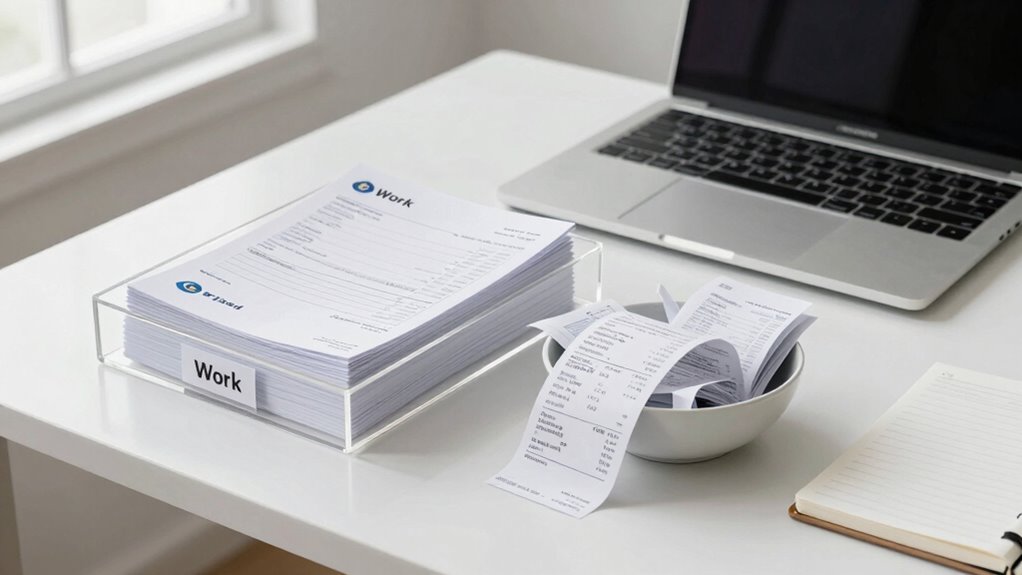

To easily separate work purchases from personal ones, set up dedicated business accounts and cards to keep transactions distinct. Use clear categories for different expenses like travel or supplies, and consider digital tools with receipt capture features to stay organized. Make it a habit to record expenses immediately, so your records stay tidy and accurate. Staying consistent with these steps simplifies your finances and tax tasks. Keep going, and you’ll discover more ways to streamline your expense management.

Get comfort and recovery gear delivered free with Prime
- Fast, free delivery on millions of items
- Prime Video, Amazon Music and more included
- Member-only deals all year
Key Takeaways
- Open separate bank accounts and credit cards for business expenses.
- Use expense management apps to automatically categorize and track purchases.
- Create clear expense categories like travel, supplies, and meals for quick sorting.
- Record expenses immediately after purchase to prevent mix-ups and ensure accuracy.
- Develop a routine of reviewing and organizing expenses regularly for consistent separation.

Separating work-related purchases from personal ones can save you time and stress, especially when it comes to tracking expenses or filing taxes. When you keep these expenses distinct, it becomes much easier to handle expense tracking and maintain clear budget management. Mixing personal and work purchases complicates record-keeping, increases the risk of missing deductible expenses, and makes tax season more intimidating. By establishing a straightforward system, you can streamline your financial organization and avoid unnecessary headaches.
The first step is to set up dedicated accounts or cards for each type of expense. Consider opening a separate business checking account or credit card for work-related purchases. This way, all work expenses automatically stay separate, and you won’t have to sift through personal transactions later. Using dedicated accounts simplifies expense tracking because you can quickly review statements and identify deductible costs without sorting through personal spending. It also helps you maintain accurate records, which are essential during tax filing or financial reviews. Implementing a clear expense categorization system makes it easier to stay organized and ensures you don’t overlook any deductible items.
Next, develop a consistent method for categorizing expenses. Whether you prefer digital tools or manual logs, create clear categories such as travel, supplies, meals, or software. Tag each purchase accordingly, making it easier to compile reports and identify spending patterns. When you categorize expenses as you go, you reduce the risk of missing deductions and make budget management more precise. You’ll also save time during tax season because your records will be organized and ready for review.
Adopting digital tools, like expense management apps, can further simplify the process. Many apps allow you to snap photos of receipts, automatically categorize expenses, and generate reports. This automation reduces manual entry errors and keeps your records organized. Regularly updating and reviewing your expense records ensures accuracy and prevents a backlog of unorganized receipts. It also gives you a clear picture of your spending habits, helping you stay within your budget. Incorporating organized record-keeping as part of your routine is crucial for maintaining clarity and efficiency. Staying disciplined in your approach reinforces good financial habits and minimizes stress during tax season.
Finally, make it a habit to separate personal and work expenses immediately. After each purchase, categorize and record it in your chosen system. Doing this consistently prevents clutter and confusion later. When you treat expense tracking as part of your routine, managing your budget becomes less stressful and more reliable. Clear separation of expenses ensures you’re always prepared for tax season and have a better grasp of your financial health. With a disciplined approach, you’ll find managing expenses and maintaining budget control far easier and less overwhelming.
As an affiliate, we earn on qualifying purchases.
Frequently Asked Questions
How Can I Separate Work and Personal Expenses on My Bank Statement?
You can separate work and personal expenses on your bank statement by using expense tracking tools or apps that categorize transactions automatically. Regularly review and label each purchase, ensuring they align with your budget management goals. Consider opening separate accounts for work and personal use if possible. This approach makes it easier to monitor expenses, stay organized, and maintain clear records for tax purposes or financial planning.
What Tools Are Best for Tracking Different Types of Purchases?
Imagine juggling flaming torches while riding a unicycle—that’s how complex tracking expenses can feel! The best tools for expense tracking and financial organization are apps like QuickBooks, Expensify, or Wave. They simplify categorizing purchases, sync with your bank, and give you clear reports. These tools turn chaos into clarity, helping you stay organized and in control of your finances without breaking a sweat.
How Often Should I Review and Categorize My Expenses?
You should review and categorize your expenses weekly to stay organized and prevent receipts from piling up. During this time, focus on receipt organization and expense labeling, making sure each purchase is properly categorized as work or personal. Regular reviews help catch errors early and keep your records accurate. By staying consistent, you’ll find managing your expenses less stressful and more efficient, ensuring you always have clear, up-to-date financial data.
Can I Automate the Sorting Process for Recurring Purchases?
Sure, you can automate the sorting process for recurring purchases with automatic categorization, making expense automation a breeze. It’s almost funny how technology can handle what used to be tedious manual work. Set up your expense management software to recognize repeating transactions, and it’ll automatically assign categories. This way, you save time, reduce errors, and keep your finances tidy—proving that automation can truly simplify your financial life.
How Do I Handle Mixed Purchases That Include Both Work and Personal Items?
You should review your mixed purchases regularly and split expenses into work and personal categories for accurate personal finance and expense tracking. Use separate apps or tags within your expense tracking tools to differentiate these purchases easily. When in doubt, keep receipts and record details afterward. This approach helps guarantee your personal finance remains clear, simplifies tax preparations, and improves your overall expense management, especially when handling combined transactions.
As an affiliate, we earn on qualifying purchases.
Conclusion
Now that you’ve got a clear system in place, sorting work from personal purchases becomes as easy as flipping a switch. Think of your receipts and expenses as a garden—by keeping them organized, you’re planting seeds of clarity that flourish into financial peace of mind. With this simple method, you’re steering your financial ship smoothly through calm and stormy waters alike, ensuring every expense lands confidently in its rightful place.
As an affiliate, we earn on qualifying purchases.
As an affiliate, we earn on qualifying purchases.
Halloween Picks
halloween
As an affiliate, we earn on qualifying purchases.