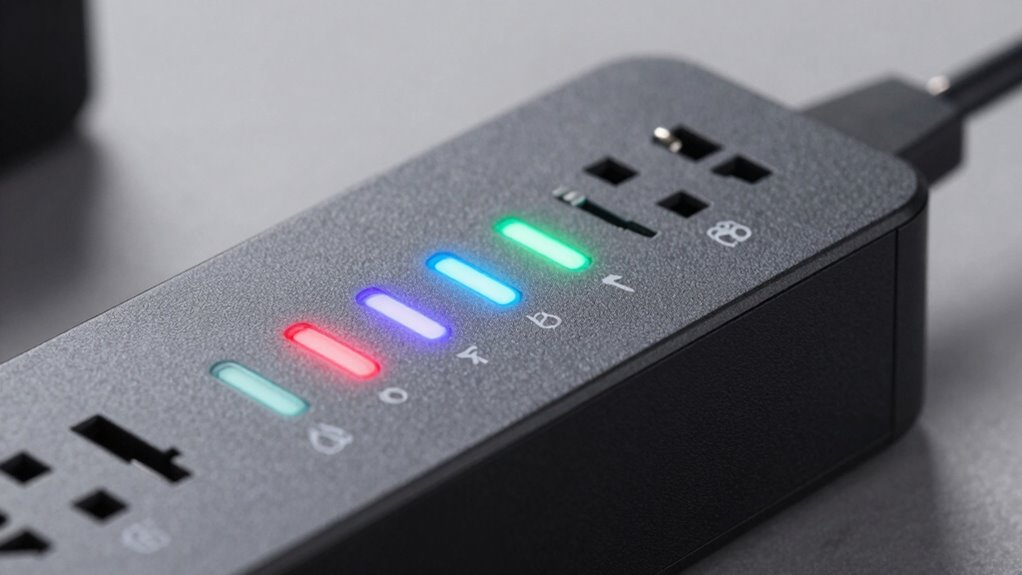
Surge protection ratings tell you how well a device shields your electronics from power spikes. The key things to check are Joule ratings, which show how much energy it can absorb before failing, and clamping voltage, meaning how early it reacts to sudden surges. Higher Joules and lower clamping voltage generally mean better protection. Understanding these basics helps you choose the right device, and if you explore further, you’ll understand how to get the best safety for your devices.
Key Takeaways
- Joule rating shows how much energy a surge protector can absorb before failing.
- Clamping voltage is the maximum voltage allowed before protection kicks in.
- Lower clamping voltage means the protector activates sooner, offering better safety.
- Surge protectors can wear out over time and may need replacing after heavy surges.
- Extra features like indicator lights help you know if the protector is still effective.
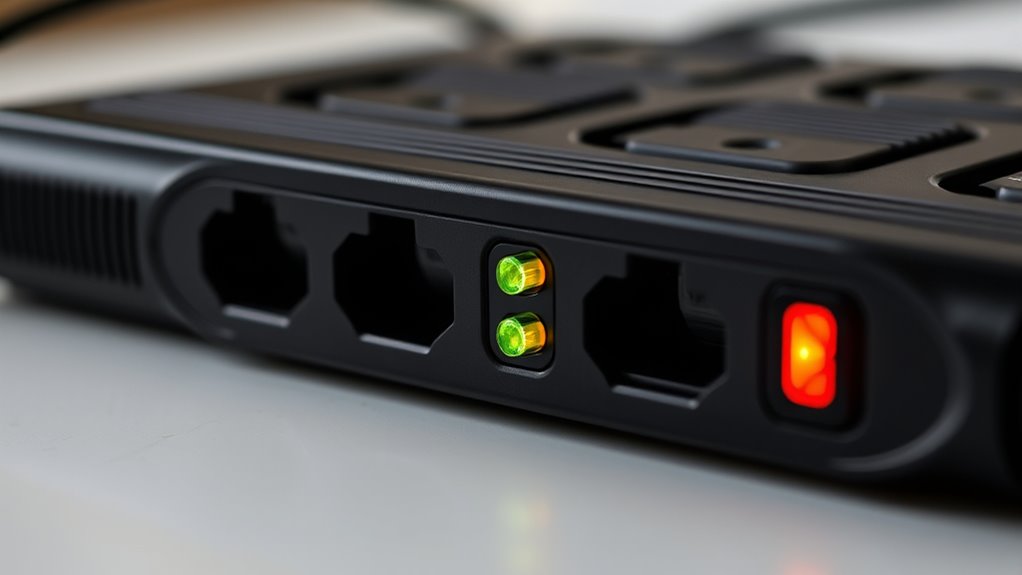
Surge protection ratings are primarily measured by two key numbers: the Joule rating and the clamping voltage. The Joule rating shows how much energy the surge protector can absorb before it fails. Think of it as the protector’s capacity to handle power spikes—higher Joule ratings mean the device can absorb more energy, offering better protection during severe surges like those caused by lightning strikes. If you live in an area prone to thunderstorms, opting for a surge protector with a higher Joule rating can provide extra peace of mind and better appliance safety. Additionally, some surge protectors include features like indicator lights or warranty coverage that can help you assess their ongoing effectiveness.
Higher Joule ratings mean better energy absorption and enhanced protection against severe power surges.
The second important number is the clamping voltage, which indicates the maximum voltage the protector allows to reach your devices before kicking in to block excess energy. A lower clamping voltage generally means better protection, as it triggers sooner to limit voltage spikes. For example, a surge protector with a clamping voltage of 400 volts will activate earlier than one with a 600-volt rating. When choosing a surge protector, aim for one with a low clamping voltage to better shield your electronics from damaging spikes caused by lightning strikes or other power fluctuations.
It’s also helpful to understand that surge protection ratings aren’t static; they can degrade over time as the device absorbs surges. This means that even a high-rated surge protector might need replacing after a few years of heavy use or a major surge event. Regularly checking the condition of your surge protection can help maintain appliance safety and ensure your electronics remain protected during unexpected power surges. Proper maintenance and replacement of surge protectors are essential to ensure ongoing safety and effectiveness.

Belkin 12-Outlet Surge Protector Power Strip w/ 12 AC Outlets & 8ft Flat Plug, UL-listed Heavy-Duty Extension Cord for Home, Office, Travel, Computer, Laptop, Charger – 3,940 Joules of Protection
MULTI-OUTLET SURGE PROTECTOR LETS YOU CHARGE & POWER MULTIPLE DEVICES AT ONCE: Power everything on your desk with…
As an affiliate, we earn on qualifying purchases.
As an affiliate, we earn on qualifying purchases.
Frequently Asked Questions
How Do Surge Protectors Differ From Regular Power Strips?
Surge protectors differ from regular power strips mainly through their surge protection standards. While power strips only provide extra outlets, surge protectors guard your devices against voltage spikes. In a power strip comparison, surge protectors include components that absorb or divert excess voltage, preventing damage. Always check the surge protection ratings to confirm your devices stay safe. You’ll get better protection and peace of mind with a surge protector over a basic power strip.
Can Surge Protection Ratings Predict Device Lifespan?
Ever wonder if surge protection ratings can predict your device’s lifespan? They give a rough idea of the surge protector’s reliability, but they don’t directly determine how long your devices last. A higher surge rating reliability means it can handle bigger surges, protecting your gear longer. However, the actual surge protector lifespan depends on usage and maintenance. So, while ratings help, they aren’t a crystal ball for device longevity.
Are Higher Surge Ratings Always Better?
Higher surge ratings aren’t always better because they don’t directly determine surge lifespan or the protection quality. Instead, the surge rating significance lies in how well a protector can handle larger or more frequent surges without failure. You should focus on a surge protector with an appropriate rating for your devices, considering both the surge lifespan and the level of protection you need, rather than just choosing the highest surge rating available.
How Do I Choose the Right Surge Protector for My Home?
Think of choosing a surge protector as picking a shield for your home’s electrical safety. To find the right one, consider the surge protection rating—higher isn’t always better, but it should match your appliance needs. Look for a protector with a clamping voltage that safeguards your devices. Prioritize models with sufficient joule ratings for appliance protection, ensuring your home stays safe during electrical surges.
Do All Surge Protectors Need to Be Replaced After a Surge?
Not all surge protectors need immediate replacement after a surge, but their durability can be impacted. You should check the manufacturer’s guidelines for replacement frequency, as some protectors have indicator lights or built-in meters showing when they’re no longer effective. If your surge protector shows signs of damage, such as a burnt smell or physical damage, replace it promptly. Regularly inspecting and replacing your surge protector helps ensure continued protection for your devices.

Eaton Tripp Lite Series SUPER7B Flat Plug Power Strip Surge Protector, 7 Outlets, 7ft Extension Cord, 2160 Joules, UL Listed & Certified, Black, Lifetime Manufacturer's Warranty & $75,000 Insurance
FLAT PLUG POWER STRIP SURGE PROTECTOR: Features 7 outlets, 2160 joule rating, and an 7ft flat plug extension…
As an affiliate, we earn on qualifying purchases.
As an affiliate, we earn on qualifying purchases.
Conclusion
Now that you understand surge protection ratings, picture your devices as delicate leaves in a storm. The right surge protector acts like a sturdy umbrella, shielding you from sudden lightning strikes. With clear ratings guiding your choice, you can confidently stand firm against unexpected power surges. Remember, a reliable protector keeps your tech safe, ensuring your home stays calm and connected—even when the storm rages outside. Stay prepared, and let your devices weather any electrical tempest.

Surge Protector 1050 Joules, TESSAN Single Plug Surge Protector with Protected Light Indicator, 1875W Max Portable Wall Outlet for Appliances, TV, Computer, Refrigerator, Treadmill, Massage Chair
1050J Surge Protector Outlet: The wall surge protector can independently protect your electrical appliances, such as computers and…
As an affiliate, we earn on qualifying purchases.
As an affiliate, we earn on qualifying purchases.
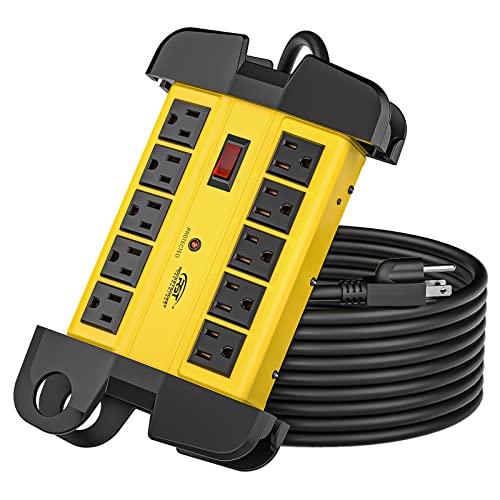
CRST 10-Outlets Heavy Duty Power Strip Metal Surge Protector with 15 Amps, 15-Foot Power Cord 2800 Joules for Garden, Kitchen, Office, School, ETL Listed(3165047) (10-Outlet, Yellow)
–Sturdy, extruded aluminum housing stands and Surge Protection constructed. CRST Industrial Power Strip is perfect for construction site,…
As an affiliate, we earn on qualifying purchases.
As an affiliate, we earn on qualifying purchases.