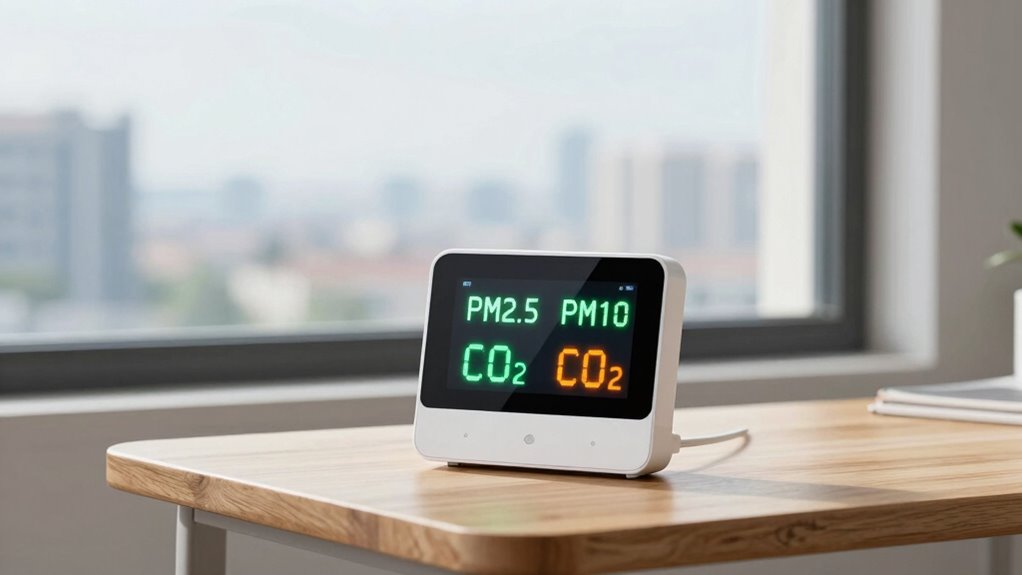

When choosing an air quality monitor, focus on PM2.5, CO2, and VOC levels, as these directly impact your health. High PM2.5 can cause lung issues, while elevated CO2 suggests poor ventilation and can make you feel sluggish. VOCs come from household chemicals and can irritate your eyes and throat. Keeping an eye on these numbers helps you make smarter decisions to improve your indoor air. To get the full picture, keep exploring what influences these readings.

Get comfort and recovery gear delivered free — and shop member deals
- Fast, free delivery on millions of items
- Access to Prime Big Deal Days deals on October 6–7
- Prime Video, Amazon Music and more included
Key Takeaways
- PM2.5 levels indicate fine particulate pollution impacting lung and cardiovascular health.
- CO2 readings reflect ventilation effectiveness; high levels suggest poor airflow.
- VOC measurements reveal chemical pollutants from household products and furnishings.
- Regular sensor calibration ensures data accuracy for meaningful air quality decisions.
- Monitoring these key metrics helps identify pollution sources and improve indoor air health.
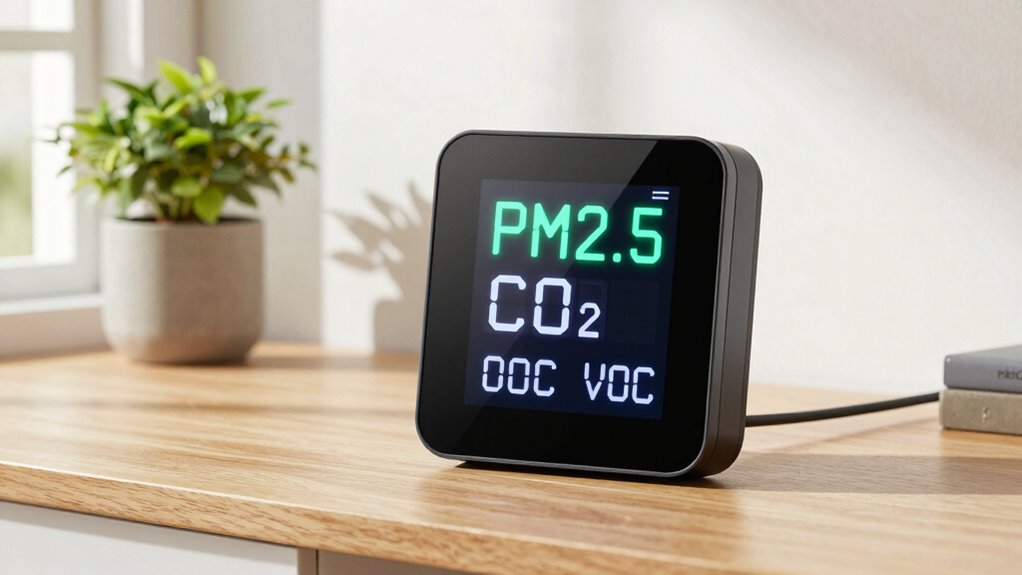
Have you ever wondered how clean the air around you really is? It’s a natural question, especially when you consider how much time you spend indoors. Indoor pollution can sneak in from everyday activities—cooking, cleaning, pet dander, and even off-gassing from furniture or paint. That’s where air quality monitors come into play. They’re designed to give you real-time data about the air you breathe, helping you identify problems before they become serious. But understanding what numbers actually matter can be confusing. Not all readings are created equal, and knowing how to interpret them is vital for making meaningful changes.
When you look at an air quality monitor, you’ll see a variety of measurements—PM2.5, CO2, VOCs, and sometimes other pollutants. Among these, PM2.5, or fine particulate matter, is often the most concerning because tiny particles can penetrate deep into your lungs and even enter your bloodstream. Elevated PM2.5 levels signal that your indoor pollution is higher than it should be. CO2 levels are equally important, as they indicate how well-ventilated your space is. High CO2 can leave you feeling sluggish or give you headaches, signaling the need for better airflow. Volatile Organic Compounds, or VOCs, come from household products and can cause eye, nose, and throat irritation, so monitoring VOCs helps you identify sources of chemical pollution.
However, just having a monitor isn’t enough; sensor calibration matters immensely. Over time, sensors can drift, leading to inaccurate readings. If your device isn’t properly calibrated, you might think your air is cleaner—or dirtier—than it truly is. Regular sensor calibration ensures your monitor provides precise data, enabling you to make informed decisions. Some monitors come with automatic calibration features, but others may require manual adjustments or calibration checks using known reference standards. Without this step, you risk acting on faulty information, which could mean neglecting a genuine problem or overreacting to a false alarm. Proper sensor maintenance can extend the lifespan of your device and keep it functioning accurately. Additionally, understanding the sources of indoor pollution can help you implement targeted improvements for better air quality. Knowing how indoor air quality standards are established can guide you in setting realistic goals for healthier living spaces. Recognizing the importance of sensor calibration and maintenance can also prevent long-term inaccuracies that undermine your efforts.
Ultimately, what numbers matter most depend on your health concerns and environment. Consistently high PM2.5 levels indicate poor air quality, prompting you to improve ventilation or reduce pollution sources. Elevated CO2 signals that your indoor space isn’t ventilated enough, which could impact your focus and comfort. Recognizing the significance of these measurements—and ensuring your device’s sensors are accurately calibrated—empowers you to create a healthier living space. By paying attention to the right numbers and maintaining your monitor’s accuracy, you take control of your indoor environment, making smarter choices about air quality every day. Understanding indoor pollution sources is key to effectively improving your air quality.
As an affiliate, we earn on qualifying purchases.
Frequently Asked Questions
How Often Should I Calibrate My Air Quality Monitor?
You should calibrate your air quality monitor regularly, typically every 1 to 3 months, depending on its sensor longevity and usage conditions. Regular calibration guarantees accurate readings and maintains sensor performance. If you notice inconsistent data or significant changes in readings, calibrate more often. Proper calibration frequency helps prevent sensor drift, extends your monitor’s lifespan, and guarantees you get reliable air quality information, so you can make informed decisions.
Can Air Quality Monitors Detect All Types of Pollutants?
You might be surprised, but air quality monitors don’t detect all pollutants. They often target common indoor allergens like dust, pollen, and mold spores, which are linked to respiratory issues. They also help with humidity control, reducing mold growth. However, gases like carbon monoxide or volatile organic compounds (VOCs) may require specialized sensors. So, while helpful, these monitors don’t catch every pollutant, and sometimes additional devices are needed for thorough air quality tracking.
Are Portable Air Quality Monitors as Accurate as Stationary Ones?
Portable air quality monitors can be quite accurate, but they often don’t match the precision of stationary models. Sensor calibration plays a key role in ensuring data accuracy for both types. Portable units are convenient, but their smaller sensors may be more prone to calibration drift over time. To get reliable readings, regularly calibrate your monitor and understand its limitations compared to stationary setups, which typically have more advanced, stable sensors.
How Does Temperature Affect Air Quality Readings?
Sure, temperature’s just a tiny detail, right? Wrong! It can totally mess with your air quality readings. When it’s hot or cold, humidity interference ramps up, confusing your sensor sensitivity. That means your monitor might scream “bad air!” when it’s just the weather throwing a tantrum. So, if you want accurate results, keep an eye on temperature and remember, your device’s readings are only as good as its environment.
What Features Should I Look for in a Good Air Quality Monitor?
When choosing a good air quality monitor, look for high sensor sensitivity to detect even small changes in pollutants. Make certain it has reliable data connectivity, like Wi-Fi or Bluetooth, so you can access real-time readings easily. A user-friendly interface, clear display, and the ability to track historical data also make a difference. These features help you monitor your environment accurately and take prompt action to improve air quality.
As an affiliate, we earn on qualifying purchases.
Conclusion
Understanding which numbers matter on air quality monitors helps you make smarter decisions for your health. Did you know that levels of PM2.5 above 35 micrograms per cubic meter can increase your risk of respiratory issues? By paying attention to these vital readings, you can take action to improve your air, like using filters or ventilating your space. Staying informed empowers you to breathe easier and protect your well-being every day.
As an affiliate, we earn on qualifying purchases.
Fall Picks
fall essentials
As an affiliate, we earn on qualifying purchases.