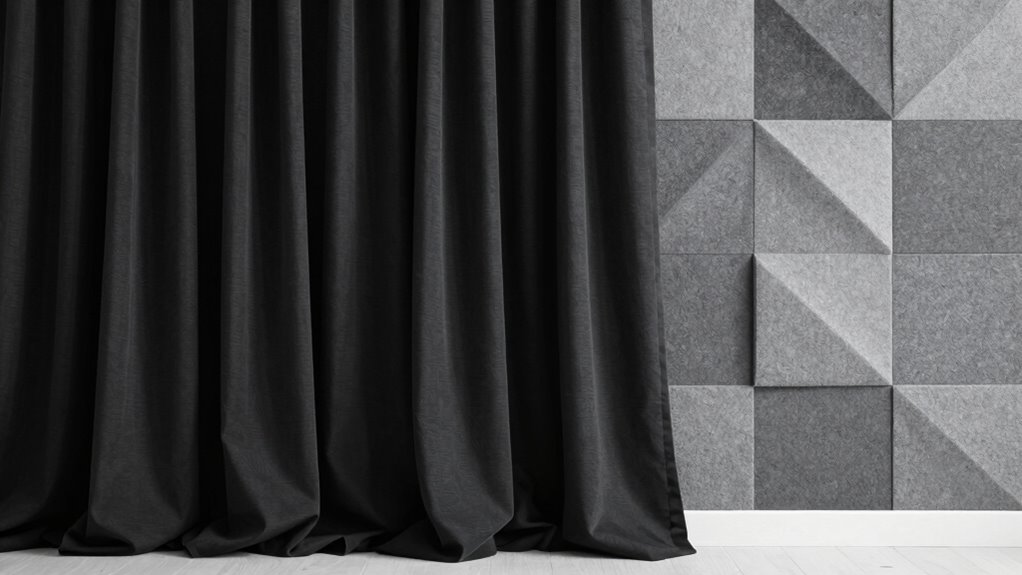
Soundproof curtains mainly block high-frequency sounds like voices and street noise, offering a quick and portable solution for windows or doorways. Acoustic panels, on the other hand, absorb a wider range of sounds, including low-frequency bass, helping to reduce echo and reverberation. Both serve different roles: curtains are easy to install and move, while panels provide all-encompassing sound absorption. If you want to understand how each option fits your needs, explore the details further.

Get comfort and recovery gear delivered free with Prime
- Fast, free delivery on millions of items
- Prime Video, Amazon Music and more included
- Member-only deals all year
Key Takeaways
- Soundproof curtains primarily block high-frequency noise, while acoustic panels absorb a broader range of sound, including low-frequency sounds.
- Curtains are easy to install and portable, ideal for temporary or rental spaces; panels require wall mounting and are more permanent.
- Curtains add a soft, decorative element to interiors, whereas acoustic panels offer customizable design options but are more visible.
- Effectiveness depends on material quality, coverage, and installation, with curtains suited for quick fixes and panels for comprehensive sound control.
- Choose curtains for quick, flexible noise reduction around windows and doors; opt for panels in environments needing sound absorption and echo reduction.
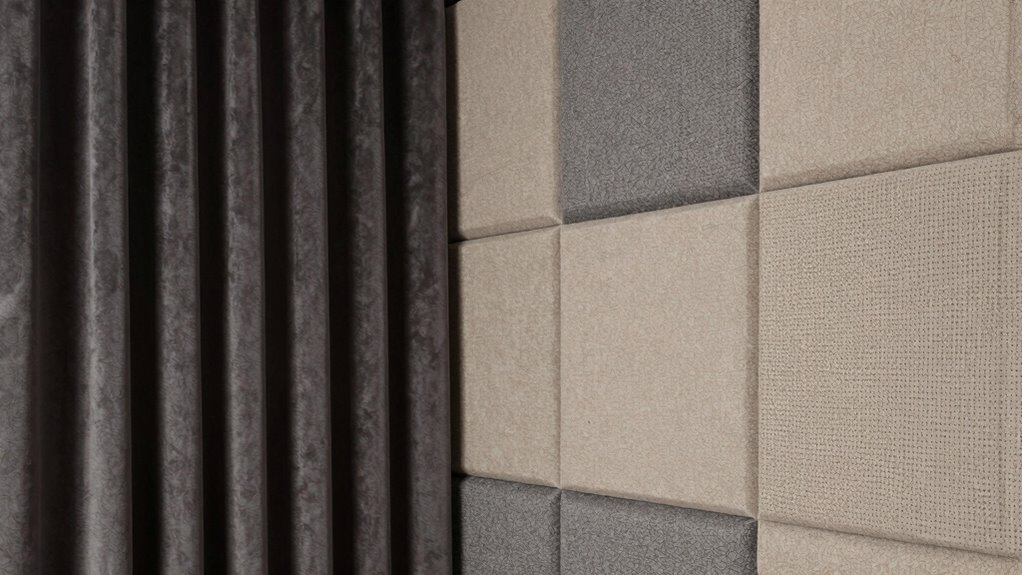
Are you unsure whether soundproof curtains or acoustic panels are better for reducing noise in your space? The choice depends on your specific needs, space, and style preferences. The effectiveness of each option can also depend on the materials used, making it important to consider the quality and composition when selecting your noise reduction solution. Both options are popular noise reduction techniques, but they serve different purposes and can impact your interior decor differently. Understanding the differences helps you make an informed decision that balances function and aesthetics.
Soundproof curtains are thick, heavy drapes designed to block sound from entering or leaving a room. They’re easy to install and can be an attractive addition to your interior decor. These curtains are especially effective at reducing high-frequency noise, like voices or street sounds, and they add a soft, warm look to your space. Because they hang over windows or doorways, they provide a quick, flexible solution that doesn’t require permanent modifications to your walls. They’re also portable, so you can move or remove them when needed, making them ideal for renters or those who want a non-invasive noise reduction technique. However, they are less effective at absorbing low-frequency sounds, like bass or loud music, which often require more specialized treatment. Soundproofing effectiveness varies depending on the material and thickness of the curtains. Additionally, their ability to block sound can be influenced by how well they cover the entire area and if they are hung properly. Proper installation and material quality are crucial for maximizing their noise reduction capabilities.
Soundproof curtains are stylish, portable solutions ideal for blocking high-frequency noise and easy to install.
Acoustic panels, on the other hand, are typically made of foam, fabric, or other porous materials designed to absorb sound waves. They’re usually mounted directly onto walls, so they’re more visible than curtains, which can influence your interior decor. Acoustic panels excel at reducing echo and reverberation, creating a quieter, more comfortable environment. They are highly customizable; you can choose different colors, shapes, and patterns to match your aesthetic. This makes them appealing if you want to incorporate soundproofing into your interior decor seamlessly. Unlike curtains, acoustic panels are more effective at tackling a broader range of noise, especially low-frequency sounds, making them a better choice for home theaters, recording studios, or noisy open-plan offices. The trade-off is that they’re a semi-permanent addition, requiring installation and some wall space, which might not suit everyone’s interior design preferences. Additionally, advancements in soundproofing materials have increased the effectiveness of acoustic treatments, making them more versatile for various environments. Proper placement and quantity of panels can significantly enhance their sound absorption capabilities.
As an affiliate, we earn on qualifying purchases.
Frequently Asked Questions
Which Option Is More Cost-Effective for Small Rooms?
For small rooms, soundproof curtains are more cost-effective because they require less investment and are easier to install. Your room size makes curtains a practical choice, as they can be quickly added without extensive modifications. Additionally, consider material durability—curtains made from thick, high-quality fabrics last longer and provide decent sound absorption, making them a budget-friendly, effective solution for reducing noise in compact spaces.
Can Soundproof Curtains Improve Thermal Insulation?
Think of soundproof curtains as cozy blankets for your windows—they do more than block noise; they help trap heat. While primarily designed for sound absorption and noise reduction, they also add a layer of thermal insulation, keeping your room warmer. So, yes, these curtains can improve thermal insulation by reducing drafts and heat loss, making your space more comfortable and energy-efficient during chilly days.
Are Acoustic Panels Suitable for Outdoor Use?
Acoustic panels aren’t typically suitable for outdoor use because they lack outdoor durability and weather resistance. Exposure to rain, humidity, and sunlight can damage them, reducing their effectiveness. If you want soundproofing outdoors, look for specially designed weather-resistant acoustic panels made with durable, weatherproof materials. These are built to withstand outdoor elements, ensuring long-lasting sound absorption without deterioration from environmental exposure.
How Do Installation Processes Differ Between the Two?
You’ll find that installing soundproof curtains is quick and simple—just hang them on a rod or track, requiring minimal tools. Acoustic panels, however, demand more effort; you’ll need to securely mount them to walls with brackets or adhesive, considering their material durability. While curtains offer a variety of aesthetic options easily swapped out, panels can be customized for style, but installation may involve precise placement for maximum sound absorption.
Which Option Is Better for Blocking Low-Frequency Sounds?
Blocking low-frequency sounds is like stopping a tidal wave—you need dense materials. Acoustic panels generally outperform curtains here because their high material density absorbs low-frequency vibrations better. Soundproof curtains, while useful for higher frequencies, struggle with these deep sounds. For effective low-frequency reduction, opt for acoustic panels, which are specifically designed to target and diminish those powerful, bass-heavy noises.
acoustic panels for wall sound absorption
As an affiliate, we earn on qualifying purchases.
As an affiliate, we earn on qualifying purchases.
Conclusion
Don’t assume that soundproof curtains and acoustic panels are interchangeable—each has its unique role. Think of it like using a sponge versus a mop; both clean, but one’s better for spills, the other for floors. The truth? Understanding their differences helps you choose the right solution for your space. So, don’t buy blindly—know what job you need done, and select the option that truly works for your environment.
high-density soundproof curtains
As an affiliate, we earn on qualifying purchases.
As an affiliate, we earn on qualifying purchases.
As an affiliate, we earn on qualifying purchases.
Halloween Picks
halloween
As an affiliate, we earn on qualifying purchases.