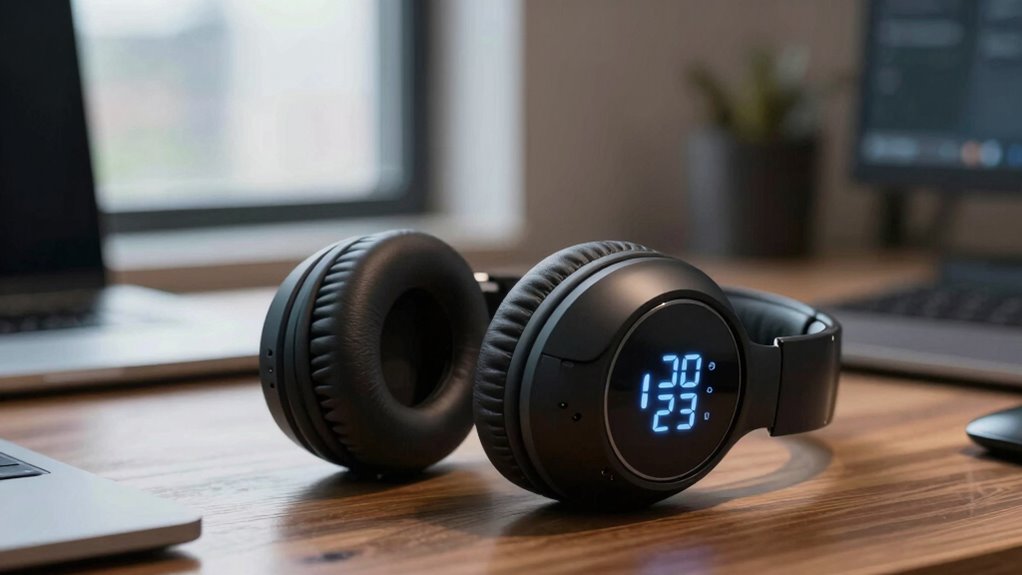

Noise canceling headphones actively reduce external sounds with electronics that generate sound waves to cancel noise, ideal for persistent, low-frequency sounds like airplanes. Noise isolation, on the other hand, uses physical barriers like thick ear cups or tips to block outside noise without power, perfect for passive quiet or sleep. Understanding these differences helps you pick the right option for your environment, and if you stay with this, you’ll learn more about choosing the best hearing protection.
Key Takeaways
- Noise canceling actively reduces external sounds using electronic signals, while noise isolation passively blocks sound with physical barriers.
- Noise canceling headphones require power and are effective against consistent, low-frequency noise; noise isolation does not need power.
- Noise canceling adjusts to varying noise levels, whereas noise isolation depends on a proper fit and physical sealing.
- Noise canceling is bulkier and more expensive, while noise isolation offers a simple, affordable, power-free solution.
- Understanding these differences helps select the right type based on environment, comfort, and noise reduction needs.
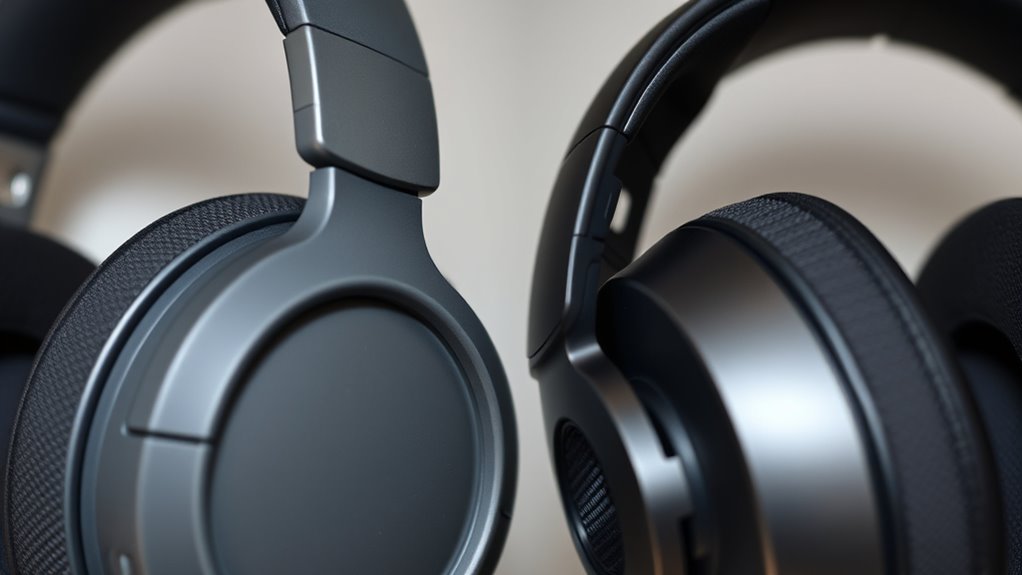
Have you ever wondered whether noise canceling or noise isolation headphones are better for blocking out unwanted sound? The answer depends heavily on the technological differences between the two and your personal preferences. Noise canceling headphones use active noise control technology, which involves microphones that pick up outside sounds and generate sound waves that cancel them out. This process creates a quieter listening environment, especially effective in consistent, low-frequency noises like engine hums or airplane engine noise. Noise isolation, on the other hand, is more about passive design. It relies on physical barriers—such as thick ear cups or ear tips—that block sound from entering your ears. This method doesn’t involve electronics but instead creates a seal that prevents external noise from reaching your eardrum.
Understanding the technological differences can help you choose the right type for your needs. Noise canceling headphones are ideal if you’re often in environments with persistent, background noise—think crowded commutes or busy offices. They actively reduce ambient sounds, so you can enjoy your music or focus without distraction. However, they tend to be pricier and require batteries or power sources to operate. Noise isolation headphones are simpler, often more affordable, and don’t depend on power. They work well in situations where you want to block out noise passively, such as during sleep, studying, or working in quieter environments. Because they rely on physical barriers, their effectiveness depends on how well the ear cups or tips fit your ears.
Noise canceling headphones are ideal for persistent background noise; they actively reduce ambient sounds but often require batteries.
Your user preferences also play a significant role. If you prefer a cleaner, more natural sound without electronic interference, noise isolation may suit you best. It’s straightforward: the better the seal, the less external sound leaks in. Conversely, if you dislike the feeling of ear cups pressing against your head or if you need adjustable noise reduction, active noise canceling offers more flexibility. Some users appreciate the ability to turn noise cancellation on or off, tailoring their experience to the environment. Others might find noise canceling headphones a little bulky or heavy for daily use, while noise isolating designs tend to be more lightweight and portable.
Ultimately, choosing between noise canceling and noise isolation comes down to your environment and what you prioritize: technological sophistication or simple, passive blocking. Both methods have their benefits, and your user preferences—such as comfort, convenience, and budget—will guide your decision. Recognizing these differences ensures you pick the right headphones for your specific needs, avoiding the common mistake of mixing them up and ending up with a device that doesn’t suit your lifestyle. Additionally, advances in home audio technology continue to improve the effectiveness and affordability of both options, making it easier than ever to find a suitable solution.

Hybrid Active Noise Cancelling Bluetooth Headphones Wireless Headphones
- Comfortable All-Day Wear: Ergonomic design with memory foam ear cups
- Premium Material Construction: High-quality, durable materials for luxury feel
- Adjustable Headband: Secure fit for all head sizes
As an affiliate, we earn on qualifying purchases.
As an affiliate, we earn on qualifying purchases.
Frequently Asked Questions
Can Noise Canceling Headphones Improve Focus During Work?
Yes, noise-canceling headphones can improve your focus during work by actively reducing background noise, creating an environment similar to soundproof barriers. They use active noise technology to block out constant, low-frequency sounds like office chatter or traffic. This allows you to concentrate better and minimizes distractions. However, if you’re in a noisy environment, noise-canceling headphones are especially effective compared to just soundproof barriers, enhancing your overall productivity.
Are Noise-Isolating Earbuds Suitable for Sleeping?
Yes, noise-isolating earbuds can be suitable for sleeping, especially if they’re designed for comfort and ear canal health. You might worry about discomfort or ear health issues, but many models feature soft, snug-fitting tips that stay comfortable overnight. Just make certain they don’t press too deeply into your ear canal, and choose ones with good ventilation. This way, you enjoy better sleeping comfort without risking irritation or harm.
How Do Ambient Noises Affect Noise Cancellation Effectiveness?
Ambient noise can substantially reduce the effectiveness of noise cancellation because it interferes with the headphones’ ability to detect and counteract external sounds. When there’s a lot of ambient noise, your noise-canceling earbuds might struggle to block out everything, especially sudden or loud sounds. To maintain peak cancellation effectiveness, try to minimize ambient noise or use headphones designed for high-quality active noise cancellation.
Do Noise-Canceling Headphones Drain Battery Faster?
Think of noise-canceling headphones like a car idling at a red light—they use extra power to keep the engine running smoothly. Yes, they do drain the battery faster because of their active noise-canceling feature, which increases power consumption. The more you use noise canceling, the more battery drain you’ll experience. To conserve power, turn off noise canceling when you don’t need it, especially during long listening sessions.
Can Noise Isolation Damage Hearing Over Time?
Noise isolation itself doesn’t cause hearing loss or long-term damage if you keep the volume at safe levels. However, if you constantly listen to loud sounds through isolating headphones, you risk damaging your hearing over time. To protect yourself, stay mindful of volume levels, especially in noisy environments, and take breaks periodically. Proper use guarantees you enjoy your audio without risking long-term damage or hearing loss.

MIPEACE Work Earbuds Headphones, Ear Plug Headphones for Work-Noise isolating Earbuds Earphones for Industrial Safety Construction(Black)
- Comfortable Tri-flange Design: Ergonomic in-ear tips for secure fit
- High Noise Reduction: 29 dB noise blocking for safety
- Clear Sound Quality: Blocks ambient noise for rich audio
As an affiliate, we earn on qualifying purchases.
As an affiliate, we earn on qualifying purchases.
Conclusion
Now that you’ve seen the difference, you can navigate the world of headphones without getting lost in the noise. Think of noise canceling as a personal shield, actively pushing away distractions like a vigilant guard. Noise isolation, on the other hand, is like a cozy cave, simply blocking out sound. By understanding these differences, you’re equipped to choose the perfect partner for your sonic adventure—whether it’s a fortress or a whispering breeze.

YMOO Active Noise Cancelling Headphones for Airplane Travel, LDAC Hi-Res Audio, Wired and Wireless ANC Headphones, 100H Playtime Over Ear Headphones, Custom EQ via App, Bluetooth 6.0 Headset for All
- High-Resolution Audio: LDAC and Hi-Res support with 40mm drivers
- Effective Noise Cancellation: Reduces ambient noise up to 90% with 4 microphones
- Bluetooth 6.0 Connectivity: Stable wireless connection over 32 feet
As an affiliate, we earn on qualifying purchases.
As an affiliate, we earn on qualifying purchases.

Veeniitosr Sleep Headphones Bluetooth 6.0 Headband for Side Sleeper (Black)
- Multi-functional 3-in-1 Design: Headband, eye mask, sleep headphones
- Durable and Comfortable Material: High-stretch fabric for snug fit
- Detachable & Washable Components: Headband and Bluetooth module removable
As an affiliate, we earn on qualifying purchases.
As an affiliate, we earn on qualifying purchases.